

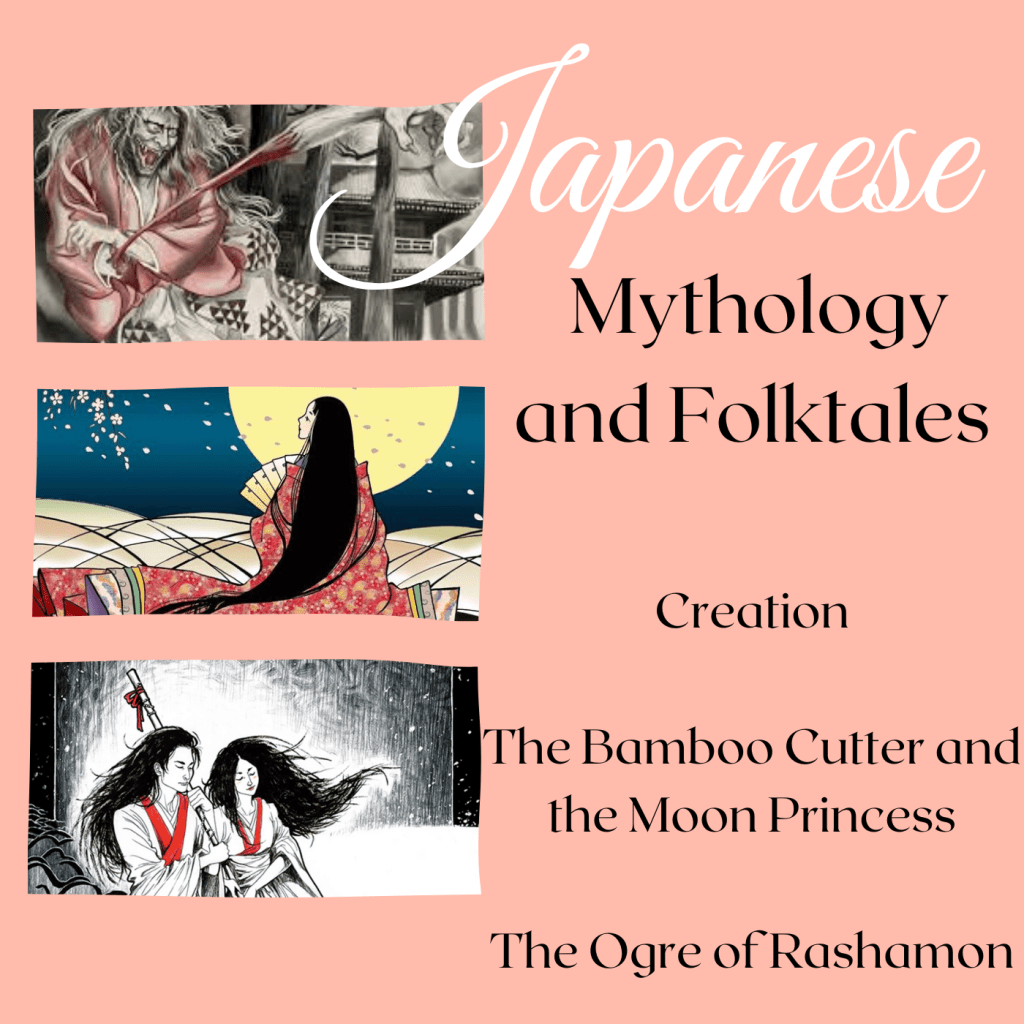
Japanese mythology and folktales continue to fascinate people all around the world. Many of my students every year are enthralled with Japanese culture, anime, and manga, so incorporating these stories into my classroom is only natural. The Bamboo Cutter and the Moon Child is a wonderful tale to weave in to your Japanese units if you do not already!
If you would like resources to help you teach this Japanese folktale, check this out!

Summary of The Bamboo Cutter and the Moon Child Folktale
This tale is both a blend of mythology as well as folktale. There is an old bamboo cutter and his wife who were childless and one day the bamboo cutter is in the forest harvesting bamboo. As he cuts a stalk, the most beautiful light glows from inside and the bamboo cutter finds a tiny, illuminating child. She explains that she has come from the moon to live with him for a time and falls asleep. There are also coins and jewels in the bamboo stalks.
The girl grows quickly and is so beautiful that she is known far and wide.
5 knights try to win her hand by going in search of fantastical items she tells them to find and bring her to prove their love. However, all of these knights fail. Not only do they fail, they try to lie about their journey, purchase fakes, etc. in an attempt to win her without any actual effort.

The emperor also falls in love with her and tries to force her to come back to the palace with her. However, she firmly answers, no and uses the power of the moon to disappear into the shadows.
“But the Princess stopped him. She said that if she were forced to go to the Palace she would turn at once into a shadow, and even as she spoke she began to lose her form. Her figure faded from his sight while he looked.”
The story ends sadly when the moon people come to take her back home against everyone’s wishes. She and the bamboo cutter (who had become as a father to her) are forced to part ways. The moon king explains that he has blessed them with prosperity in return for caring for Princess Moonlight while on Earth but she must now return alone.
It is revealed in the end that she was sent here to live on Earth for a short time as a punishment. This can lead to an interesting conversation with your students as to why experiencing a human life (especially the one she had) could be seen as a punishment to a celestial being.
Film Adaptation- The Tale of Princess Kaguya
In 2013, the movie The Tale of the Princess Kaguya was released in Japan. It is a historical anime adaptation of this ancient story and is still the most expensive Japanese film every made. I find some of the changes/additions to be quite interesting and wonder what it says about the shift in Japanese culture.
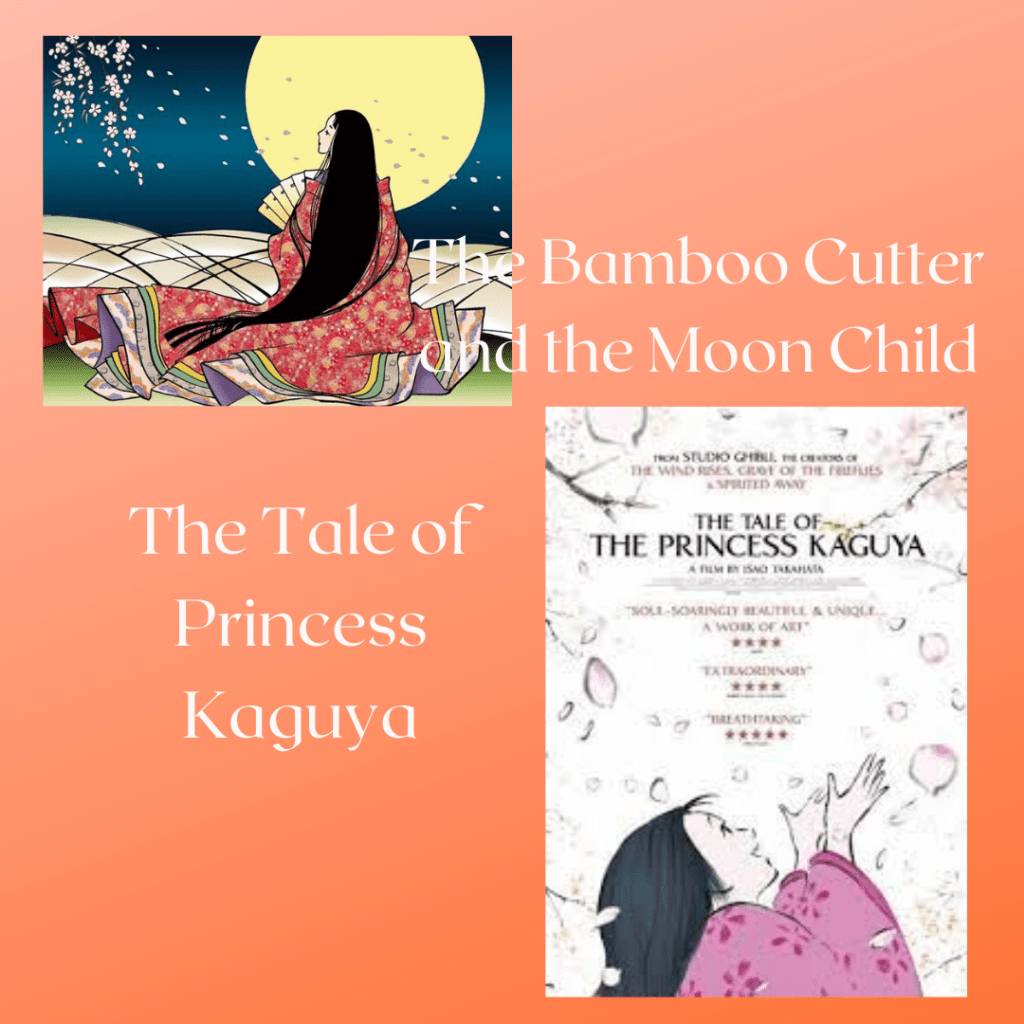
One change being that Princess Kaguya spends much of her early years on the planet living in poverty in the country. However, this turns out to be the only place she was truly happy.
Once the bamboo cutter has amassed enough of the coins and jewels to build a mansion, fine clothes, and a position in society; he rips his wife and daughter away from the simple life they loved. Princess Kaguya goes through some horrific body rituals required by her station (including staining her teeth with black ink because a lady of her station shouldn’t be speaking or laughing enough to show her teeth anyway).
Only after she rejects all of these beauty rituals and returns to her simple nature does she start to become herself again.
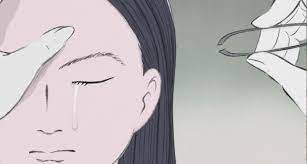
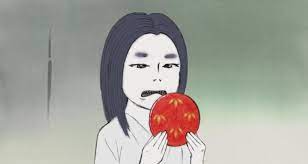
I do wonder if these changes were put into the movie to reflect more of the Buddhist philosophies that are more prevalent in modern Japan as well as the desire to live more simplistic lives.
The only true love of her life also lived near her childhood home and we see the heartbreak of losing her one chance at happiness. Towards the end of the film, she finds him again and they have a fleeting moment of pure joy of finally being together. However, it is ripped away and she accepts the fact that she must return to the moon.
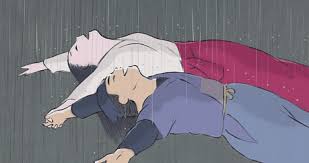
I am not entirely sure why this major shift was put in and what it says about modern Japan in comparison. Perhaps this too goes along with the desire many modern Japanese citizens for a simple life. In the original tale she leaves the Emperor an elixir for immortality, but in this movie his character is seen as fake as the knights.
There is also one moment in the film in which she finally gets to go and see the cherry blossoms that she has never been able to see. However, the moment of awe is short lived. In Japanese culture cherry blossoms symbolize beauty and fragility of life due to their brief growing season.
I do love that this scene was added because this thought is prevalent with her story in both versions. She only stays on Earth for 20 years, so it is brief, especially for an immortal. In such a short time she experiences so much.

Why should teach The Bamboo Cutter and the Moon Princess in your World Literature Class?
“The Bamboo Cutter and the Moon Child” is rich cultural content, offering students insights into traditional Japanese folklore and values. The tale’s universal themes of love, sacrifice, and the search for identity provide ample opportunities for students to explore literary analysis and critical thinking skills.
Teaching this folktale and the comparing with the anime movie can also offer a unique exploration in narrative structure and fantastical elements that will engage your students’ imaginations and foster appreciation for diverse storytelling traditions.
If you would like some resources to use to teach this beautiful tale, please feel free to check out my store! I have handouts for basic comprehension, inference questions, and 3 possible writing pieces. I highly recommend comparing with the movie if you can! It is currently on HBO Max streaming.
I also have this bundle with resources to teach The Bamboo Cutter and the Moon Child, The Japanese Creation Story, and The Ogre of Rashamon so that you can add in even more Japanese goodness into your World Lit or Mythology classes.
 Around the World With Mrs. C
One thought on “Japanese Mythology and Folktales- The Bamboo Cutter and the Moon Child”