

High School PBL- Historical Video Game Pitch
I have shared the power of project based learning in high school in other post (such as here and here). I am thrilled to share my latest PBL concept that combines the thrill of gaming with the richness of world history and ELA skills. I extra love this project based learning unit because it combines real-world learning with something most of our students LOVE- video games!
Engaging in real-world project-based learning, such as this exciting historical game pitch, resonates deeply with high school students by turning the classroom into a hub of creative exploration and critical thinking.
By merging our students’ love for gaming with a deep dive into history we can not only pique their interest but also show them the WHY of what they are learning. Say goodbye to the dreaded, “But when would I ever use this” question!

This is also a fantastic way of showing our students that they can use their writing skills for things beyond “being an author”. We English teachers know that writing is a critical skill in most aspects in life, but our students don’t always see that until we show them.
By having students move into the driver’s seat of their education, face the challenges of figuring out the process, present their concepts to a real-world audience; they not only grasp subject matter but also build the essential skills vital for success in our ever-changing world.
This four-week project based learning unit will not only empower your students but also foster critical thinking, collaboration, and creativity.
Lets take a closer look at what a month in this project could look like!

Week 1: Setting the Stage
To kick things off, introduce your students to the project by providing a the overview of a gaming franchise that has mastered the art of historical storytelling. Since I want to respect copyright expectations, I won’t mention the franchise name explicitly (though you certainly could in your own classrooms).
Think about a game where historical accuracy meets thrilling gameplay. Hint: it involves assassins….
Within the teaching tips I provide, there are links to several of their engaging trailers from various games they have created over the years (such as THIS ONE). There are also resources to share with students that give insights into how a major gaming company collaborates with historians and similar professionals to ensure historical accuracy.
This is the spark for a fantastic class discussion on the significance of blending world history and ELA skills to build an immersive world that gamers will love.
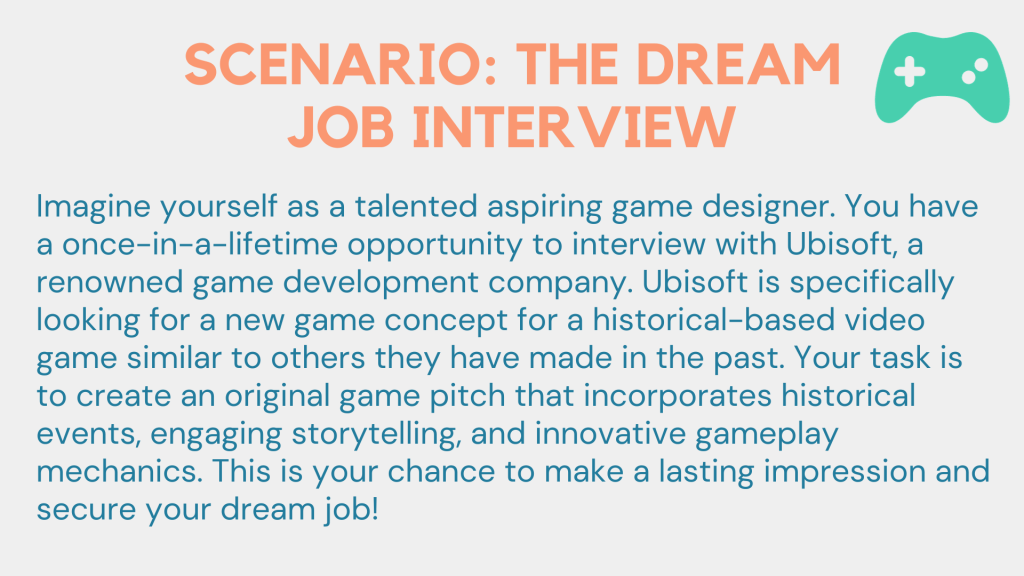
Guiding your students to select a time period for their game concept can be a challenge. Fear not! I include several suggestions like the 100 Years War, Ancient Aztec and Mayan cultures, or the Russo-Japanese War if they find this a challenge.
Ideally, your students have already had some exposure to lots of history and will have some ideas of what they would love to make their focus to really dive in deep and create an immersive world for their video game pitch.
Week 2: Flushing out the Details
Once the proposals are in, students are guided through historical and cultural research using the provided checklist. Encourage them to delve deep into the chosen era and support the creation of a captivating storyline.
You’ll remind them that one of the challenges is that their story can’t alter the course of history. However, it can certainly bend it- here is where the critical thinking skills really get sharpened.
This is where you will want to sprinkle in some mini lessons on story building and help students develop their narrative elements, guiding them to craft immersive and well-rounded characters that seamlessly integrate into the historical setting they’ve chosen.
Emphasize the importance of a compelling exposition that not only establishes the world and time period but also sets the stage for the conflict that propels their characters on an engaging journey.
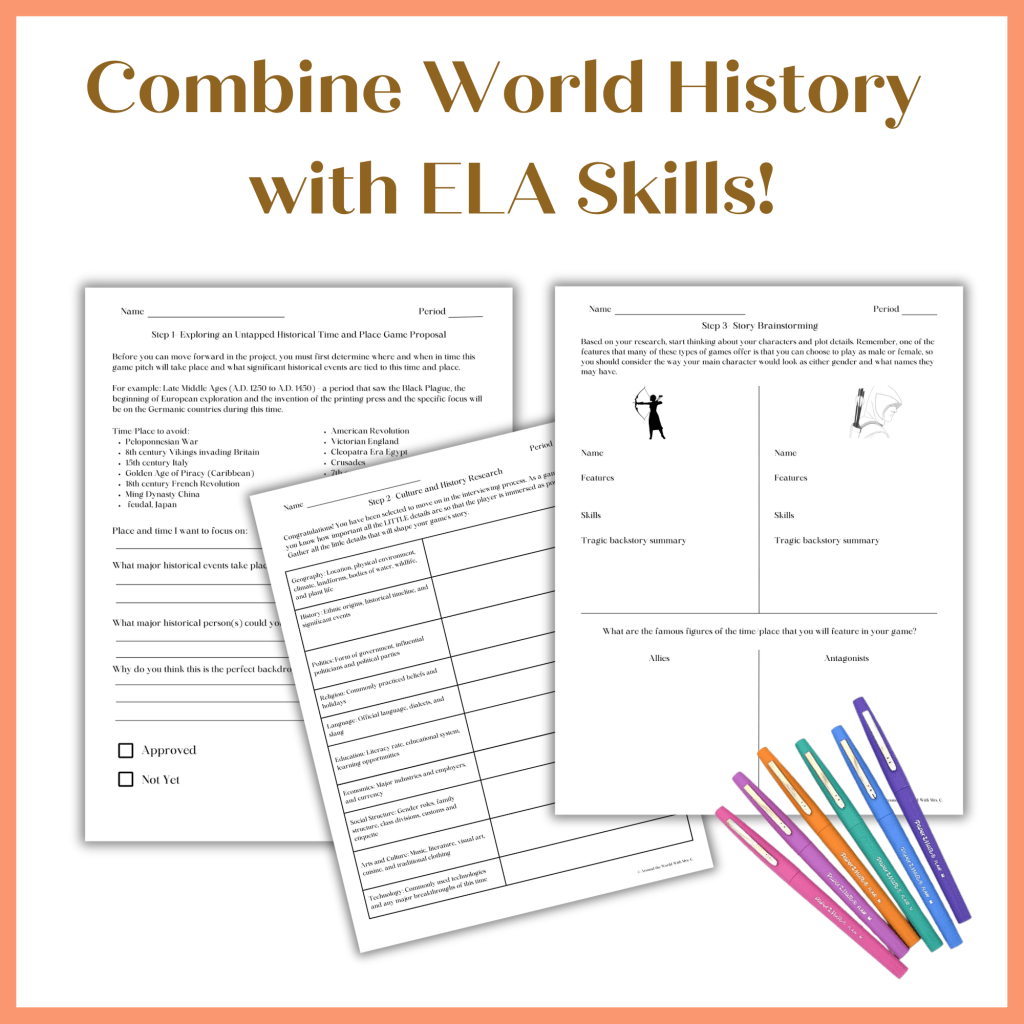
Encourage students to build tension through the rising action as their characters acquire skills, forge alliances, and confront initial challenges, leading to a climactic encounter with a formidable opponent.
Finally, ensure that the falling action and resolution not only bring closure to the narrative but also resonate with the historical authenticity they’ve worked hard to maintain. Through these details, their stories become not just a gaming experience but a thoughtful exploration of history.
Week 3: Visual Storytelling
This week, focus on the visual aspect of storytelling, ensuring that students understand the power of compelling visuals in conveying their historical narratives. In the teaching tips provided, I suggest you share this hilarious yet enlightening video highlighting common pitfalls in visual presentations, igniting a discussion on effective design principles.
This is a funny way of showing our students what NOT to do in their presentations.
Guide students through the creation of visually stunning storyboards or video trailers using platforms like Canva, PowerPoint, Prezi, or CapCut, providing them with the tools to bring their historical game concepts to life.
You would also want to stress the importance of proper image attribution, empowering students to ethically showcase their creative work while also being a good digital citizen.
The world of AI art creation is also a fun way to approach this, but can also lead to a great conversation on how they can indicate that it was AI generated (or if they even need to!).
Week 4: Prepare for the Grand Presentation

As the final week approaches, shift gears to prepare students for their big presentation. Here, you may want to teach effective mini lessons on presentation skills, emphasizing organization, visuals, and persuasive pitching. Help students compile their research, character designs, storyline, and gameplay mechanics into a cohesive game pitch presentation.
Consider going the extra mile and arrange for an authentic audience, inviting parents, community members, or fellow staff to witness the creativity and innovation your students have poured into their projects. This elevates the experience, giving students a chance to shine beyond the classroom. I found this to be an easy ask by just mass emailing all the parents first and then asking admin if any of the school sponsors would be open to coming in to help give feedback to students on their work.
This PBL project isn’t just about gaming; it’s about unlocking the potential within your students and showcasing their talents to the world.
Ready to bring this PBL project to life?
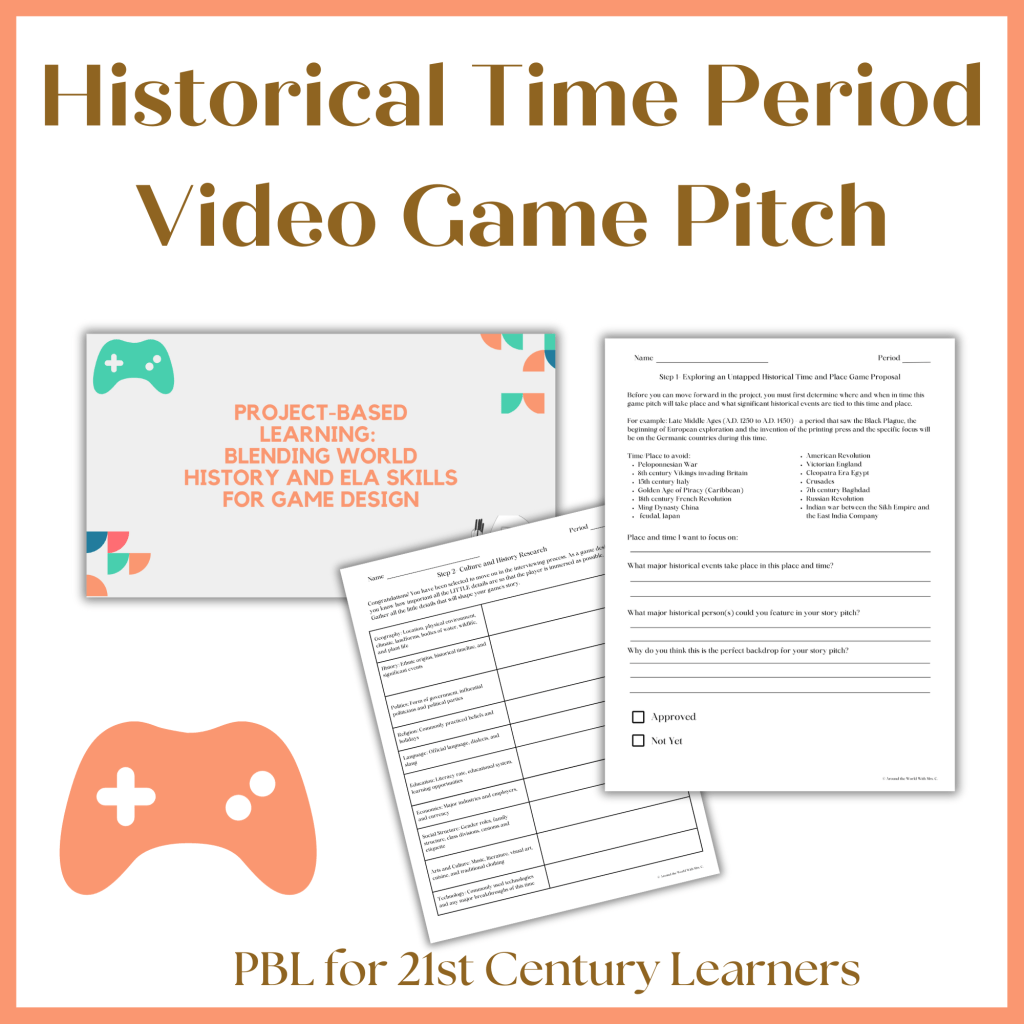
This transformative historical game design project not only energizes your classroom but also equips students with invaluable skills that extend beyond the gaming realm. By seamlessly integrating world history, ELA skills, and the excitement of gaming, this real-world project captivates high school students, fostering a dynamic and immersive learning experience.
Other educators are already having great success with this project!
⭐⭐⭐⭐⭐ I used this with my social studies students. So engaging!
Mary Elise M.
This product provides educators like you with everything you need to get started today!
It includes:
- lesson plans
- resources
- rubrics
- and step-by-step teaching tips
With this, you can take a breather from extensive lesson plans and just focus on what you do best- TEACH!
Join my weekly newsletter!
Would you love to get weekly tips and resources for teaching secondary English delivered right to your inbox? Click here to join!
 Around the World With Mrs. C