

Teaching Literary Analysis Through Archetypes
A few years ago I found myself beginning my journey into teaching World Literature to 10th graders. The first 2 weeks of school can be challenging. Your classes are leveling out. You are trying to build relationships while also starting off with some content.
Many of my fellow teachers were terribly uncomfortable with World Literature since they were far more versed in American Literature. However, since I was a young child, I have been fascinated with stories, characters, and well, just about ANYTHING that would carry me away. I was one of the few kids who could spout Arthurian lore and Shakespeare at the drop of a hat.
But, where to begin with bringing this passion to my students? And how do I simultaneously deepen their literacy and analysis skills?

As English teachers, we have the important job of helping students find the deeper meanings in texts. Teaching them about archetypes can help them understand complex stories, characters, and themes better. Through archetypes they can more deeply understand character dynamics, and appreciate the profound interplay of symbols and themes.
In this blog post, I will delve into the art of teaching literary analysis through the lens of archetypes. We’ll explore what archetypes are, why they matter in literary study, and practical strategies for incorporating them into our teaching toolbox.
Understanding Archetypes:

First, lets be clear what archetypes are and why they can help our students deepen their literary analysis skills.
Archetypes, derived from the Greek word ‘archetypos,’ meaning “original pattern,” are recurrent symbols, characters, motifs, or situations that embody universal themes and motifs. These primordial images permeate myths, folklore, literature, and even our collective unconscious, serving as fundamental building blocks of storytelling.
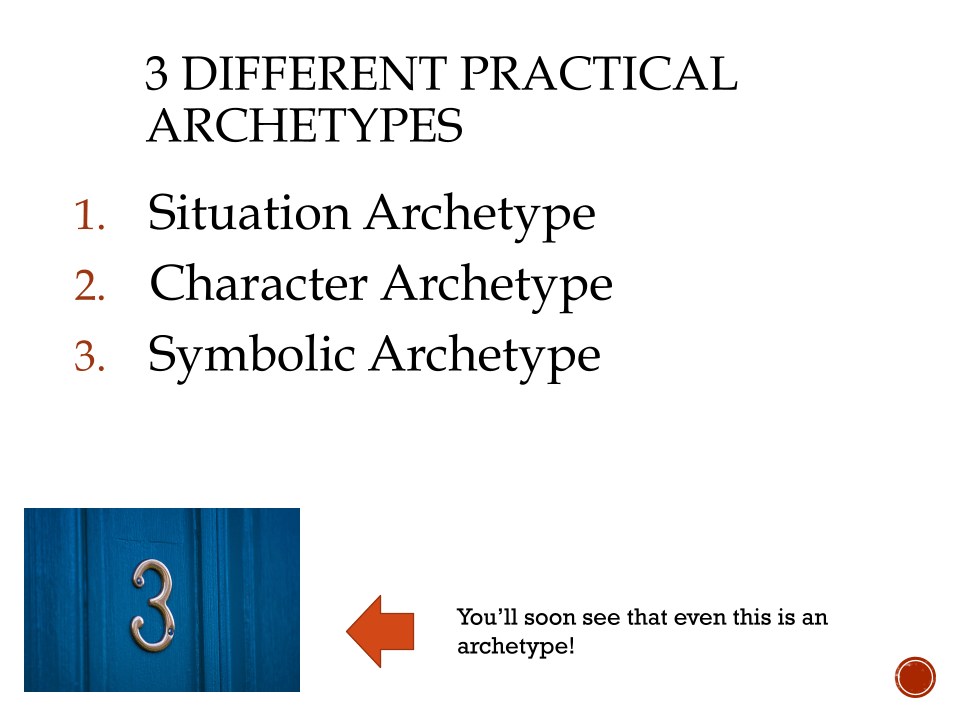
There are 3 major types of archetypes:
- Character Archetypes: These are recurring character types that embody specific traits or roles, such as the hero, the mentor, the trickster, the damsel in distress, and the villain.
- Symbolic Archetypes: These are recurring symbols, colors, or objects that carry deeper meanings, such as the journey, spirals, the descent into darkness, and the rebirth.
- Situational/Plot Archetypes: These are recurring narrative patterns or motifs, such as the hero’s journey, the quest for redemption, the battle between good and evil, and the coming-of-age tale.
Why Teach Archetypes?
Now, you might wonder, why are archetypes significant in the study of literature? Here are a few reasons:
- Universal Relevance: Archetypes resonate across cultures and time periods, tapping into fundamental human experiences and emotions. By understanding archetypes, students can connect with literature on a deeper, more profound level.
- Analytical Framework: Archetypes provide students with a structured framework for analyzing characters, symbols, and themes within texts. They offer a lens through which students can interpret and dissect complex narratives, unraveling layers of meaning beneath the surface.
- Critical Thinking Skills: Studying archetypes cultivates critical thinking skills by encouraging students to recognize patterns, make connections, and draw inferences. It fosters literary analysis skills that are transferable to other texts and contexts.
How to teach archetypes:
Lets circle back now to my students. These are 10th grade high schoolers and I was looking for a meaningful way to teach them about archetypes to deepen their literary analysis skills.
When I first began teaching, the other 10th grade teachers had students making ABC books of 100 or so literary terms for the first week of school. The kicker though was that they had to use their phones to look up these terms which lead to a whole other issue.
Starting the first week of school having students on their phones the entire class time is just a recipe for disaster.
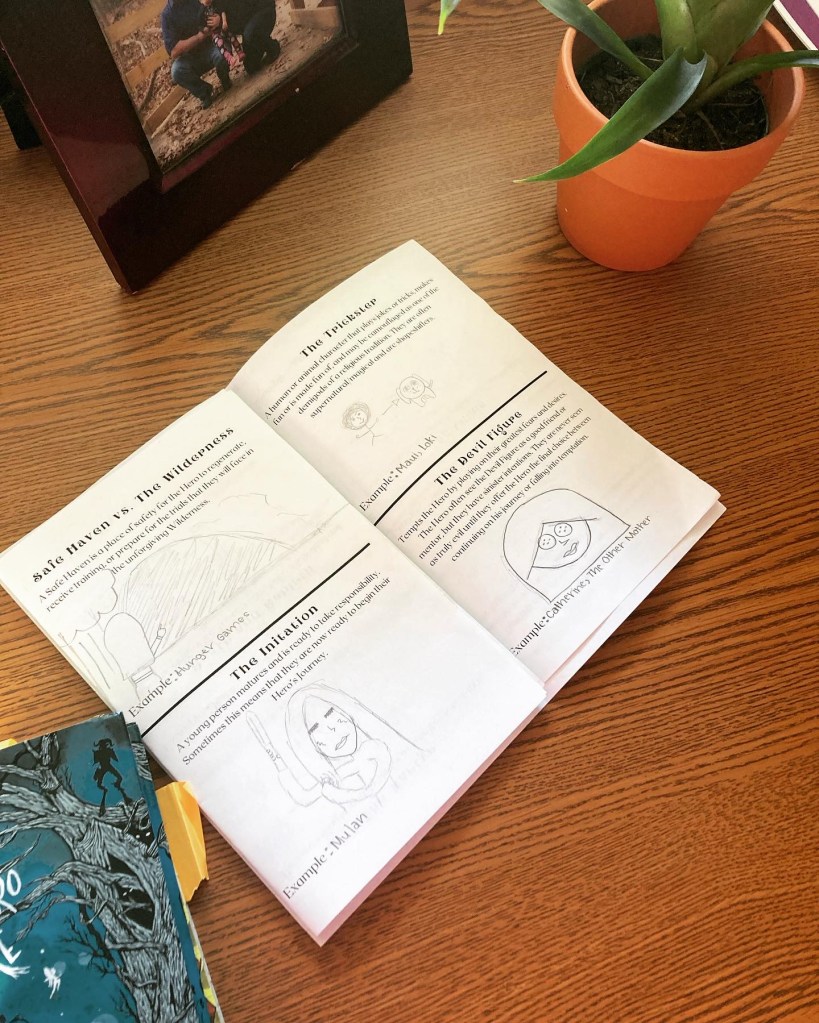
BUT, I thought, making a reference book for archetypes and make it hands-on could be a great start to the year!

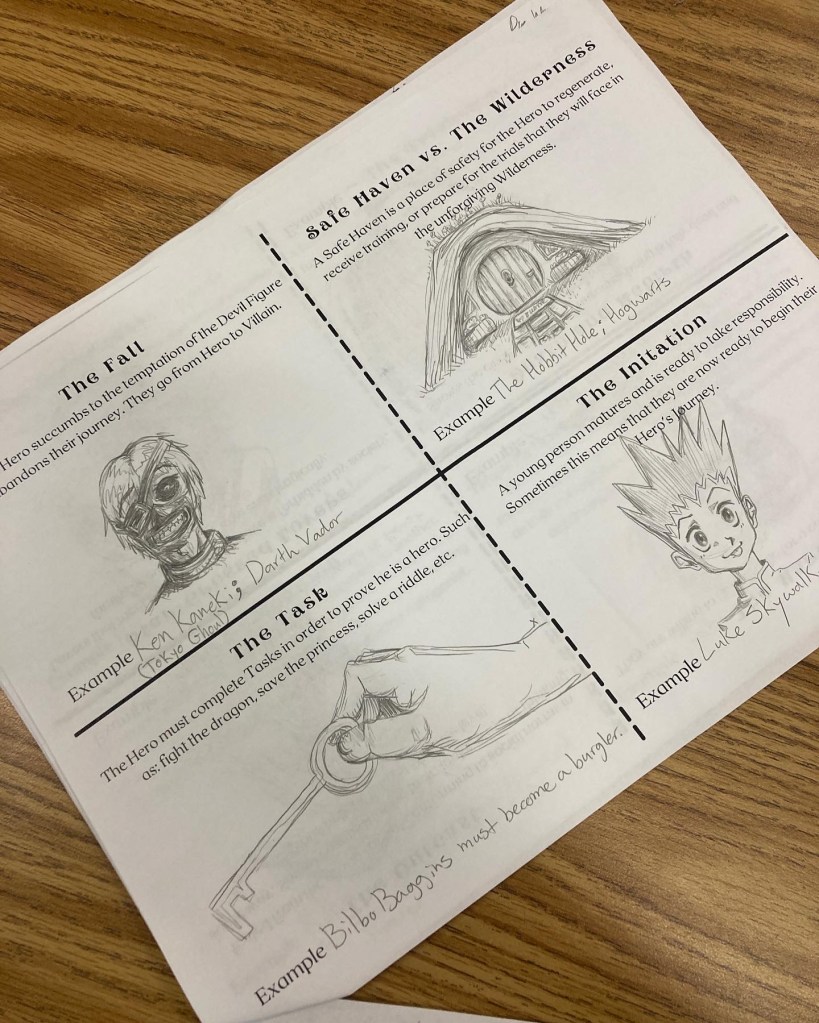
We now spend our first week together every year making their very own Archetypes Reference books.
Creating these books are pretty easy and engaging:
- The Archetype Name and Definition: First I introduce the term of an archetype and the definition/characteristic of this archetype.
- We then discuss as a class, different examples they have seen this archetype from movies, books, comics, games, etc. This way, they are noticing how they have already been identifying these patterns for years- now they just have a term for it!
- They make a quick drawing and record examples that resonant with them.

Modern Archetypes Examples
If you are new to this idea and are wondering what kind of pop culture examples students can equate with different archetypes. Here are a few ideas!
The Hero
- Link from The Legend of Zelda series – A young hero chosen to rescue Princess Zelda and defeat evil forces.
- Harry Potter from Harry Potter series – A classic hero’s journey from ordinary boy to savoir of the wizarding world.
- Lara Croft from Tomb Raider series – An adventurer and archaeologist who takes on dangerous quests.
The Damsel in Distress
- Princess Peach from Super Mario games series – Frequently kidnapped by Bowser and rescued by Mario. However, she is VERY different in the new animated movie!
- Princess Zelda from The Legend of Zelda series – Often captured by Ganon and rescued by Link.
The Devil Figure
- Emperor Palpatine from Star Wars series – The manipulative Sith Lord who seeks to control the galaxy.
- Diablo from Diablo series – The Prime Evil who spreads chaos and destruction.
The Jester
- Deadpool from Deadpool series – A wise-cracking anti-hero who often breaks the fourth wall.
- Daxter from Jak and Daxter series – A humorous and talkative ottsel who provides comic relief.
- The Genie from Aladdin series – A playful and comedic character who helps Aladdin with his wishes.
Final Thoughts
My students keep these books all year long to refer back to and use all year long to help with analysis of the various texts we cover. It truly helps to bring their analysis skills to a whole new level and an ability to connect with the texts in a more meaningful way.
My students have commented in the past few years what a difference this book has made to them and understanding literature more deeply. It made me smile earlier this year when a previous student saw me in the hallway and he exclaimed that in his Lit class that day they were reading a text and he remembered, “Water means rebirth!”.
That’s when I knew that it was a tactic that helped many of my students long after they left my classroom. I hope that this tidbit helps anyone out there in the World Literature teaching cosmos!
This activity is also included in this unit that I also LOVE starting the year off with!
Get Started Today!

If you are wanting to have your students get started right away and deepen their literary skills, you can grab this resource now. It is easy to begin with right away and watch your students’ skills skyrocket!
Join my weekly newsletter!
Would you love to get weekly tips and resources for teaching secondary English delivered right to your inbox? Click here to join!
 Around the World With Mrs. C
One thought on “Teaching Literary Analysis Through Archetypes”