

Greek fatalism stemmed from the belief in the omnipotence of the Fates, who determined the destinies of mortals. This idea of predestined fate influenced various aspects of Greek life, including religion, philosophy, and literature.
The Fates, also known as the Moirai, are three sister goddesses responsible for assigning destinies to mortals and cutting their life’s cord when they felt it was time. Their names were Clotho, Lachesis, Atropos. As with most trinities, they equally share the power of Fate.
Clotho spins the thread, Lachesis measures it, and Atropos cuts it.
There power was so great that not even the gods could alter the decisions of the Fates. However, there are several myths of these women trying to appease or give information to the Gods/Goddesses(as you’ll see later in this post).

Even though they were equals in this endeavor, Atropos was the most feared and she was often called “She Who Cannot Be Turned”. This is due to the fact that she is the one who makes the final decision on when a person’s thread is cut.
In Greek art forms the Fates were first depicted as young, attractive women and later they were turn into old fearsome crones. In literature they were typically seen as older as well.
The Fates’ have a role in various myths and interact with gods and mortals alike. Depending on the myths you read, they are either daughters of Nyx or Zeus and Themis. However, the story of Nyx being the parent is generally the one that was accepted.
In this post, we will look at how they are seen in several of the Greek myths about heroes like Hercules, Achilles, and Atalanta.
The Fates & the Birth of Hercules

Alcmene, mother of Hercules, was in labor, attended by the Fates and Eileithyia, the goddess of childbirth. The Fates and Eileithyia sought to prolong Alcmene’s labor to appease Hera, who was angered by Zeus’s infidelity. Galinthias, a friend of Alcmene, deceived the goddesses by claiming Zeus had fathered a child, thus ending Alcmene’s suffering.
Angered by the deception, the Fates punished Galinthias by transforming her into a weasel, altering her identity and behavior. Hercules was born despite the Fates’ initial interference, showcasing the power of human resilience against divine intervention. Galinthias faced the consequences of her actions, demonstrating the Fates’ uncompromising enforcement of destiny.
This begs us to ask, “How do Hera’s antagonism and Zeus’s protection reflect the idea of fatalism in Hercules’s life?”
Later in his life, Hera again causes havoc by cursing Hercules to think his family were violent intruders and he slaughtered them all. Hercules is given twelve labors as a form of penance. A great question to pose to students here would be: Do you think Hercules’s completion of these tasks was driven by fate, or by his strength and determination?
The Fates & Achilles
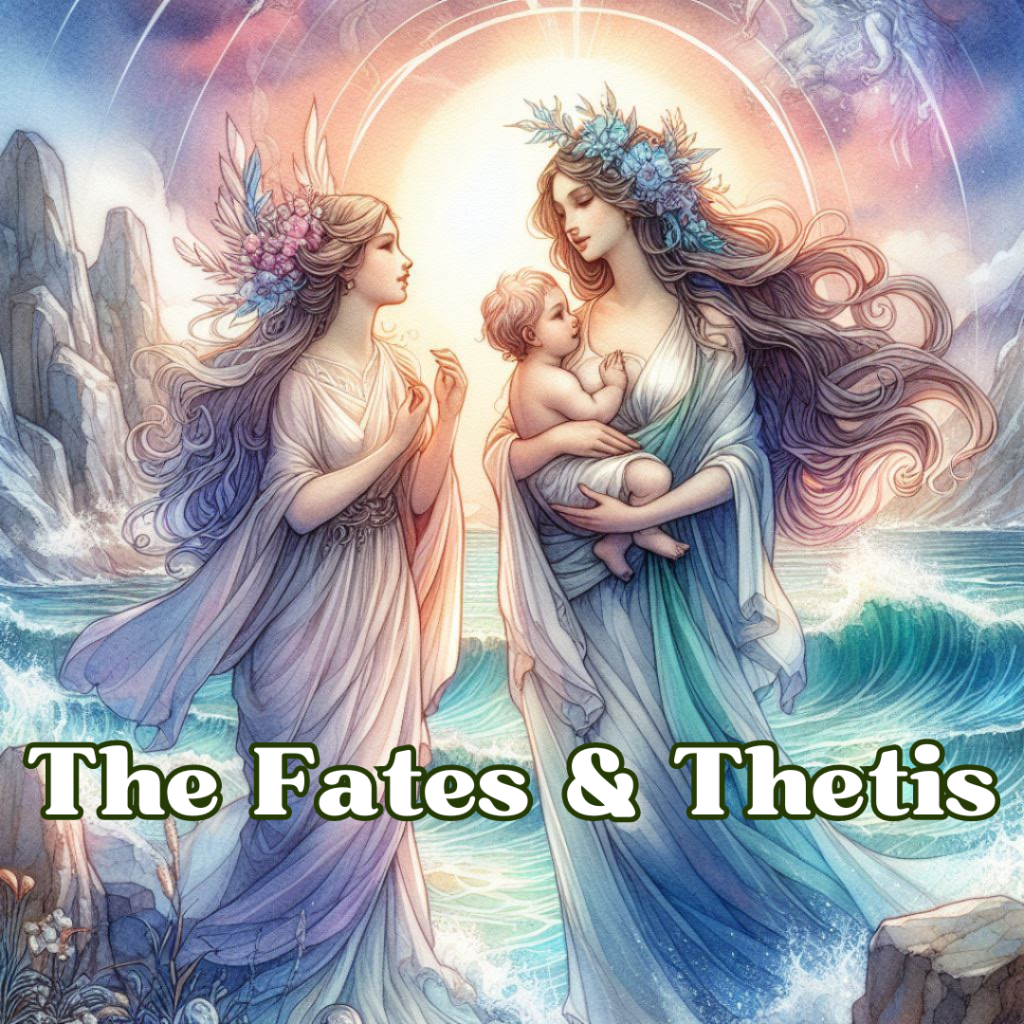
Achilles’ fate was intertwined with the prophecy regarding his life: his mother, Thetis, learned from the Fates that Achilles would die young if he went to Troy, but he would gain everlasting glory. Thetis, attempting to protect her son, hid him among the women at the court of King Lycomedes on the island of Skyros.
However, despite his mother’s efforts, Achilles eventually fulfilled his destiny by joining the Greek expedition to Troy. Throughout the war, he was aware of his impending death but chose to pursue glory nonetheless.
The Fates & Meleager
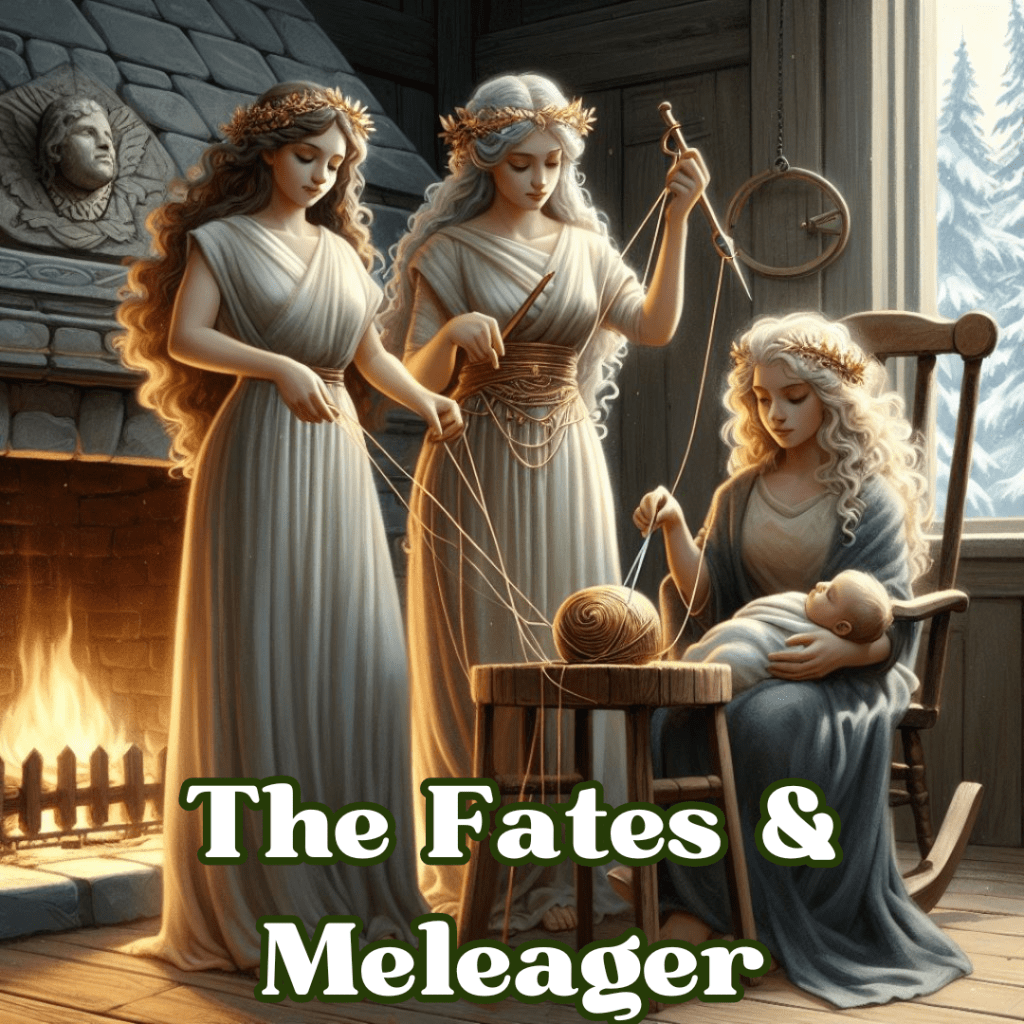
When Meleager was seven days old, the Fates appeared and declared that Meleager would die when the log that was burning in the hearth had stopped burning. Althaia (his mother) grabbed the log from the fire and hid it away in a chest in a desperate attempt to prevent his death.
Meleager, after neglecting to honor Artemis, faces the wrath of the goddess who sends a deadly boar. He joins a hunt to slay the beast, aided by Atalanta, who deals the first blow. Meleager’s decision to gift the boar’s skin to Atalanta triggers conflict with King Thestios’ sons, whom he subsequently kills.
In her grief, Meleager’s mother rekindles the prophetic log, fulfilling the Fates’ prediction of his demise.
Teaching Ancient Greek Mythology and Fatalism

Fatalism instilled a sense of resignation to one’s fate, as seen in Greek tragedies where characters often struggle against inevitable outcomes. The belief in fate also served as a moral lesson, emphasizing the consequences of human actions and the limits of free will in the face of divine decree.
By sharing this with your students before reading any of the Greek myths can help to deepen their analysis and understanding of character actions.
For example:
Knowing that it would lead to his death. why did Achilles choose to still go to Troy?
Would Meleager have chosen a different path if he had ever been told about the Fate’s prophesy?
If the gods couldn’t interfere with what the Fates said, then why were they trying to make Hera happy?

This also ultimately leads to a conversation on Fate vs. Free Will. How do these myths collectively address the idea of fate versus free will? Do the heroes have any real agency, or are their lives entirely controlled by fate? How much of our lives is pre-determined and how much is our own free will?
If you are ready to dive into a study on this with your students, check out this product to teach Fatalism in Greek mythology and several ancient Greek heroes!
In it, you will find:
- PDF texts for The Rage of Achilles, Perseus, The Golden Apple Race, and The Calydonian Boar-hunt
- 10 PDF handouts for students to analyze these myths through close reads, multiple choice questions, and constructed responses as well as answer keys
- 3 pages of possible writing and discussion prompts included in the teaching tips
- Video link and PDF handouts to learn about Hercules’ 12 Labors
- Presentation and CLOZE notes on The Fates and fatalism in ancient Greek culture
- Presentation on Ancient Greek culture
Would you like to go EVEN deeper and do an entire unit on mythical heroes all over the world? Check out this unit that also contains this study of Greek heroes!

Join my weekly newsletter!
Would you love to get weekly tips and resources for teaching secondary English delivered right to your inbox? Click here to join!
 Around the World With Mrs. C