

The first two weeks of the schoolyear is critical for establishing relationships with our students and setting up expectations for the year. This time sets the tone for a positive and productive classroom environment. Engaging activities and clear communication during these initial days can foster a sense of community and excitement for the year ahead.
As always, it’s even better when you can collaborate with others and really start to get those back-to-school juices flowing!

So, I reached out to a few other teachers on their top back to school activities. In this post, we are sharing our top activities for building community, setting up procedures, re-introducing academics, and supporting the social and emotional needs of our students.
Activities for Building Communities
I am a visual learner and one of the top ways to build your classroom community is to learn all those names quickly while also learning some fun tidbits about each student. To do this, I always like to have students create name tents.
You don’t have to have anything fancy. Just paper and markers really. But, I like to provide some fun art supplies so they can personalize it a little and bring their personality to life.

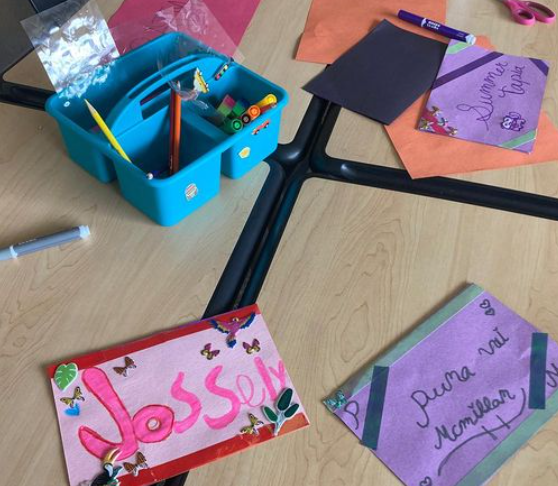
However, if you want something more structured, I love these name tents from Spark Creativity! They have some fun personalization aspects to them that can help you connect with your students as well.
For the first week, I give them back each day and at the end of class, I ask them to write on the back. They are responding to things like:
- a question I asked
- share something they are worried about
- share something they are excited about
- things they wished all their teachers understood about them
I take the time to reply to each one. This often shocks them and sets up the expectation that I will always take the time to hear them out about anything.

Allison McManus at Mrs. McManus ELA is a middle school teacher who believes that teaching is a performance, and you don’t know what your audience needs on that first day.
Seating Chart Challenges puts some of that BTS work on the students to start class and allow teachers to:
🌟 find leaders
🌟 find the kids that don’t follow directions
🌟 find the team players
🌟 see the groups you’ll have to separate… 😌
…the list goes on, even for such a simple concept.
Here’s how it works. As your students come in, display directions for how they should line up and then sit on your board. But the trick is, don’t just ask them to sit in alphabetical order. Make it more interesting, like, “line up in chronological order according to how early you went to bed last night. Latest sits in seat 1.” Maybe even throw in a, “do this SILENTLY” direction.
Don’t just do it on the first day, though. Do it for the first couple of days because it gives the best kind of background knowledge about your students. Here is a database of 35 options, separated by categories like:
- Let’s Get to Know Each Other
- Seating with a Purpose (Or Content Specific Questions)
- Grouping Challenges
A colleague turned Mrs. McManus onto Seating Chart Challenges several years ago and, since then, she has used them at the beginning of every school year, as well as for creating groups and assigning new seats throughout the year. Are you going to give it a try? Share them and tag @mrsmcmanusela on Instagram!

Another engaging first-week activity comes from Danielle Hicks of English Classroom Architect who uses hexagonal thinking to develop classroom norms. This strategy, which has gained popularity in education recently, serves multiple purposes:
- It gets students talking and collaborating from day one.
- It introduces important classroom routines like group work, gallery walks, and whole-class discussions.
- It gives students agency in creating their classroom environment.
The activity begins with students receiving hexagons featuring various values. In groups, they arrange these hexagons, connecting related concepts. After comparing arrangements, the class discusses the most important convergences of ideas.

This discussion serves as a springboard for developing classroom norms. Students work in groups to propose three to five key norms, encouraging thoughtful prioritization. A gallery walk follows, allowing students to view other groups’ ideas.
The process concludes with a whole-class discussion to reach a consensus on the final set of norms. Importantly, each class develops its own unique set of norms, respecting the distinct personality of each group.
This is not a quick activity – but the time spent is worth it and sets a tone of active participation and collaborative learning for the year ahead.
Activities for Establishing Routines and Procedures

I love finding ways to add in more writing as often as I can. One way to do this is writing warmups! Regular writing warmups in high school can greatly benefit students. They help to improve writing skills by providing consistent practice, making it easier for students to express their thoughts clearly.
You can have students complete these every day or you could do Writing Wednesdays! No matter what, the point here will be that you will want to make sure you keep it consistent with your students.
With this product, there are 50 writing prompts so that you always have a highly engaging writing activity on hand that students can complete!

Jeanmarie from McLaughlin Teaches English likes to get students into the classroom routine of bell ringers on the very first day of school. To make this happen, she greets students at the door on the first day and as they enter, she hands them a warm up activity. This usually centers around a get to know you survey and directions are posted on the board. The survey asks questions about their outside of school lives and about their favorite books (even if they have to go back to elementary school 😅).
This gets students used to the idea that they will be expected to get right to work each day. Since we don’t usually begin school with a full week, this pattern continues for the first few days.
Then on the first Monday of the first full week, we begin our “Of the Week” bell ringer series which really gets those routines in place. These bell ringers follow a text like a poem, excerpt from fiction or a speech for a week. They follow a predictable pattern that students grow to expect: Mondays focus on meaning, Tuesday through Wednesday focus on elements of craft and Fridays focus on a quick writing task.

If you would like to see what each of these look like, you can grab a free Bell Ringer Sampler set that includes 10 different styles of warm ups (including several styles of “Of the Week” bell ringers).
Activities for Re-introducing Academics
It’s not exactly flashy stuff here, but I love to assign a Quill.org diagnostic in the first 10 days of school. This way I can get a feel for where everyone is as far as grammar goes, set up goals for my students, and see any mini lessons I may need to prepare for the whole class.
Quill is incredibly easy to use and you can get so much for the free version if your school can’t pay for the full version for you!
There are a lot of tech tools that I love and make your classroom run smoothly. So, if you would like to read more about Quill and my other top tech recommendations, check out THIS POST!

Missy Davis, the creator of the English Teacher Vault, has found that the first week of class is a great time to gauge students’ writing and grammar skills, while setting the tone for the year–that this class will be a place of focused learning but also a safe place for risk taking in writing where students can even play with language.
Missy has created a free parts-of-speech unit (download it here!) where you can determine where your students are with their understanding of grammar skills. These engaging resources allow students to play with language, and they’ll start to see how understanding grammar can give them tools for better writing. These resources are so intentionally designed that they work for all levels of high school students.

Much better than your run-of-the-mill grammar worksheets, these lessons include beautiful mentor sentences, sentence frames for imitation, and engaging video clips for your students to use as prompts. Follow up writing activities are included as well as hands-on games for review!
When you start the year with a few engaging grammar lessons you’ll have a baseline for where your students’ writing skills are, and your students will immediately see that your classroom will be a place of meaningful learning where it is ok (and even encouraged) to take risks in writing!
Get those 7 free grammar resources here!
SEL Activities for Back to School
I love completing this activity within the first 10 days of school. It is perfect for bringing light academic standards back and also engage in some fantastic SEL conversations!
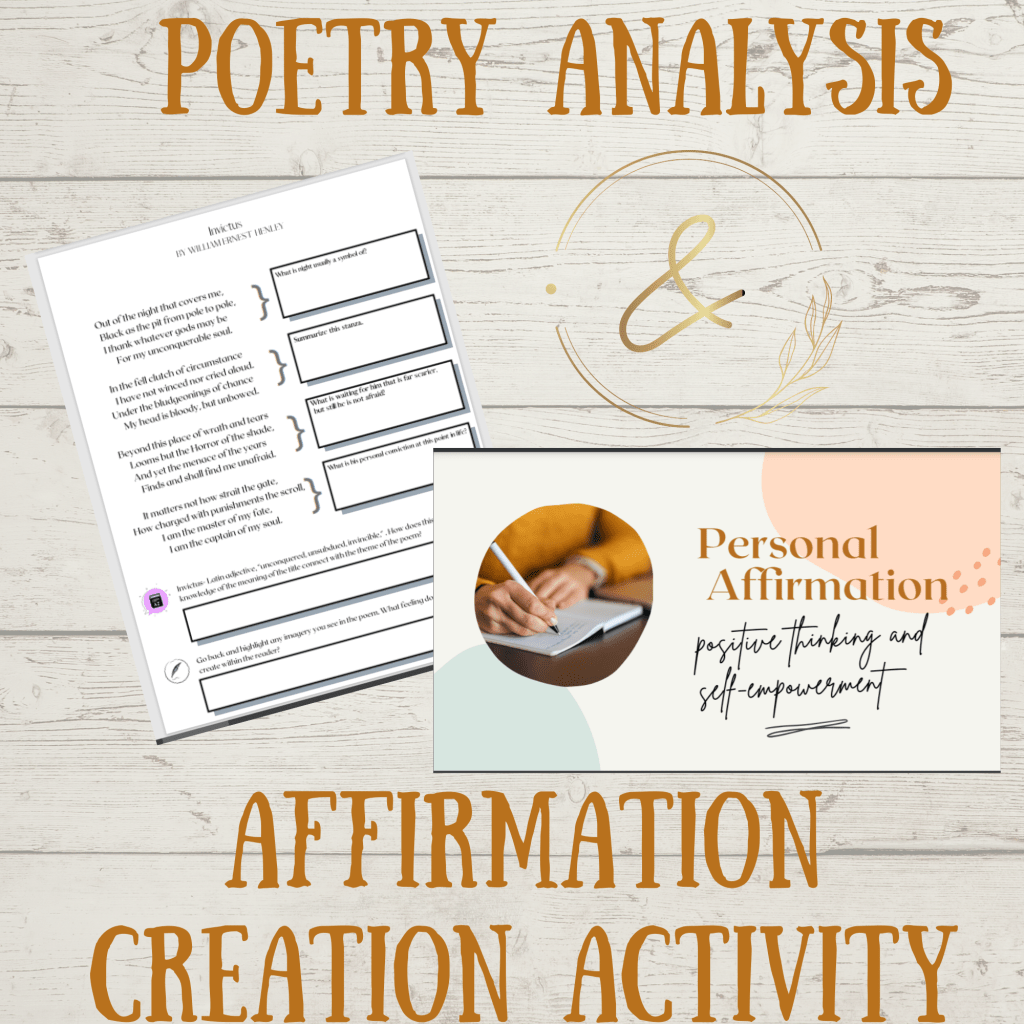
Day 1- a deep analysis of the poem Invictus. I started this by playing this audio of Tom Hiddleston reading it (because all things are better when Loki is saying it!). After completing the analysis and discussing the poem and the poet, we talk about how this poem specifically reads like a personal affirmation to keep his mind strong during such a hard time in his life.
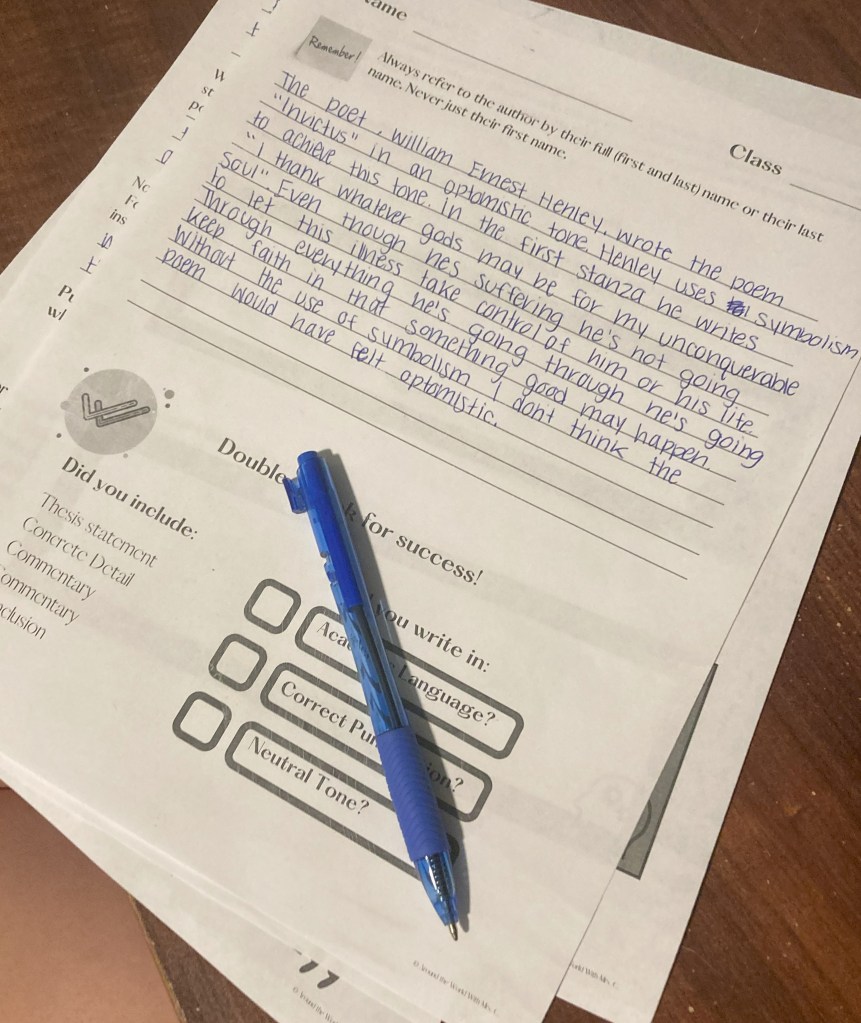
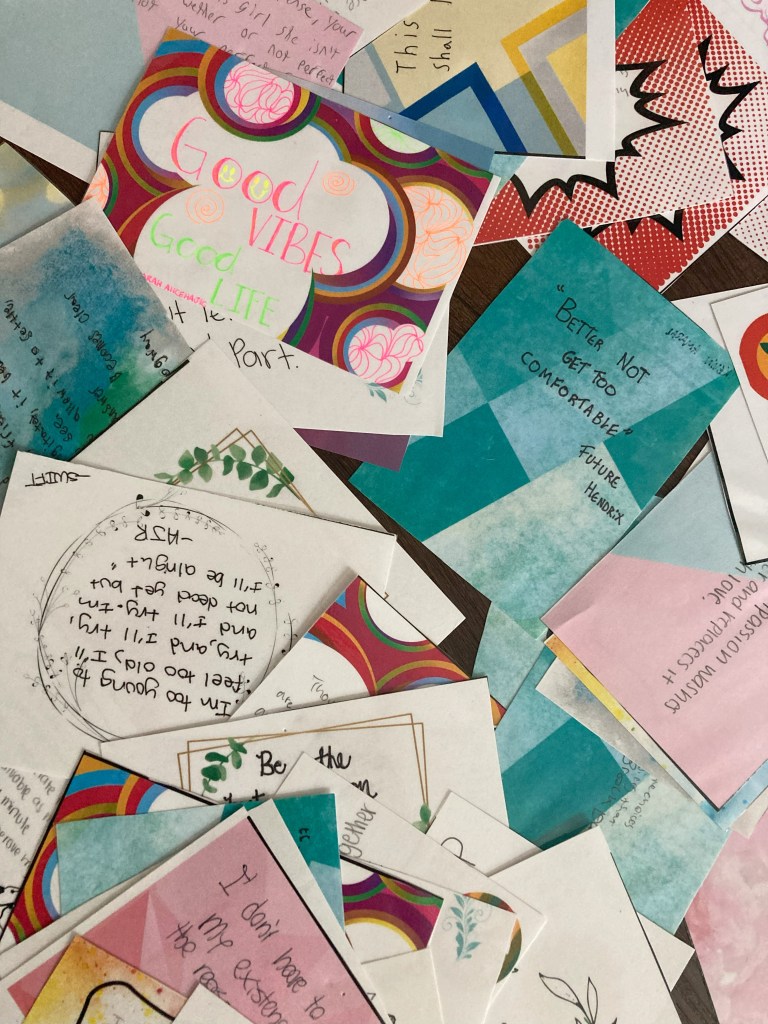
Day 2- we discuss the author’s physical ailments and constant pain he had been in when he wrote the poem. We then shift the conversation to overcoming tough times in life, before sharing a short presentation on affirmations for inner strength. Then, students get to work on making their own!
Day 3- We completed a Schaefer paragraph analysis of the poem and the tone created. By reviewing Schaeffer writing and guiding them through the writing, helps to lightly bring back those academic standards we will build on all year.
What I extra loved about this:
❤️ it combines some academic rigor with SEL goodness!
🥰 I had so many students comment that they have always struggled with and disliked poetry but they absolutely loved reading this poem in such detail and being inspired by it.
⭐ You could hang them on an inspirational wall, laminate them and give it back to the student when they need a pick-me-up, or both!
Final Thoughts on Starting the Year Strong
While there is no one-seize-fits-all approach to starting your year, we hope that these activities we have shared have given you lots of inspiration on ways to start the year strong. The first 10 days are so important, so make sure you have a plan for building communities, setting in place routines, reintroducing academics, and attending to SEL needs.
Would you like a few more ideas? Check out this blog post as well where I share even more engaging back-to-school ideas!
 Around the World With Mrs. C