

“The Fall of the House of Usher” by Edgar Allan Poe is a haunting tale that high school students LOVE! It follows the narrator as he visits his childhood friend, Roderick Usher. He finds Roderick in his decaying family home.
The story unfolds with an ever-growing sense of gloom and dread. It reflects the deteriorating mental health of Roderick. It also shows the declining physical health of his twin sister, Madeline.
As the plot continues, it is revealed that the Usher family is plagued by a hereditary curse. This culminates in the end of not only the Usher family, but their home as well.
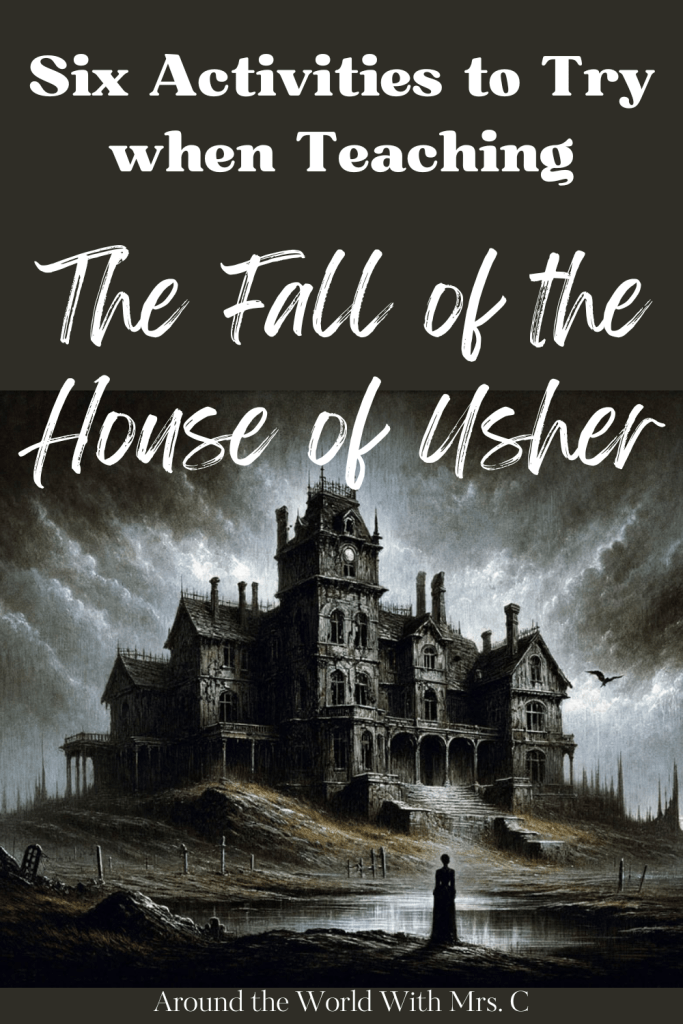
This is the perfect story to use in the Fall season around Halloween. It also works well in units on fear and paranoia. And should be a staple in any Dark Romantic unit. Here are 6 activities to try out when you are teaching this chilling short story!
Animated Adaptation of “The Fall of the House of Usher“
I love to first show this animated short film version of the story. It gives students an engaging overview of the story before we dig into the language. I find this is especially helpful for my ELL students who are already struggling with the language.

To build on this introduction to the story, we discuss the unsettling mood created by this visual representation. We then compare this with the opening scene of the story. This helps them understand how tone and atmosphere are conveyed differently in various mediums.
After watching, we discuss how the animation captures the eerie and unsettling feeling of the story. We also explore how Poe’s detailed descriptions add layers of meaning that the film might not show.
Comparing Poe’s “The Haunted Palace” with “The Fall of the House of Usher”
For something more challenging, first have students read Poe’s poem “The Haunted Palace” and later compare with the short story. This poem, is considered a companion to “The Fall of the House of Usher”. It uses the image of a decaying palace to symbolize a mind overcome by madness.
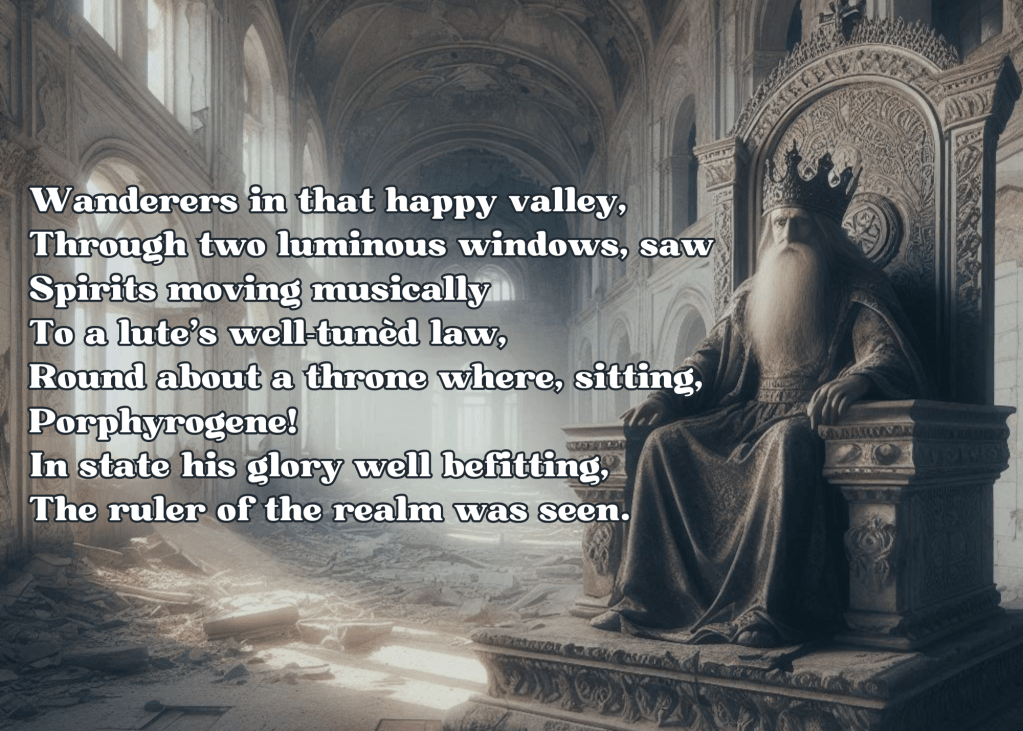
One example for this comparison can be with this quote:
“I looked upon the scene before me – upon the mere house, and the simple landscape features of the domain – upon the bleak walls – upon the vacant eye-like windows – upon a few rank sedges – and upon a few white trunks of decayed trees – with an utter depression of soul which I can compare to no earthly sensation more properly than to the after-dream of the reveller upon opium – the bitter lapse into everyday life – the hideous dropping off of the veil. There was an iciness, a sinking, a sickening of the heart – an unredeemed dreariness of thought which no goading of the imagination could torture into aught of the sublime.”
This description of the Usher mansion can be compared with the poem’s imagery of “two luminous windows” where “spirits” once moved “musically.” Both passages highlight a place that was once full of life and splendor. Now it is overshadowed by decay and a haunting presence. The “luminous windows” of the poem parallel the deteriorating house, with both symbolizing the decline from glory to ruin.
Reading Poe’s poem “The Haunted Palace” before comparing it with his short story “The Fall of the House of Usher” helps students see how similar themes and imagery are used in different forms.
Both the poem and the story use imagery of a crumbling structure to reflect the mental and physical deterioration of the ruler. I love how the poem’s meaning is broken down here!
Close Reads of “The Fall of the House of Usher”
Poe’s use of descriptive language and symbolism creates an unsettling atmosphere. This chilling ambiance makes it an excellent choice for honing literary analysis skills. However, his language can be daunting at first glance to our students.
To help with this, pull out the juiciest portions for students to zero in on! Pull close reads that heavily tie into the imagery and characterization prevalent. This way students can take their time going through important chucks that are critical to the overall story.
You can help your students to dive in deep to the imagery, characterization, diction, and mood with these close read handouts!
One Pager Illustrations of “The Fall of the House of Usher”

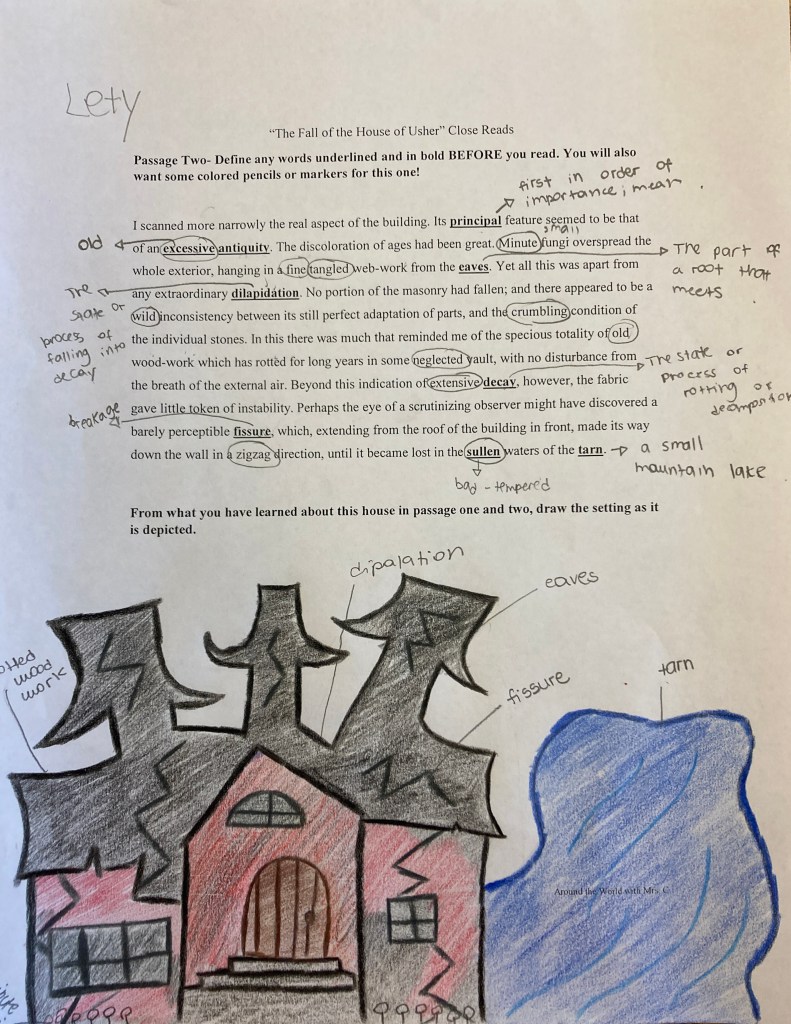

As you can see, I pulled small passages and my students first dig into the language that Poe uses. This way they are:
- learning new words
- deepening their understanding of the language
- take it a step further by transforming it into a visual
Through this process, students gain a more profound connection to the text. They translate Poe’s dark, atmospheric words into artwork and this artwork reflects their personal interpretation of the narrative. This can be especially helpful for ELL, SPED, and gifted students who could benefit from non-traditional methods of displaying their knowledge. However, this activity is truly great for ANY student!
Bloom Ball Group Analysis of “The Fall of the House of Usher”
This Bloom Ball activity for “The Fall of the House of Usher” offers a dynamic way for students to engage with Edgar Allan Poe’s Gothic masterpiece. It allows them to interact with the text creatively. It challenges students to create a 12-sided 3D ball. Each side is dedicated to a different aspect of the story, such as theme analysis, character exploration, and the identification of symbols and mood.

This activity encourages deep literary analysis and critical thinking. By constructing the Bloom Ball, students demonstrate their understanding of the text. They also creatively synthesize their knowledge and make connections between the story’s elements and its broader themes. This hands-on activity is an engaging way to bring Poe’s chilling narrative to life in the classroom.
Where Roderick and Madeline Really Vampires?
You can have a lot of fun having students re-examine the text to determine if Roderick and Madeline were actually vampires! Not only is it a lot of fun, but it also builds your students’ critical reading and thinking skills.

Students gather evidence from the text that supports the vampire theory. Such as the descriptions of their physical appearance, food aversions, their mysterious connection, and the strange events leading up to their deaths. You can have your students show off their findings in a variety of ways:
- challenge students to argue their case in debates, using textual evidence to back up their claims
- create a PSA one-pager warning others of two vampires on the loose and how to identify them
- write a persuasive essay
This not only engages students in close reading but also encourages them to practice persuasive writing and speaking skills. In this product, I have also included everything you need to have students complete this creative project that also sharpens critical reading and thinking skills.
Curious what other teachers have to say about this?
Students had so much fun determining if Roderick and Madeline were Vampires. What a fun way to go deeper with the text and have them look at things from a different perspective. The different project options were helpful and allowed all students to feel comfortable with the project.- Julie M.
Final Thoughts
“The Fall of the House” of Usher is a story that has so much to unpack that there is no wrong activity to use! Watching the animated version helps students to visualize the story as a whole. Close reads will help your students dig into the rich, descriptive text. Having them take it a step further by creating illustrations to bring that analysis to life. And Bloom balls or proving Roderick and Madeline were vampires challenge your students in fun ways!
Be sure to check out this resource for these NO PREP resources!

Join my weekly newsletter!
Would you love to get weekly tips and resources for teaching secondary English delivered right to your inbox? Click here to join!
 Around the World With Mrs. C