

Winter provides a unique opportunity to delve into diverse myths and folklore, making it an engaging season to introduce your students to tales that capture the essence of the colder months. These stories, drawn from cultures around the world, are not just captivating but rich with themes of resilience, transformation, and the mysteries of the natural world.
In this post, I’ve gathered 6 winter-themed myths that are not the typical ones done to death. They offer fresh, thought-provoking material for classroom discussions. From Norse legends to Japanese folklore, these tales will invite your students to explore timeless ideas about nature, honor, and even the darker sides of winter.

Norse Mythology- The Death of Baldur
You can introduce students to the tradition of kissing under mistletoe by covering the myth of The Death of Balder from the Norse Mythology cannon. I personally love the Neil Gaiman version, but if you don’t have access to it- check out this site.
In this tale, Odin is plagued with terrible dreams of his son Balder dying. To try an keep this from happening, his wife (Freya) goes to every single living thing in all the realms and asks them to pledge that they will never harm Balder. Since Balder is so beloved everyone readily agrees.
However, she overlooks the unassuming mistletoe.
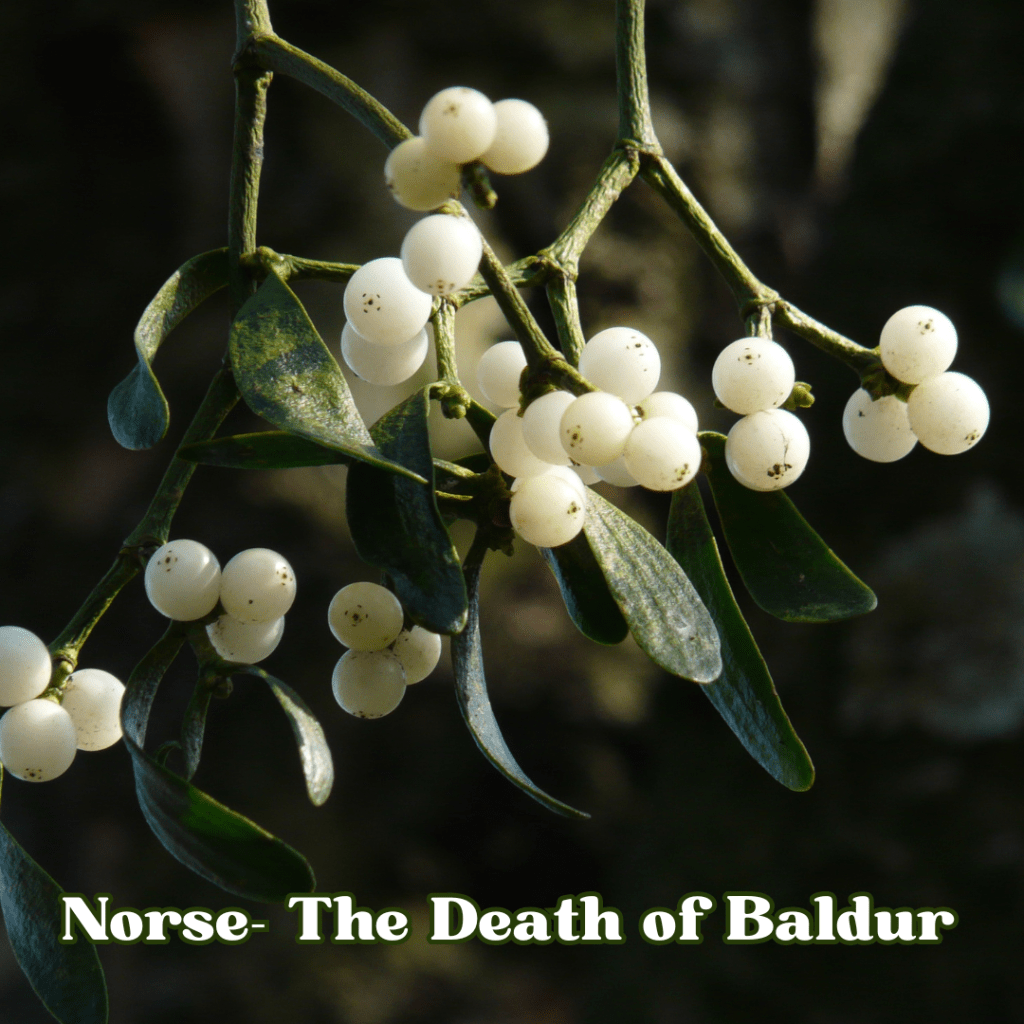
She realizes her mistake but also sees no way that this plant can ever bring harm to her son. So, she makes the tragic decision to leave it alone. Loki figures out this oversight and fashions a weapon out of mistletoe.
Through the events of the tale, Balder is killed with the mistletoe. In their grief, mistletoe ended up becoming a symbol of love. To always remember Balder, everyone would then kiss when they saw mistletoe.
These specific versions may not go into the actual tradition, but this story leads to it. You can find out more about the tradition of honoring Balder’s death by kissing under mistletoe here.
It’s also worth noting that this is the story that ends up being the catalyst for Ragnorok! You can use the Myths and Legends podcast Loki: Them Apples to cover this myth and 2 others involving the trickster god!

Iroquois Mythology- How Old Man Winter Was Driven Back
This is a story from the Iroquois nation about the harshness of winter and the coming of Spring. The story begins with Old Man Winter coming from his wigwam in the sky and building a lodge of of ice. His only friend, The North Wind.
This one winter, he and the North Wind were particularly harsh. A hunter and his son were trapped inside of their lodge with no food and a dying fire. Old Man Winter knocked on their door 3 times and the child returns the knocks. Old Man Winter takes offense to this.
However, as their fire finally died, “The South Wind gently opened the door, and a young chieftain, with a face like the sun, entered”. He advises them to throw blackberries at Old Man Winter when he returns since he is afraid of blackberries.
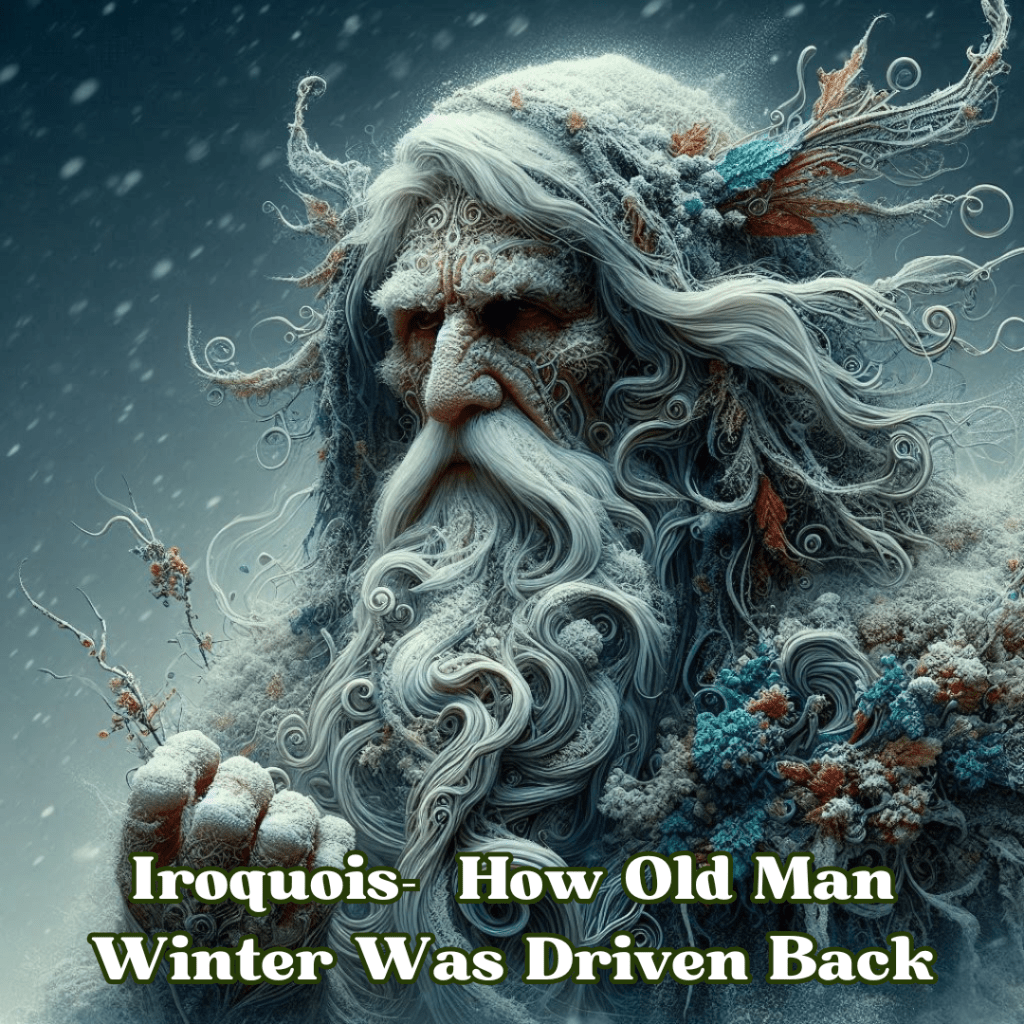
Blackberries mean sunshine and summer heat. Old Man Winter cannot stay where they are. He never visits the earth at blackberry time.
They do and Old Man Winter is scared away. It is reveled that the young chieftain is Spring and he forces Old Man Winter back to his wigwam in the sky.
This is a beautiful story and I wish I could find an oral telling of it, but you can find a print version here!
British Mythology- Sir Gawain and the Green Knight
My FAVORITE Arthurian legend of all time is Sir Gawain and the Green Knight! The tale of Sir Gawain and the Green Knight follows Sir Gawain, a knight of King Arthur’s court, who faces a mysterious and magical Green Knight. During a Christmastide celebration, the Green Knight arrives and challenges any knight to strike him with his axe, under the condition that the challenger will receive a return blow one year later.

At first, Arthur becomes enraged and plans to accept. However, Gawain bravely takes his place and beheads the Green Knight, who magically survives. A year later, Gawain journeys through harsh winter landscapes to honor his promise. He faces many challenges and temptations, but ultimately keeps his honor…. and his head!
The story connects to winter’s themes of endurance, reflection, and the challenge of staying true to one’s values.
Sadly, I usually don’t have the time to read through the entire tale with students. I problemed-solved this issue and created this multimodal approach to cover this amazing story in just 3-4 days!
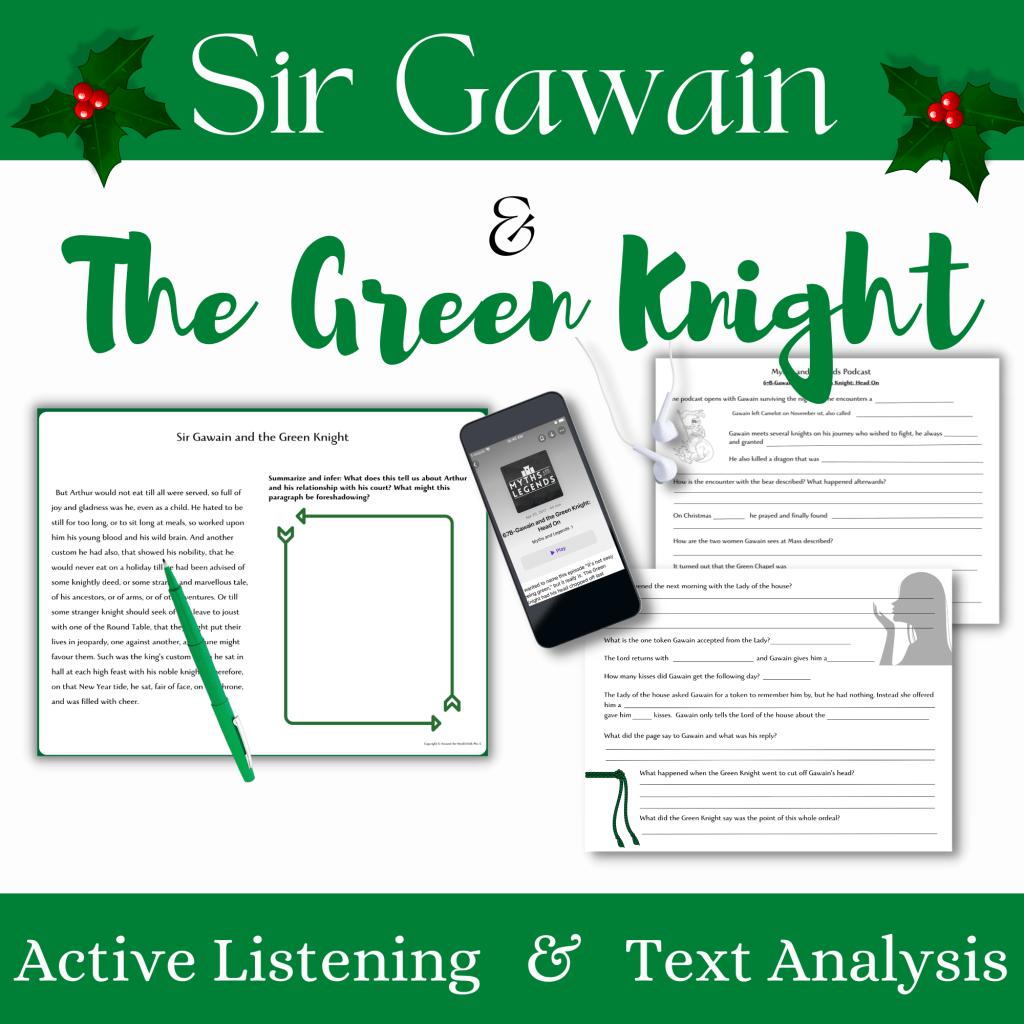
With this, students:
- read and annotate passages from the original tale’s opening scene
- go into detail with The Green Knight’s appearance and characterization of the others present
- have a little fun making a one-pager in-between modes
- finish out by switching over to a podcast episode from my favorite- Myths and Legends!
If you like this 21st century approach to this classic, you can grab it here!
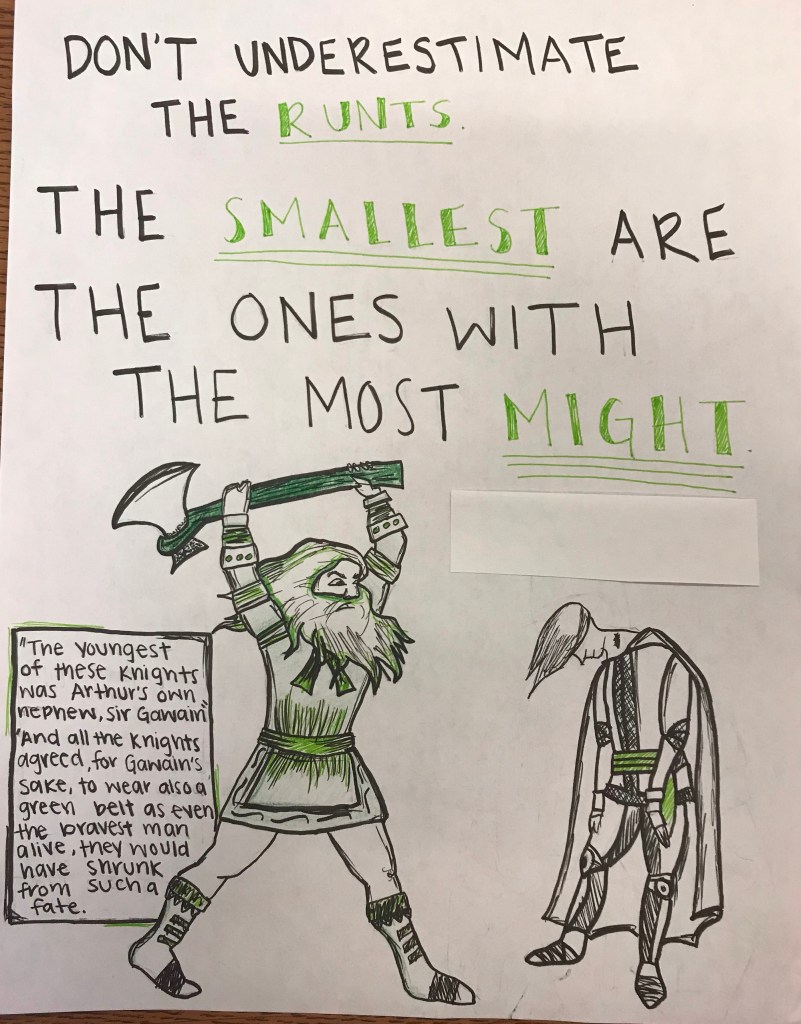
If you are looking for an extension to this activity, you can share the graphic essay version of Neil Gaimon’s article on why we need libraries . Discuss how the images created melded with the words and enhanced the mood and tone. Then challenge them to create a graphic paragraph that depicted the theme of the story with a piece of evidence and draw an image that connecting the two!
Here are a few that my students created:


Celtic Mythology- The Holly King and the Oak King
The Holly King and Oak King, two legendary figures in Celtic mythology, symbolize the cycle of seasons and the battle between light and dark. The Holly King represents winter and rules from the Summer Solstice to the Winter Solstice. The Oak King symbolizes summer and reigns from the Winter Solstice to the Summer Solstice.
Their myth is celebrated during both the Summer and Winter Solstices. It embodies themes of rebirth and balance. These themes reflect the Celts’ reverence for nature and seasonal rhythms. This enduring story invites students to explore how ancient cultures used myth to understand the natural world and life’s ongoing cycles of change.
This story provides a fresh re-envisioning of this centuries-old myth! This would be great to share with students after learning about the myth of the Holly King.

With this product you can introduce students to the Holly and Oak kings and challenge them to write their own modern version!
Japanese- Yuki-onna (The Snow Woman)
Of course, not all winter myths end happily… Such is the case with the Japanese story of The Snow Woman. However, this is a myth that teaches you to keep your word!
In Musashi Province, an apprentice woodcutter, Minokichi, and his master, Mosaku, are caught in a snowstorm and take refuge in a hut. While Mosaku sleeps, Minokichi sees a beautiful, ghostly woman in white, who freezes Mosaku to death with her breath. She spares Minokichi but warns him never to reveal her existence.

– “I intended to treat you like the other man. But I cannot help feeling some pity for you, – because you are so young…. You are a pretty boy, Minokichi; and I will not hurt you now. But, if you ever tell anybody – even your own mother about what you have seen this night, I shall know it; and then I will kill you…. Remember what I say!”
Later, Minokichi meets and marries a mysterious woman named O-Yuki, with whom he has many children. One night, he recalls the snow woman from his youth. Furious, O-Yuki reveals she is that spirit and vanishes forever, warning him to care well for their children, or she’ll return.
You can find a copy of this story here!
Germanic Cultures- Krampus
Of course, the winter months often brings stories of Father Christmas and other similar characters who bring joy and presents. However, in the Germanic cultures, there is another character who comes when you have been naughty… Krampus!
He is depicted as a horned, demonic figure who punishes misbehaving children during the Christmas season. Unlike Saint Nicholas, who rewards well-behaved children with gifts, Krampus carries chains, switches, and even a sack to capture and punish those who have been naughty.
His origins are thought to be pre-Christian, with ties to pagan winter solstice traditions that celebrate the balance between good and evil. Krampusnacht, or Krampus Night, is celebrated on December 5th in parts of Europe, where revelers dress up as Krampus to parade through streets, adding a dark twist to the holiday season.
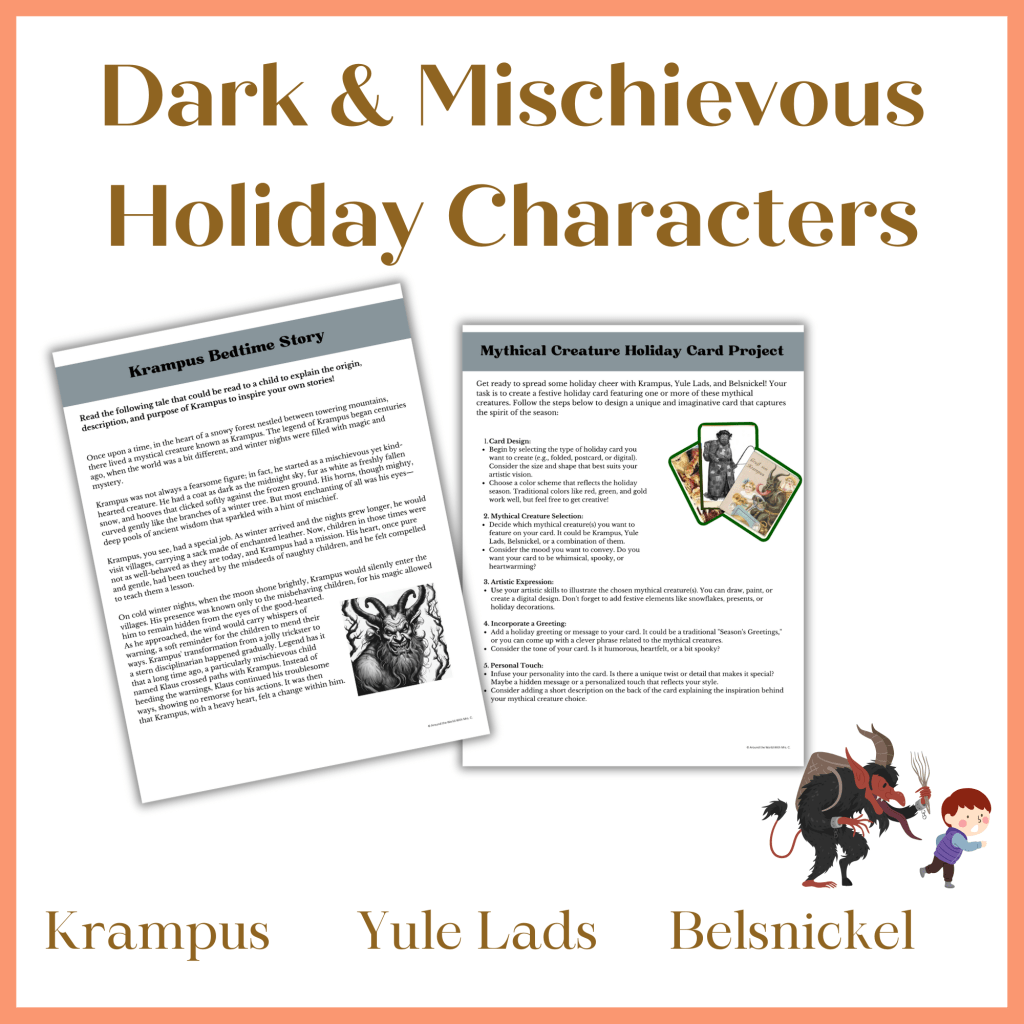
This product introduces students to Krampus, the Yule Lads, and Belsnickel! They then get to be extra creative and create their own twisted myths centering on these creatures.
Final Thoughts
Sharing winter mythology in the classroom can deepen students’ understanding of different cultural perspectives. It brings warmth to the colder months with tales of valor, mystery, and celebration. Each of these stories, whether it’s the fateful death of Balder or the eerie presence of Yuki-onna, offers students a chance to connect with themes that have captivated people for centuries.
By bringing these myths to your classroom, you’re offering a rich tapestry of history, tradition, and imagination that your students won’t soon forget.
Would you like more ideas to use this winter? Check out this blog post!
Join my Newsletter!
Would you love to get weekly tips and resources for teaching secondary English delivered right to your inbox? Click here to join!
 Around the World With Mrs. C