

Vampires are one of the most ancient and widely known mythical creatures, present in many cultures around the world. The oldest recorded vampire myth of from a Babylonian prayer describes demons that devour flesh and suck blood, emphasizing the vampire’s origins as a symbol of primal fear.
“Spirits that minish the land, of great strength… knowing no mercy, they can rage against mankind. They spill blood like rain, devouring flesh and sucking their veins. They are the demons of full violence, ceaselessly devouring blood”

Exploring the rich history of vampire mythology, we can see how these creatures have evolved from ancient symbols of fear to complex characters embodying primal desires and moral ambiguity. Because it is the most time-honored mythical figure, there are a multitude of examples in literature to dive in to with our students! In fact, I created this mini unit that is perfect for a broader study. Or you can easily use it to add in to your studies on Dracula!
This post will tackle the same two questions posed in the unit:
- How do fear and desire interact in the vampire myth?
- In what ways do vampires reinforce or challenge moral boundaries?
Using Carl Jung’s theory of the Shadow Self, we will explore why vampires have been a fixture of both fear and fascination for thousands of years.
Vampirism and Jung’s Shadow Self Theory
Carl Jung was a Swiss psychiatrist and psychoanalyst who founded analytical psychology. He is best known for his theories of the collective unconscious and archetypes. He also introduced psychological concepts like the shadow self and individuation. Jung’s work deeply influenced psychology and philosophy as well as art and literature. His ideas left a lasting impact on how we understand the human mind.
Carl Jung’s theory of the “shadow self” refers to the unconscious and repressed aspects of an individual’s personality. These traits are often negative or socially unacceptable, such as selfishness, greed, or anger, but they can also include hidden talents or desires. The shadow includes parts of ourselves that we deny. We are often unaware of these parts. However, they still influence our behavior and emotions.
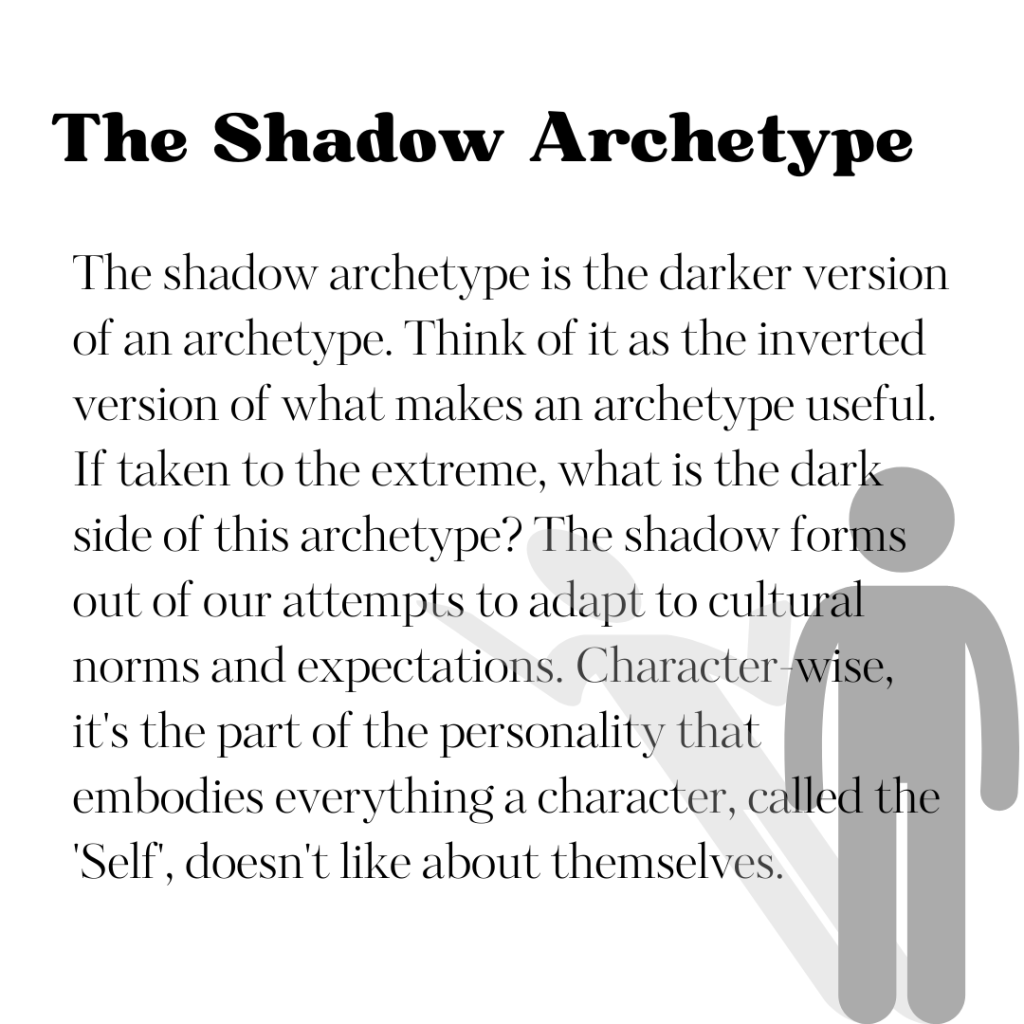
Jung believed that integrating the shadow into conscious awareness is essential for personal growth. By acknowledging and accepting these hidden aspects, individuals can achieve a more complete and balanced self. If left unaddressed, the shadow can manifest in negative ways, such as projecting these traits onto others or experiencing inner conflict. Embracing the shadow requires self-reflection, honesty, and a willingness to confront uncomfortable truths about oneself.
The Jungian concept of the shadow self sheds light on why vampires captivate us so deeply: they reflect our darkest fears, hidden desires, and the internal conflicts we often struggle to confront. From the bloodthirsty Ekkimu of Mesopotamia to the tormented characters of modern literature, vampires serve as both cautionary tales and mirrors of the human psyche.
How Vampires Embody the Shadow Self:
According to Jung, the vampire represents the ‘Shadow’ archetype—a symbol of our deepest fears and desires. Some of these are lust, greed, and a fear of death. They can also represent our desire to break free from the societal constraints placed upon us.
One example often seen in Vampiric literature is the Shadow Lover. The vampire may often desire someone that society says they should not. A forbidden love. Such is the case with Carmilla and her desire for Laura. Or Dracula’s fascination with Mina. As a Shadow Lover, they use their lust and desire to seduce those around them in a harmful way.
In “The Vampyre”, Lord Ruthven’s character uses his power to fuel his greed and cruelty. He woes women and has them believe he loves them before he kills them. He also uses his social status to lure Aybrey into his control before destroying the women that Aubrey loves.
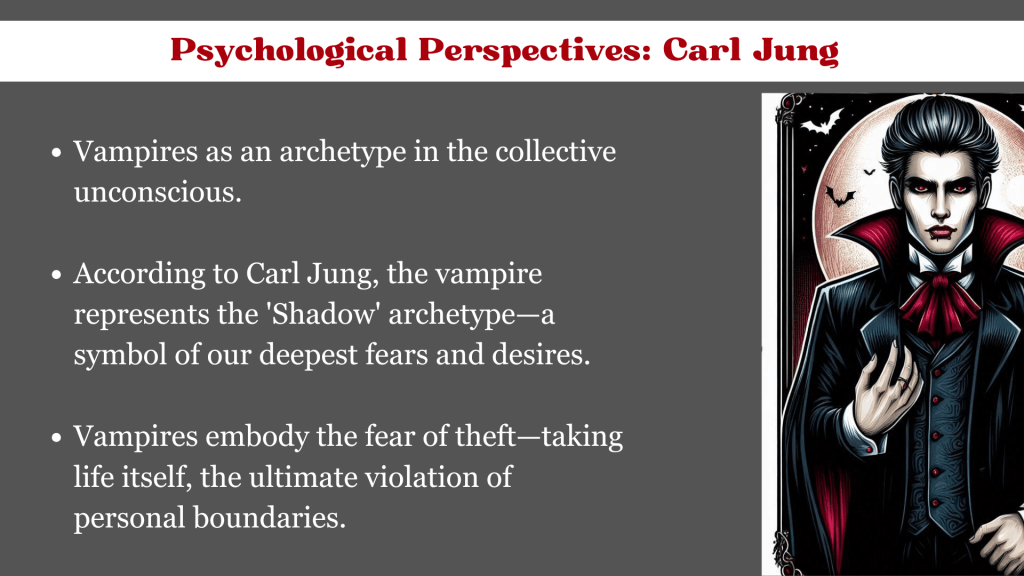
These and other vampire stories allow readers to explore these repressed aspects of themselves. They can confront their own shadow and those of society through the fear and fascination with the vampire.
Vampires in Mythology Across Cultures
Vampires have long fascinated cultures across the world, evolving from mythological creatures to Gothic icons and even modern-day antiheroes. Lets take a closer look at four examples from mythologies around the world and they reveal about the culture they came from.
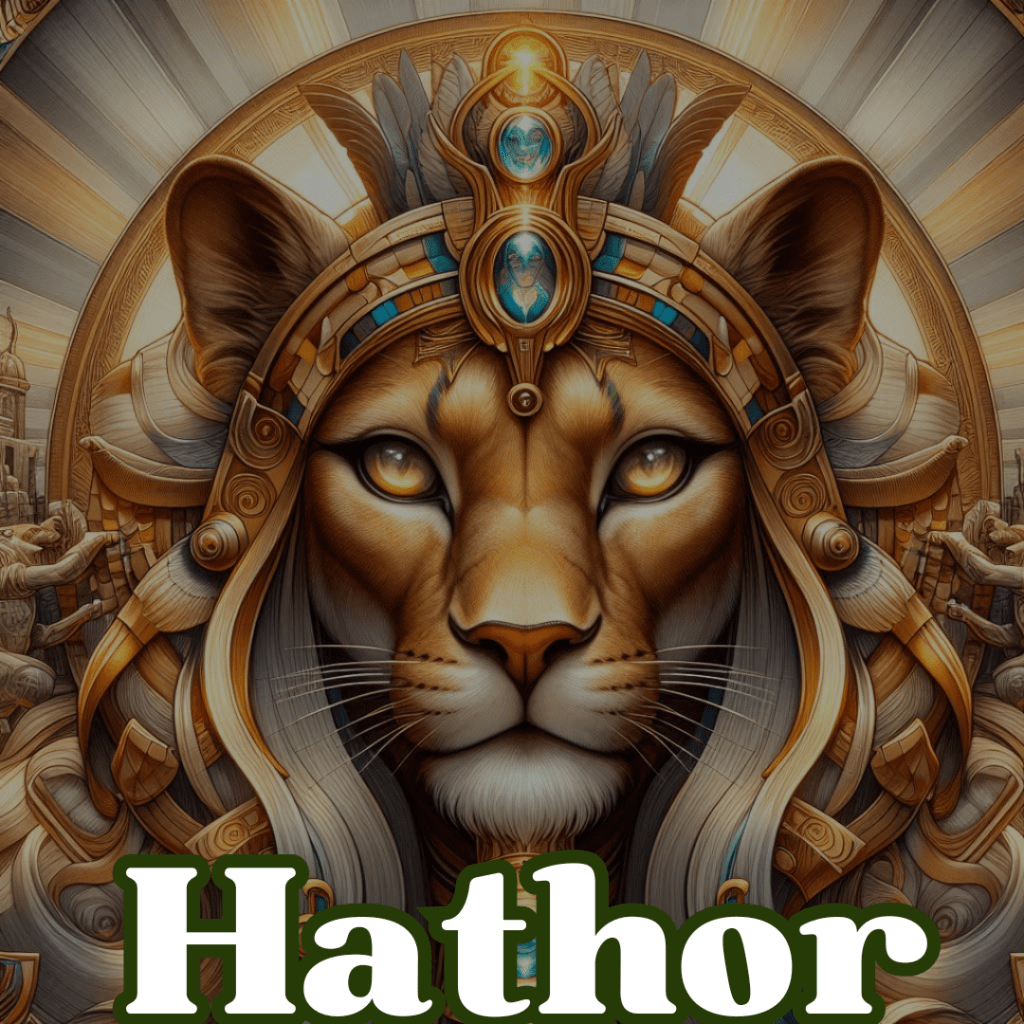
Ekkimu (Mesopotamia): One of the earliest vampire myths, representing fear of death and the afterlife. The myth of the Ekimmu addresses social anxieties related to isolation. It also touches on improper burial and the fear of dying without love or family. In Ancient Assyrian society, dying without proper rites or being forgotten by one’s family was a terrifying prospect, as it meant a restless afterlife as a vengeful spirit. These anxieties reflect the deep moral concern for maintaining familial ties. They show the importance of ensuring that all members of society are properly cared for, even in death.
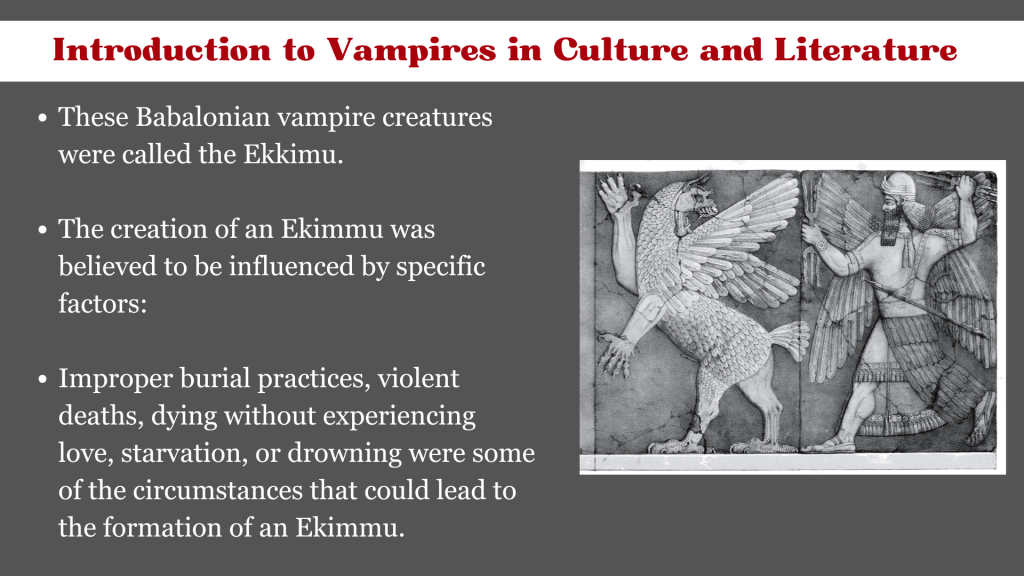
Hathor and the Destruction of Mankind (Egyptian Mythology): This myth tells of Hathor transforming into a bloodthirsty goddess as punishment for human disrespect. When Ra becomes angry with humans, he sends Hathor in her fierce lioness form, Sekhmet, to attack them. She drinks human blood and becomes so bloodthirsty that she nearly destroys humanity. To stop her, Ra tricks her into drinking red-dyed beer she thinks is blood, calming her down and sparing the survivors. The story warns of the dangers of defying the gods and highlights the importance of respecting tradition and divine authority. It also highlights how carried away we can become if we give into our darker desires.
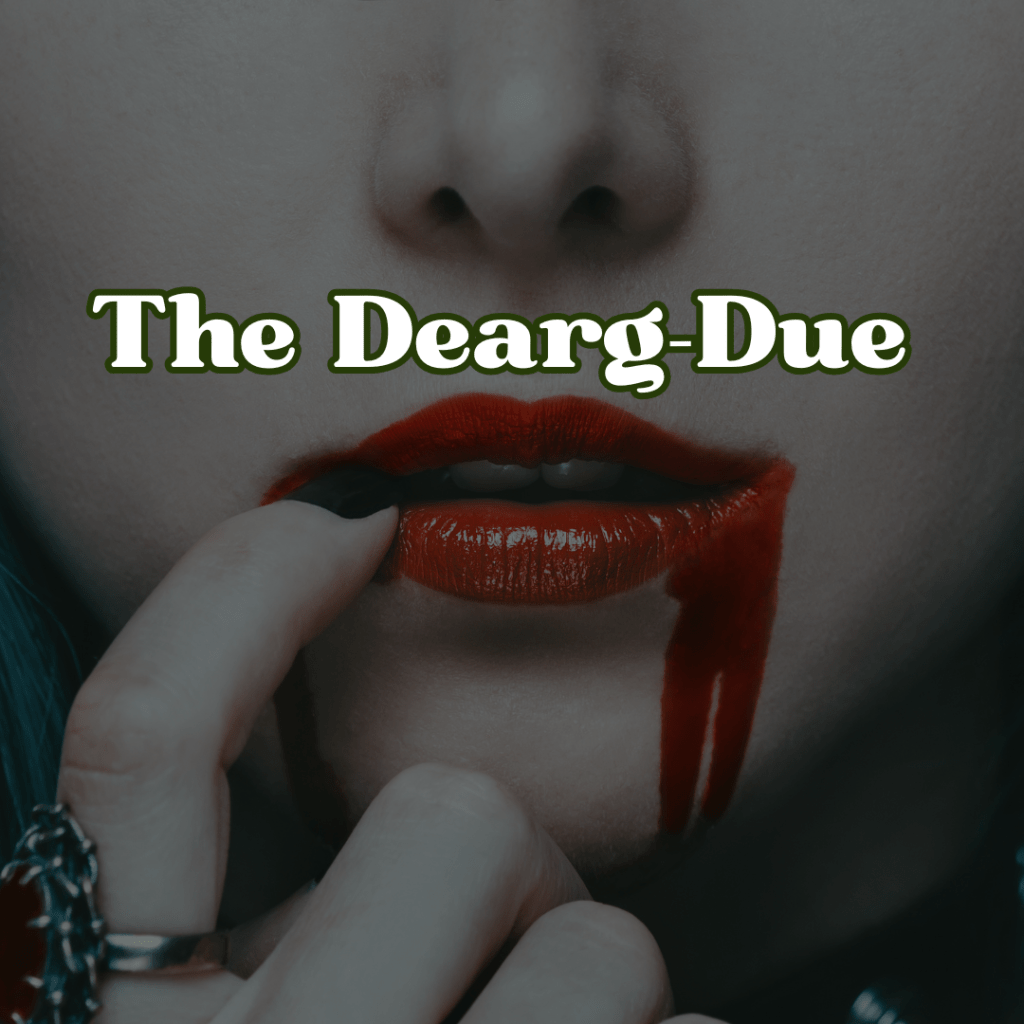
Dearg-Due (Ireland): The Irish myth of the Dearg-Due (which means “red-blood sucker”) as a tragic figure driven by unfulfilled desire and revenge, a metaphor for repressed emotions. She was a beautiful woman who lived 2,000 years ago and was known for her her blood-red lips and silver-blonde hair. She was a noble woman who fell in love with a man from the village well below her station. When her father found out, he quickly married her off to a much older and cruel man. This man violence and cruelty lead to her starving herself. She was able to rise after her death and revenge herself against her husband and father.
Sasabonsam (Ashanti, West Africa): A malevolent forest creature, symbolizing fear of the wild and the unknown. The Sasabonsam myth teaches the moral lesson that defying societal expectations, particularly in terms of respecting the land and traditions, leads to severe consequences. The Sasabonsam punishes those who stray from the rules. This punishment discourages rebellion or actions that go against the community’s established customs. By portraying a terrifying fate for those who break societal norms. Such as venturing into prohibited forests or disobeying hunting laws. The myth reinforces obedience and respect for authority.
Vampires in Literature
Shifting around the Victorian era, vampires in literature now often challenge moral and societal boundaries. Some are evil. Some are tormented. Some desire to be turned and relish in their new, dark selves. Some are forced to turn and are constantly living in a tormented state of fighting their new state of being.
Lets take a look at how this is seen in 4 notable works from the time: “The Vampre”, Carmilla, Varney the Vampire, and Dracula.
John William Polidori’s The Vampyre:
“Tha Vampyr” is a short story that is considered the first modern vampire story. It presents the vampire as a seductive but morally corrupt figure. The main character, Aubrey, becomes fascinated by an upper-class man who begins socializing in the same circles. Aubrey becomes to drawn to this man that he agrees to go on a European tour with him.
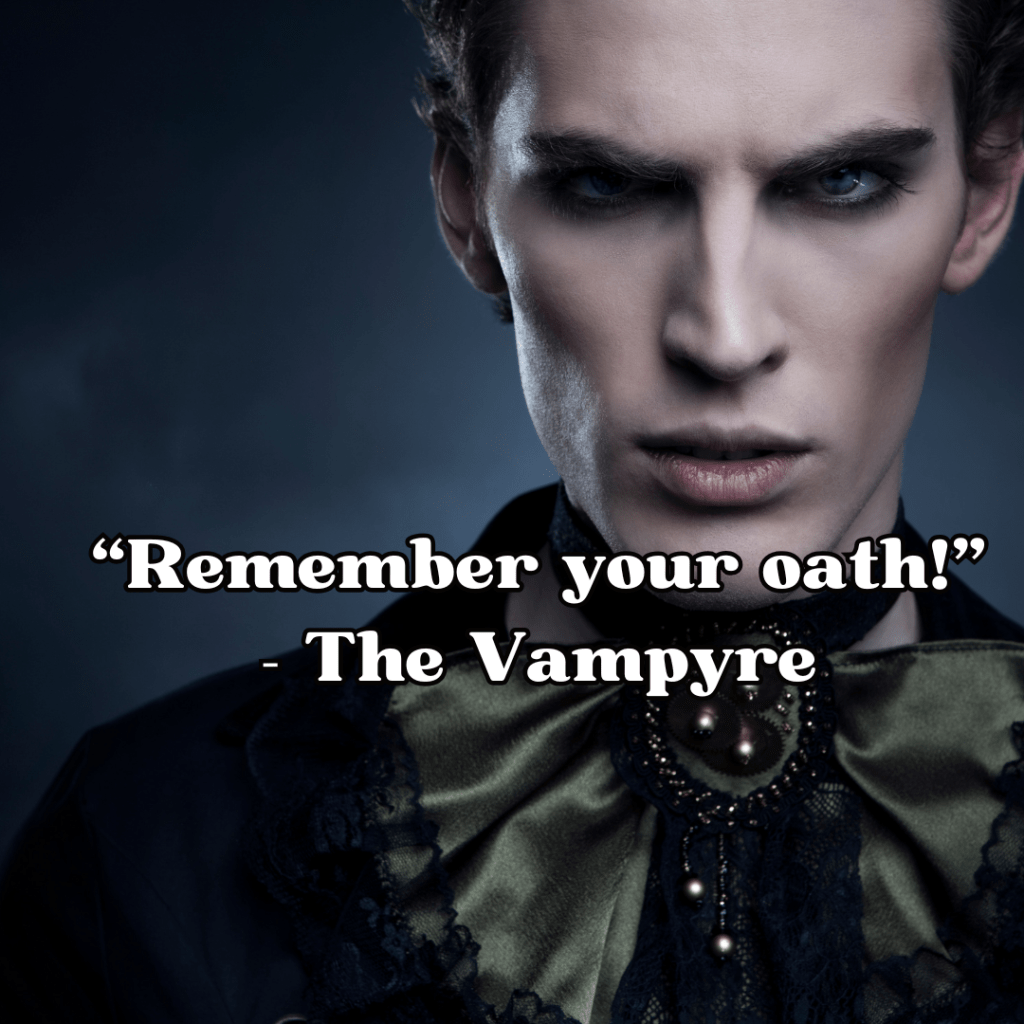
The character of Lord Ruthven embodies Jung’s concept of the Shadow Self. He represents the dark, hidden aspects of the psyche individuals often repress. Ruthven’s seductive charm and malevolent nature reflect the allure and danger of the shadow, as he preys on others while maintaining a façade of respectability.
For example, he woes women over long periods of time before he finally kills them. He uses his social position and mystery to ensnare the main character, Aubrey. Once Aubrey begins to show signs of distrust in Lord Ruthven, the woman he loves is killed by the vampire. Ruthven then swears Aubrey to an oath not to reveal what he knows to others for a year and a day before faking his death. Aubrey, conforms to the social standards placed upon him and does keep this oath. Sadly, keeping this oath leads to Aubrey’s sister’s murder from the vampire a year later.
His influence over Aubrey mirrors how unchecked shadows can corrupt and destroy.
Carmilla by Sheridan Le Fanu:
Joseph Sheridan Le Fanu’s Carmilla was a groundbreaking Gothic novella that predates Dracula, featuring one of the earliest female vampires in literature. Carmilla explores themes of seduction, desire, and fear, highlighting the evolving portrayal of vampires as both terrifying and alluring.
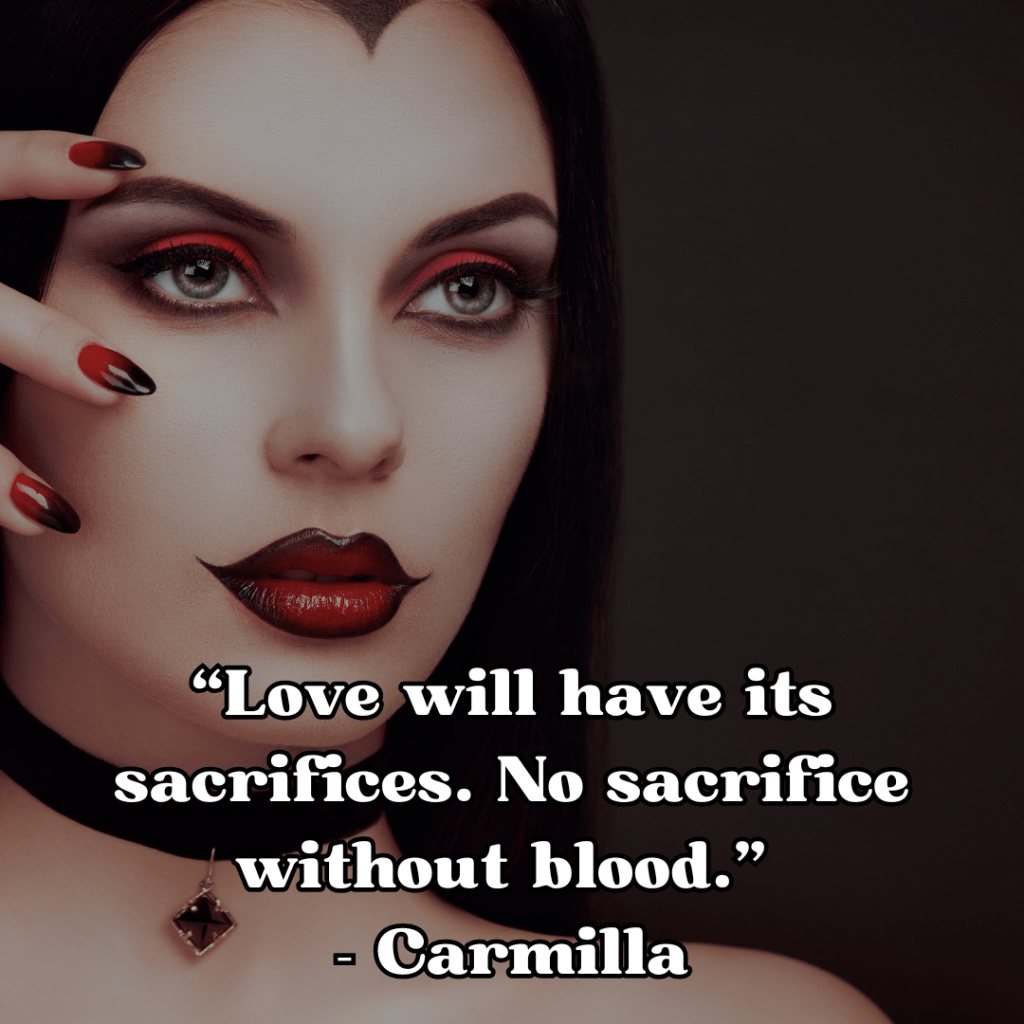
Carmilla is a vampire who spends months trying to subtlety seduce the female main character, Laura. In this sense, Carmilla is the a type of shadow lover who is seeking companionship by means of turning Laura into a vampire as well. Not only was this dark attraction in general a sense of taboo, but homosexuality in Victorian England was a crime. This story gave its readers a chance to observe “Otherness” from a lens of forbidden desire.
Love will have its sacrifices. No sacrifice without blood. – Carmilla
In fact, the idea is so outside the norm that Laura often plays off the things that Carmilla says as a moment of confusion. She never believes that she is in any danger, even when her heath becomes increasingly poor. Laura is drawn to Carmilla, but her naivety plays off as only a lonely young woman seeking a friend.
Dracula by Bram Stoker:
Dracula serves as a symbol of both physical and moral corruption. His vampirism challenges moral boundaries while also representing forbidden power, lust, and a desire to break free from societal constraints.
One example is when Harker is first introduced to Dracula’s brides. The first social constraint to consider her is that Dracula has THREE brides. Showing that he has no need to conform to any idea of monogamy. The way Harker describes the brides also contrasts with what we would want to believe. They are described as quite beautiful and seductive; while clearly being monsters.
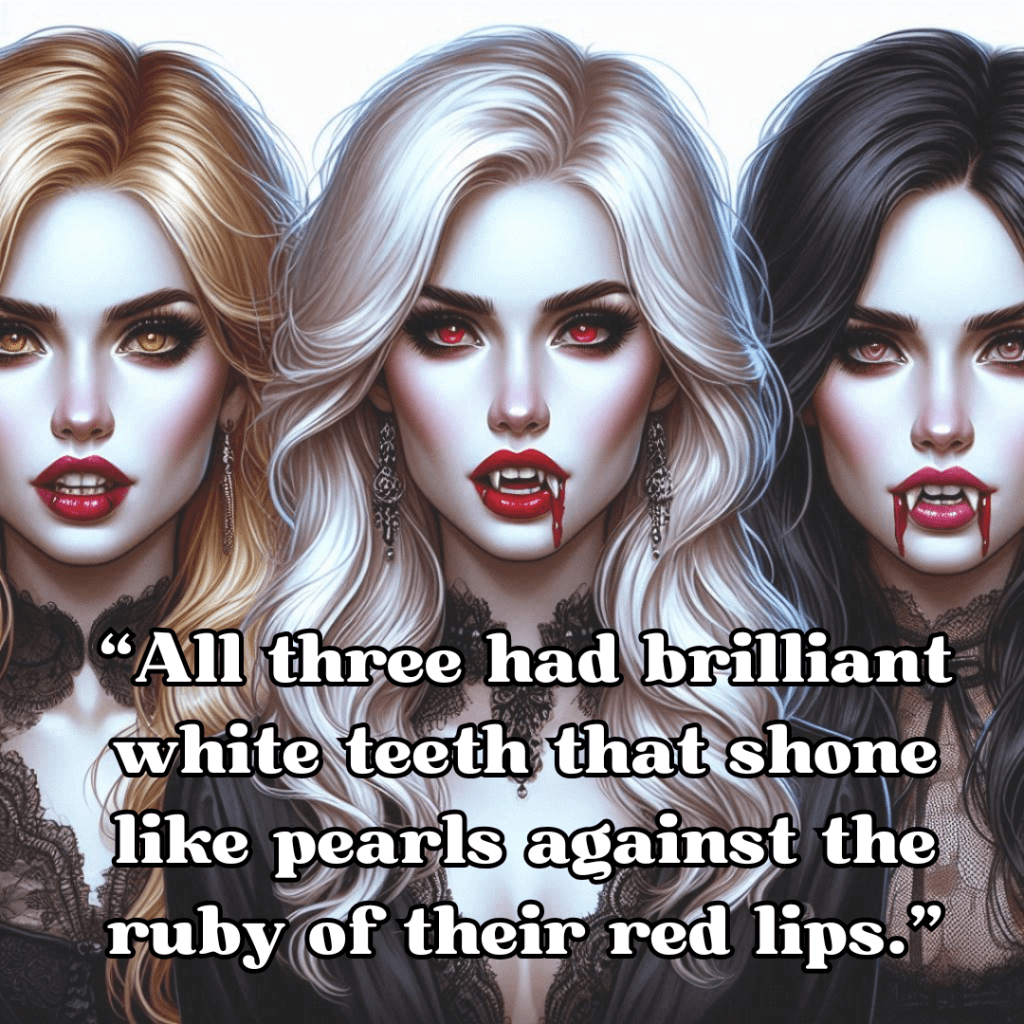
Harker is unable to move with fear as they assess him. However, once the first one finally approaches, it is not only fear that has him pinned,
“I lay quiet, looking out from under my eyelashes in an agony of delightful anticipation. The fair girl advanced and bent over me till I could feel the movement of her breath upon me. Sweet it was in one sense, honey-sweet, and sent the same tingling through the nerves as her voice, but with a bitter underlying the sweet, a bitter offensiveness, as one smells in blood. I was afraid to raise my eyelids, but looked out and saw perfectly under the lashes. The girl went on her knees, and bent over me, simply gloating. There was a deliberate voluptuousness which was both thrilling and repulsive, and as she arched her neck she actually licked her lips like an animal, till I could see in the moonlight the moisture shining on the scarlet lips and on the red tongue as it lapped the white sharp teeth.”
Notice the words used that indicate a dark desire that is present. His first feelings are “delightful anticipation” and then the word sweet is used 3 times. He then describes the vampire woman as. “both thrilling and repulsive”.
While the fear is present, there is also the undeniable desire and lust in the moment. In connection to Jung’s ideas on the shadow self, Harker must confront this darker side of himself that presents himself here.

Later, the character Lucy is turned into a vampire. However, she has been shown throughout the book to be a woman who does not easily conform to the Victorian society rules. At one point she has 3 proposals and hates that she must choose only one. Her transformation is seen as something that stems from her sexual desires and disdain of being forced to love only one man.
Mina, on the other hand, is seduced and forced to drink Dracula’s blood. Her transformation is seen as a violation against her purity and Dracula’s desire to destroy. While some view Dracula’s fixation on Mina as love, there is no evidence to this. Though he does state earlier in the book that, “Yes, I too can love”. It appears that he chooses Mina simply as revenge against Harker.
Varney the Vampire by: James Malcolm Rymer and Thomas Peckett Prest
Varney the Vampire tells the tale of Sir Francis Varney, an aristocratic vampire. He preys upon the Bannerworth family and targets young Flora Bannerworth. As the serial progresses, Varney fluctuates between being a ruthless predator and a remorseful figure, often seeking redemption for his monstrous actions. Ultimately, his inner torment leads him to take his own life by throwing himself into Mount Vesuvius.
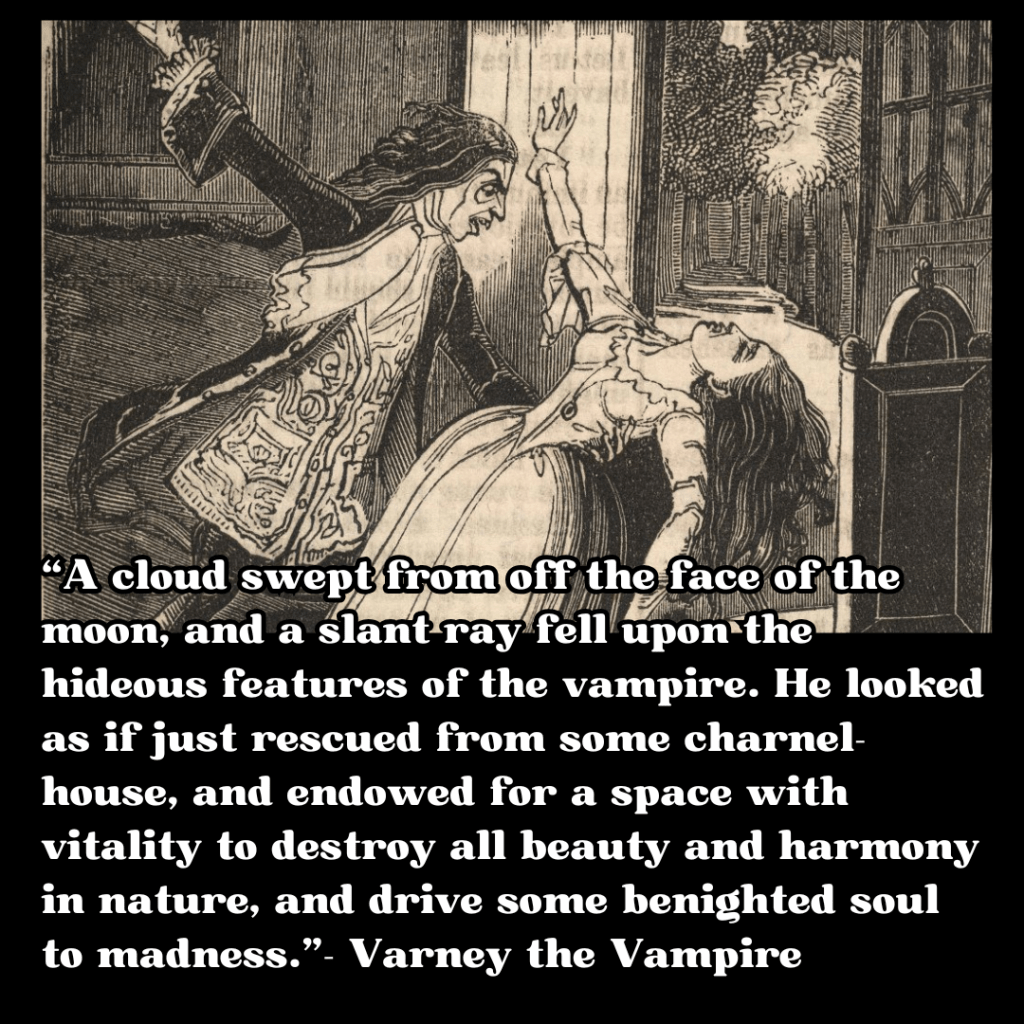
Varney the Vampire, a serialized Penny Dreadful from 1845, exemplifies this connection to the Shadow Self. Sir Francis Varney is both a villainous predator and a tragic figure, reflecting the complexity of the Shadow in Jung’s theory.
While Varney embodies fear, violence, and immortality, he is also plagued by remorse and a desire for redemption. His internal conflict mirrors the struggle between our conscious identity and the darker, repressed aspects of the self. In this way, Varney the Vampire not only helped shape the vampire genre but also serves as a gothic exploration of the human psyche’s shadowy depths.
Fear, Desire, and Morality in Vampirism
Vampires have evolved from terrifying demons to seductive figures in modern culture, embodying both fear and desire. Many of the vampire myths from thousands of years ago where meant to instill fear in what could happen if you strayed from the constraints of the collective. However, modern vampire literature, often presents more complicated characters.
Instead of mindless, evil creatures lusting for power and greed and living unnatural lives; we often see characters struggling with a loss of self.
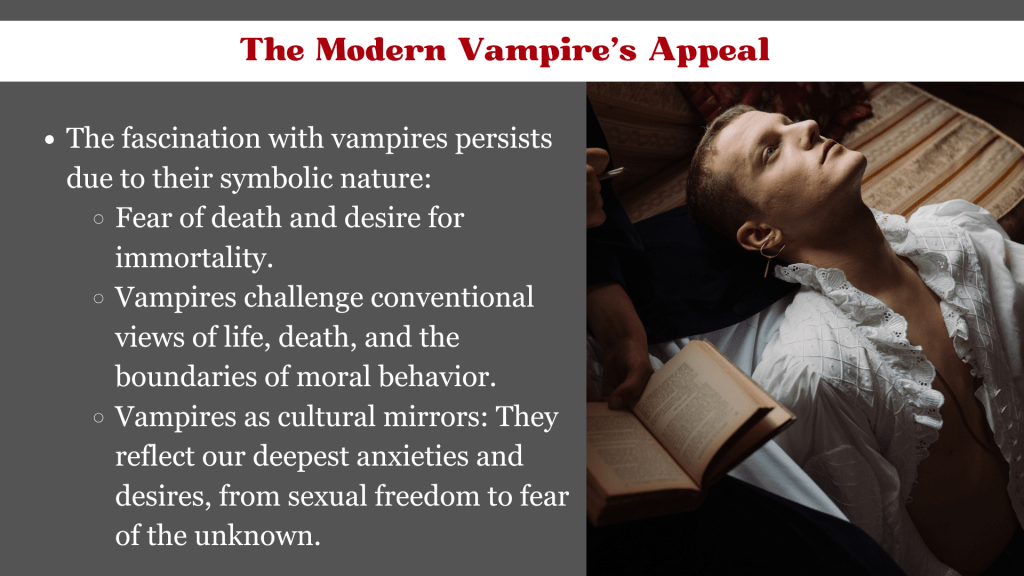
Modern Vampirism in Anne Rice’s Interview With a Vampire:
In Anne Rice’s Interview with the Vampire, this inner conflict is clearly seen in the character of Louis. After being turned into a vampire, Louis struggles to maintain his humanity, refusing to drink human blood and instead surviving off animals. His maker, Lestat, mocks and abuses him for this, fully embracing his vampiric nature and relishing the power it grants.
Lestat represents the darker side of the vampire myth—the seduction of power and the consequences of rejecting societal norms. Louis, on the other hand, symbolizes constant tension. He wrestles with embracing the shadow self while holding on to the remnants of human morality. His resistance to his new nature reflects the internal conflict that many modern vampire characters face, as they embody both the attraction to and the dangers of forbidden desires.
Claudia, the child vampire in Interview with the Vampire, adds another layer to this struggle between desire and loss of self. Turned into a vampire as a young girl, Claudia remains eternally youthful. This traps her in a body that no longer reflects her growing intellect. Her desires continue to evolve beyond her physical form. She becomes frustrated and enraged because she cannot reconcile her physical form with her inner self. This inability leads her to lash out in violent ways.
This can be likened to how many women are often chided for embracing their adult desires. The message is often implied that they should only remain innocent and childlike. No matter how unrealistic this is. Claudia’s character highlights the tragic consequences of immortality, showing how the vampire’s seductive allure can ultimately become a prison, amplifying the tension between what we desire and what we lose in the process.
Modern Vampirism in Twilight:
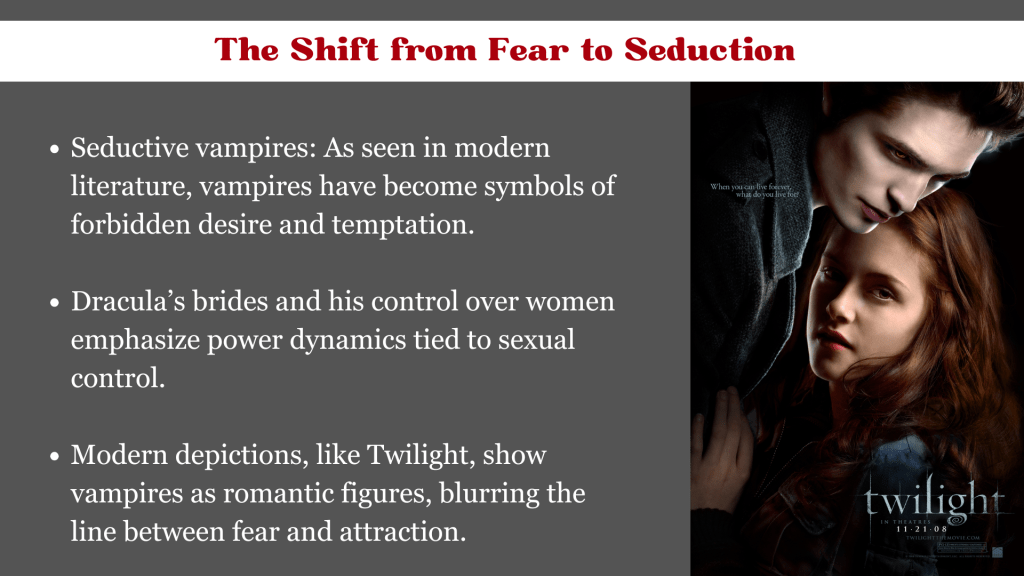
Edward Cullen and his family strive to suppress their natural vampiric instincts, symbolizing the human struggle to control darker urges like violence or primal desires. Their choice to resist feeding on humans reflects the tension between acknowledging and mastering one’s shadow. Bella’s fascination with Edward highlights the allure of the Shadow. She is drawn to his dangerous side. She is also attracted to his protective nature. This illustrates the duality within people’s inner selves.
Final Thoughts: Vampires as Mirrors of Our Inner Darkness
In exploring the rich history of the vampire, we see how these creatures have evolved from ancient symbols of fear to complex characters embodying primal desires and moral ambiguity.
The Jungian concept of the shadow self sheds light on why vampires captivate us so deeply. They reflect our darkest fears, hidden desires, and the internal conflicts we often struggle to confront. From the bloodthirsty Ekkimu of Mesopotamia to the tormented characters of modern literature, vampires serve as both cautionary tales and mirrors of the human psyche.

With my unit, your students will examine these myths and literary works through the lens of fear, desire, and morality. This approach offers students a chance to explore the cultural origins of these stories. It also helps them understand the psychological themes they represent.
Perfect for a broader study or as a complement to works like Dracula, this unit will engage your students in critical thinking and deep analysis of the vampire myth and its relevance to today’s world.
Join my weekly newsletter!
Would you love to get weekly tips and resources for teaching secondary English delivered right to your inbox? Click here to join! Would you like to connect on social to see more of my ideas in bite-sized form? You can find me on YouTube and Instagram.
 Around the World With Mrs. C
One thought on “Vampires Through Time: Fear, Desire, and the Shadow Self”