

Teaching Transcendentalism is often a challenge for high school English teachers. Its abstract ideals and 19th-century language can feel inaccessible to students, leaving many to wonder how these ideas connect to their lives. However, when taught thematically, Transcendentalism comes alive! And our students can explore its core principles—self-reliance, nature, individuality, and civil disobedience—in meaningful and relatable ways.
This is why I developed this Transcendentalism thematic unit. This unit is designed specifically for high school students. It makes the abstract tangible and the historical contemporary. It helps students connect deeply with the works of Emerson, Thoreau, and their modern counterparts.
The rest of this blog post will shed light on what is included in this unit!
What Is Transcendentalism?
At its core, Transcendentalism is a philosophical and literary movement. It champions the power of the individual and the spiritual significance of nature. It also holds the belief that society can sometimes hinder personal growth. Writers like Ralph Waldo Emerson and Henry David Thoreau encouraged our students to think independently, live simply, and find beauty in the world around them.
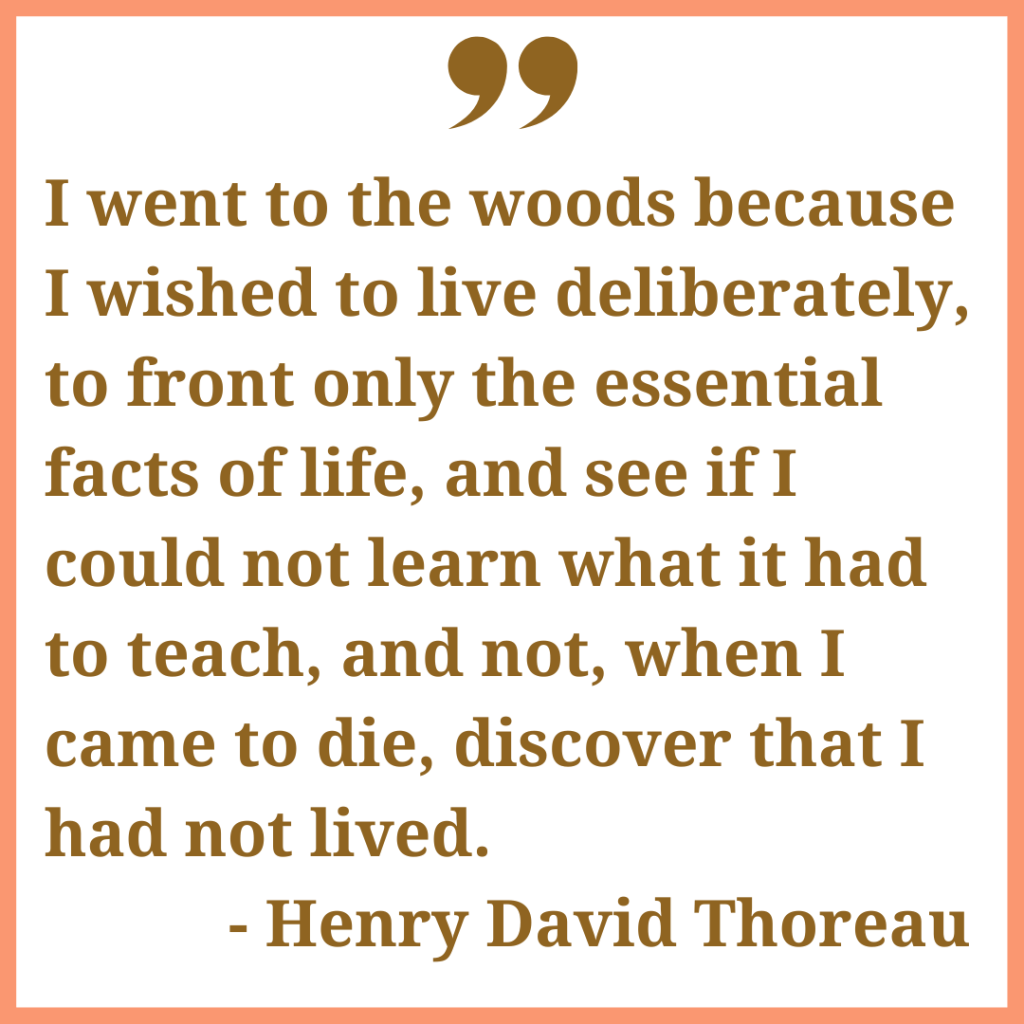
While these ideas are powerful, they require context and thoughtful exploration. That’s where teaching thematically comes in!
Why Teach Transcendentalism Thematically?
A thematic approach transforms Transcendentalism from a dry literary movement into a lens through which students examine themselves and the world. Here’s why this approach works:
1. Personal Connection
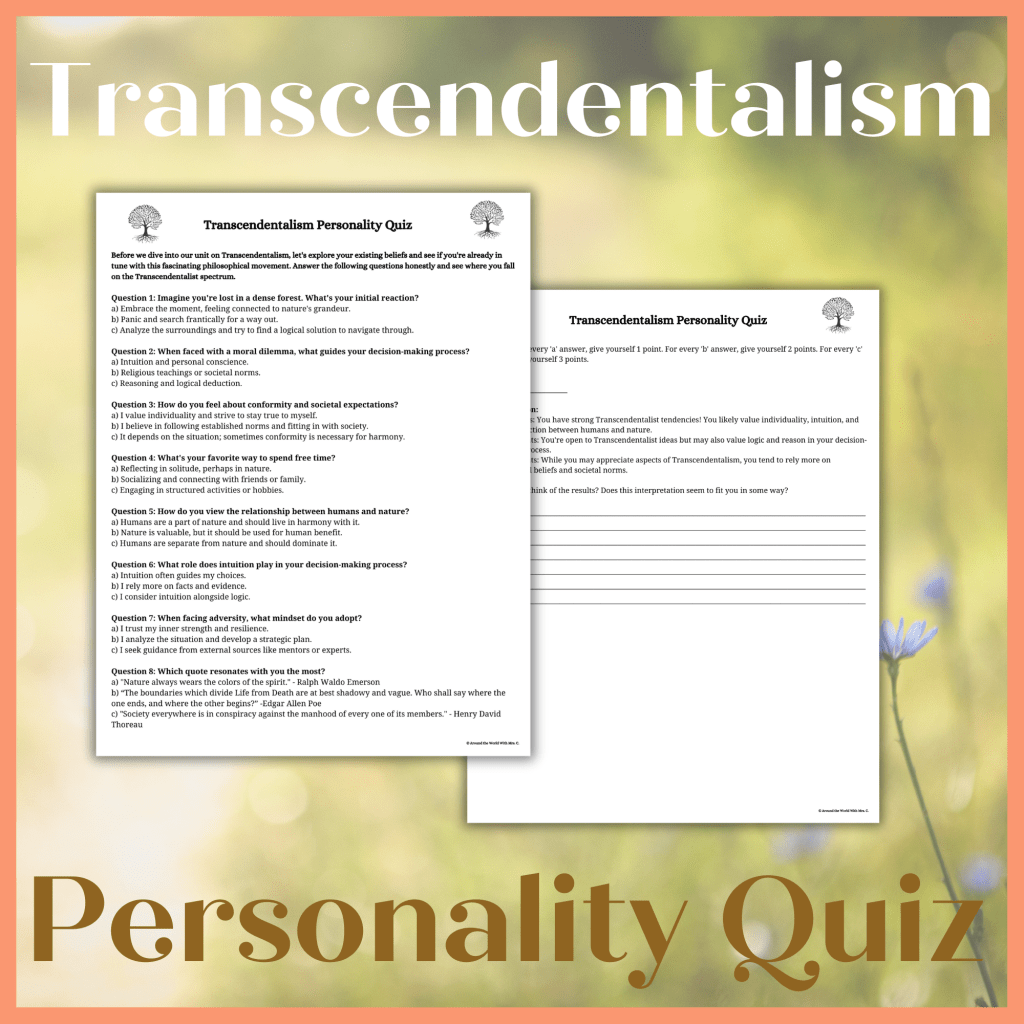
Themes like self-reliance and individuality encourage students to reflect on their lives. Through journal prompts, discussions, and creative activities, they see how these concepts still resonate today.
2. Relevance to Current Events
By pairing classic essays like Self-Reliance or Civil Disobedience with modern, real-world examples, students explore how Transcendentalist ideas influence contemporary movements, from environmentalism to social justice.
3. Multimodal Learning
This unit integrates art, poetry, and music inspired by Transcendentalist themes. Students engage not only through reading and analysis but also through creative projects like designing nature-inspired art or composing reflective essays.
4. Critical Thinking
Through inquiry-based activities, students grapple with questions like What does it mean to be self-reliant in a digital age? or How does our relationship with nature shape our identity? These questions lead to lively debates and insightful essays.
Exploring the Texts and Projects
When teaching Transcendentalism thematically, the texts we select are critical. The ones I have selected highlight the movement’s central beliefs. They also connect these beliefs to our students’ lives today. This Transcendentalism Mini Unit features carefully chosen works that reveal the movement’s core ideas while sparking student interest and engagement.
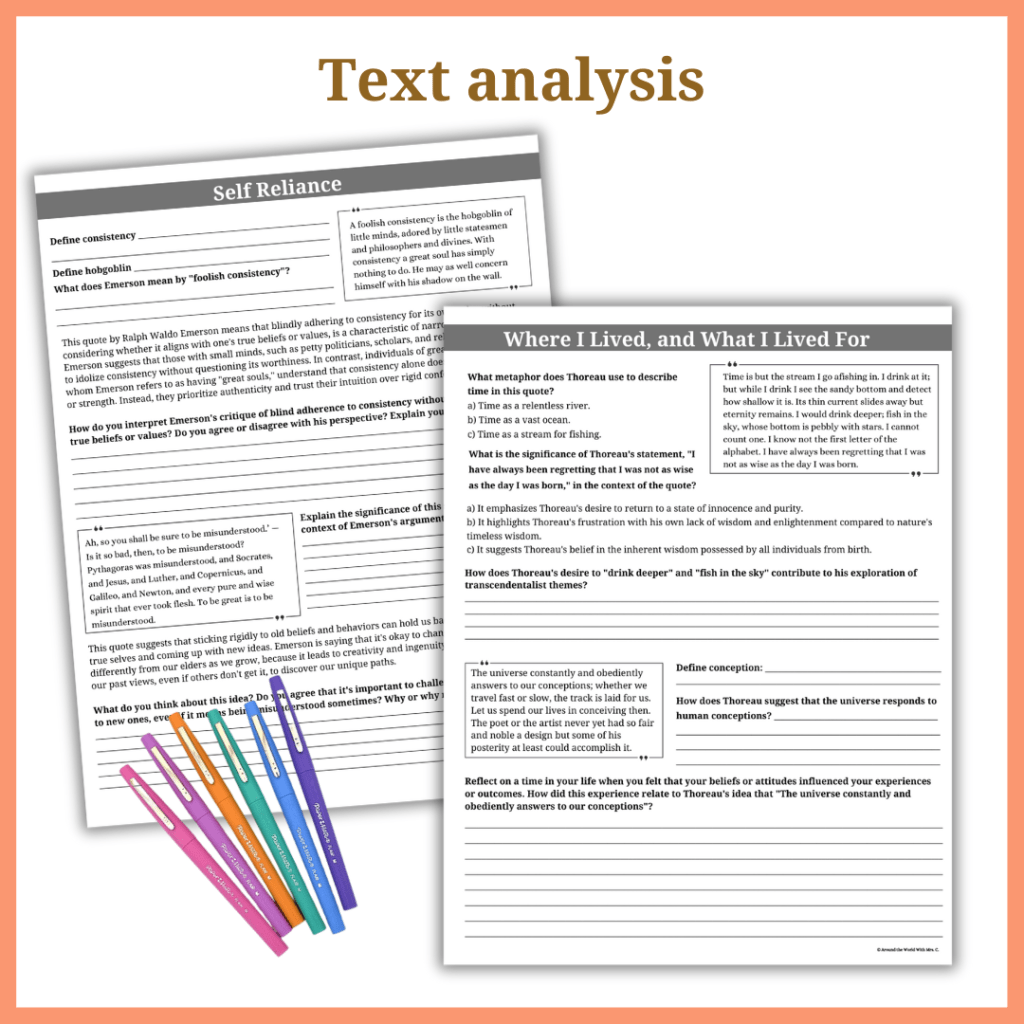
Ralph Waldo Emerson’s Self-Reliance
This essay is foundational to understanding the Transcendentalist call for individuality and nonconformity. Emerson argues that true greatness lies in trusting oneself, even when society pressures conformity.
- Why It’s Important: It empowers students to think independently. It encourages them to explore what it means to live authentically. This message resonates especially with teenagers.
- How It’s Taught: Students engage in close reading to unpack Emerson’s dense language. They then connect his ideas to modern issues like peer pressure and social media.

Henry David Thoreau’s Walden
Thoreau’s reflections on simple living and nature engage students in the Transcendentalist belief. This belief suggests that being in nature fosters spiritual and mental well-being.
- Why It’s Important: Walden demonstrates the restorative power of nature and its ability to inspire clarity and purpose.
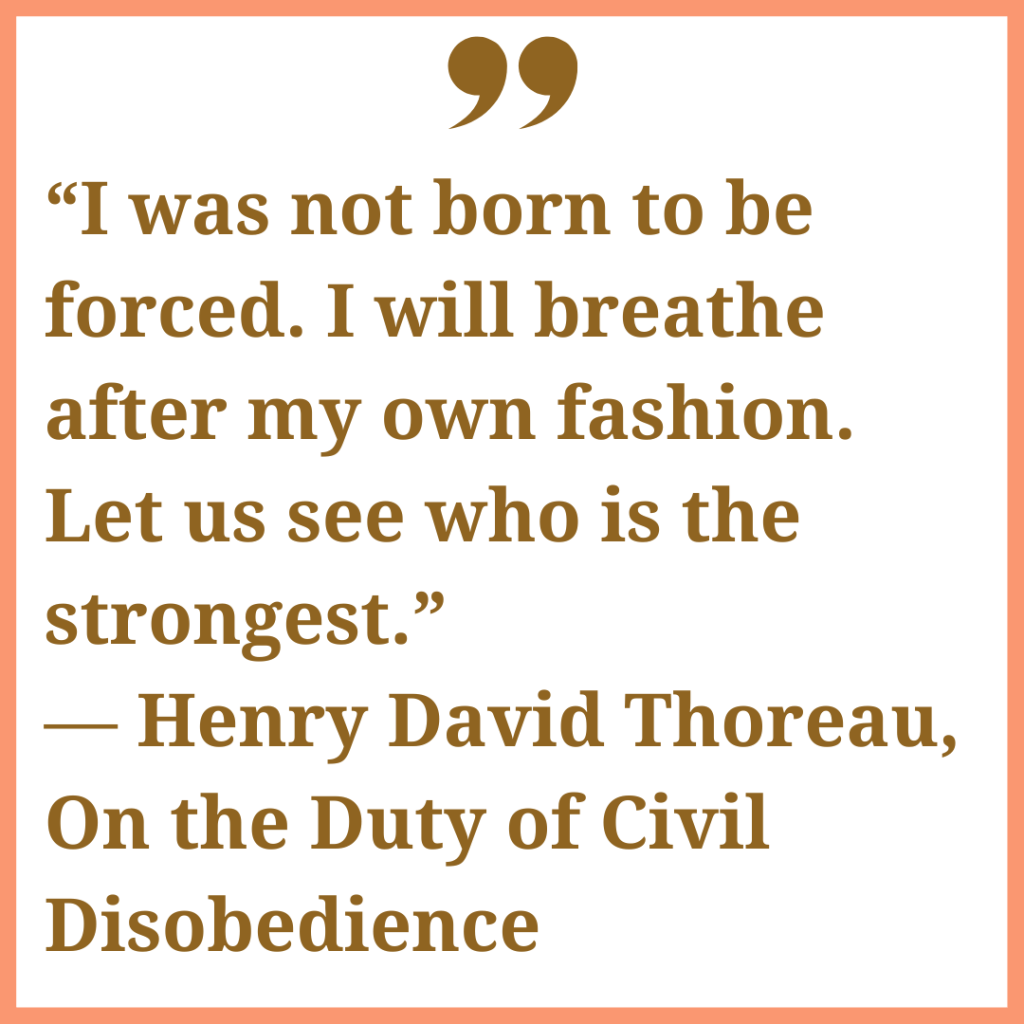
Thoreau’s Civil Disobedience
This essay brings activism into the fold, showing how Transcendentalist principles inspire peaceful resistance to injustice.
- Why It’s Important: Civil Disobedience is a text that can inspire rich conversations about living an authentic life- something that speaks to many teens!
Modern Connections
To ensure relevance, the unit pairs these classic texts with modern ones, such as:
- TED Talks like “The Art of Stillness” by Pico Iyer.
- Nature-inspired poetry by Mary Oliver.
- Articles on the mental health benefits of spending time in nature.
These connections help students see that Transcendentalist ideas aren’t just historical artifacts—they’re part of ongoing conversations about individuality, activism, and wellness.
The Impact of Nature on Mental Health
A key theme of this unit is the Transcendentalist belief in the healing power of nature. Using the article, Nurtured by Nature, students get to look at the modern research that supports the ideals of Transcendentalism. This research shows that time outdoors reduces stress, improves focus, and fosters creativity. Students continue to engage with this idea through:
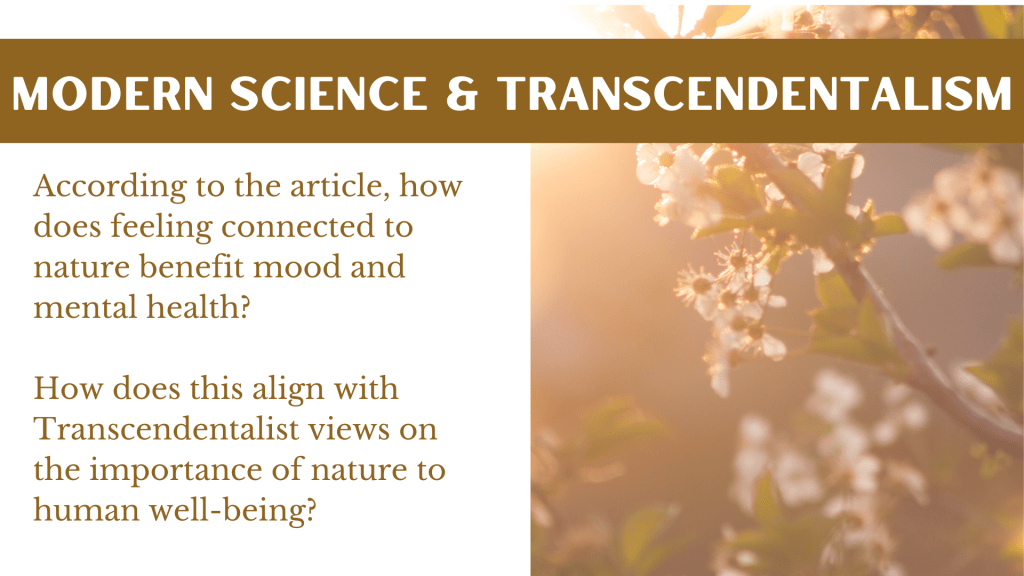
- Reflecting on personal experiences in nature.
- Connecting the literature with the research.
- Journaling during a nature walk to observe and describe their surroundings, connecting their experiences to Thoreau’s observations.
These activities help students build a personal connection to the texts and recognize how Transcendentalist ideas can enhance their well-being.
Student Projects
This unit is infused with engaging, hands-on projects that allow students to creatively explore Transcendentalist ideas. Three of projects that can be used are:
1. Nature Journals
Students document their own experiences in nature, inspired by Thoreau’s reflections. They write observations, sketch scenes, and compose poems or essays about what they notice and feel.
2. Modern Activism Campaign
After reading Civil Disobedience, students create a mock campaign for a cause they’re passionate about. This includes:
- Writing a persuasive manifesto.
- Designing posters, slogans, or social media posts.
- Presenting their campaign to the class.
3. My Barbaric Yawp
Steven Hermann, a Jungian psychologist, explains Walt Whitman’s concept of the “barbaric yawp.” It symbolizes an expression of the primal truths. These truths are unspoken and lie deep within the human soul. Whitman was inspired by Transcendentalist ideals of individualism, nature, and the interconnectedness of all beings. He aimed to sound a new heroic message of “Happiness, Hope, and Nativity” over the roofs of the world.
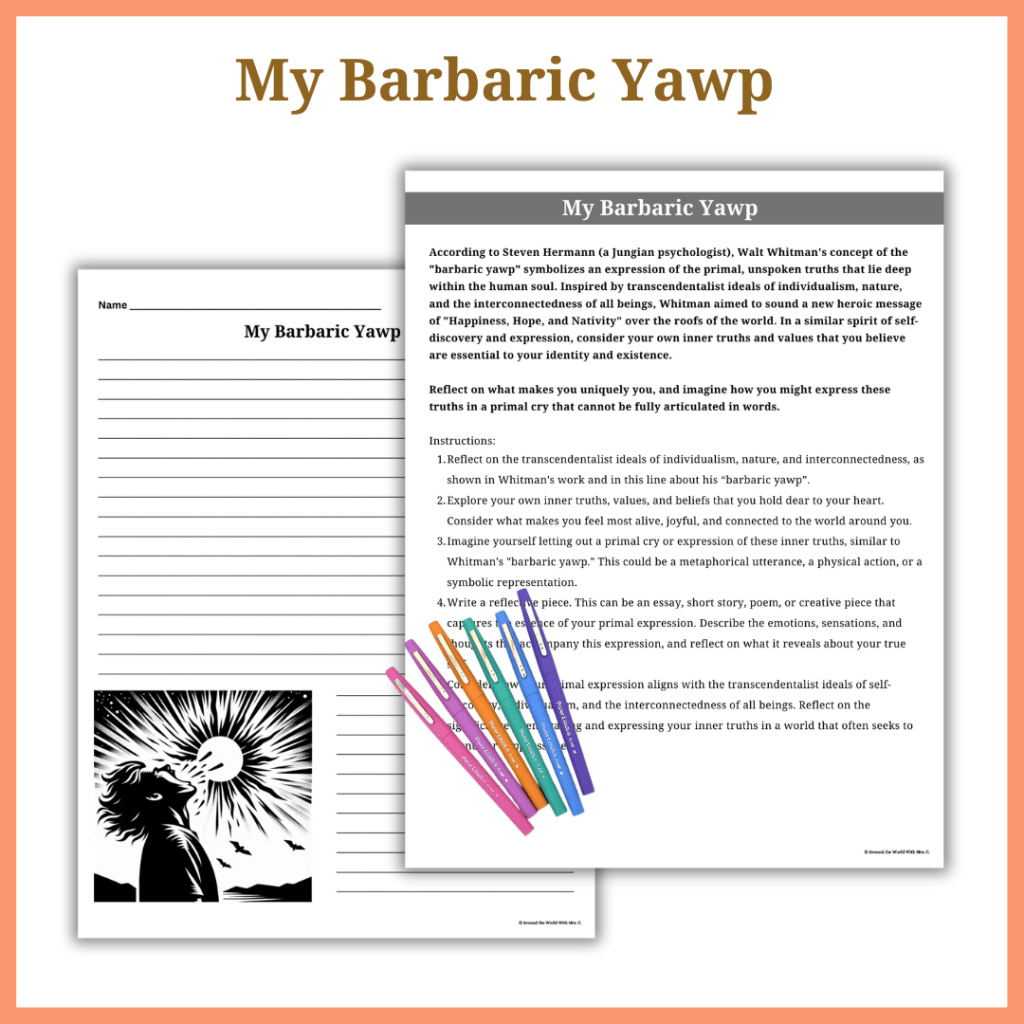
Students are encouraged to consider their own inner truths. They should reflect on values they believe are essential to their identity and existence. With this activity, they reflect on what makes them unique. Imagine how they might express these truths in a primal cry.
The Benefits for Your Students
By the end of the unit, your students will:
- See Transcendentalism not as an abstract relic of the past but as a vibrant, living philosophy.
- Feel empowered to think critically about their role in society.
- Gain an appreciation for the beauty and power of nature.
- Understand the importance of individuality in shaping their identities and beliefs.
Ready to Teach Transcendentalism Thematically?
If you’re ready to save time, this unit is exactly what you need. It will make Transcendentalism engaging and meaningful for your students. With ready-to-use resources, differentiation options, and connections to modern life, it’s the perfect way to introduce Emerson and Thoreau.
Get the Transcendentalism Thematic Unit now!
By teaching Transcendentalism thematically, you’ll inspire your students to explore timeless ideas while connecting them to their lives. Let’s empower the next generation to think deeply, live authentically, and embrace the beauty of the natural world.
Join my weekly newsletter!
Would you love to get weekly tips and resources for teaching secondary English delivered right to your inbox? Click here to join! Would you like to connect on social to see more of my ideas in bite-sized form? You can find me on YouTube and Instagram.
 Around the World With Mrs. C