

What makes us who we are? Is it our memories, our experiences, or something deeper? These are the questions at the heart of “1,000-Year-Old Ghosts” by Laura Chow Reeve — a short story that blends magical realism with deeply human themes of identity, memory, and family across three generations.
A winner of the PEN America Best Debut Short Fiction Prize (2017) and featured on LeVar Burton Reads, this story has earned its place as one of the most teachable contemporary short stories available for high school English classrooms. If you’re looking for a text that will spark meaningful discussion, sharpen literary analysis skills, and invite genuine personal reflection — this is it.
💡 Ready to skip straight to teaching? My 7-day mini-unit on “1,000-Year-Old Ghosts” includes complete lesson plans, close reading guides, Socratic Seminar prompts, and a personal identity writing activity — everything you need, fully built out.

Quick Reference: “1,000-Year-Old Ghosts” at a Glance
| Author | Laura Chow Reeve |
| Published | Hyphen Magazine, 2016 |
| Word Count | ~2,900 words |
| Grade Level | 9–12 (adaptable for advanced 8th grade) |
| Genre | Magical Realism / Contemporary Fiction |
| Key Themes | Memory, personal identity, generational trauma, cultural heritage, coping mechanisms |
| Literary Devices | Symbolism, imagery, metaphor, magical realism, character development |
| Read/Listen Free | Available at Hyphen Magazine; LeVar Burton Reads Episode #9 |
| Awards | PEN America Best Debut Short Stories 2017 |
What Is “1,000-Year-Old Ghosts” About?
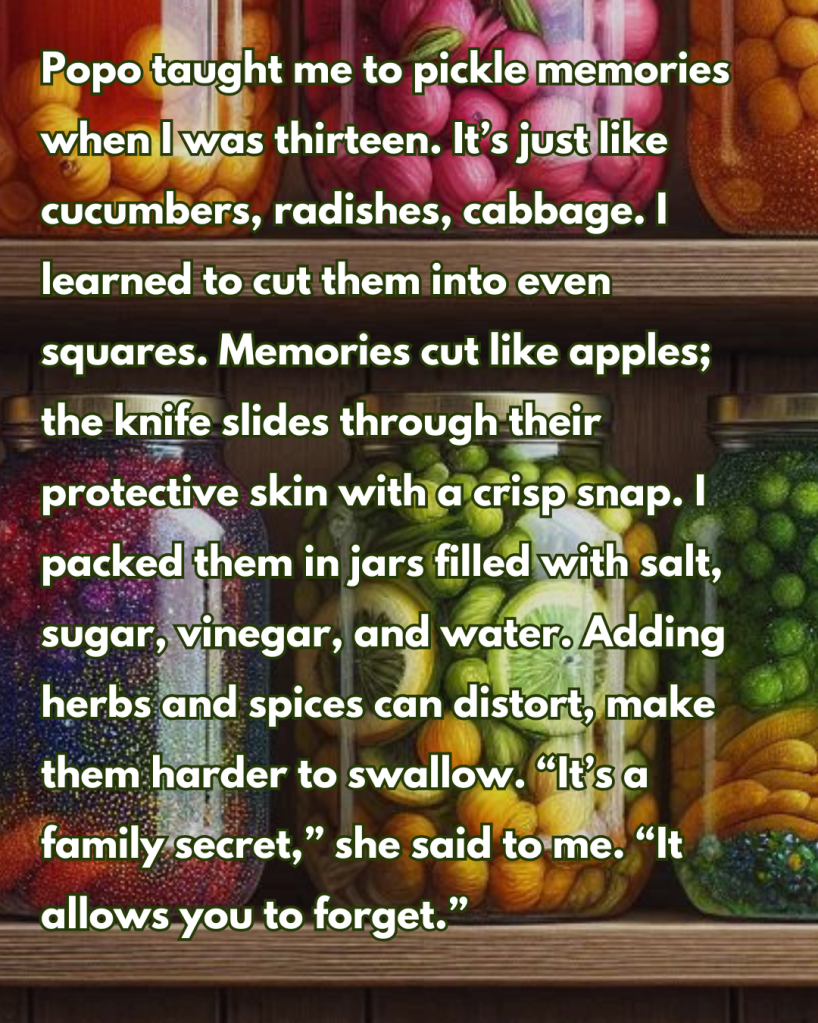
“1,000-Year-Old Ghosts” follows Katie, a half-Chinese, half-white girl growing up in San Francisco with her mother Anne and her grandmother Popo. When Katie is thirteen, Popo teaches her a secret family practice: pickling unwanted memories in jars so they can be preserved but forgotten. The story spans Katie’s life as she uses — and eventually overuses — this practice, forgetting painful experiences tied to race, identity, loss, and belonging. When she finally confronts what her mother has chosen to remember instead, the story lands on a quiet, devastating question about what we lose when we forget.
The magical realism is accessible and immediate — students can grasp it on a first read — making it an ideal entry point into the genre while still offering rich layers for deeper analysis.
“So many magical realism stories are hard for my students to parse. THIS was one they could read on their own and understand. They LOVED it.” — Amy P., high school ELA teacher
Why “1,000-Year-Old Ghosts” Works So Well in High School ELA
1. It Makes Abstract Themes Concrete and Discussable
Memory and identity are intrinsically linked — but they can be hard to discuss productively with teenagers. This story makes that conversation tangible. The physical act of pickling memories gives students a concrete image to anchor otherwise abstract philosophical questions:
- What memories shape who we are?
- Does forgetting serve a positive purpose — or does it come at a cost?
- How do different generations in a family understand memory differently?
These are not just literary questions. They are questions students are already living.
2. It’s a Masterclass in Magical Realism
The story is ideal for teaching magical realism because the fantastical element (pickling memories) is grounded in an ordinary domestic act. Students can clearly see why an author would use a magical device — and what work it does that plain realism could not. Discussion questions write themselves: Why jars? Why pickling? What would be lost if this were just a metaphor?
3. It Centers a Diverse, Contemporary Voice
The story was originally published in Hyphen Magazine in 2016 and selected for the LeVar Burton Reads podcast before being named a PEN America Best Debut Short Stories winner in 2017. Laura Chow Reeve Laura Chow Reeve is an Asian American author writing about the lived experiences of Chinese American women across generations — themes of assimilation, cultural inheritance, and identity that many students will connect with directly, and all students benefit from encountering.
4. It Pairs Naturally With Philosophy and Multimedia
The story opens a natural door to John Locke’s memory theory of personal identity — the idea that consciousness, built from memory, is what makes you you. Pairing the story with a short philosophy clip (Crash Course Philosophy #19 works well) and asking students to test Locke’s theory against Katie’s experience generates some of the richest discussions you will have all year.
Key Literary Elements to Teach With This Story
Magical Realism — The blending of the ordinary (pickling vegetables) with the extraordinary (pickling memories) is the engine of the story. Ask students: what does the magical element allow the author to explore that a realistic story could not?
Symbolism — The jars, the pickling liquid, the stinging hands, the overflowing shelves — each image carries thematic weight about memory, identity, and the costs of forgetting. This story is an excellent text for teaching how objects accumulate symbolic meaning across a narrative.
Character Development — Katie’s arc across decades, and the contrast between how she, her mother, and her grandmother relate to memory, gives students rich material for analyzing motivation, change, and intergenerational dynamics.
Imagery and Sensory Language — From the crisp snap of a memory being cut to the salt and vinegar of the pickling liquid, the story’s language is vivid and precise. It’s excellent for teaching close reading of word choice and sensory detail.
How to Teach “1,000-Year-Old Ghosts”: A 7-Day Classroom Arc
Here is a brief overview of how I structure the mini-unit. Each day builds toward the next, moving students from personal connection to philosophical inquiry to literary analysis to creative expression.
Day 1 — Essential Question & Pre-Reading Introduce the driving question: How do memory and forgetting shape personal identity and family relationships? Students reflect on their own most vivid memories and consider what they would do if they could choose to preserve or erase them.
Day 2 — Philosophy Connection Introduce John Locke’s memory theory of identity. Students take CLOZE notes from a short video clip and reflect on whether they believe memory defines who we are — then hold that question while they read.
Day 3 — Reading Day This is a story students can read independently. I highly recommend using the LeVar Burton Reads episode . His narration is beautiful, and his personal reflections afterward add another layer of meaning.
Day 4 — Close Reading & Literary Analysis Students return to key passages for close reading, analyzing how the author uses symbolism, imagery, and magical realism to develop the story’s central themes.
Day 5 — Multimedia Connection Use clips from The Big Bang Theory and Young Sheldon to explore how misunderstood or selectively held memories can shape identity in ways we don’t even realize: a powerful real-world complement to the story’s themes.
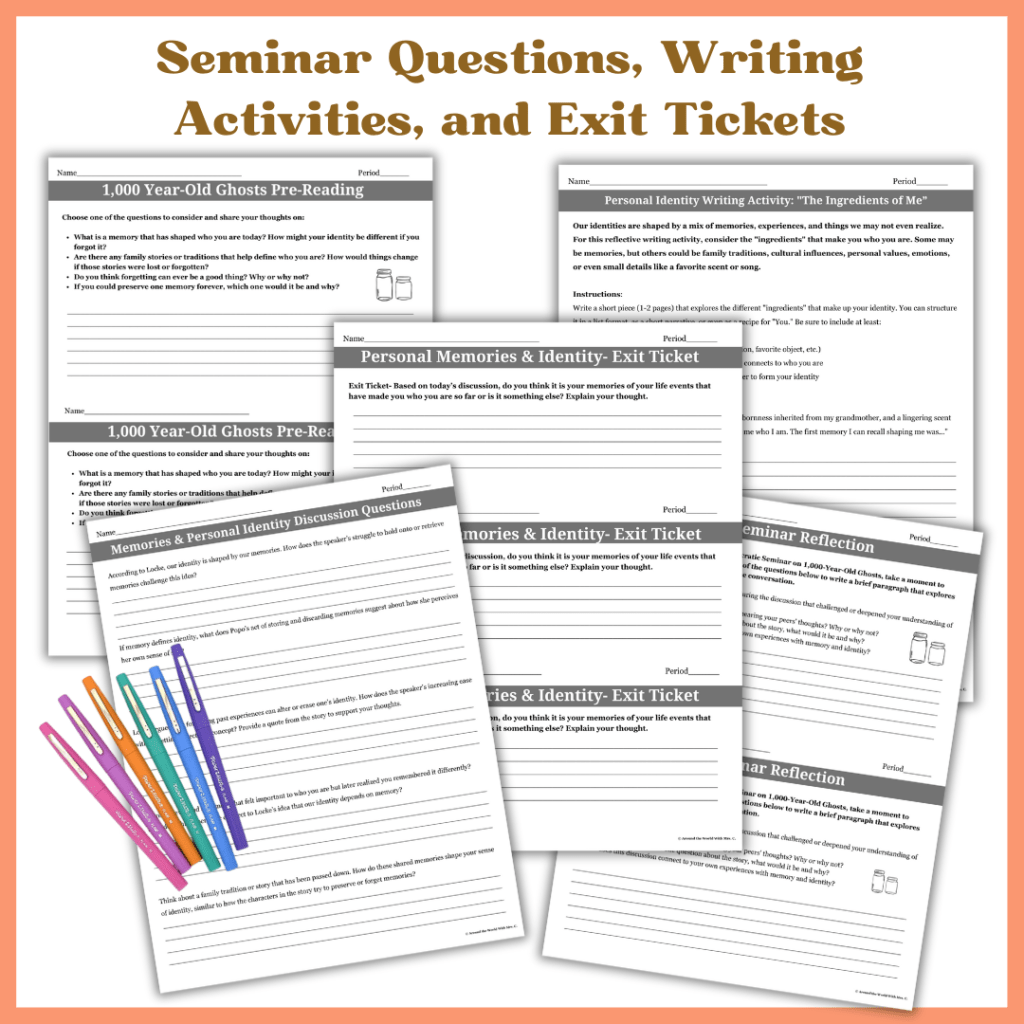
Day 6 — Socratic Seminar Student-led discussion on essential questions: Is forgetting always harmful? What role does love play in the family’s struggle with memory? How do the three generations differ in their relationship with the past?
Day 7 — Creative Writing: “The Ingredients of Me” Students write a personal identity piece exploring the memories, experiences, and influences that have shaped who they are — inspired by the story’s use of preservation as a metaphor for selfhood.
📥 Want the full 7-day unit, ready to print and teach? My complete mini-unit includes day-by-day lesson plans, close reading guides, discussion prompts, CLOZE notes, the Socratic Seminar protocol, and the creative writing activity with a student-facing rubric. [Grab it here !]
So many magical realism stories are hard for my students to parse. THIS was one they could read on their own and understand. They LOVED it. I loved it too! At first I wasn’t sure if it should go in our world lit class, as the author is American, but I used it as an extension activity to show Magical Realism at work in current, brand new, works by writers that can actually be found on Instagram. 🙂 I am so glad you found this story!- Amy P.
Close Reading Spotlight: Two Key Passages
Passage 1 — The Confrontation Between Mother and Daughter
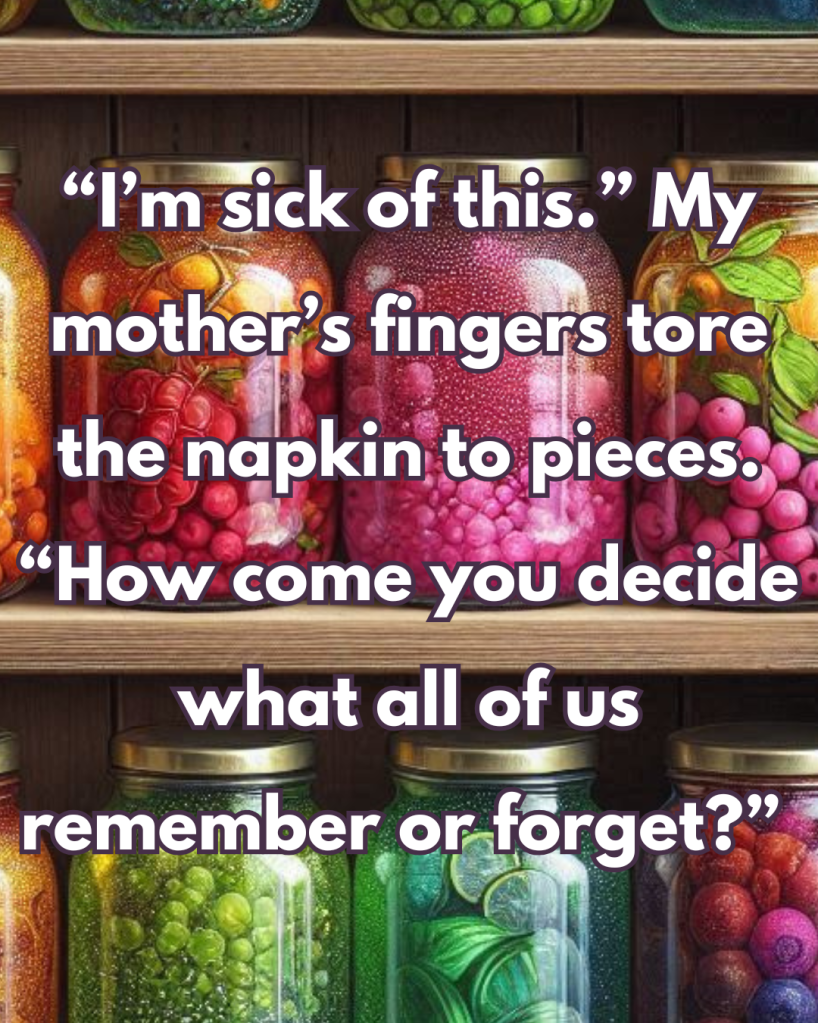
“‘How come you decide what all of us remember or forget?’ There was water in her eyes…’You know what, Ma?’ she said. ‘I remember everything.'”
This exchange sits at the moral center of the story. Anne’s refusal to pickle her memories — even the painful ones — is both a rejection of her mother’s coping mechanism and an assertion of a different kind of identity. Ask students: What does Anne’s choice suggest about the relationship between memory and selfhood? Is she braver than Katie, or just differently wounded?

Passage 2 — The Catalogue of Forgotten Things
The passage beginning “I chose to forget the song that was playing when I lost my virginity…” is the story’s most powerful close reading opportunity. Each item Katie chooses to forget is a piece of lived experience tied to race, gender, body, and belonging. Ask students to consider: What is the cumulative effect of these forgettings? What kind of person is left when these experiences are removed?
Frequently Asked Questions About Teaching “1,000-Year-Old Ghosts”
What grade level is “1,000-Year-Old Ghosts” appropriate for? The story is best suited for grades 9–12. The themes of racial identity, loss, and coping are handled with nuance rather than graphic content, making it appropriate for most high school classrooms. Advanced 8th grade classes can also handle it well.
Where can I find “1,000-Year-Old Ghosts” to read with my class? The full text is available free at Hyphen Magazine online. The LeVar Burton Reads audio version (Episode #9) is also free to access and is an excellent option for auditory learners or for a whole-class listening experience.
What standards does this story align with? “1,000-Year-Old Ghosts” aligns with Common Core ELA standards for literary analysis (RL.9-10.1–6, RL.11-12.1–6), including citing textual evidence, analyzing theme development, evaluating author’s craft, and comparing texts across genres. It also supports speaking and listening standards through Socratic Seminar.
Is this story appropriate for a world literature or American literature class? Both. While Laura Chow Reeve is an American author, the story’s themes of cultural identity, generational memory, and immigration experience make it a strong fit for world literature units as well. It works beautifully as a contemporary example of magical realism alongside García Márquez or Isabelle Allende.
What other stories pair well with “1,000-Year-Old Ghosts”? Strong pairings include “Fish Cheeks” by Amy Tan (cultural identity, family), “Recitatif” by Toni Morrison (memory and race), or any García Márquez story for genre comparison. For a nonfiction pairing, John Locke’s memory theory of personal identity creates a rich philosophical anchor.

Forgetting may seem protective as she lists off several painful memories that she chose to pickle. But it can also leave gaps in identity and relationships. Her stinging hands could symbolize the pain of holding onto or handling memories, even when trying to erase them. Because she has made pickling her memories such a part of her identity and everyday routine, she is now left with the pain of not knowing who she truly is.
Final Thoughts: Why This Story Belongs in Your Classroom
“1,000-Year-Old Ghosts” is a short story that does what the best literature always does: it takes something universal — the question of who we are and what shapes us — and makes it feel both new and deeply true. It is accessible enough for independent reading, rich enough for graduate-level discussion, and human enough to meet students exactly where they are.
Whether you use it as a standalone text, an anchor for a magical realism unit, or the centerpiece of a personal identity study, it will leave your students — and you — thinking long after the last page.
Looking for ready-to-use lesson plans, close reading guides, Socratic Seminar prompts, and a student-facing creative writing activity? My complete 7-day mini-unit on “1,000-Year-Old Ghosts” has everything you need. Save hours of planning and walk in ready to teach one of the most memorable units of your year.
Get the 7-Day Mini-Unit

📌 What are your favorite short stories for exploring memory and identity? Drop your thoughts in the comments below!
Join my weekly newsletter!
Would you love to get weekly tips and resources for teaching secondary English delivered right to your inbox? Click here to join! Would you like to connect on social to see more of my ideas in bite-sized form? You can find me on YouTube and Instagram.
 Around the World With Mrs. C