

Short stories are a staple in every ELA classroom. They are a wonderful way to have the full class instruction with smaller, but still impactful texts. However, I love to introduce my students to different genres of short stories. Today I am sharing about two Magical Realism short stories my students and I love.
Magical Realism is a literary genre that seamlessly intertwines magical or fantastical elements with everyday reality, blurring the boundaries between the mundane and the extraordinary. In Magical Realism, fantastical occurrences are presented as ordinary events, inviting readers to question their perceptions of reality and explore deeper layers of meaning within the narrative.

Today, I am sharing three of my favorite Magical Realism short stories. These stories are beautiful and are sure to be a big hit with your students! They are: “The Paper Menagerie”, “Chivalry”, and “1,000 Year-Old Ghosts”.
If you fall in love with them as much as I have, be sure to check out this bundle where you can easily teach all 3!
Besides being the perfect stories to read and discuss about universal themes through beautiful symbolism; each of these stories can be found on LeVar Burton Reads! You will find the links for each episode in the blog post.
Why use Magical Realism in your classroom?
Integrating Magical Realism into your classroom engages students in thought-provoking discussions about the nature of reality and the power of imagination. By exploring the fantastical elements within these stories, your students can develop critical thinking skills while also honing their ability to analyze symbolism and thematic depth.
Magical Realism offers a diverse range of cultural perspectives. It includes various storytelling traditions. These elements provide you with opportunities to promote empathy and understanding among your students.
Neil Gaiman’s “Chivalry”
This is one of the stories in Neil Gaiman’s anthology Smoke and Mirrors. I highly recommend using this recording of LaVar Burton reading it !
This beautiful story intertwines the magic of Arthurian legends with the modern world when Mrs. Whitaker (an old widower) purchases the Holy Grail in a secondhand shop and Galahad comes knocking on her door looking for it. Mrs. Whitaker refuses to give away the Grail as she likes how it looks on the mantle.
Next to the book, on its side, was the Holy Grail. It had a little round paper sticker on the base, and written on it, in felt pen, was the price: 30p. Mrs. Whitaker picked up the dusty silver goblet and appraised it through her thick spectacles.
“This is nice,”she called to Marie. Marie shrugged.
“It’d look nice on the mantelpiece.”
Neil Gaiman

Galahad is determined to not simply take the Grail, but to prove he is worthy of it. He goes on many dangerous quests to find even more magnificent magical totems to exchange for the Grail. He also helps Mrs. Whiticker around the house and her garden with mundane (not very “knightly”) chores.
It is a lovely story that has us examine what is most important in our lives and what the true magic is. This product helps to introduce students to what Magical Realism is and then guides them through the thematic analysis of the story.
Analyzing “Chivalry” by Neil Gaiman provides students with an exploration of the intersection between modernity and folklore. It invites discussions on the enduring relevance of chivalric ideals in contemporary society.
Also, by dissecting Gaiman’s narrative techniques in this short story, your students can sharpen their literary analysis skills. With this mini study of the story, your students can dive into deep thematic analysis of this charming story!
⭐⭐⭐⭐⭐ Extremely satisfied- Brooke J.
After Christmas Break, we wanted a nice magical realism unit to start the year off. My students really enjoyed this story, and this was a great resource. Thank you!
This story can also be a fun twist to add into your King Arthur units! In fact, I have included it in my King Arthur Bundle HERE.
Ken Liu’s “The Paper Menagerie”
You can find an open source text version here and you can listen to LeVar Burton read it here!
This is a heartbreaking story of a son who learns how much his mother loved him. As a small child, the main character is extremely close with his Chinese mother who speaks little-to-no English. She often makes him origami animals that come to life after she breathes into them.
However, as he grows older, and encounters a steady dose of racism from those around him, he pushes his mother away indignant that she should become more “American”. After her death, he finally learns more about her life and just how much she loved him.
“You know what the Chinese think is the saddest feeling in the world? It’s for a child to finally grow the desire to take care of his parents, only to realize that they were long gone.”
Ken Lui

This product helps to introduce students to Magical Realism and guide them through a full analysis of “The Paper Menagerie” via a close look at literary devices used, point of view, and quote analysis.
⭐⭐⭐⭐⭐ Extremely satisfied- Veronica A.
My kids were in tears! Such a powerful story and wonderful resource.
The final page of this handout set is breakdown of their thematic statement on the story as well as evidence to support. This can serve as a quick check for understanding or the outline of a larger essay.
Laura Chow Reeve’s “1,000 Year-Old Ghosts”
Memory and identity are intrinsically linked, and this story provides a powerful lens through which students can explore that connection. Katie, the protagonist, struggles with what it means to remember and what it means to forget—ideas that are deeply personal and universally relevant. Her grandmother teaches her to take all her unwanted memories and pickle them in jars. This way, they will be preserved but she won’t remember them.
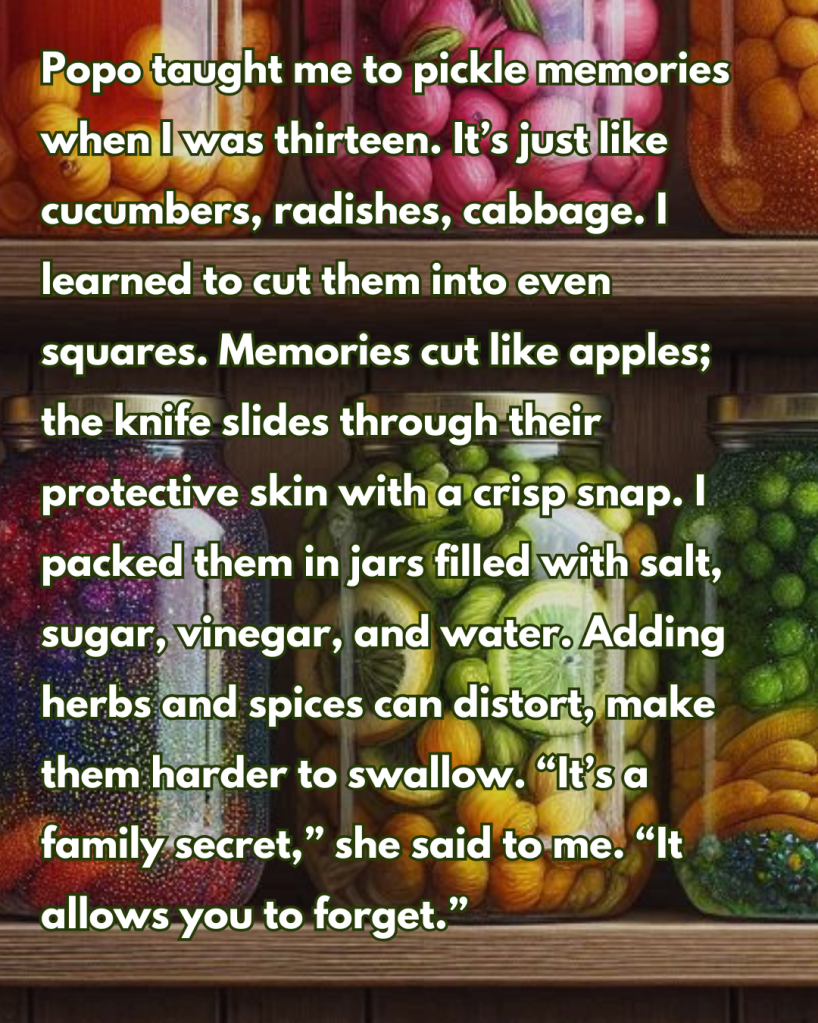
The story’s magical realism, where memories are physically preserved in jars, serves as a metaphor for the ways we try to hold onto (or forget) our past and the consequences of doing so. It can also be seen as a metaphor for unhealthy coping mechanisms.
This story is also perfect for exploring personal identity. Before reading, I suggest asking students: How do our memories (or forgetting them) shape personal identity and family relationships? Introducing your students to John Locke’s memory theory is great for continuing to discuss this story and its symbolism.

Looking for ready-to-use lesson plans, close reading guides, Socratic Seminar prompts, and much more to help you teach this story? Check out my 7-day mini-unit to save time and get everything you need for an engaging, thought-provoking study!
Final Thoughts
Magical Realism takes your students to worlds unimagined yet all too real while also honing in on the skills they will need for a lifetime. Through stories like “The Paper Menagerie”, “Chivalry,” and “1,000-Year Old Ghosts”, we unravel themes and symbolism, delving into the nuanced layers of these enchanting narratives.
If you are ready to share all 3 with your students, this Magical Realism Short Story Bundle is exactly what you need! This bundle is fully planned and ready to go, with engaging activities that guide students through literary analysis, philosophical connections, and creative and literary analysis writing.

With no-prep PowerPoints, discussion guides, and scaffolded analysis worksheets, you’ll have everything you need to spark deep, meaningful conversations in your classroom. Plus, students will love exploring the intersection of the real and the fantastical as they analyze themes of memory, perception, and human connection. If you’re ready to bring these mesmerizing stories to your students, check out the Magical Realism Short Story Bundle today!
Join my weekly newsletter!
Would you love to get weekly tips and resources for teaching secondary English delivered right to your inbox? Click here to join! Would you like to connect on social to see more of my ideas in bite-sized form? You can find me on YouTube and Instagram.
 Around the World With Mrs. C
I’m not sure using Neil Gaiman’s work is a good idea after all the revelations.
LikeLike
I completely understand your feelings here! Sadly, there are so many examples of art we fall in love with and the revelations that come out later about the creator taint it. Some are able to separate the work from the artist, so I’m leaving that up to individuals here to do what they feel is best. I’ve shared this story many times over the years and teachers have loved my resources for it (which do not financially benefit him), but I absolutely understand if some are no longer comfortable using this text.
LikeLike