

Creative writing in upper elementary and early middle school isn’t just about crafting silly stories or filling time after testing. It’s about helping students tap into the highest level of thinking: creativity! According to Bloom’s Taxonomy, creativity represents the top tier of cognitive processing.
When we encourage students to imagine, invent, and write, we are building the foundation for stronger critical thinkers, problem solvers, and communicators.
But if you’re a teacher or a homeschooling parent, you already know how full your days are. Between test prep, core subjects, behavior management, and everything in between, it’s hard to carve out space for creative expression. That’s why I’ve created quick, low-prep resources that make it easy to integrate creative writing into your weekly routine.
Whether it’s a morning warm-up, an early finisher task, or a full writing lesson!
Here are three engaging and purposeful writing activities that can spark your students’ imaginations and support higher-level thinking.
1. Mystery Writing Outline Handouts
There’s something about a good mystery that pulls kids in immediately. Spooky shadows, creaky floorboards, and secrets waiting to be uncovered. Mystery stories naturally lend themselves to deep thinking, especially when students are guided to build them from the ground up.
To make the process approachable, I’ve created Mystery Writing Outline Handouts. These brainstorming guides help students map out their characters, setting, clues, red herrings, and solutions before they even begin their first draft.
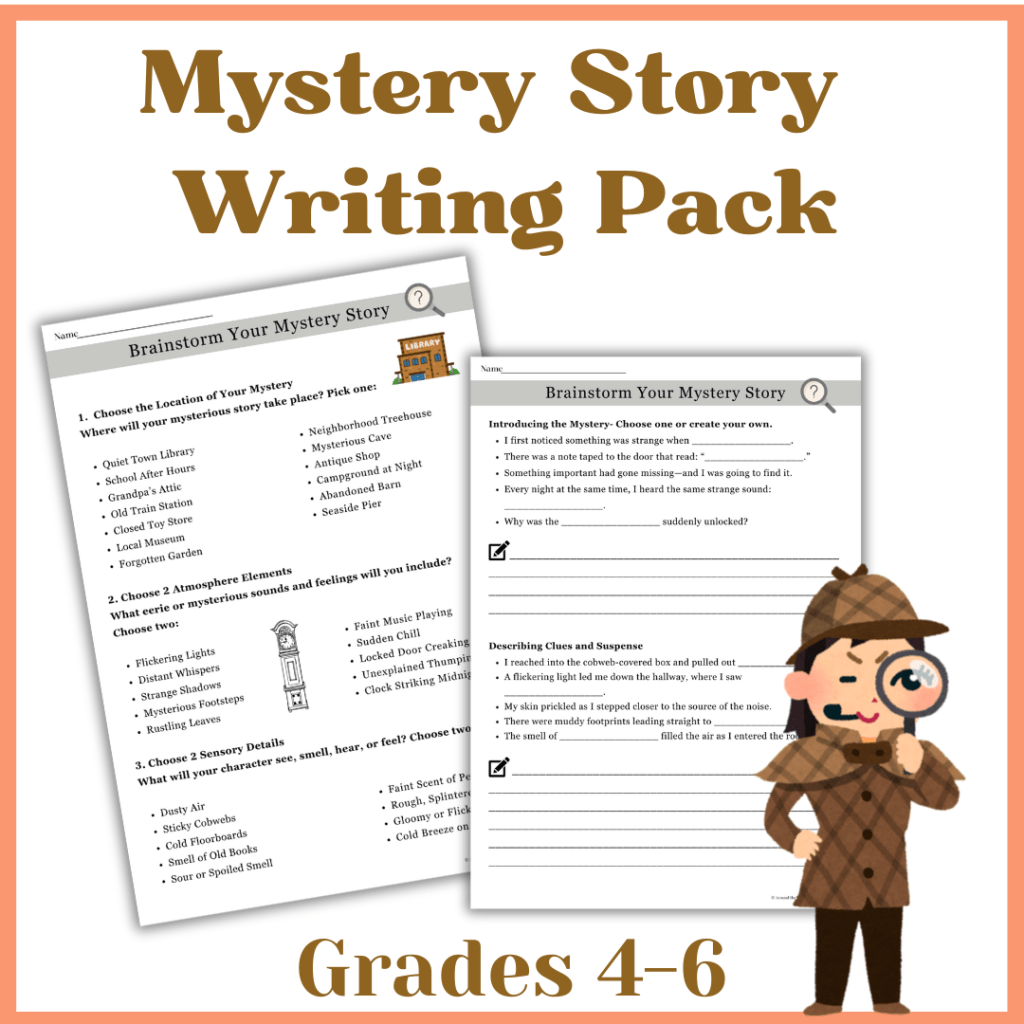
Here’s how they work:
Before students even start using the handouts, begin with a short 5-minute warm-up discussion. Ask questions like:
- What makes something feel mysterious or spooky? (Think: shadows, secrets, sounds.)
- What’s the spookiest or most mysterious place you’ve ever seen in real life or a movie?
Then, students start to think through the components they want to include in their mystery. Using the brainstorming handouts, students walk through a step-by-step creative process:
Brainstorm who or what is behind it all (a neighbor with a secret? A misunderstood animal?)
Choose a setting (like a school after hours or a forgotten garden)
Select eerie atmosphere elements (flickering lights, distant whispers)
Add sensory details (sticky cobwebs, the smell of old books)
Create a sleuth character (like a clever cat or a group of mystery-loving friends)
Craft the central mystery (a missing item, an unexplained sound, or a strange message)
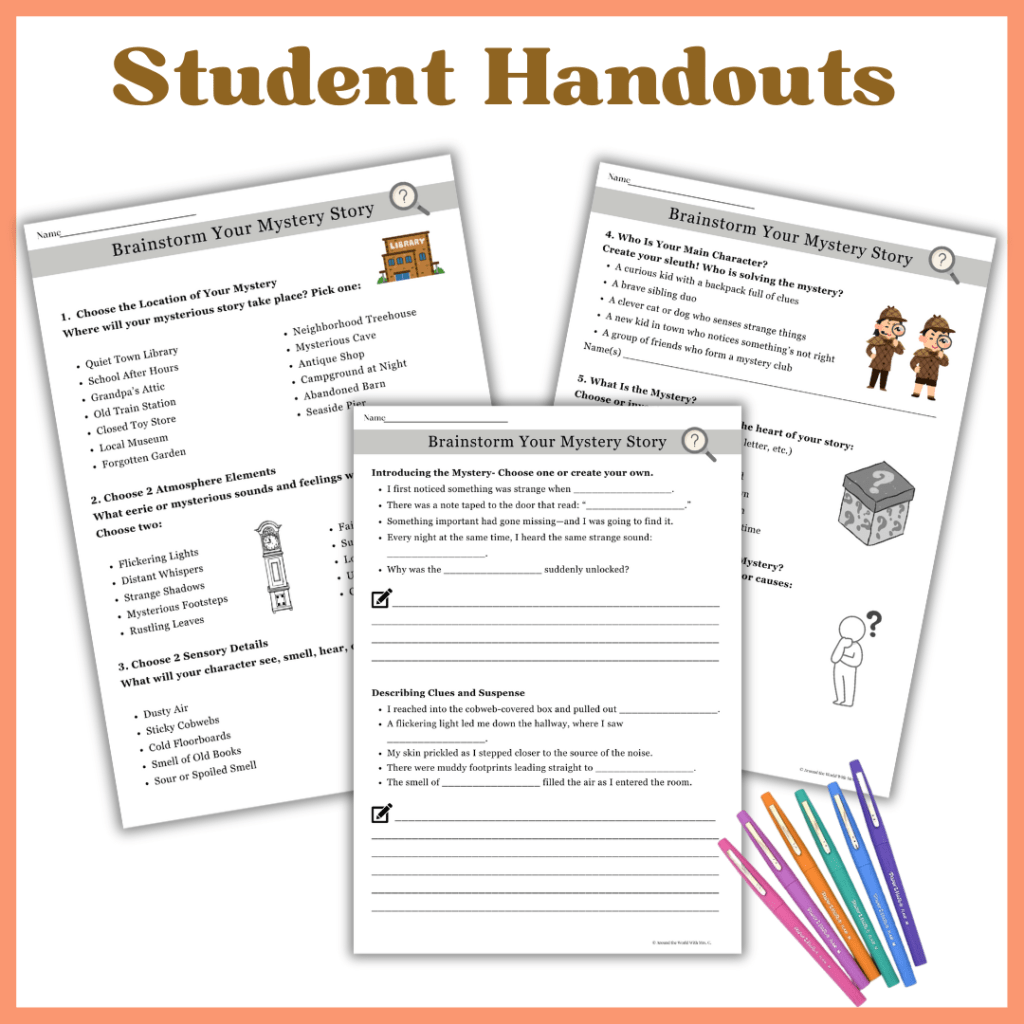
Once the brainstorming is finished, students move on to writing! I included sentence stems that help them draft key scenes with descriptive language and suspense. You’ll find useful prompts like:
- “Did you hear that?”
- “We need to figure out what’s going on before it’s too late.”
- “There were muddy footprints leading straight to…”
They also get space to draw an illustration of their story, encouraging a visual connection to their writing. This resource is perfect for both reluctant and enthusiastic writers because it scaffolds the entire process without limiting imagination.
This mystery story writing pack is an ideal option for:
- Writing workshop
- Sub plans
- October or mystery-themed units
- Independent or partner writing projects
With structure, inspiration, and spooky storytelling all built in, this resource helps students produce writing they’re proud of—without needing a full week of prep time on your part.
2. Seasonal Creative Writing Prompts
Need a low-lift way to sneak in creative writing all year long? These seasonal creative writing prompts are perfect for morning work, enrichment, or early finisher stations. Each prompt encourages students to stretch their imaginations while practicing descriptive writing, dialogue, and narrative structure.
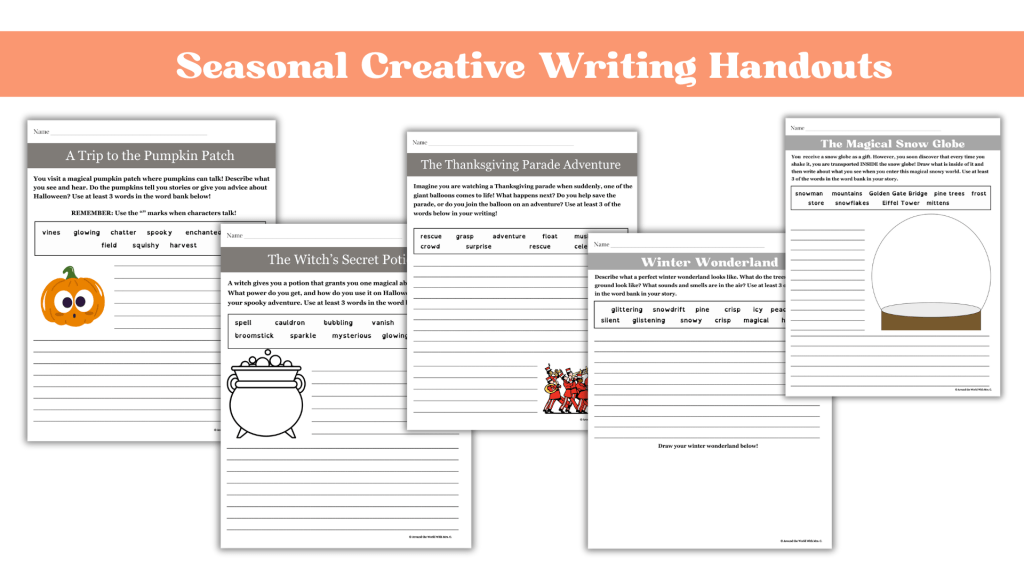
Each prompt is designed to spark creativity and imagination, while also supporting a variety of learning styles. These narrative storytelling prompts give students will have the chance to develop their writing skills in a fun, low-pressure way.
Plus, each prompt comes with a helpful word bank, making it accessible for all learners, including English language learners (ELLs) and students who need extra vocabulary support.
For example, from one of the Halloween prompts, students get to write about a haunted house with the following prompt:
You and your friends discover an old, spooky house at the end of the street.
When you enter, strange things start happening. What do you see, hear,
and feel? What happens next? Use at least 3 of the words in the word bank
below.
- creaky
- cobwebs
- ghostly
- shiver
- flicker
- whisper
- foggy
- shadow
- mysterious
Then, in the my winter-themed creative writing prompts, students get to imagine a magical snowglobe with the following prompt:
You receive a snow globe as a gift. However, you soon discover that every time you
shake it, you are transported INSIDE the snow globe! Draw what is inside of it and
then write about what you see when you enter this magical snowy world. Use at least
3 of the words in the word bank in your story.
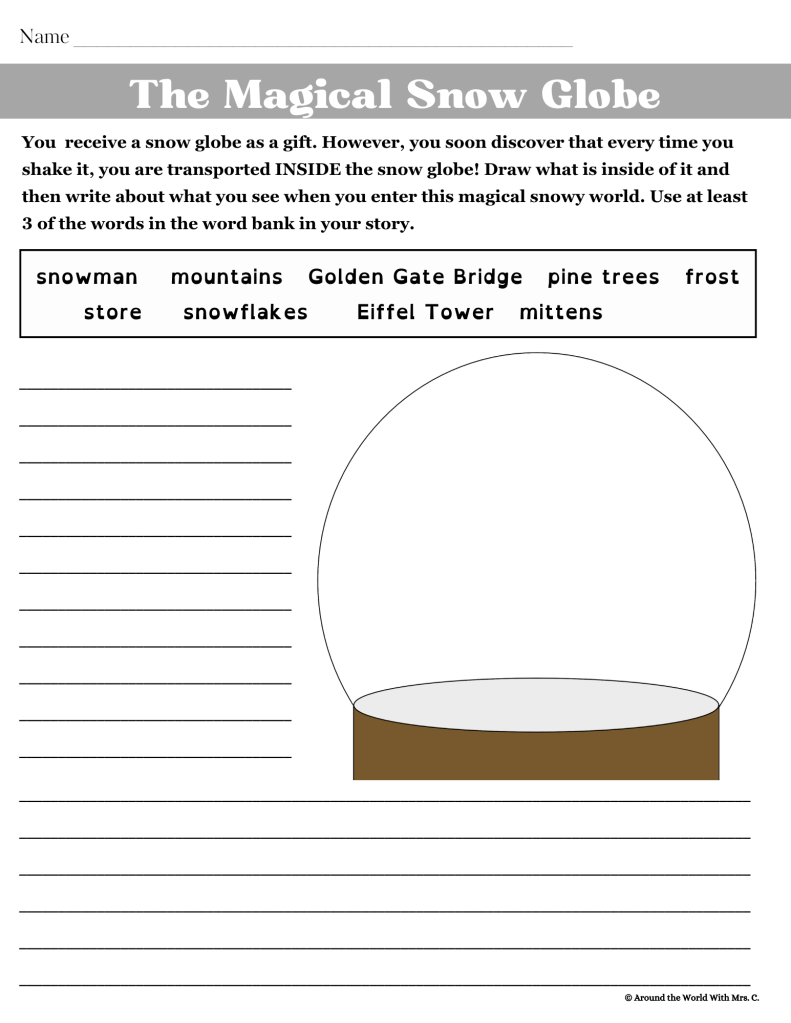
These fun and quick prompts are the perfect addition to your busy classrooms! Not only are they engaging for students, but there is a lot of higher thinking going on in these creative prompts.
3. Spellbook Writing Activity
If your students love fantasy and magic, they’ll love this one. The Potion Writing Activity asks students to become young wizards crafting their own magic potions. But this isn’t just play. It’s a clever way to teach sensory details and cause-and-effect writing!
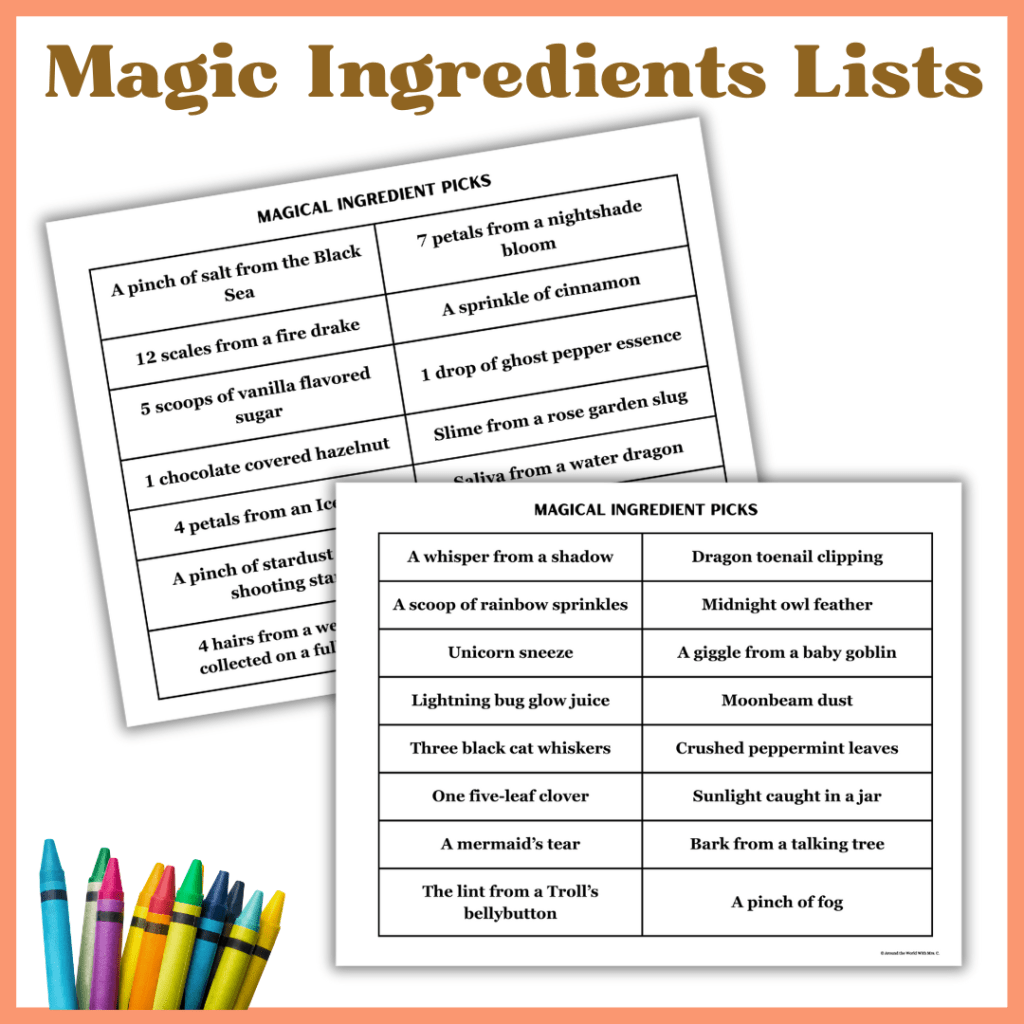
Your students get to pull 3 magical ingredients from the 50+ I have created (make it extra fun by having them pull them out of your magical cauldron!). Magical ingredients like:
- A whisper from a shadow
- Dragon toenail clipping
- A giggle from a baby goblin
- Midnight owl feather
- Unicorn sneeze
Then, they get to brainstorming what kind of potions they would make. What kind of spell would it make? What would it look and taste like (if done properly)? What warnings must go along with this spell?
FOR EXAMPLE!
Shadowglow Elixir
Ingredients:
- A whisper from a shadow
- Moonbeam dust
- 10 drops of ink from a kraken
Spell Type:
This mysterious elixir allows the drinker to blend into the shadows and move without making a sound. But, it’s only for exactly one hour. Perfect for sneaking past sleeping dragons or slipping through locked castle doors unnoticed.
Appearance:
The potion glows a soft silver in the bottle but turns deep violet once poured into a cup. When stirred, it swirls with smoky tendrils and faint glimmers of light, like moonlight reflecting off ink.
Taste:
It tastes like cool peppermint with a strange aftertaste of sea salt and old parchment. Some say it leaves your tongue slightly tingly, like the fizz of a magical soda.
Preparation Instructions:
Whisper the name of the moon phase (e.g., “Waning Crescent”) as you combine the ingredients under a full moon. Stir with a silver spoon exactly 13 times clockwise, then let it rest in total darkness for 10 minutes.
Warning:
Use with caution. If you speak while the potion is active, your voice echoes as if coming from a distant cave—giving you away instantly. Effects will vanish immediately if exposed to sunlight or candle flame.

There is no end to the creative fun you can have with this!
There are multiple templates to choose from. So whether you need a handout that students can illustrate or an interactive notebook edition, I have got you covered!
Want Even More Creative Writing Fun?
If you’re loving the sound of these writing activities, you’ll be thrilled to know that they’re all part of my Creative Writing Bundle for Grades 4–6. This bundle is packed with engaging, low-prep resources that make it easy to weave writing into your week without overwhelming your schedule.
Here’s what you’ll find inside the bundle:
- ✍️ Seasonal creative writing prompts for fall, winter, spring, and beyond—great for morning work, fast finishers, or writing centers
- 🕵️♀️ Mystery story outlines to help students structure spooky or suspenseful tales
- 🧪 Spellbook writing activities with magical ingredients and imaginative prompts to build sensory writing and cause-and-effect skills
- 🎨 Visual elements like coloring pages, illustration spaces, and themed layouts to tap into students’ artistic sides
Whether you’re teaching in a classroom or homeschooling, this bundle makes it easy to promote creativity and critical thinking while keeping students engaged and excited about writing.
👉 Click HERE to get the bundle!
Final Thoughts
Creative writing isn’t just a fun extra. It’s an essential part of developing confident, critical thinkers. When we give students the space to dream, invent, and express themselves through writing, we’re helping them grow into better readers, deeper thinkers, and more empathetic humans.
With that in mind, I don’t think we can afford to NOT make more time for creation in our classrooms!
With ready-to-use, flexible resources like these, you don’t have to carve out a whole afternoon or overhaul your lesson plans. Just plug them in wherever you have time, and let the creativity flow. Your students will only benefit!
 Around the World With Mrs. C