

The days are getting shorter, the air is (finally!) becoming more crisp, and pumpkin spice is everywhere. Which can only mean one thing: spooky season has arrived!
If you’re a middle or high school ELA teacher, this is the perfect time to bring a little eerie energy into your classroom. October offers a natural opportunity to hook students with stories that explore fear, suspense, the supernatural, and the unknown… all while building their reading and writing skills!
To be honest, this is what I LIVE for! So, get your favorite warm beverage, put on some Gothic ambient music, and lets dive in.
In this post, you’ll find a mix of literature, mythology, writing prompts, and creative classroom activities to help your students get into the spooky spirit while keeping the rigor high. Whether you have a full month to dive into Gothic lit or just a few class periods to squeeze in some spooky fun, there’s something here for you.
Set the Tone with Gothic Literature
One of the easiest and most engaging ways to tap into spooky season is by exploring Gothic literature. This genre has it all—dark castles, haunted minds, eerie landscapes, and a whole lot of literary devices your students can sink their teeth into.
Now, you might need to teach your students that Gothic means way more than just teens who love dark hair and black everything. If that is the case, be sure to give a quick introduction like this one! With this, they will learn that Gothic literature is characterized by elements of fear, horror, death, and decay, as well as supernatural elements. Such as ghosts, monsters, and demonic entities.
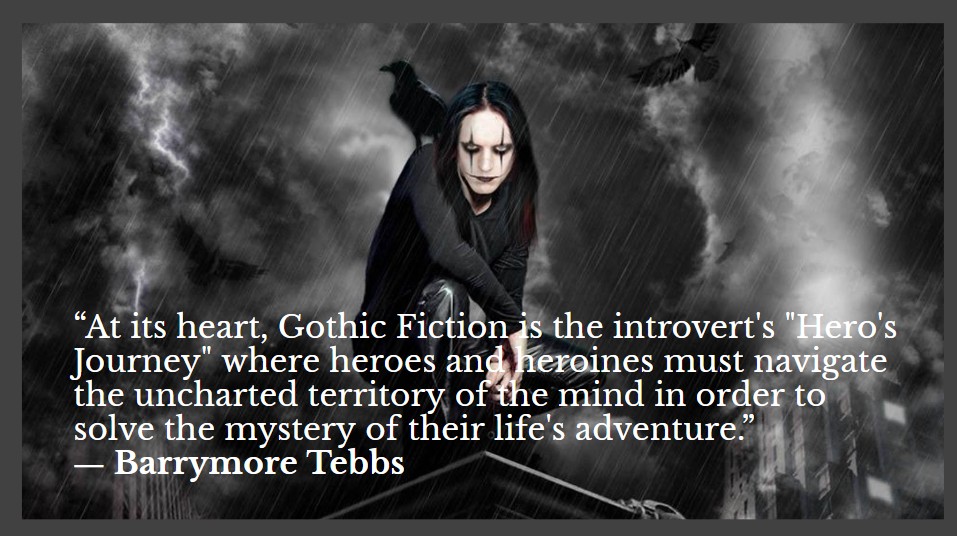
It often explores themes of madness, guilt, and transgression, and features gloomy settings such as castles, graveyards, and haunted houses. It also often features strong and mysterious characters, including the Byronic hero, who is typically brooding and dark.
Here are a few of my favorite short Gothic texts to use:
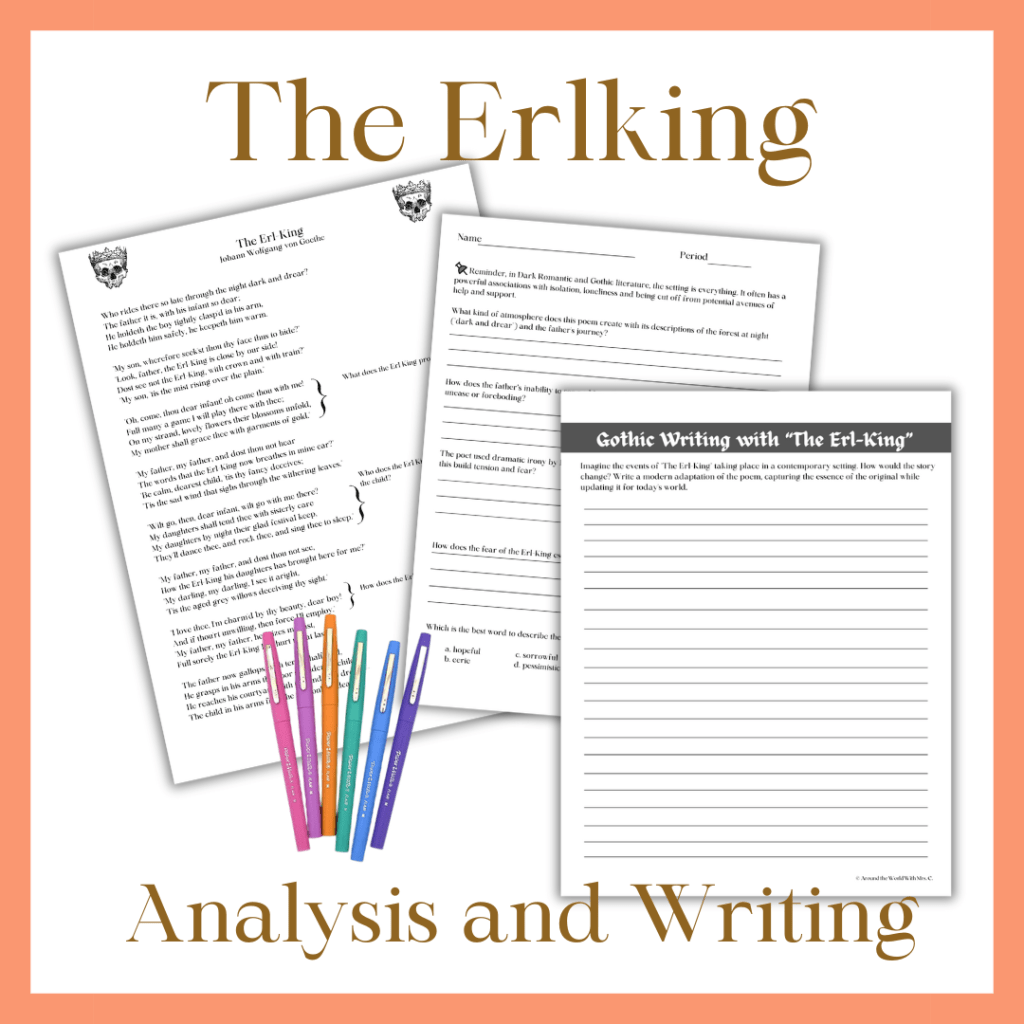
“The Erl-King” by Johann Wolfgang von Goethe
A terrifying journey through the forest, a supernatural threat, and a tragic twist—this short poem delivers big on atmosphere and suspense. Students can analyze its vivid imagery, symbolism, and dramatic irony. I HIGHLY recommend using this recording from Nocturnal Transmissions as it really ratchets up the chill and suspense!
To go along with this poem, tie-in John Connolly’s short story, “The Erlking”! You can listen to it HERE.
Guide your students through the haunting world of “The Erlking” with my Erlking Analysis activity. This resource helps you incorporate “The Erlking” by including:
- a visually engaging Mythology Presentation shedding light on the backstory of the mythical creature (The Erlking) that inspired these stories
- Navigate challenging vocabulary effortlessly with a list of words and phrases
- thought-provoking analysis questions accompany the poem
- 5 different writing prompts
“The Fall of the House of Usher” by Edgar Allan Poe
Poe’s short story “The Fall of the House of Usher” is perfect for October! With it, your students can explore themes of madness, decay, and the blurred line between reality and the supernatural.
In “The Fall of the House of Usher”, a man visits his ailing childhood friend Roderick Usher, whose crumbling mansion mirrors the decay of his mind and family line. As strange events unfold, the mysterious death (and return) of Roderick’s twin sister Madeline lead to the ultimate destruction of both the family and the house.

I first love to show this animated short film version of the story. Then diving into close reading activities that emphasize mood, diction, and imagery.
For visual learners or students who need more support (looking at you, ELLs and SPED), this multi-step approach—from video, to language deep-dive, to creative interpretation—ensures everyone gets to experience Poe’s brilliance.
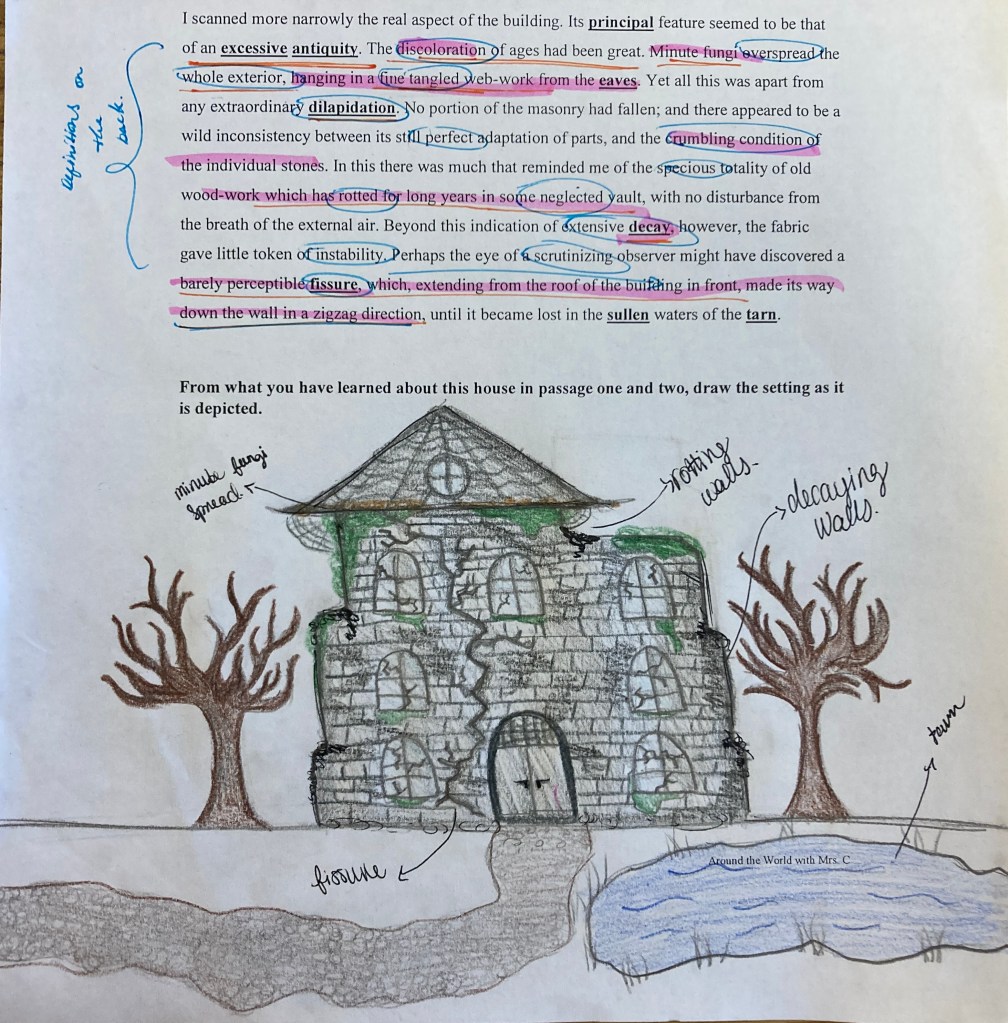
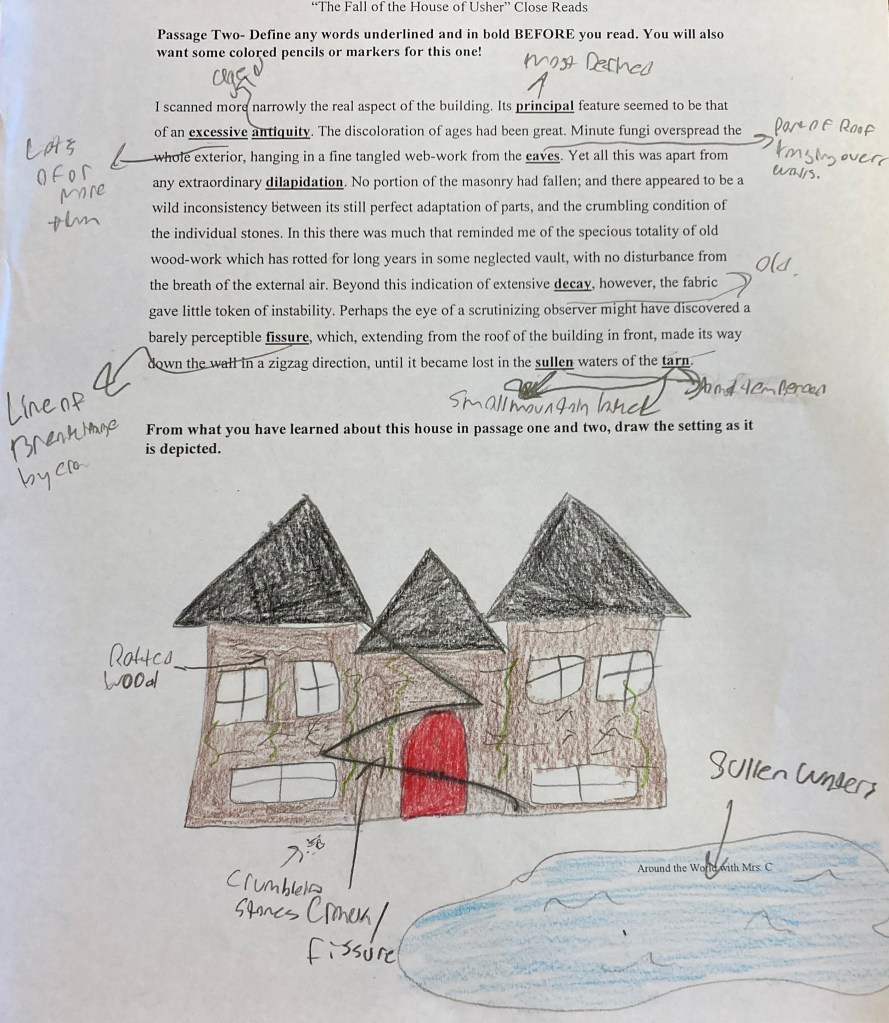
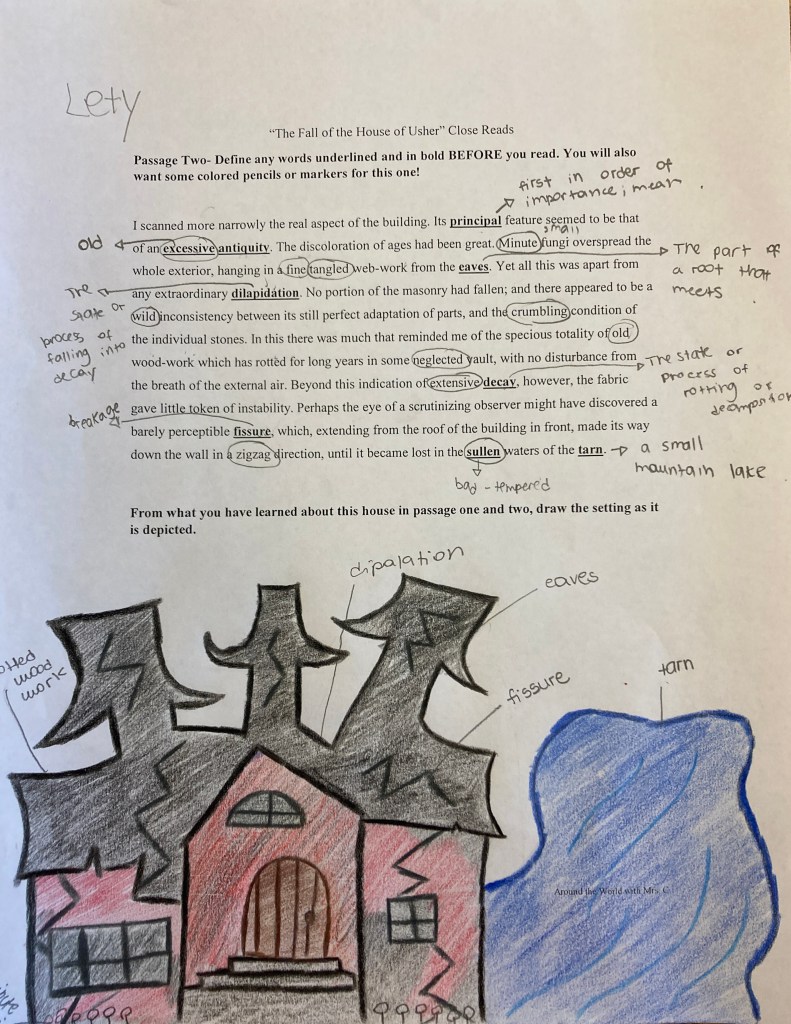
This was the perfect resource to ensure students were annotating the text and responding to standard based questions! It was a great purchase to help break down a complex story to 9th graders.- Janel G.
This resource makes “The Fall of the House of Usher” both accessible and unforgettable. Students work through four close reads from five key passages, answering both multiple-choice and short-answer questions. Then, they move into creative one-pagers.
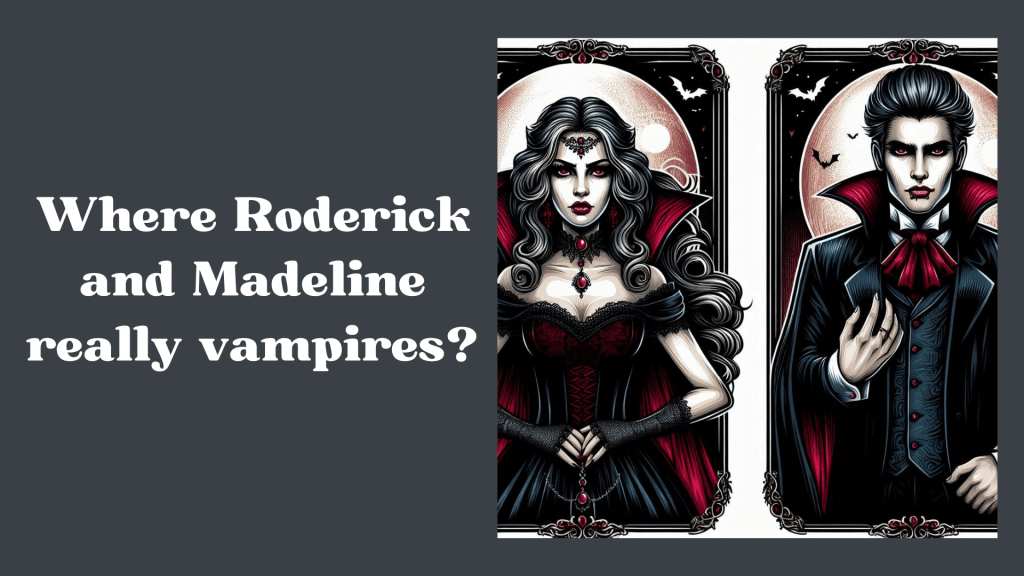
Then, they top it off with a highly engaging culminating project: re-examining the story to decide whether Roderick and Madeline were actually vampires!
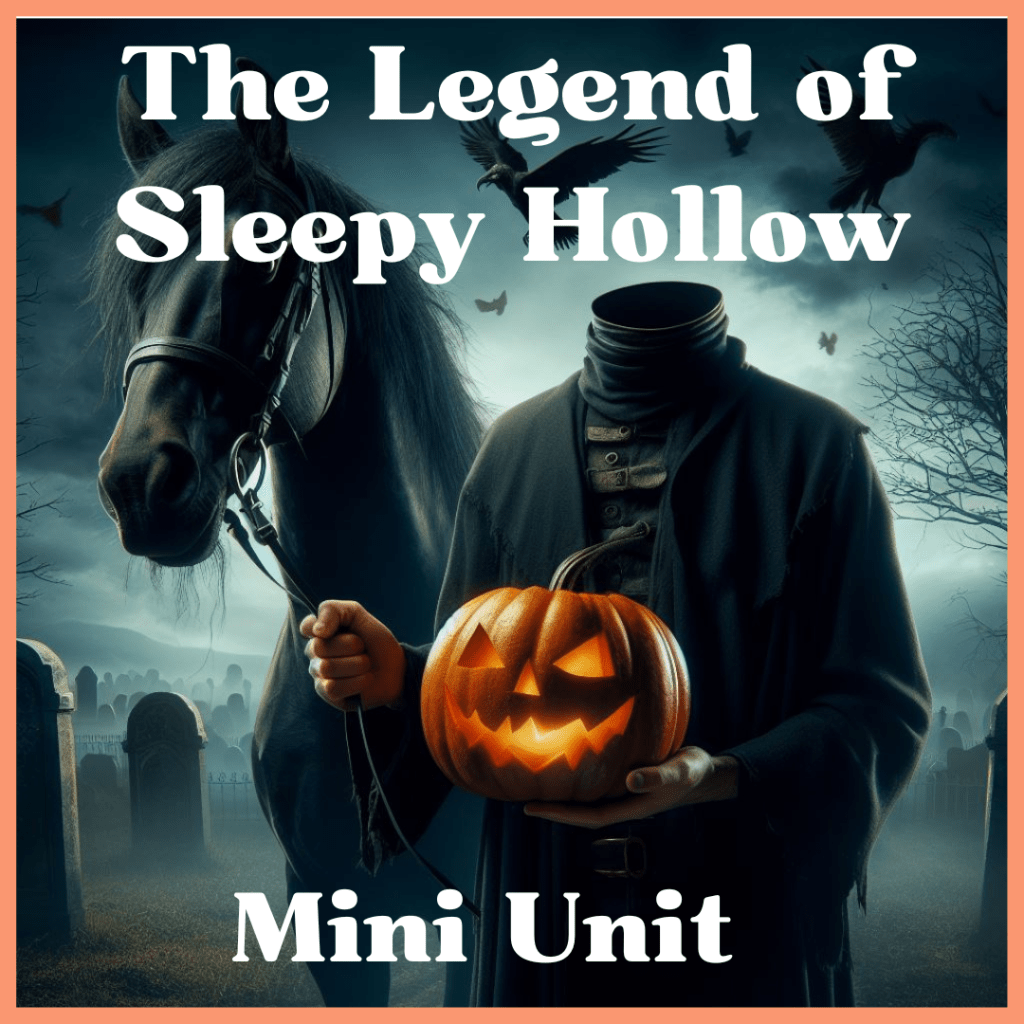
The Legend of Sleepy Hollow – A Perfect Spooky Season Classic
Few ghost stories blend satire and Gothic elements quite like Washington Irving’s “The Legend of Sleepy Hollow“. Something I love discussing with my students is the fact that NONE of the characters in this story are “good”. Brom is a bully, Ichobad covets Katrina because of the wealth he could get from her, and Katrina loves to manipulate the situation.
Add in its misty landscapes, superstitious villagers, and the unforgettable Headless Horseman, this tale is a perfect addition to your spooky season lineup with lots of room to analyze & discuss!
Not only does “The Legend of Sleepy Hollow” deliver suspense and folklore in one package, but it’s also a fantastic way to introduce students to Dark Romanticism and early American literature. The story blends historical setting, Gothic atmosphere, and legendary elements.
I love to make it extra fun by adding on a comparison with Disney’s short animated adaptation!
In my Legend of Sleepy Hollow mini unit, students work through 11 close reading passages from the original story (with skill-based questions on setting, character, language, and mood). For accessibility, I’ve included two audiobook versions and an adapted text alongside the original, so all learners can enjoy the story without getting bogged down in the language.
Here’s what’s included in the unit:
- Introductory presentation & notes on Irving, Dark Romanticism, and the story’s themes
- Close reading handouts for 11 key passages with guided analysis questions
- One-pager activities for creative and visual responses
- 3 writing prompts on author’s craft, character analysis, and Dark Romanticism
- 2 project options—compare another legend or create your own local ghost story
- Comprehension questions/quiz to check understanding
- Original & adapted versions of the story for differentiation

Whether you pair it with a unit on American Romanticism, use it alongside The Dullahan myth, or simply add it as a seasonal short story study, The Legend of Sleepy Hollow will keep your students hooked from the first haunting description to the last gallop of the Headless Horseman.
Short Spooky Podcasts to Use in Your Classroom
PRO TIP: Before listening to any podcast in class, I highly recommend having a hand-brain connection piece. I like to make active listening sheets which work as CLOZE notes they fill in while reading. However, you could also do things like Sketchnotes or mindmaps.
Adding in this active part is what will help your students retain even more of what they are hearing and limit the “zoning out” we all dread in our classrooms!
13 Days of Halloween
13 Days of Halloween was created by Aaron Mahnke (his podcast Lore is also great for this time of the year). I personally like using Season 1 in my classroom as it is an anthology, so I can pick and choose the stories. Here is how the creator describes it:
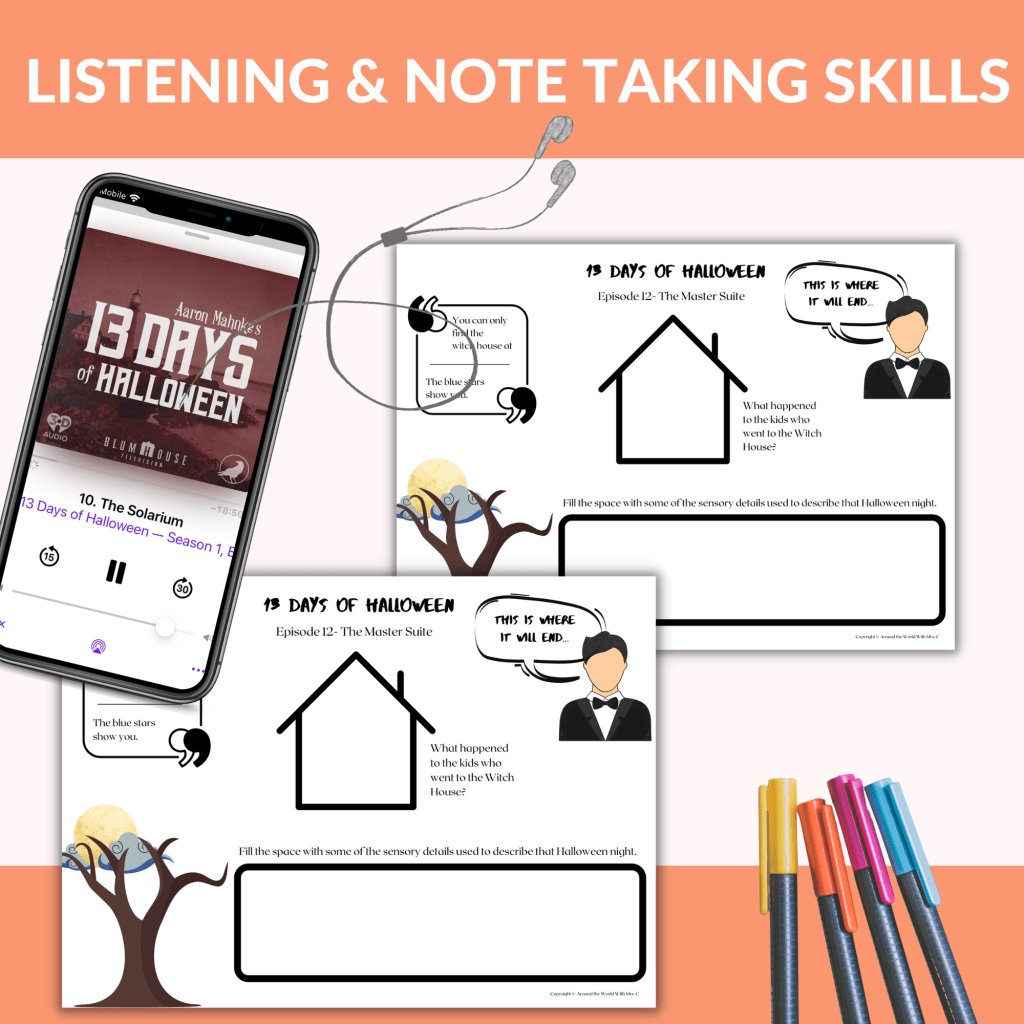
Season 1 of Aaron Mahnke’s 13 Days of Halloween is a guided tour into the strange and unusual. Each episode explores a different chilling story from one of the residents of the mysterious Hawthorne Manor.
Listeners are guided through this fictional boarding house by a man known only as “The Caretaker” (voiced by actor Keegan-Michael Key). Listeners will spend 13 days immersed in stories about the ghosts of dead lovers, eerie children who stalk the night, and weddings gone horribly wrong.
Since each episode is only 15-25 minutes long, they are the perfect SHORT add-ons to your classroom this spooky season!
Limetown
If you have not discovered Limetown yet, you really should just pause everything in your life and go start listening! Limetown is a mystery/suspense podcast that brings back the glory days of radio storytelling—it’s like a movie for your ears. The show’s premise is introduced on their website:
“Ten years ago, over three hundred men, women, and children disappeared from a small town in Tennessee, never to be heard from again. American Public Radio reporter Lia Haddock asks the question once more: What happened to the people of Limetown?“
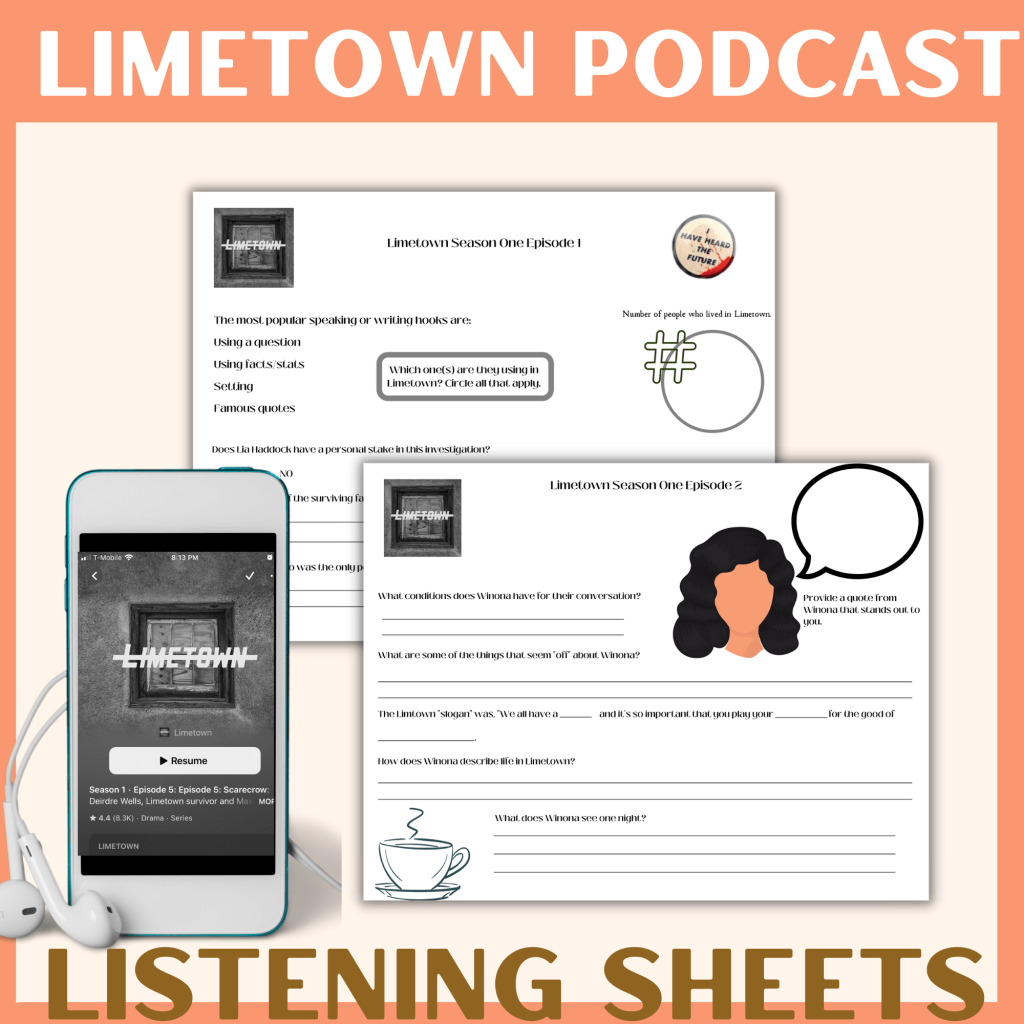
While Limetown is more suspenseful than spooky, it’s still the perfect add-on to your classroom during Spooky Season!
Now, if you are looking for something more substantial to sink your teeth into…
Sink Your Teeth into Vampire Literature
What would spooky season be without a few bloodthirsty vampires?
If you’re ready to go beyond ghosts and Gothic castles, this inquiry-based vampire unit is a perfect addition to your October plans! I created this thematic unit to take students on a chilling and thoughtful journey through vampire myths and tales from around the world.

It’s an ideal companion to a Gothic literature unit, a study of Dracula, or even a genre-focused independent reading project. What makes it stand out? It doesn’t just explore vampires for the sake of scares (or thrills!) Though we do love that as well…
It prompts students to wrestle with essential questions like:
- How do fear and desire interact in the vampire myth?
- In what ways do vampires reinforce or challenge moral boundaries?
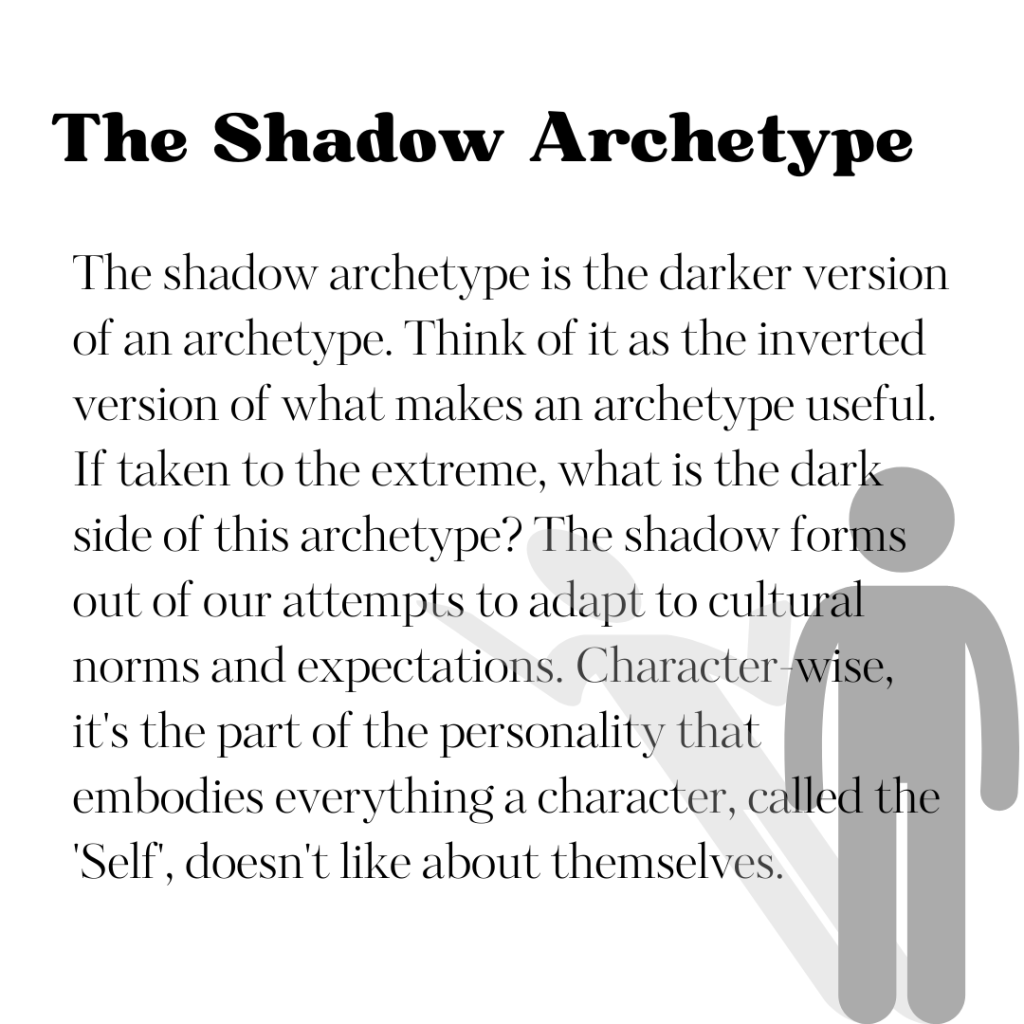
When I created it, I wanted my students to think about Jung’s idea of the Shadow Self and how we used things like these stories to explore the darker aspects ourselves and humanity safely.
What’s Inside:
- Cultural Origins: Dive into vampire myths from China, Ireland, Mesopotamia, and West Africa with the Ch’iang Shih, Dearg-Due, Ekimmu, and Sasabonsam.
- Gothic vampire texts: Read a modernized version of The Vampyre and explore Carmilla, and close reads from Dracula. All complete with discussion prompts and optional audio or dramatic versions.
- Penny Dreadfuls & History: Study Varney the Vampire and the evolution of vampire lore in cheap serialized fiction.
- Deep Literary Themes: Analyze Carl Jung’s Shadow Self concept and apply it to vampire figures throughout time.
- Critical Discussions & PBL: Host Socratic Seminars, explore moral ambiguity, and connect ancient myths to modern media—from Twilight to What We Do in the Shadows.
This unit is rigorous and flexible—perfect for spooky season but engaging enough to use any time of year. Whether you teach it in full or pull from pieces to enhance your October lessons, your students will love diving into the seductive, terrifying, and symbolic world of the vampire.
If you would love to read a deeper breakdown on this unit, check out my blog post on it HERE!
Let Students Write the Fear
Reading spooky stories is fun. Writing them is even better.
Whether you have a day or a week, try a few of these activities to get your students thinking like Gothic authors:
Easy, No-Prep Writing Activity
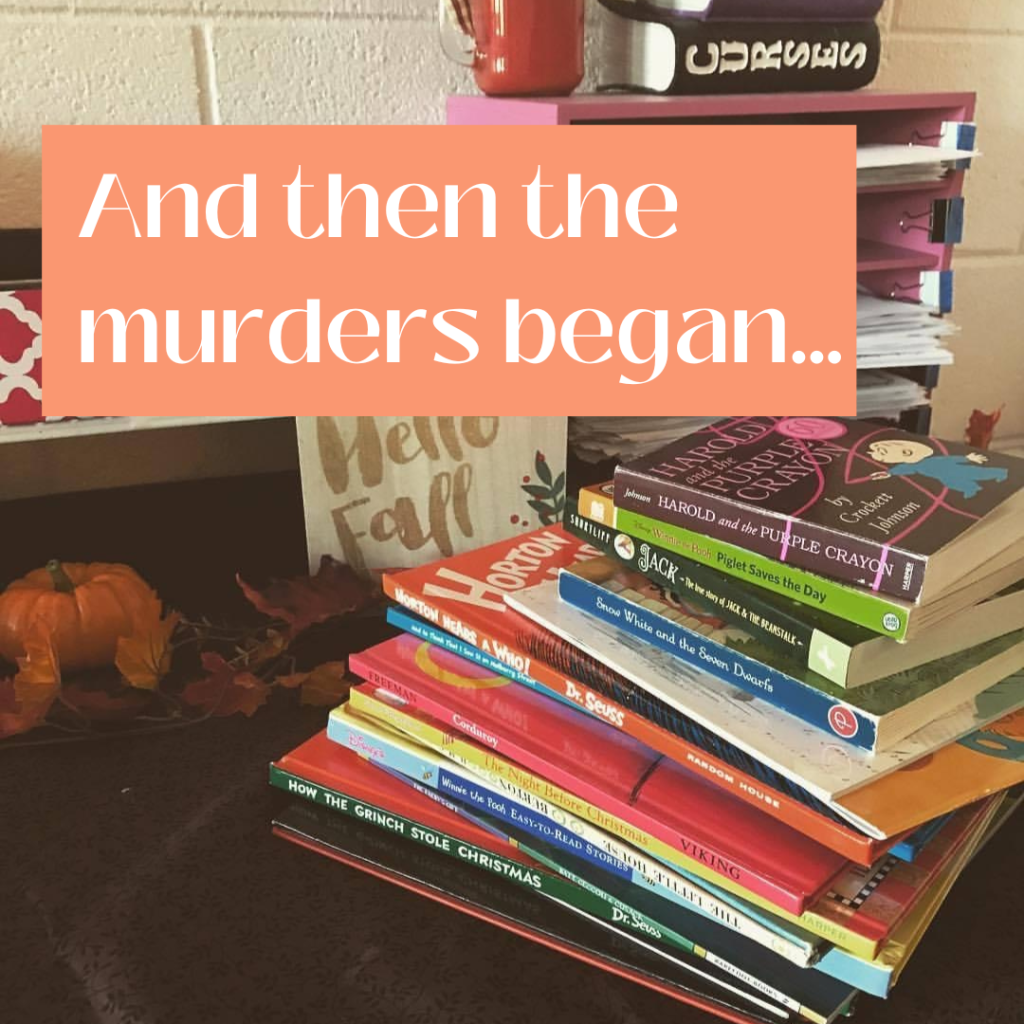
One of my favorite activities requires no (or almost no) prep on you at all! Simply, tell students to choose a book- any book. Have them write the first sentence and then wait until you tell them what the second sentence will be. Once they’ve done this, give them the second sentence: And then the murders began. After that, they continue the story on their own!
Now, if you want to make this EXTRA fun… bring in a stack of beloved childrens’ books for them to choose from!
Immersive Gothic Storytelling
Use an immersive guided writing activity that is complete with sound effects, music, and eerie visuals. Each slide adds a little more to a creepy story outline, allowing students to craft their own tale while feeling like they’ve stepped inside a horror film. One teacher even said, “I felt like the Wizard of Oz behind the curtain!”
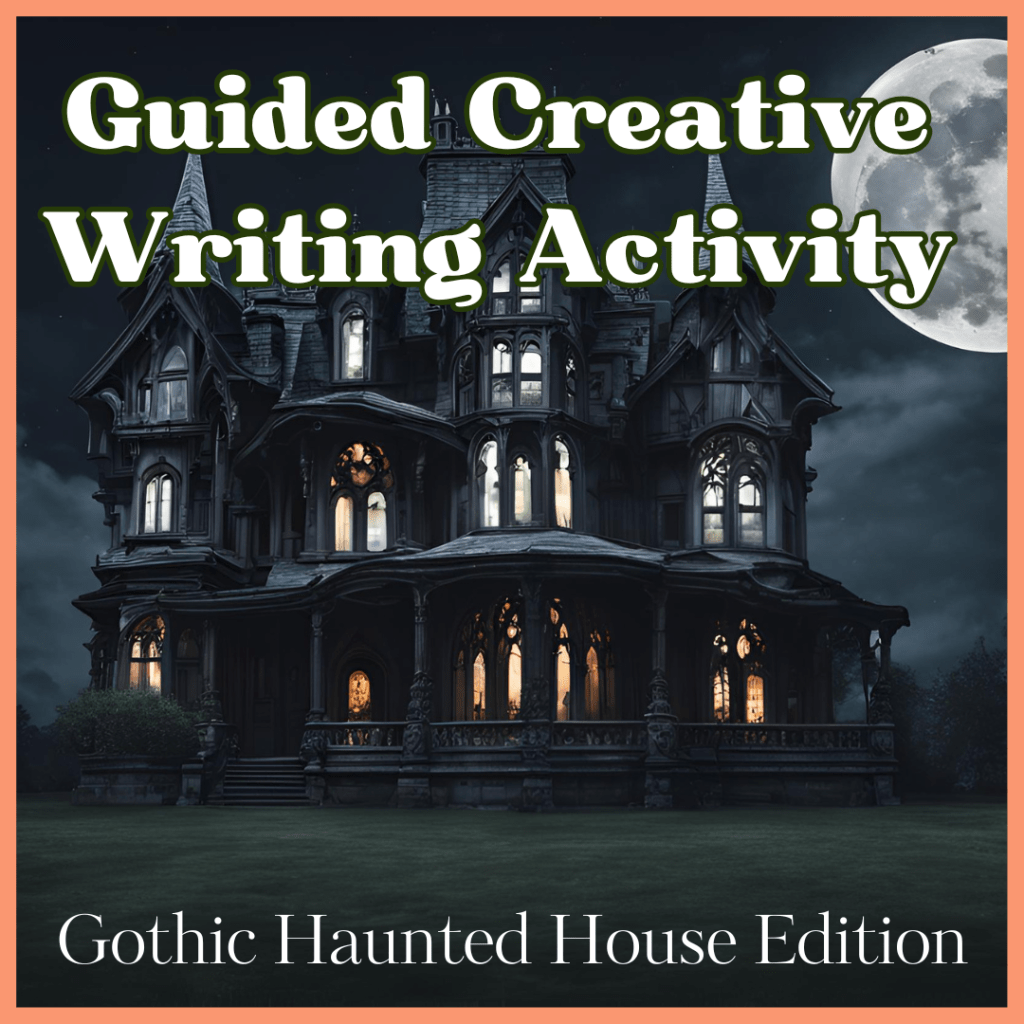
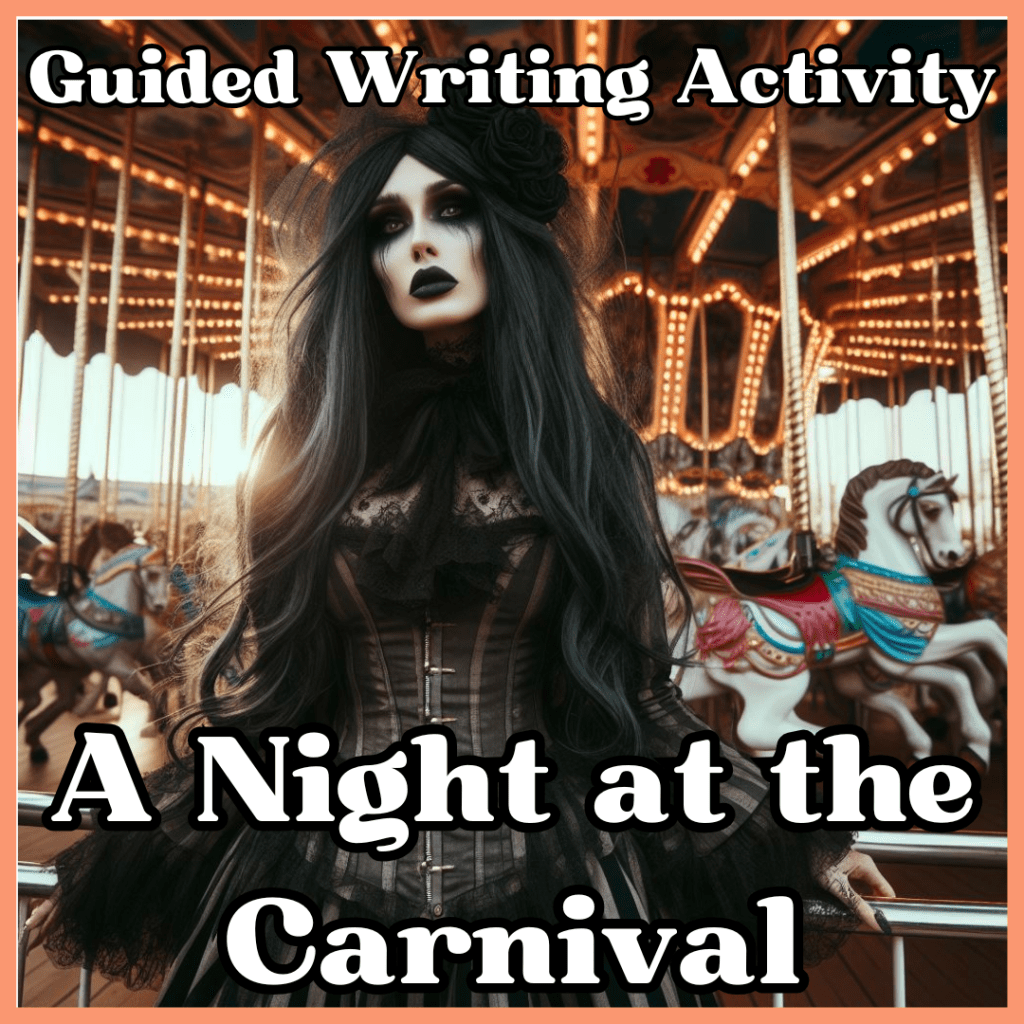
Try this one where students go through a Gothic-styled haunted house. Or this one where they receive a mysterious invitation to attend a new carnival that just came to town… only to find out things are not what they seem once inside!
Found Poetry from Creepy Texts
Grab a few pages from a horror novel or a suspenseful short story and have students create found poems. They’ll pull phrases and twist them into something new—and haunting. It’s a great activity for reluctant writers, too.
Create a Gothic-style short story in a SNAP with Choose Your Own Outlines
Providing students with a list of elements to choose from is a great way to brainstorm their spooky story outline! Give them options for sensory details, spooky atmospheric elements, weather, time of day, location, etc. and have them quickly consider what details they want in their story.
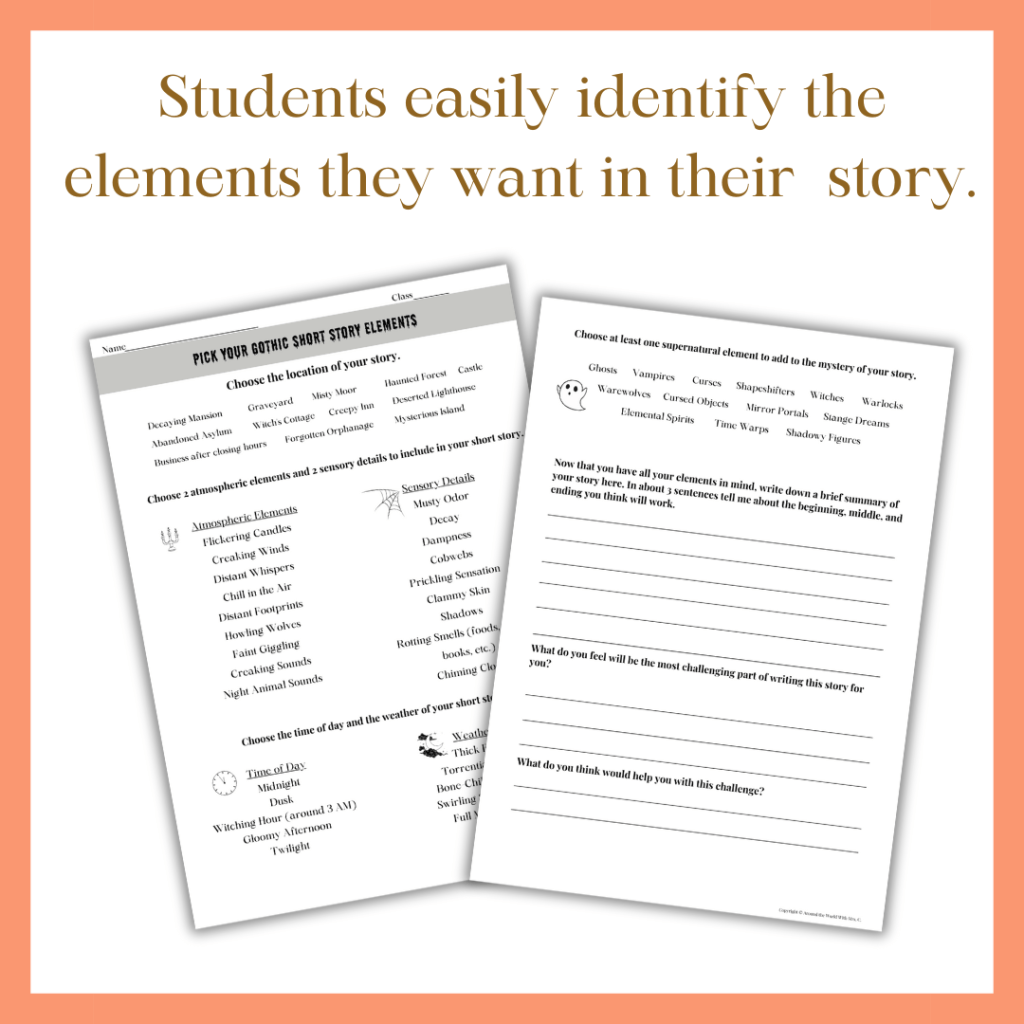
You can use this resource and your students can have a completed outline ready to go by the end of class!
“I used this for my creative writing elective. It was an engaging activity and got them thinking about what makes a suspenseful story! I especially liked the scaffolding this activity provides.” – Ashley C.
Quick Suspense Writing Prompts
If you’re short on time, try one of my 3 free spooky writing activities, which include:
You can grab the freebie on its own, or preview the full suspense unit it comes from.
Immerse Your Students in a Haunting Mystery
Who doesn’t love a good mystery? Escape rooms can be a lot of fun as you try and put the pieces together to solve the mystery of what’s got your trapped.

But, what if solving that mystery helped release a trapped soul who has been languishing in a forgotten manor for generations? That is exactly what happens when your students are introduced to The Haunting at Ravenwood Manor!
They take on the role of Lady Elenor’s long-lost descendant who comes to the manor one dark night. Lady Elenor has been trapped in the manor for decades and your students have to use their ELA skills to find the lost amulet. But, more importantly, they have to help Lady Elenor remember the name of the daughter that was taken from shortly after her birth- causing the curse.
What’s extra great about this spooky ELA escape room? It’s a sneaky way to have your students practice inferencing, foreshadowing, conflict, imagery, and mood! PLUS, it’s almost no prep on you!
Teach the Real Origins of Halloween
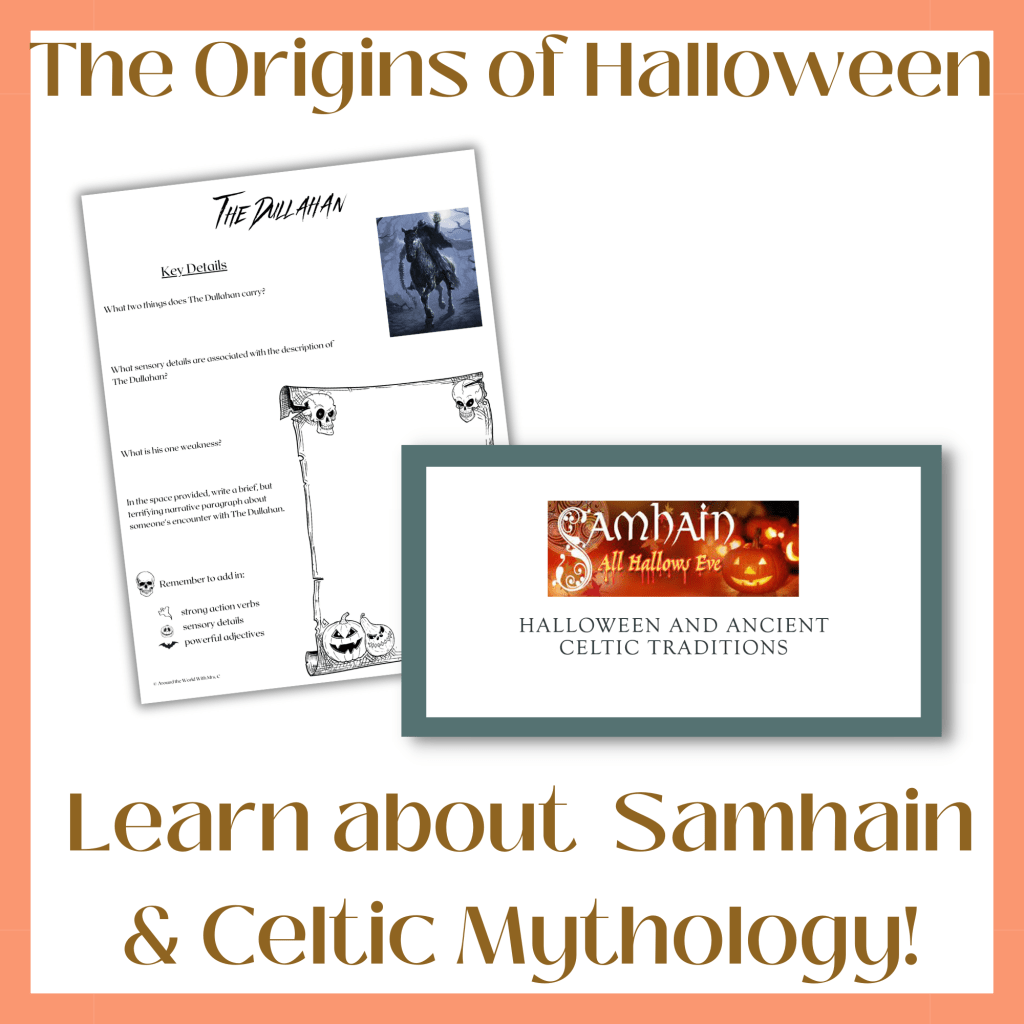
Halloween is more than candy and costumes—it has rich cultural and historical roots. Take a day to dive into the origins of this holiday, starting with the ancient Celtic festival of Samhain.
Your students will be fascinated to learn:
- People originally carved turnips to ward off evil spirits
- Costumes were meant to confuse spirits, not impress party guests
- Each Irish family had their own banshee, a supernatural messenger whose scream foretold death
My Samhain activity includes short nonfiction passages, guided analysis, and a look at two eerie Celtic creatures—the Dullahan (the original headless horseman!) and banshees. Students get a deeper understanding of how legends travel across cultures and time.
Dive Deep with a Full Suspense Unit
If you’re ready to go all-in this October, my Building Suspense mini unit is your best friend.

This 3–4 week unit blends many of the ideas and resources mentioned in this post:
- Foundational vocabulary like ominous, eerie, and lurching
- A deep dive into the psychology of fear and why humans love to be scared
- Close readings of Poe, Goethe, and global horror stories
- Guided analysis of Limetown, a podcast that hooks students with mystery and masterful storytelling
- Dozens of writing prompts and creative exercises
Teachers say their students are obsessed with this unit. PLUS, it gives you everything you need for a meaningful, standards-aligned October.
“I used this resource to supplement a unit within our actual curriculum, and I couldn’t be more pleased. It took all the best aspects from suspenseful literature and combined them into one unit, and my students were very engaged. ” – Ashton G.
Creepy Myths from Around the World
Spooky stories aren’t limited to the Western canon. Every culture has its monsters, ghosts, and cautionary tales—and students love exploring them.
Introduce your class to legends like:
- The Yurei, Japanese spirits caught between life and death
- The skinwalkers of Navajo lore—shape-shifting beings feared across the Southwest
- The Pontianak, a terrifying ghost from Southeast Asian mythology
To make this easy, try my free Creepy Myths Around the World resource, which includes 5 chilling tales. Use them as daily warm-ups or let students pick one to analyze or creatively retell.
Gothic Fiction and Writing Bundle
Want several of these spooky-season favorites for a discounted price? My Gothic Reading & Writing Bundle includes most of the resources mentioned in this post. Perfect for an unforgettable October in your ELA classroom!
It is packed with ready-to-use resources for exploring classics like “The Fall of the House of Usher” and “The Erlking”. Loaded with creative writing resources, immersive activities, and a haunted house escape room; you’ll have everything you need to bring eerie, atmospheric learning to life in your classroom.
Final Thoughts:
October is one of the most magical months for ELA. Lean into the atmosphere and let your students experience the thrill of fear, mystery, and suspense—all while sharpening their reading and writing skills. From creepy poems to ghost stories from around the world, there’s no shortage of ways to engage your students this spooky season.
So light that metaphorical classroom jack-o’-lantern, open a haunted book, and let the spooky stories begin!
 Around the World With Mrs. C
One thought on “The Ultimate Guide on Spooky Season Stories & Writing Activities for Middle and High School ELA”