

If you are like me, you love classics (The Odyssey, Beowulf, Sir Gawain). But let’s be honest—teaching them can sometimes feel like slogging through dense language with disengaged students. Even though we KNOW they would love the actual heart of these stories!
That’s where a multimodal approach to teaching classics comes in. By blending podcasts, close reads, visuals, and creative activities, we give students multiple ways to connect. This not only makes the texts more engaging and comprehensible but also ensures accessibility for all learners. Over the years, this approach has completely transformed the way my students experience world literature.
So, I am here to spill the tea on how I do this by blending the Myths and Legends podcast, close reads, and engaging activities.

Why a Multimodal Approach to Teaching Classics Works
In case this is a new term for you, multi-modal is just a fancy way of saying I use multiple points of media to help students to take in the entire story. We are listening for some points, reading for others, discussing along the way, and creating!
Let’s talk benefits for all of our students’ different learning needs and how this approach helps to naturally differentiate for them all.
- Comprehension – listening while reading supports understanding of complex texts. They also hear complex language in use (building vocabulary).
- Engagement – creative and interactive elements make the epic stories come alive.
- Accessibility – helpful for SPED, ELL, and struggling readers.
I loved how this article in Edutopia also points out that literacy is multimodal now. It’s not just reading novels or essays—it’s navigating apps, digital texts, podcasts, images, and more. So, not only does this approach make sense for difereciation reasons, but also for the real world applications our students NEED for their adult lives.
Beowulf Mini Study (Multimodal in Action)
The first multimodal study I made was with Beowulf. Teaching world literature in 2020 was nothing short of wild, and Beowulf was right at the center of it for me. I’ve always loved this epic hero tale—what’s not to love about a story full of monster-slaying, bragging, and mead-hall drama? But bringing Beowulf to life during a year when half my students were in the classroom and the other half were online was a whole new challenge.
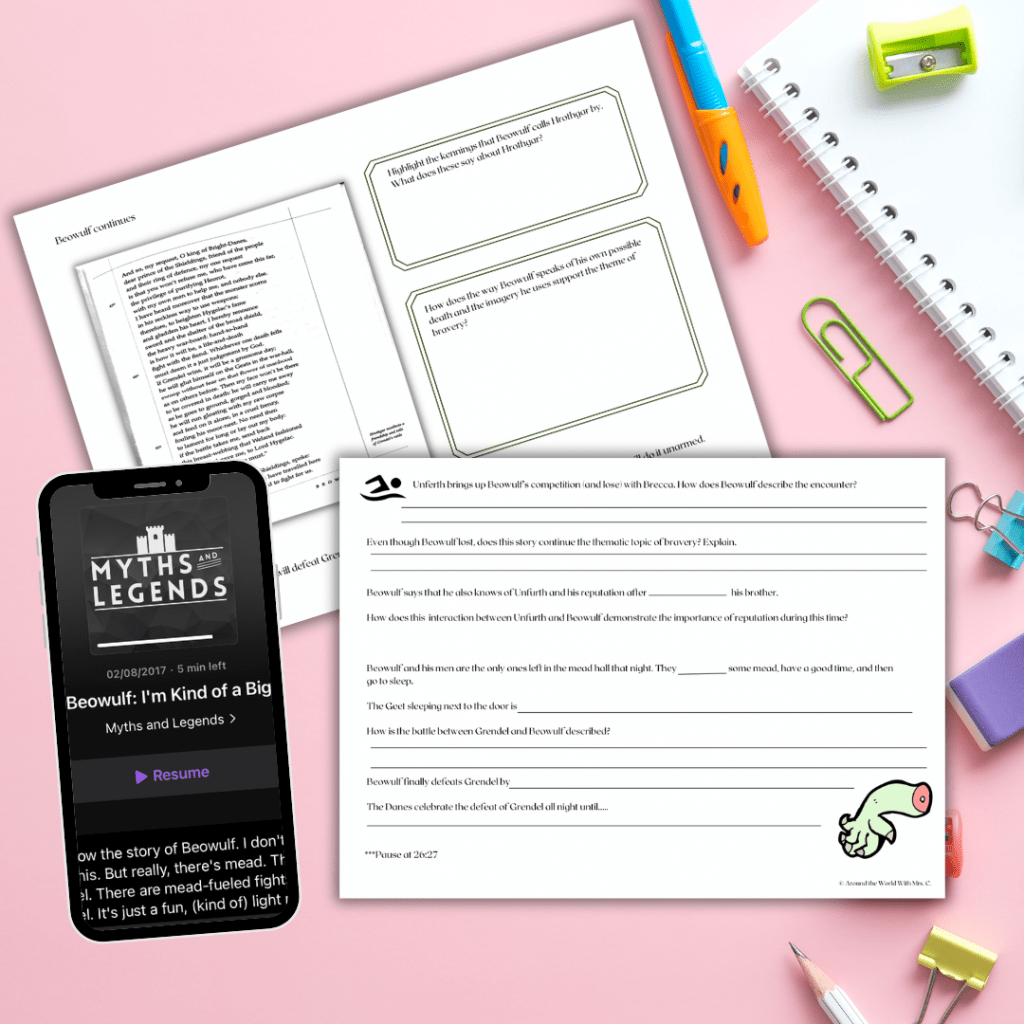
Normally, my students thrive on the energy and theatrics I bring to the text, but how was I supposed to capture that same excitement for kids who proudly announced they hadn’t read in months. Especially the ones stuck behind a screen at home?
That’s when I thought back to one of my FAV podcasts- Myths and Legends. I remembered that he had done a three part series on Beowulf and I loved it! The host brings his dry humor and occasional modern day connections/summaries with it as well. It took some time, but I made some listening sheets for when students were taking in the audio.
I leaned on my trusty Seamus Heaney translation alongside the podcast, pulling key excerpts into our listening guides so students could connect the audio with the actual text. We’d pause, read closely, annotate, and tie everything back to the themes we were unpacking.
I would share clips from the 2007 animated movie (really great to tie in to any Beowulf unit!). They especially love the scene of Beowulf boasting to Unferth.
One of the highlights was our “boast like Beowulf” activity—students in class stood on desks to proudly declare their achievements, while my online learners shared just as boldly on Flipgrid.

Honestly, it was the most engaged I’ve ever seen my students with Beowulf. Weeks later, they were still calling each other “Grendel” or booming “I AM BEOWULF!” in class. What started as a challenge ended up becoming one of the most memorable ways we’ve ever experienced this 2,000-year-old epic together.
Pretty soon, other teachers also found it incredibly helpful:
My students loved this resource! It engaged them and helped guide them through the challenging content, and I found it to be fairly adaptable for various overall units. I used it primarily for in person learning, but it also worked well for students who were on digital while we completed it. ⭐⭐⭐⭐⭐- Kim C.

Find this Beowulf mini unit here!
Sir Gawain and the Green Knight as a Multi-Modal Mini Study
Sir Gawain and the Green Knight is one of my all-time favorite Arthurian legends, but I’ll be honest—reading the entire thing with students isn’t always realistic. The language can be intimidating, and time is always limited. That’s why I created a multimodal mini unit that lets us experience the best parts of the story in just about a week—and my students absolutely love it!

Much like my Beowulf unit, this approach keeps the integrity of the text while making it far more approachable for 21st century learners.
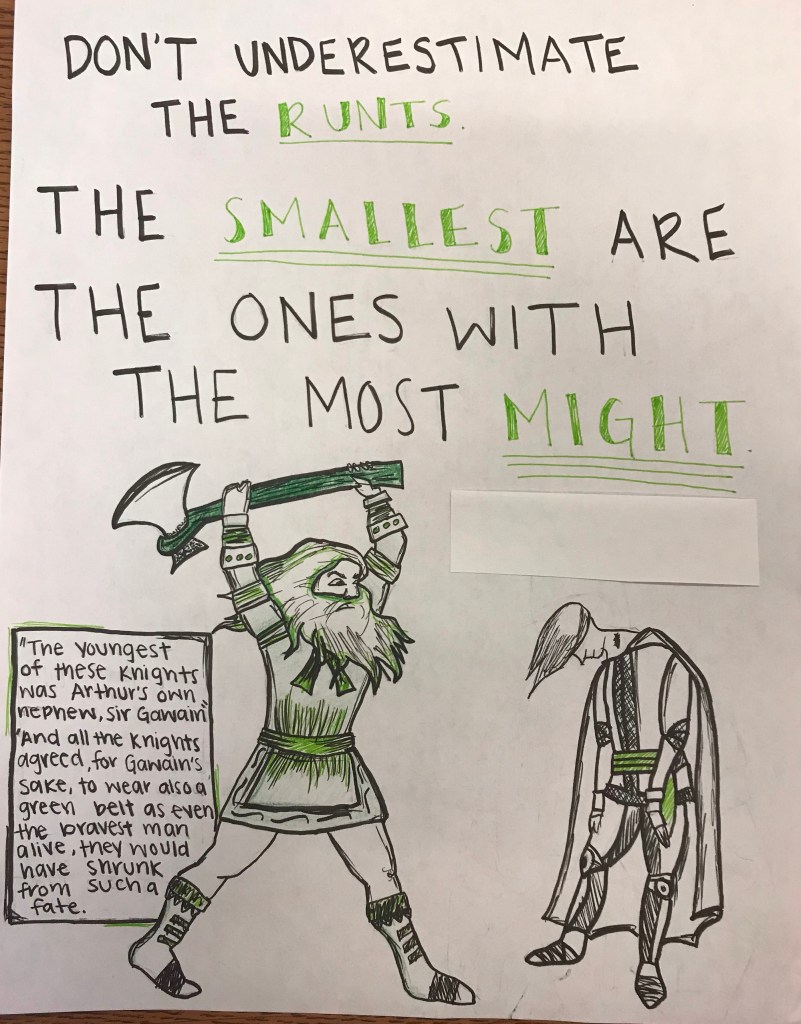
In this, I started by slightly adapting original text of Green Knight’s unforgettable entrance. From there, students create one-pagers to visually explore themes like honor and chivalry. Then, we shift to the Myths and Legends podcast for Gawain’s epic journey.
Pairing the adapted text with active listening sheets keeps students engaged through multiple learning modes. Visual learners thrive with the creative one-pager, while auditory learners connect deeply through the podcast and even record reflections of their own. Blended together, it ensures all my students are engage and enjoying the entire story!

This multimodal design makes the story come alive without watering it down. By modernizing the language just enough, providing guiding questions, and scaffolding activities across different modes, my students walk away with a real understanding of Gawain’s journey—and they actually enjoy it.
Best of all, it fits neatly into a larger Arthurian legends unit, alongside Le Morte d’Arthur and even Neil Gaiman’s “Chivalry.” With this approach, we can dive into an entire world of knights, quests, and moral dilemmas in a way that’s fun, meaningful, and memorable.
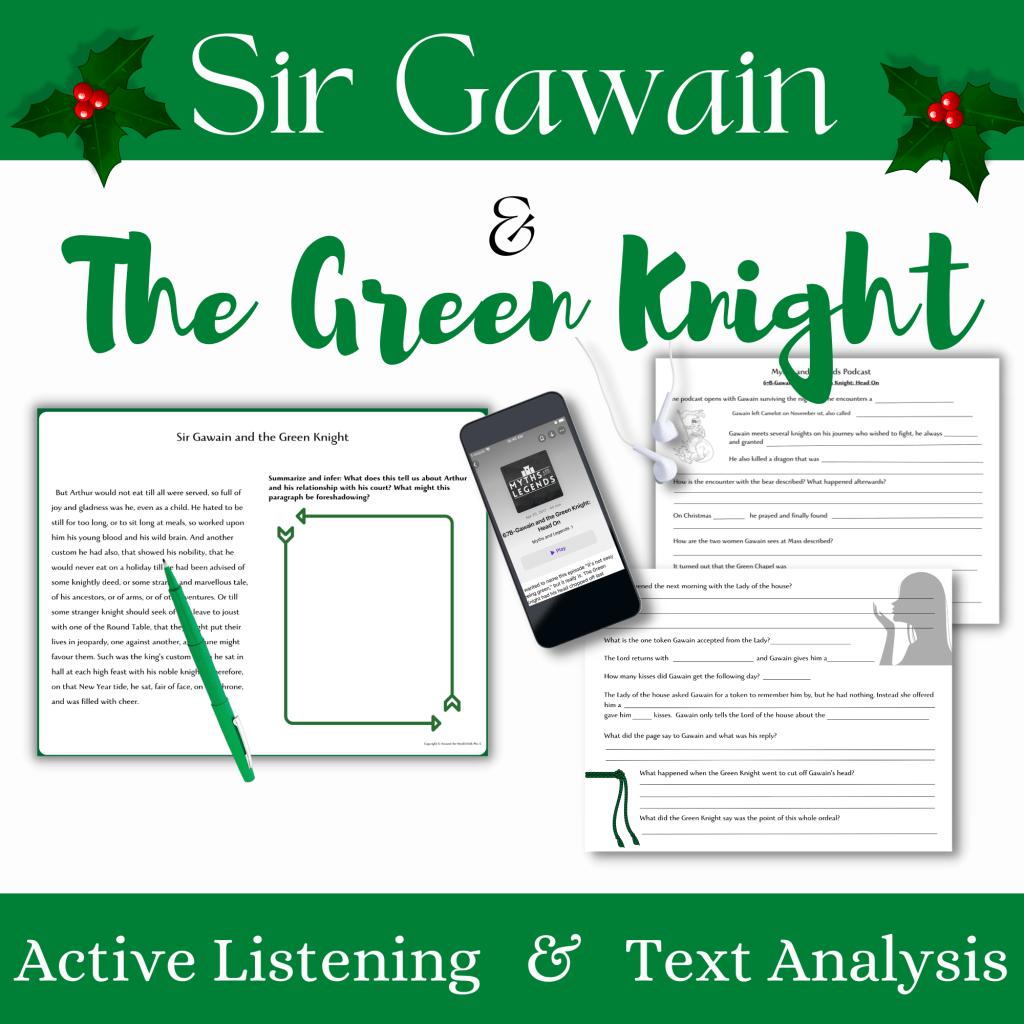
You can check out my entire bundle of King Arthur Legends resources here!
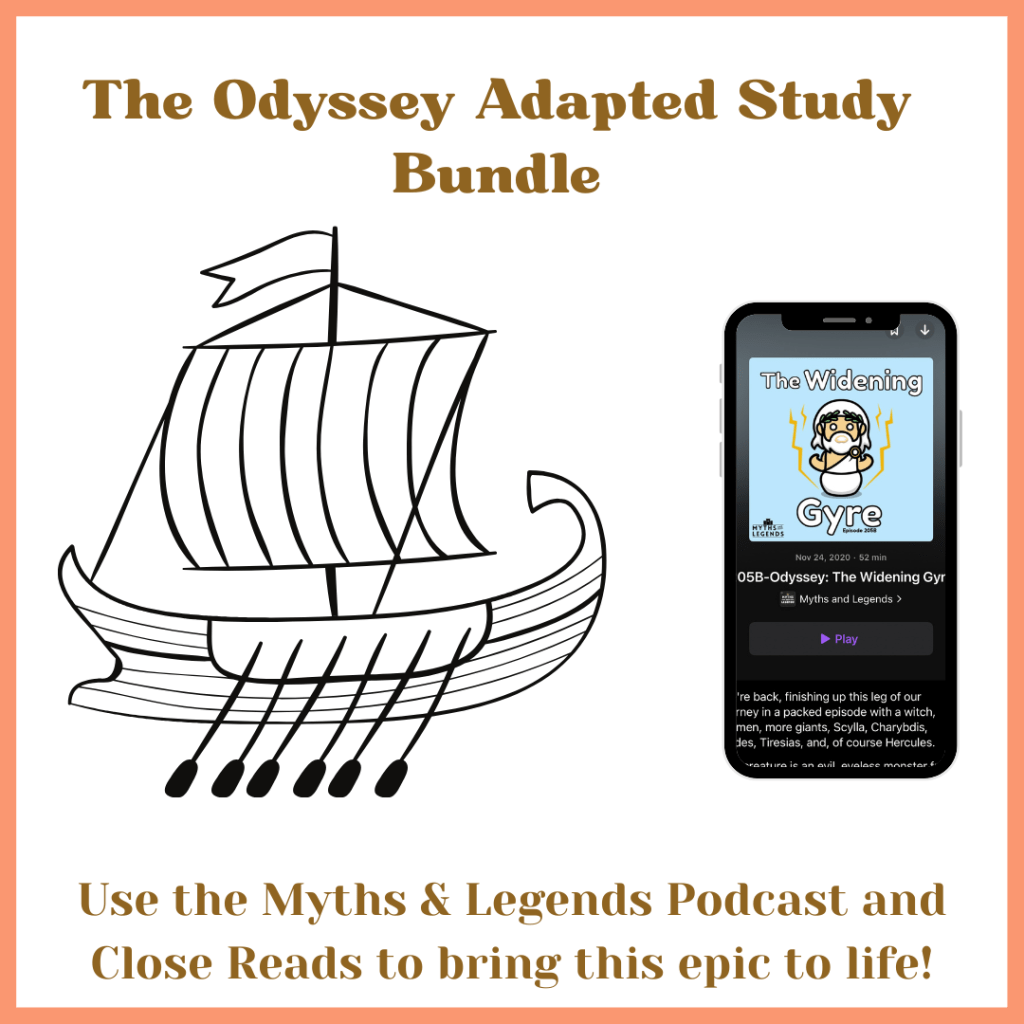
Adapted Study of The Odyssey
During a Facebook group discussion, I got this question and reply from another teacher. I honestly 100% felt her pain! Despite being the mythology queen, I have never LOVED teaching The Odyssey.
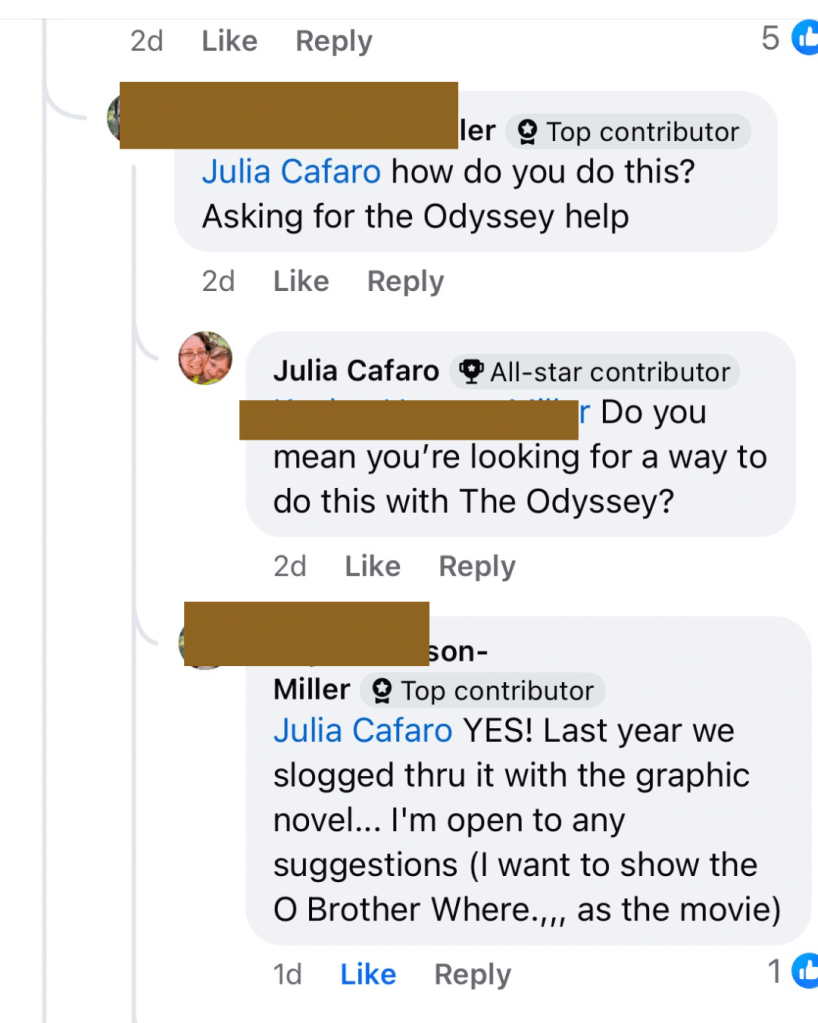
Some teachers do and they do a fantastic job at it, but it just isn’t my favorite. But, I also haven’t had to teach it in several years, so I put it out of my mind until this interaction. I love her use of O Brother Where Art Though, but first they actually need the story.
I thought about all the success I have had with Beowulf and Sir Gawain (just to name a few) and decided to try it out with The Odyssey!
Instead of slogging through every line, students listen to carefully chosen podcast episodes that summarize Odysseus’s journey in a way that’s engaging and easy to follow. Then, dig into some of the most exciting moments (like Odysseus and his men blinding the Cyclops) through a close reading activity that slows students down and gives them room to analyze Homer’s language.

To tie it all together, students create a one-pager style illustrations, discuss Odysseus’s actions (both good and bad), and much more!
The result? Students actually get The Odyssey—its characters, conflicts, and themes… without getting lost or frustrated in the text!
Bringing It All Together with a Multimodal Approach
What I love most about this approach is that it isn’t about “dumbing down” the classics—it’s about opening doors. Whether it’s Beowulf, Sir Gawain, or The Odyssey, students are still encountering the original text, wrestling with themes, and analyzing literary techniques.
By weaving in podcasts, close reads, and creative projects, we’re giving them multiple access points to be enveloped by these stories.
In every case, I’ve seen students who would normally check out come alive with excitement. Auditory learners latch onto the podcast storytelling. Visual learners shine when creating one-pagers or illustrations. Striving readers benefit from the scaffolding of adapted passages and guided questions. And advanced students? They still get the rigor—through higher-order analysis and the challenge of expressing their ideas in new modes.
Best of all, it’s sustainable for us as teachers. These mini-studies fit neatly into larger units, connect to standards, and save us from spending weeks slogging through dense text while fighting disengagement.
Final Thoughts
If you’ve ever dreaded teaching a classic epic, trust me—you’re not alone. But using a multimodal approach to teaching classics has completely changed the way I (and my students!) experience these texts. Instead of feeling like a chore, The Odyssey, Beowulf, and Sir Gawain become adventures worth diving into.
At the end of the day, these stories have lasted for thousands of years because they speak to universal human struggles—courage, temptation, honor, survival. By offering students multiple access points—through podcasts, close reading, film clips, and creative projects—we’re not only honoring the texts, we’re honoring our learners.
If you’re curious to try this multimodal approach yourself, I’d love for you to explore one of my mini studies. They’ve brought ancient and epic tales to life in my classroom, and I think they’ll do the same for yours.
👉 Odyssey mini study
👉 Beowulf mini study
👉 Sir Gawain study
Join my weekly newsletter!
Would you love to get weekly tips and resources for teaching secondary English delivered right to your inbox? Click here to join!
 Around the World With Mrs. C