

Engaging Classroom Activities for Teaching The Hobbit
J.R.R. Tolkien’s The Hobbit will always be one of my favorite books! I love the world that he created and that it was described in such a way that you can easily see yourself in it. Tolkein often stated that he created Middle Earth to serve as a rich mythology for Britain.
See, Tolkien was a historian, linguist, and professor first. He was particularly drawn to Norse and Anglo Saxon cultures. (In fact, his translation of Beowulf is incredible and I highly recommend it!) Through this he saw that his country was a conglomeration of conquests. So, all of their mythology was from other cultures.
King Arthur (one of the most recognized mythical characters) began in France. Celtic and Welsh mythology largely began in Gall. Even Beowulf is heavily centered on Norse traditions and customs and given a Christian spin by the monks who recorded the surviving version we have today.
So, one day, when Tolkien was bored grading papers (haven’t we all been there?), he suddenly wrote on a page a student left blank, “In a whole in the ground lived a Hobbit”. And the rest is history!
In this post, I want to share some tips, ideas, and resources on how to engage your students in one of my FAVORITE books. So, let’s talk all things The Hobbit now!
Activities to Try Before Your Begin Teaching The Hobbit
Many of your students will be learning about Middle Earth for the first time. You can make this introduction even easier. Provide them with a list of mythical creatures beforehand. Include key characters for them to refer back to. Download this one for free!

Before starting chapter one, ask students what characteristics come to mind when they think about heroes. Be sure to include the age of most heroes they think of. As you read chapter 1, come back to these discussions and see how they align or do not align with Bilbo.
You may also want to introduce the concept of The Hero’s Journey to your students. Bilbo follows this archetype and you can have students note the elements of the journey as they happen. Use this video to introduce the concept and you can use this handout or this handout for students to note the different stages as they come to it.
Activities for Chapters 1-3 of The Hobbit
The beginning of this chapter 1 is rich in descriptions of Hobbits, Bilbo’s house, and his family history. A lot can be inferred about Bilbo from the rich description of his house, you may want to spend some time pulling out these details.
You may want to consider having students keep a record of how Bilbo changes from the beginning of the story to the end. In the beginning, we know that he is 50 years old, a rich Hobbit, a fabulous house, loves to eat, lives a quiet, but his family is known to be a little adventurous.

Songs are common throughout all of Tolkien’s work and were especially important to him in building his lore. The “Misty Mountains” song is a particularly important one as it tells the history of these dwarves and why they eager to regain their home. Use this video clip from the movie adaptation to share with your students. This performance captures the solemn tone that Tolkien was trying to capture in this moment.
Runes are used in various places throughout the novel, but this is the first significant time they are included. Tolkien’s academic life made him an expert on ancient languages and runes, so this was an aspect of Middle Earth he was quite passionate about. Consider using this handout from the Tolkien Society to introduce your students to runes and their uses and activities you can have them try out.
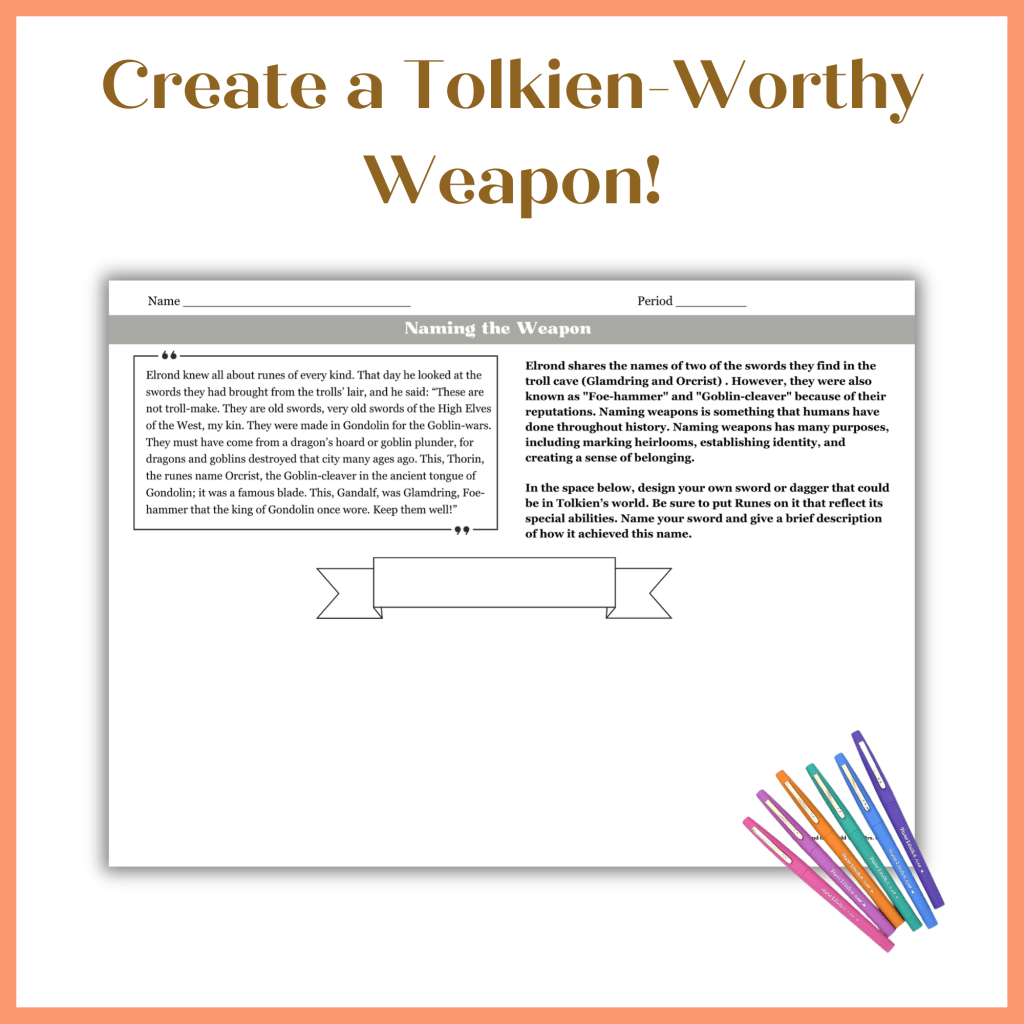
Elrond shares the names of two of the swords they find in the troll cave (Glamdring and Orcrist) . However, they were also known as “Foe-hammer” and “Goblin-cleaver” because of their reputations. You could consider having students design their own swords! They can cover their swords in runes to depict its name and its special abilities.
Activities for Chapter 5 of The Hobbit
This chapter focuses heavily on riddles and cleverness. Before reading, challenge your students to some general riddles, but also include a few from the chapter to see if they could guess the answer. You could make it a rapid fire situation to see how higher stakes makes the tension rise as it does in the chapter.
Here are a few of the riddles included in this chapter:
What has roots as nobody sees, Is taller than trees, Up, up, up it goes And yet, never grows
Answer: mountain
Thirty white horses on a red hill,
First they champ,
Then they stamp,
Then they stand still.
Answer: Teeth
Voiceless it cries,
Wingless flutters,
Toothless bites,
Mouthless mutters.
Answer: Wind
Tracing Bilbo’s Growth: From Reluctant Hobbit to Hero
One of the best parts of teaching The Hobbit is watching students recognize just how much Bilbo changes over the course of his journey. He begins as a timid homebody and ends as a brave, self-assured adventurer who values peace and wisdom over comfort and wealth.
To help students really see this transformation, I like to use a Character Growth Tracker that follows Bilbo’s development from the first chapter to the last. This resource encourages students to select one quote from each of seven key chapters that best demonstrates how Bilbo grows and changes. Alongside each quote, they write a short explanation of what that moment reveals about his courage, confidence, or worldview.
For example:
- In Chapter 1, Bilbo insists, “We don’t want any adventures here, thank you!” showing his resistance to change and love of comfort.
- By Chapter 8, after defeating the giant spider alone, he feels “a different person, and much fiercer and bolder,” signaling the turning point in his self-perception.
- And in Chapter 16, when he declares, “I am on the side of peace for once,” we see his moral growth and maturity—he has become a hero on his own terms.

Once students have completed their trackers, they can take their analysis in one of two directions:
- Bilbo’s Memoir: Students outline and write the opening of Bilbo’s own memoir, reflecting on the key moments that changed him and what he learned along the way.
- Character Growth Essay: Students write a traditional literary analysis essay tracing Bilbo’s evolution from “Mr. Baggins of Bag End” to “the burglar” who saves the day.
Both options allow students to blend textual evidence with critical thinking, and the included rubrics make grading quick and meaningful. I like to highlight which skills students have mastered or need to revisit, then hold brief conferences for targeted feedback.
Whether you use this as a running activity throughout your Hobbit unit or as a culminating project, it’s a powerful way for students to reflect on how much Bilbo—and they, as readers—have grown by the end of the journey. This product can help you easily complete this with your students!
Ready-to-Use Resources for The Hobbit
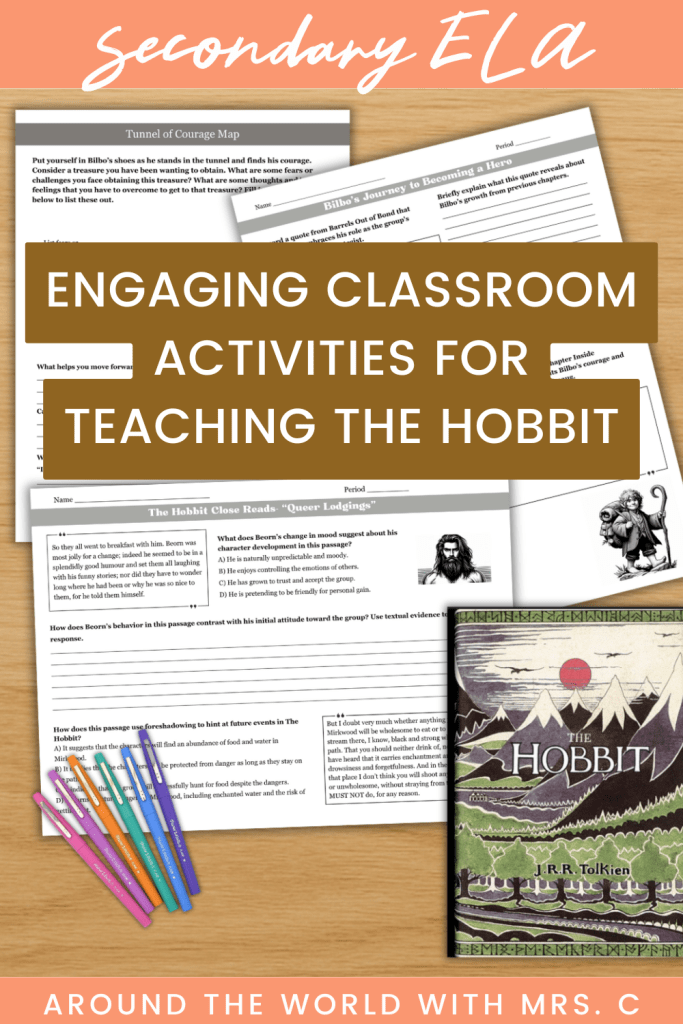
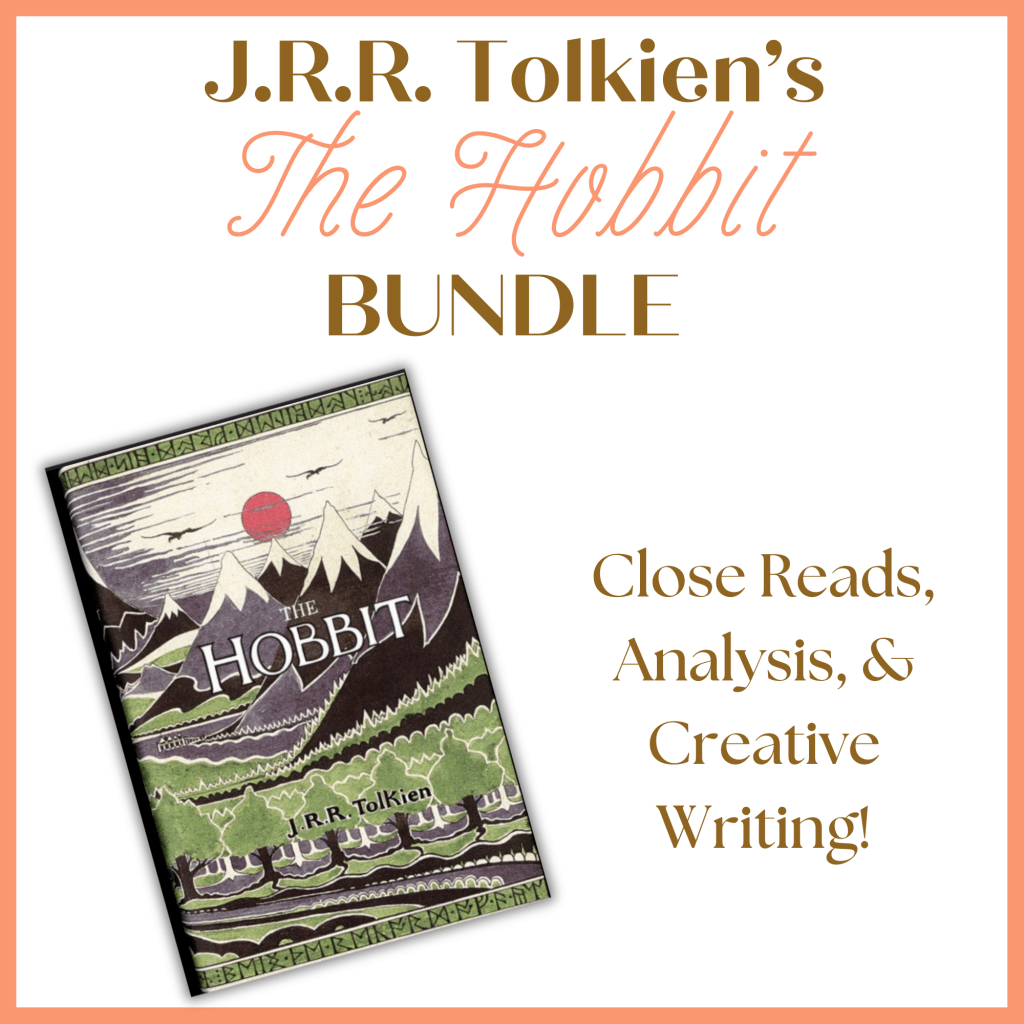
If you want to save time planning and focus more on discussion and engagement, I’ve created a set of close reading activities for most of the chapters in the book. And a complete Hobbit teaching bundle that cover key moments, themes, and symbols throughout the novel.
These resources help students:
- Analyze Tolkien’s craft and diction through guided close reading questions
- Track Bilbo’s hero’s journey and character growth
- Explore the themes of courage, greed, and belonging
- Connect The Hobbit to mythology and world literature (a natural tie-in to Tolkien’s inspiration!)
Each activity is designed to meet ELA standards while still being approachable and fun for your students.
Bringing It All Together
Teaching The Hobbit is such a joy because it offers students adventure, humor, and deep reflection all in one story. Whether you’re exploring the hero’s journey, decoding runes, or tracing Bilbo’s growth, each activity gives students a chance to see themselves in the small but mighty hobbit who learns that courage often begins in unexpected places.
If you’re ready to bring these lessons to life, explore my Close Reading Activities, Character Growth Writing Project, and Complete Hobbit Bundle—everything you need to make Tolkien’s world engaging, meaningful, and memorable for your students.
Join my weekly newsletter!
Would you love to get weekly tips and resources for teaching secondary English delivered right to your inbox? Click here to join!
 Around the World With Mrs. C