

“Are we ever going to read something happy?”
If you are a secondary English teacher, I am positive you could retire now if you got a dime each time you’ve heard that question.
While we all love the conflict and depth that comes with all the death, murder, and mayhem in the literature we are usually teaching, it’s also important to balance this with stories that celebrate the joys of life. Engaging with uplifting literature can help students appreciate the beauty and positive aspects of the human experience.
This post is dedicated to eight texts you can use in your classroom to spark more joy!
“Chivalry” by Neil Gaiman
Perfect for grade 9-12
This is one of the stories in Neil Gaiman’s anthology Smoke and Mirrors. You can use this audiobook where Gaiman reads it! However, this recording of LaVar Burton reading it is also LOVELY!

In this beautiful story, Arthurian legends blend with the modern world. Mrs. Whitaker, an old widow, buys the Holy Grail at a secondhand shop. Then, Galahad shows up at her door, looking for it. Mrs. Whitaker refuses to give it to him because she likes how it looks on her mantle.
Determined, Galahad goes on many dangerous quests to find other magical items and helps her around the house, hoping to trade for the Grail.
It is a lovely story of looking at what is most important in our lives and what the true magic is. This resource helps to introduce students to what Magical Realism is and then guides them through the thematic analysis of the story.
“The Bass, the River, and Sheila Mant” by W.D. Wetherell
Perfect for grades 7-9
“The Bass, the River, and Sheila Mant” by W.D. Wetherell tells the story of a young boy who spends his summer on a river, where he develops a crush on Sheila Mant, an older girl visiting a neighboring cabin. He struggles to impress her, torn between his desire to win her favor and his passion for fishing.
One evening, he hooks a large bass while taking Sheila to a concert on his boat (thinking that she’s agreed to go on a date with him). He then makes a difficult decision between reeling in the prize fish of the summer or letting it go and focusing only on her. After a heroic struggle with the bass, he chooses to release it.
At the fair, he realizes that he was taking her to meet up with her boyfriend. The events of the day help him to realize that his love for fishing and being true to himself are more important than impressing someone else.
The story explores themes of adolescence, identity, and the conflicts between personal desires and external expectations.
“Invictus” by William Ernest Henley
Perfect for grades 8-10

While not particularly “joyful”, this poem sparks inspiration with a sense of strength and determination. This poem was written in 1875. The poet endured years of an extremely painful ailment. He had contracted tuberculosis of the bone when he was younger, and the lower part of one of his legs was amputated in his twenties. However, he refused to be conquered.
This poem is uplifting and inspiring from the beginning with the title. ‘Invictus’ is Latin for ‘unconquerable’. Within the poem he uses strong verbs and imagery to convey life continuing beat him up, ‘My head is bloody, but unbowed’.
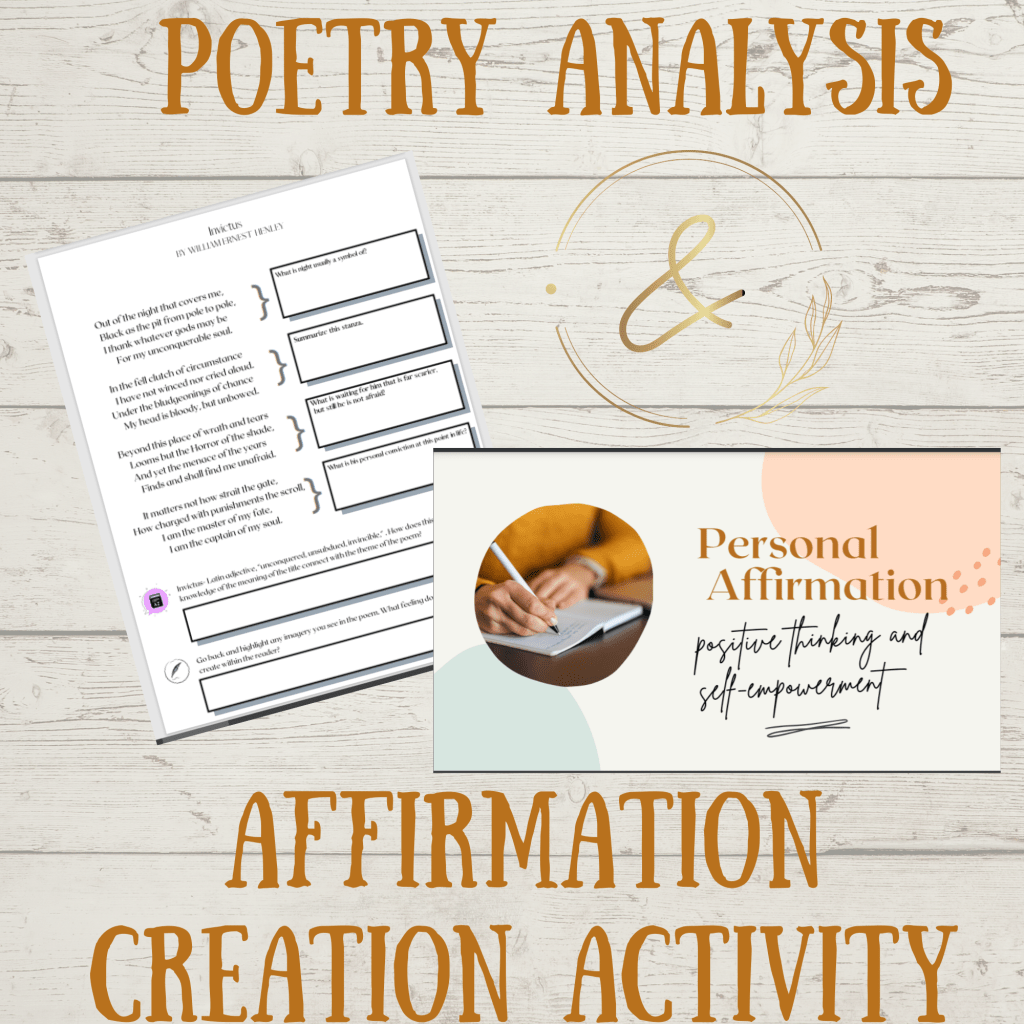
I actually love completing this activity within the first 10 days of school to start the year on a really positive note with the poem as our anchor. However, it’s perfect for any time of the year! It is perfect for bringing light academic standards back and also engage in some fantastic SEL conversations.
Shedding Your Past by Joshua G. J. Insole
Perfect for grades 6-9
This short story is all about a woman who follows a zombie to a support group one night. It turns out to be a bi-weekly meeting of monsters to support one another- Monsters Anonymous if you will. What is interesting is that each monster’s affliction is the inversion of something core to the person.
The zombie is a former model. The vampire is deathly afraid of blood. The invisible man was a tattoo artist who was covered in tattoos and can no longer even see his own body art.
I love that this story is all about finding ways to accept something in yourself you don’t necessarily love. This could lead into some really fantastic conversations about how we can embrace and love all of ourselves.

This story takes familiar spooky figures—zombies, vampires, and werewolves—and turns them upside down with humor and irony, making it both fun and thought-provoking for middle school students. Beneath the playful surface, it explores the deeper theme of accepting yourself and finding a sense of community
I created this FREE resource to help you teach this story and a creative writing prompt to go along with it!
A Midsummer Night’s Dream
Perfect for grade 9-12

A Midsummer Night’s Dream, by William Shakespeare, is a comedy that intertwines the lives of four young lovers, a group of amateur actors, and the magical fairies that inhabit a forest. The play features love potions, mistaken identities, and playful magic, leading to humorous and joyful resolutions. It ends with multiple weddings and a sense of harmony restored.
Including A Midsummer Night’s Dream in the curriculum has many benefits for students. The play’s ridiculous antics can add some much needed laughs, but it explores timeless themes of love, identity, and transformation our students can also relate to.
You can find an entire bundle on teaching this classic comedy HERE!
The Secret Life of Walter Mitty by James Thurber
“The Secret Life of Walter Mitty” by James Thurber is about a man who escapes his mundane life through vivid daydreams. In his fantasies, Walter Mitty imagines himself as a hero in various exciting scenarios, contrasting sharply with his ordinary, uneventful reality. The story highlights the power of imagination and the desire for adventure in everyday life.
Including “The Secret Life of Walter Mitty” in the curriculum can engage students’ imaginations, as Walter’s vivid daydreams encourage them to appreciate creativity. The story’s humor and lighthearted tone make it an enjoyable read, providing a refreshing break from darker, more serious texts. Additionally, it opens up meaningful discussions about balancing dreams and reality, a topic highly relevant to students’ lives.
The Hobbit
Perfect for grades 8-12
Yes, I know, The Hobbit does end with the death of Thorin and his cousins. However, the text as a whole inspires readers as good triumphs over evil. Enemies become allies and realize they actually should stay that way. A small hobbit learns that he is far more brave and adventurous then he ever dreamed.
Bilbo’s adventure teaches all of us that even the smallest and most assuming can make a difference! Can you tell The Hobbit is one of my favorite books?
If you want to make teaching The Hobbit easy and engaging for your students, I have several resources to help with that!
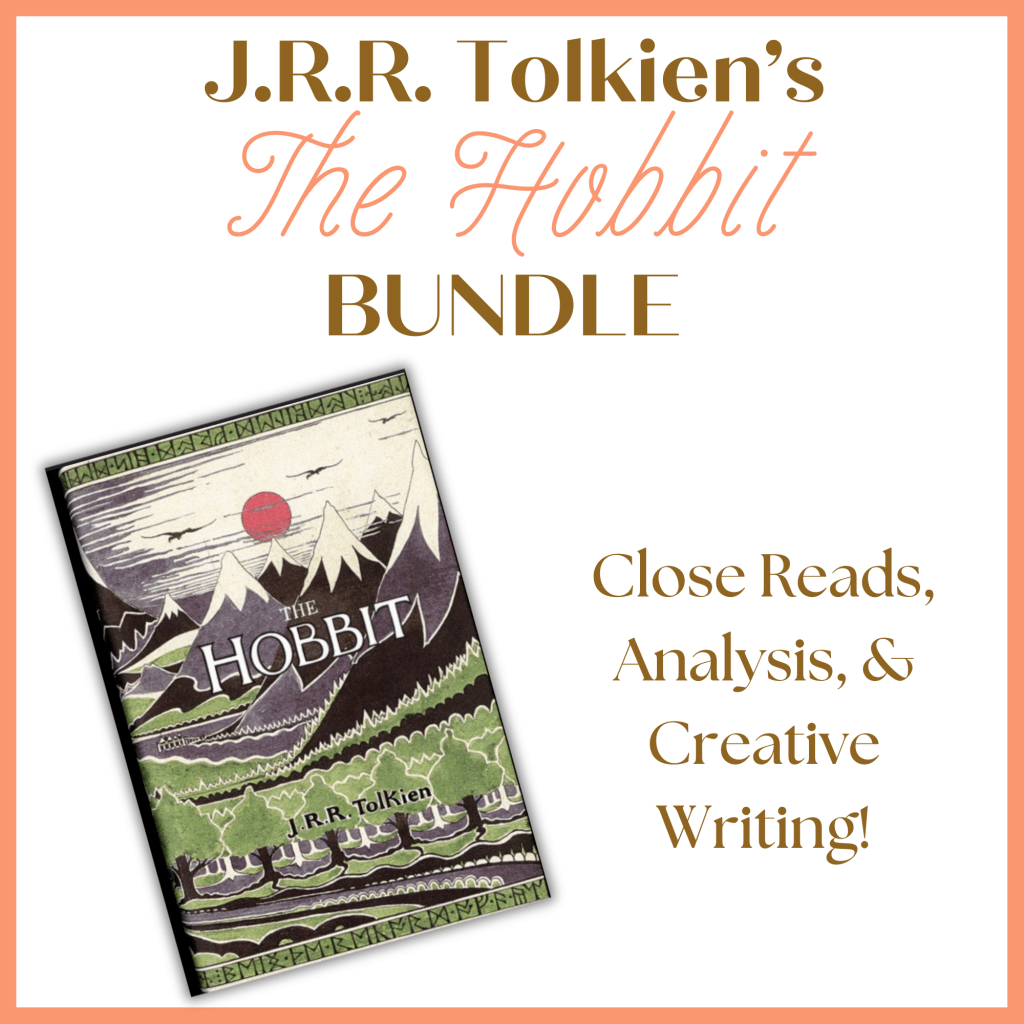
This Hobbit Bundle includes everything you need to bring Tolkien’s world to life in your classroom. You’ll get 55 pages of close reading handouts with answer keys that focus on theme, figurative language, character development, and tone—plus a fun sword-naming activity. The Hero’s Journey pack includes literary evidence trackers, essay organizers, rubrics, and a creative memoir project where students write as Bilbo. You’ll also find an SEL-focused close read on courage with reflection and discussion prompts, and a free mythical creatures and characters reference sheet to support comprehension and engagement.
“Joy Comes Back” by Donna Ashworth
Perfect for grades 9-12
The poem “Joy Comes Back” explores how true joy is found in life’s simple, quiet moments rather than in extravagance. It reminds us to slow down, embrace mindfulness, and be open to joy’s gentle presence.
When you finally realise that joy
is less fireworks
more firefly
less orchestra
more birdsong
she will come back much more often
I have created a FREE resource for you to use with your students to analyze the poem and do a short SEL reflective writing with it!

Final Thoughts
So, the next time your students sigh and ask, “Are we ever going to read something happy?”, you’ll be ready! Balancing the heavy themes of tragedy and conflict with stories that celebrate humor, hope, and humanity reminds students that literature reflects the full spectrum of life.
These uplifting texts not only build empathy and critical thinking, but they also give students space to breathe, laugh, and reflect on the beauty of being human. After all, joy deserves a place on our classroom bookshelves too.
Join my weekly newsletter!
Would you love to get weekly tips and resources for teaching secondary English delivered right to your inbox? Click here to join!
 Around the World With Mrs. C