

Engaging ELA Assignments That Aren’t Essays (But Still Rigorous)
For years, the essay has been the gold standard of assessment in secondary English classrooms. And there is definitely a need for this. Essays teach students how to develop claims, analyze evidence, and communicate complex ideas clearly.
But here’s the truth many teachers already know: rigor doesn’t come from the format alone. It comes from the thinking students are asked to do.
When we expand the ways students can demonstrate analysis, we don’t lower expectations—we often raise them. Creative, modern assignments can demand the same (or greater) levels of critical thinking, while increasing student engagement, accessibility, and authenticity. They also have far-reaching real-world implications for our students.
Below are several high-rigor alternatives to traditional essays, along with classroom-ready resources you can use right away.
1. Bloom Balls: Hands-On Analysis with Depth
Bloom Balls are a powerful way to push students beyond surface-level comprehension and into higher-order thinking. Instead of responding to a single prompt, students tackle multiple analytical tasks aligned to Bloom’s Taxonomy, all within a collaborative structure.
Students might:
- Analyze theme and symbolism
- Evaluate character decisions
- Connect literary elements to overall meaning
- Create visual representations that demonstrate understanding
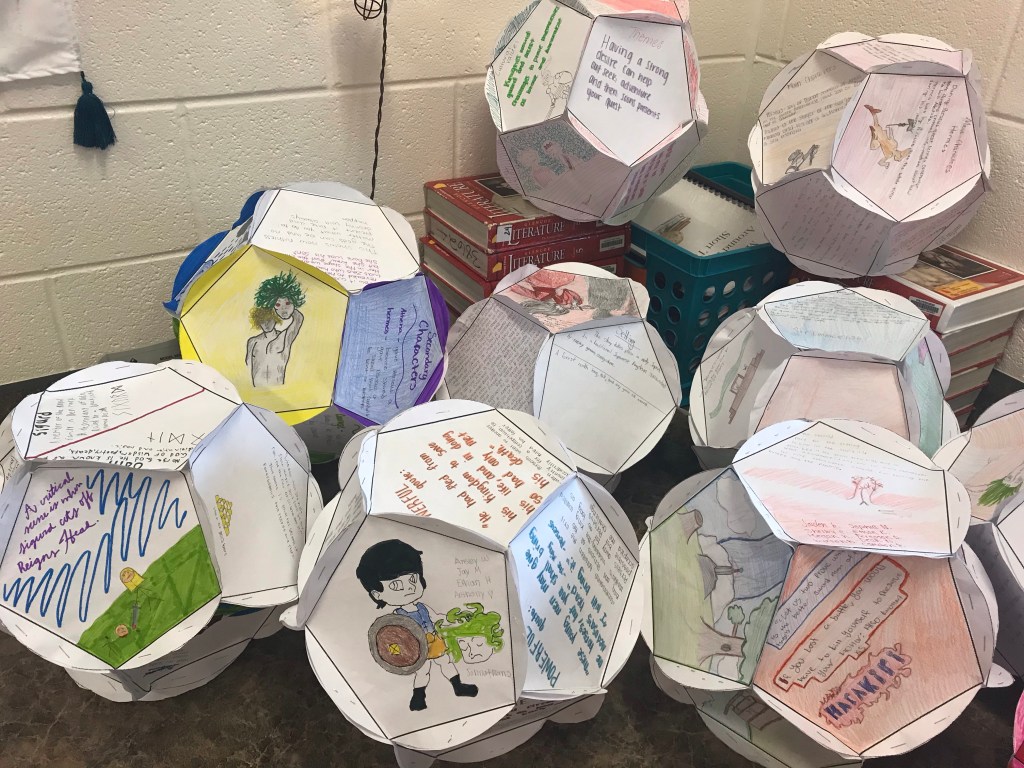
The rigor comes from the breadth and depth of thinking, not the length of a written response. You can check out this blog post I wrote about using Bloom Balls as a choice reading assignment with a variety of mythologies!
The Fall of the House of Usher Bloom Ball Activity
This small-group activity guides students through a deep analysis of Poe’s short story using a structured Bloom Ball format. With the provided handouts, students work in groups of four to complete all 12 sides of the Bloom Ball, ensuring every student contributes meaningfully to the analysis.

It’s an ideal alternative to a traditional literary analysis essay—especially for students who benefit from collaboration and visual learning.
2. TikTok-Style Informative & Persuasive Videos
Short-form video assignments may look “fun,” but when designed intentionally, they are incredibly demanding.
To create a compelling 60-second video, students must:
- Develop a clear, focused claim
- Research reliable sources
- Select and synthesize evidence
- Apply rhetorical strategies intentionally
- Avoid logical fallacies
- Communicate concisely for a real audience
In many ways, this is argumentative writing under pressure.
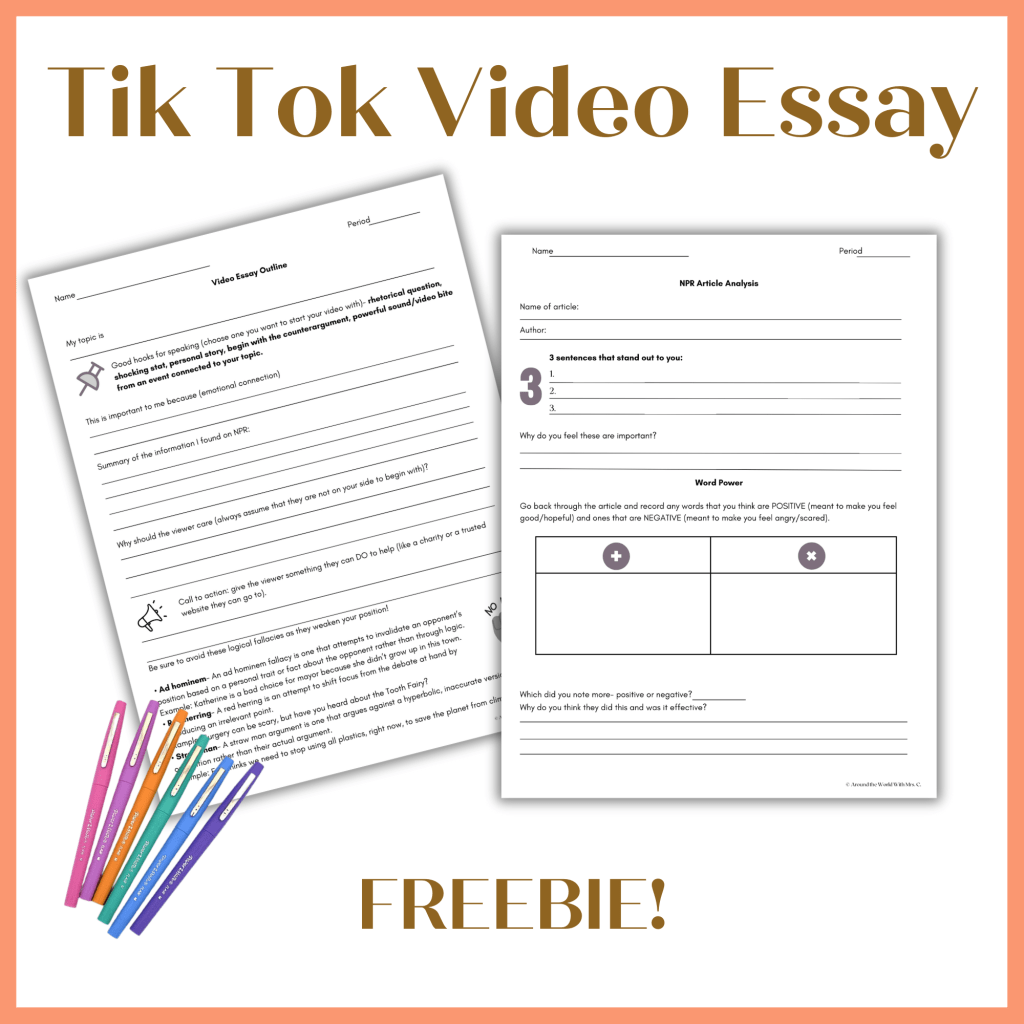
Informative and Persuasive TikTok Video Project
This comprehensive project walks students through the entire process of creating a 1-minute informative or persuasive video inspired by TikTok-style content.
Students:
- Analyze NPR articles to build strong background knowledge
- Learn and apply rhetorical techniques
- Identify and avoid common logical fallacies
- Draft, outline, and revise a script before filming
What’s Included:
- 1 PDF to introduce the project
- 1 PDF for an idea proposal
- 1 PDF to analyze an NPR article
- 1 PDF to outline the script
- 1 PDF to fully write out the script
This resource is especially effective for teaching argument, research, and media literacy in a way that feels relevant and meaningful to students.
3. Creative Informational Writing: Fairytale & Monster Headlines
Informational writing doesn’t have to feel dry or formulaic to be rigorous. One way to keep the focus on facts, tone, and word choice—while still inviting creativity—is to frame informational writing within an imaginative context.
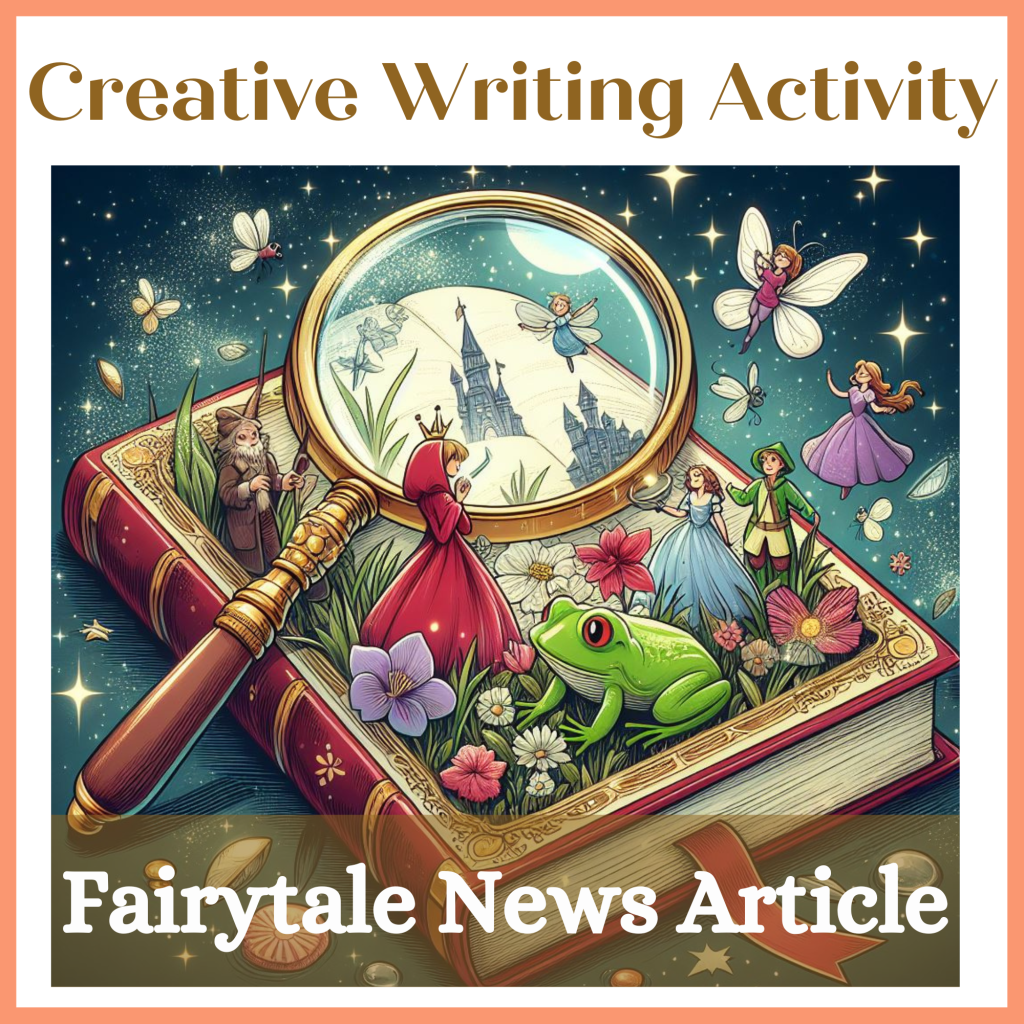
In a fairytale headline activity, students select a whimsical, fictional headline and then write the factual news article they imagine would accompany it. The creativity is in the premise; the rigor is in the execution.
Students must:
- Maintain an objective, informational tone
- Use precise word choice appropriate to news writing
- Organize information clearly and logically
- Demonstrate an understanding of factual writing conventions
Creative Writing with Informational Writing Style: Fairytale Headlines Activity
This no-prep activity is a creative alternative to traditional informational writing practice for middle and high school students.
It works especially well for 8th–10th grade and can be used as:
- Informational writing practice
- A creative formative or summative assessment
- An engaging, low-stress sub activity
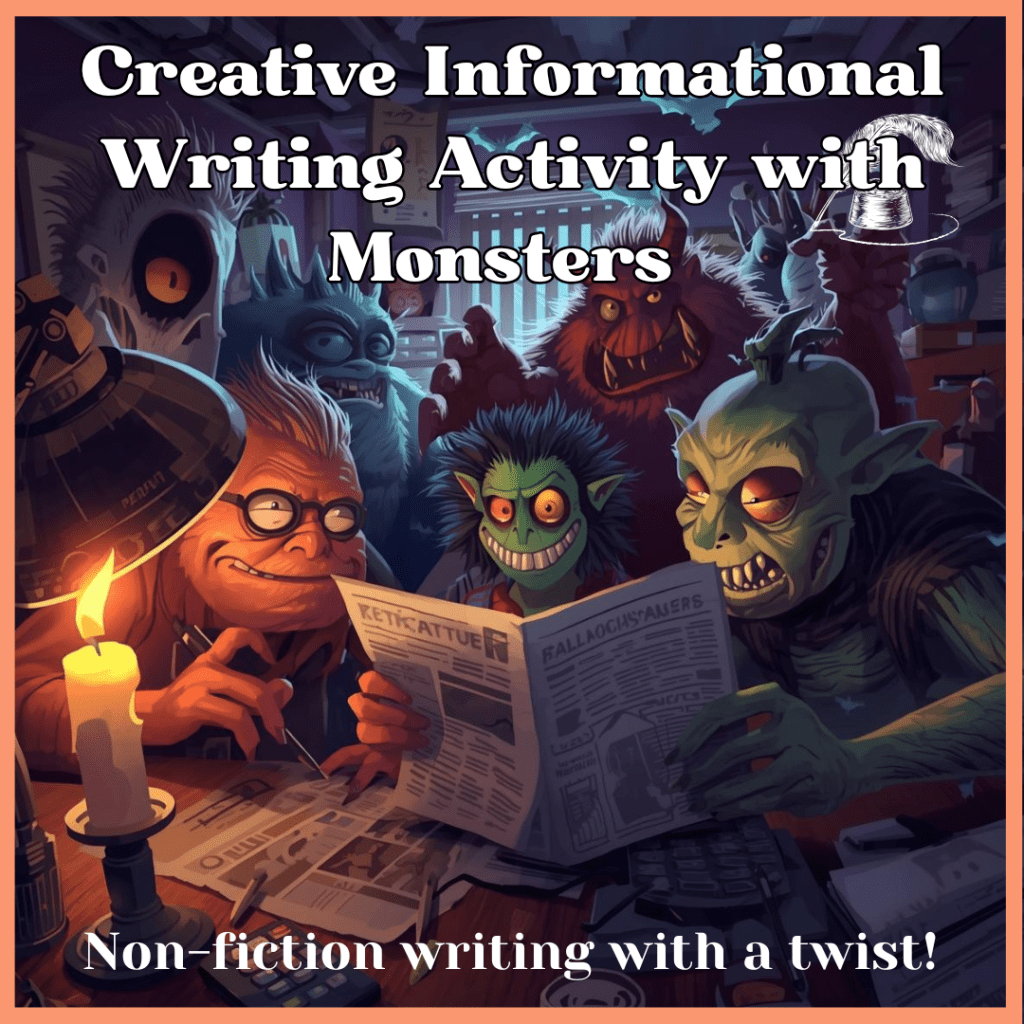
Want something still fantastical, but make it monsters and creatures of myth and lore? Check out this product! In this Monster & Myth Newspaper Writing Project, students step into the role of reporters covering extraordinary events involving creatures commonly found in folklore, fantasy, and classic monster tales.
Students choose from a variety of creature-centered newspaper headlines (or create their own) and write a news article that follows real nonfiction conventions while exploring imaginative, otherworldly scenarios. From vampires and werewolves to ghosts, goblins, and legendary beasts, this project blends academic writing skills with high-interest content students love.
These actives allow students to practice factual writing skills in a way that feels fresh, accessible, and fun—without sacrificing academic expectations.
4. Podcast Episodes: Speaking, Listening, and Literary Analysis
Podcast-style assignments ask students to say their thinking out loud—which is often more challenging than writing it down.
Through podcast episodes, students practice:
- Organizing ideas coherently
- Integrating textual evidence smoothly
- Explaining analysis clearly
- Engaging in academic discussion
- Meeting speaking and listening standards
These projects work especially well for literature circles, paired texts, or thematic units.
4. Webpage Creation (Adobe Express or Canva)
Asking students to create a webpage is essentially asking them to publish an essay for a real audience.
A strong webpage requires students to:
- Present a central claim or controlling idea
- Organize information logically
- Blend text, visuals, and evidence
- Consider audience, purpose, and design choices
This format is particularly powerful for research projects, author studies, or thematic explorations.
5. Project-Based Learning: Movie Sales Pitch Project
For teachers looking to combine research, persuasive writing, creativity, and visual literacy, project-based learning offers a powerful alternative to traditional essays.
In a movie sales pitch PBL, students step into a real-world role and apply multiple ELA skills simultaneously. Rather than writing about skills in isolation, they actively use them in an authentic context.
Students:
- Research an underrepresented culture
- Develop a narrative-driven movie concept
- Analyze audience and marketing demographics
- Create visual texts (storyboards, posters, trailers)
- Present and defend their ideas persuasively
Project Based Learning | Movie Sales Pitch Project
This ready-to-go PBL project asks student groups to imagine how a Disney-style movie idea is developed and pitched to executives.
Students identify a culture that has been underrepresented, research it thoroughly, and design a movie concept that reflects the culture respectfully and thoughtfully. They then create marketing materials and present a formal sales pitch.
Included with This Project:
- Project introduction presentation (PowerPoint, Google Slides, PDF, and Canva)
- Student job role handouts
- Tips for a successful sales pitch
- Movie proposal forms
- Project manager update forms
- Individual student reflection handouts
- Skills-based rubrics covering narrative, research, speaking, listening, writing, and technology standards
Teachers consistently report high engagement and strong skill transfer, making this project a favorite for high school classrooms.
“I loved how easy this resource was to implement! It’s a great way to get students collaborating, and I was able to adapt it for my Mythology class with great success.”
6. Aesthetic Book Promo Videos for Independent Reading
Independent reading assignments don’t have to end with book reports. Aesthetic book promo videos allow students to reflect on what they’ve read while maintaining the joy of reading.
Inspired by popular “Convincing You to Read…” videos, students create short promotional videos that focus on a book’s vibes, mood, and tone, supported by textual evidence.
Independent Reading Project: Aesthetic Book Promo Video
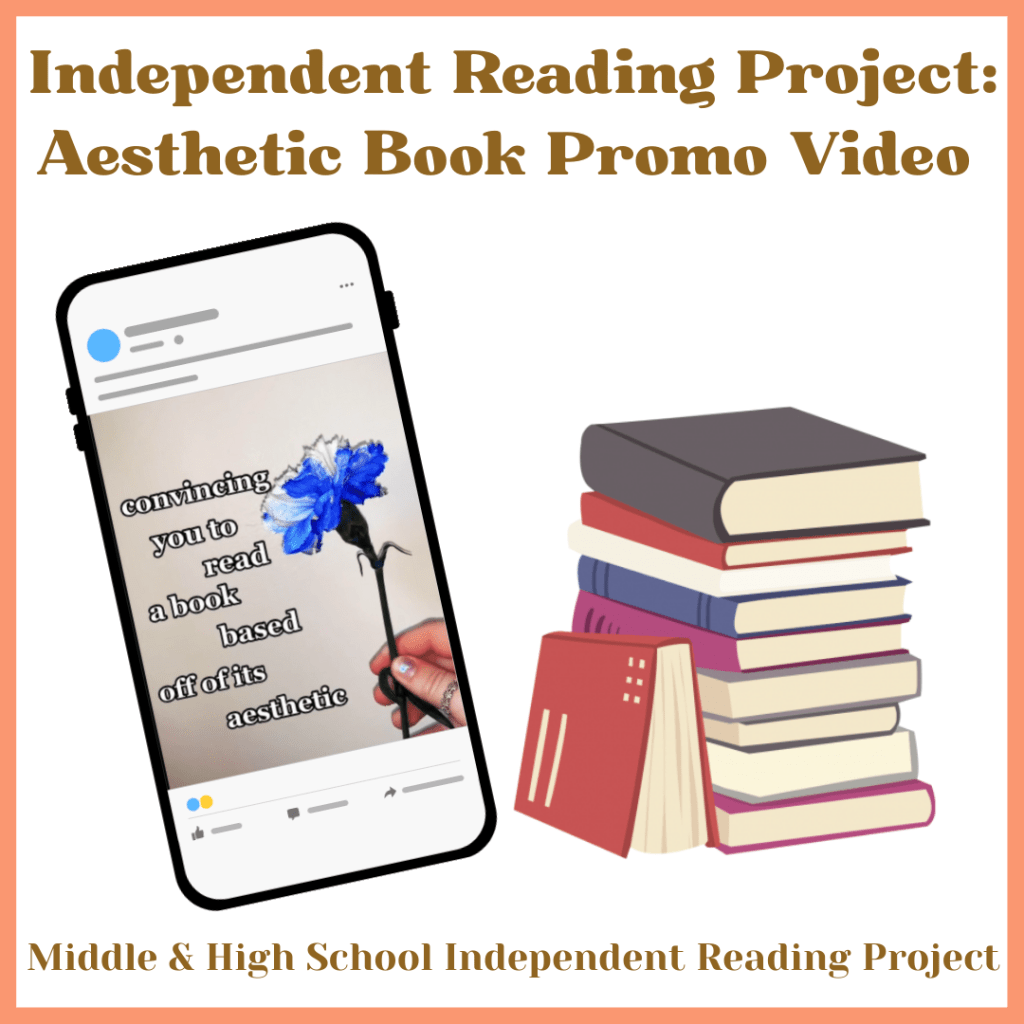
This flexible assignment works with choice reading, book clubs, or whole-class novels.
Students:
- Create a 30–60 second video promoting the book’s aesthetic
- Use images, music, and short quotes intentionally
- Write a short reflection explaining how their creative choices connect to the text
What’s Included:
- 2 PDF pages with clear instructions
- Project objective
- Student-friendly rubric
- Short written response prompt
Why teachers love it:
- Low-stakes creativity paired with meaningful analysis
- Works with any novel
- Easy tech integration (TikTok, Canva, Adobe Express, etc.)
The Takeaway: Rigor Is About Thinking, Not Format
When students are asked to analyze deeply, justify their choices with evidence, and communicate purposefully, the assignment is rigorous—regardless of whether it looks like an essay.
Creative assessments:
- Increase engagement
- Support diverse learners
- Build real-world communication skills
- Still meet (and often exceed) ELA standards
If you’re looking to move beyond the traditional essay without sacrificing academic depth, these assignments—and the resources above—are a powerful place to start.
Looking for more creative, classroom-tested ELA resources? Explore activities designed to save you time while keeping rigor front and center in my store!
Join my weekly newsletter!
Would you love to get weekly tips and resources for teaching secondary English delivered right to your inbox? Click here to join!
 Around the World With Mrs. C