

If you’ve ever searched for a way to bring Greek mythology into your classroom that actually engages students — and doesn’t require you to spend your weekend hunting down texts, designing handouts, and writing discussion questions — you’re in the right place!
Greek mythology is one of those units that sounds exciting on paper but can feel overwhelming to plan. Where do you start? Which heroes do you teach? How do you make it rigorous enough for high schoolers while keeping it accessible for middle schoolers? And how do you connect it to the standards you’re actually responsible for?
I’ve got you.
Let’s talk through how to teach Greek mythology in a way that builds real literary analysis skills, sparks genuine discussion, and gives students a window into one of the most influential cultures in human history.
Why Greek Mythology Still Belongs in Your Curriculum
Before we get into the how, let’s talk about the why. Because if you ever had a parent or administrator ask why you’re teaching “old myths,” you’ll want a solid answer.
Greek mythology isn’t just a fun detour from “real” ELA or history content. It’s actually foundational. The themes of fate, heroism, hubris, and redemption that show up in these ancient stories are the same themes students will encounter in Shakespeare, in The Hunger Games, in The Kite Runner, and in virtually every piece of literature they’ll read for the rest of their lives. Teaching mythology gives students a shared literary framework.
They’ll have a set of archetypes and cultural references they can draw on again and again.
On top of that, Greek mythology is genuinely one of the best vehicles for teaching close reading, constructed response writing, and analytical thinking. The texts are rich, the characters are complex, and there’s almost always something to argue about — which is exactly what you want when you’re trying to get students to write a thesis.
The Greek Heroes Worth Teaching (and Why)
When I put together my Greek mythology hero unit, I focused on three heroes that offer real range: Atalanta, Achilles, and Hercules. Here’s why each one earns a spot in the lineup.
Atalanta: The Hero Students Don’t Expect
Atalanta is one of the most underrated figures in Greek mythology, and she’s an incredible choice for the classroom precisely because students don’t see her coming. She’s a fierce, independent female hero in a tradition that isn’t exactly known for those. That tension is rich territory for discussion.
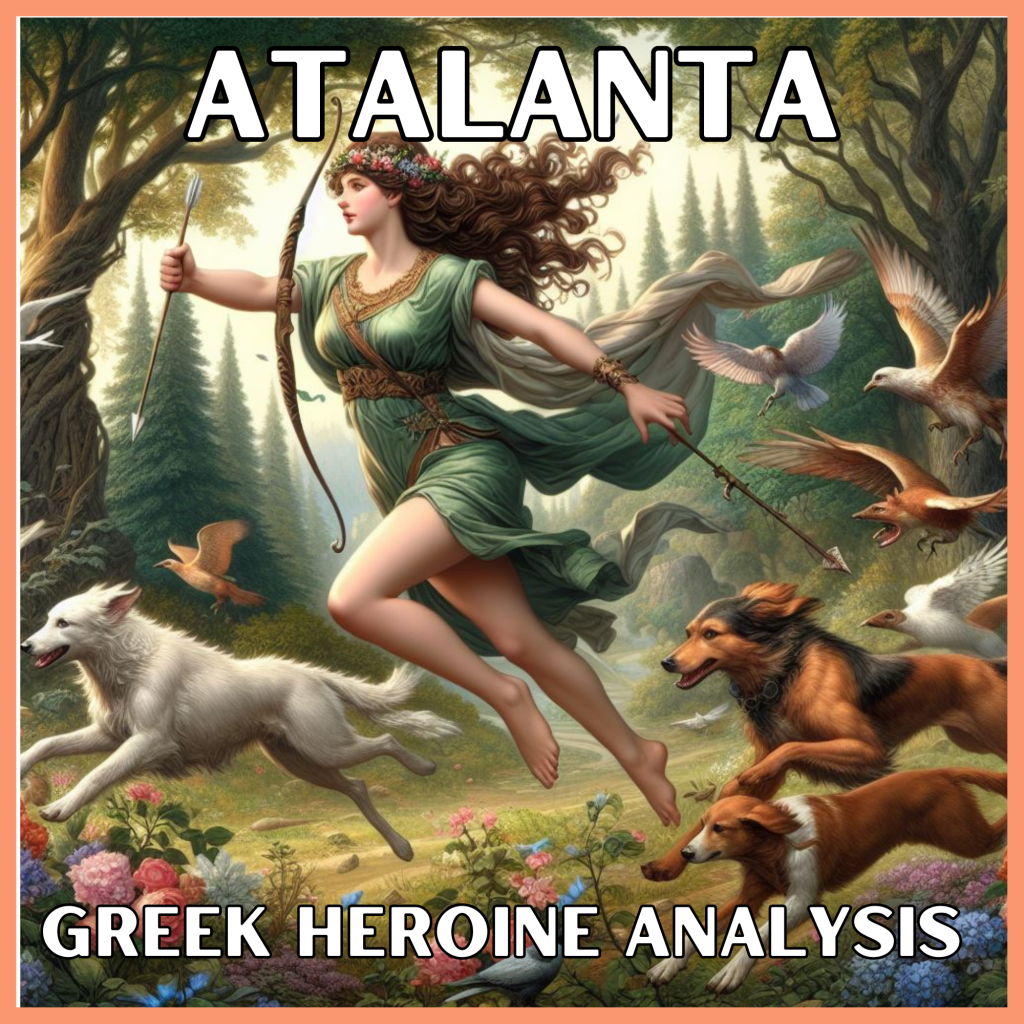
The two myths I use with Atalanta are Atalanta’s Foot Race and The Calydonian Boar Hunt. Together, they give students a fuller picture of who she is: a hunter who earns her place among heroes, and a woman whose fate is complicated by love and pride. These texts work beautifully for close reading, and they open up fantastic conversations about gender roles in ancient Greece versus today.
Achilles: The Hero with the Biggest Feelings
If you’re teaching the Iliad — or even just dipping a toe into it — The Rage of Achilles is the place to start. Achilles is the quintessential Greek hero: skilled, proud, and completely undone by his own emotions. Students connect with him more than you’d expect, because even if they can’t relate to being the greatest warrior in Greece, they absolutely understand feeling like you’ve been disrespected and deciding to blow everything up over it.
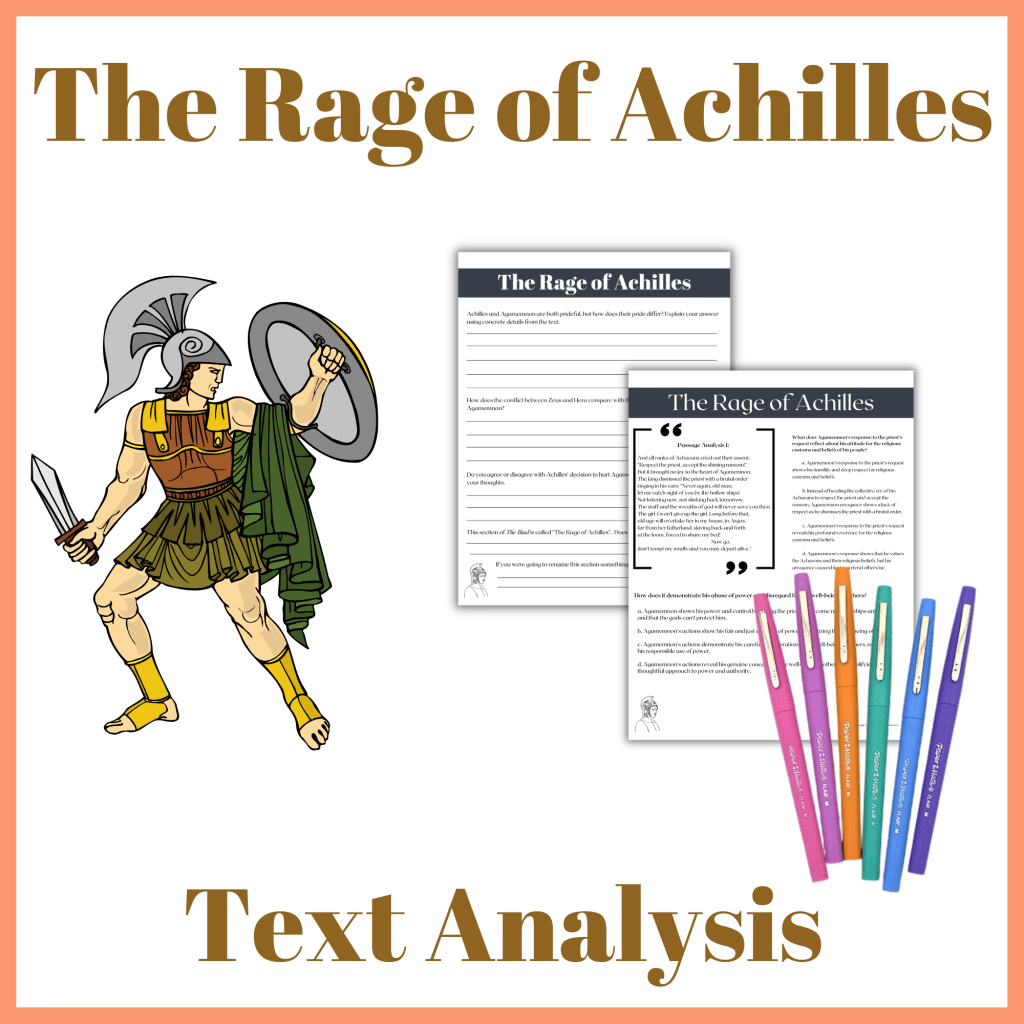
The close reading handouts I use with this text focus on Achilles’ motivations, the concept of kleos (glory), and how the ancient Greeks understood honor in ways that feel both foreign and strangely familiar. It’s a great entry point for teaching character analysis and argumentative writing.
Hercules: The Hero Who Had to Earn It
Hercules might be the most recognizable name on this list, but there’s a lot more to him than the Disney version students already know. And that’s actually a fantastic teaching moment! Starting with the background of who Hercules is (son of Zeus, target of Hera’s wrath, a man who did something unforgivable and had to find a way back from it) sets up the 12 Labors with real emotional stakes.
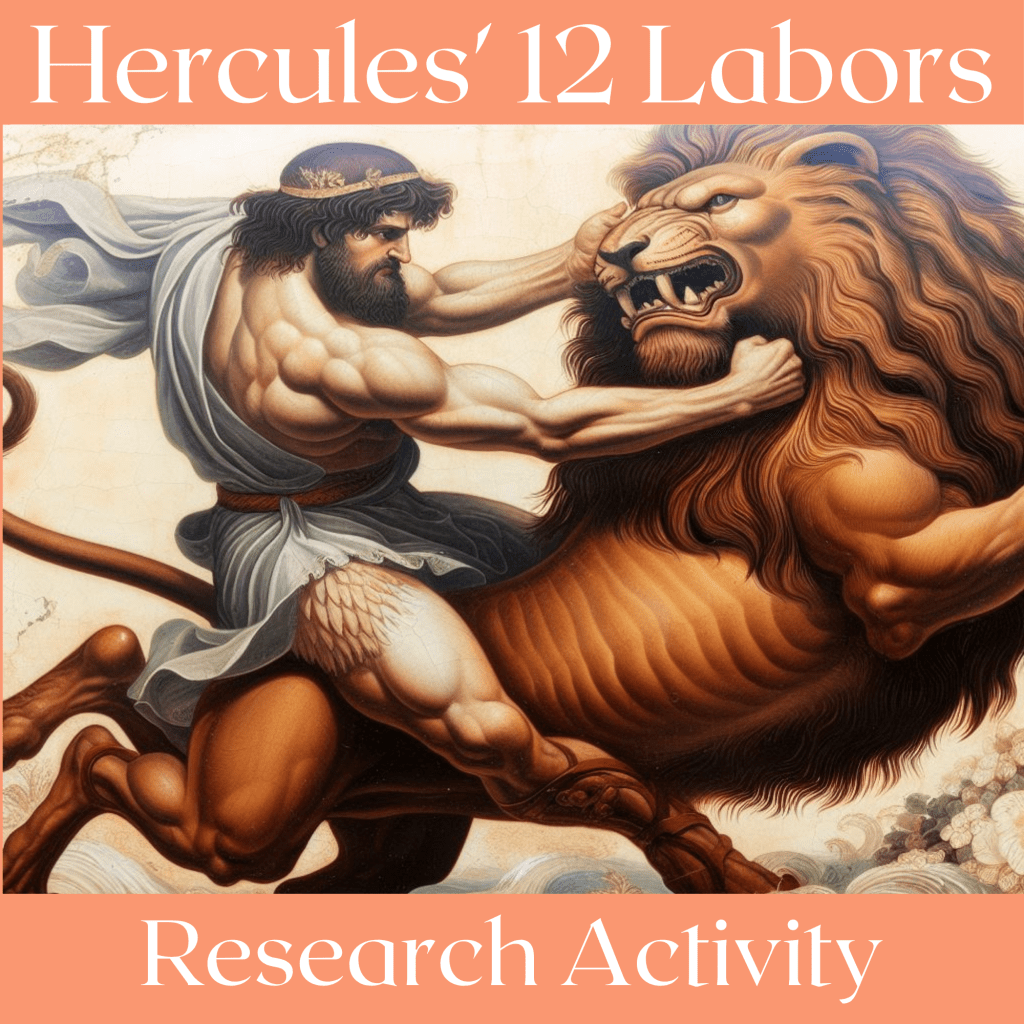
The activity I use asks students to research or watch a video about Hercules’ origin story, then work through each of the 12 Labors; identifying what each one required and why it mattered. The discussion questions that follow push students to think critically: Was it fair that Hercules had to atone for something Hera drove him to do? Why didn’t Zeus intervene? These aren’t easy questions, and they shouldn’t be. That’s the point.
Perseus: No, not Percy
Before you introduce Perseus to your students, be prepared for one very important conversation: Percy Jackson is not Perseus. Your students who have read Rick Riordan’s series will come in with strong opinions and a lot of misplaced confidence, and honestly, that’s a gift. Use it. The overlap between Percy Jackson and the original myth of Perseus is a fantastic entry point — let students notice where Riordan borrowed, adapted, and invented, and you’ve already got them thinking like literary critics before you’ve even started the lesson.
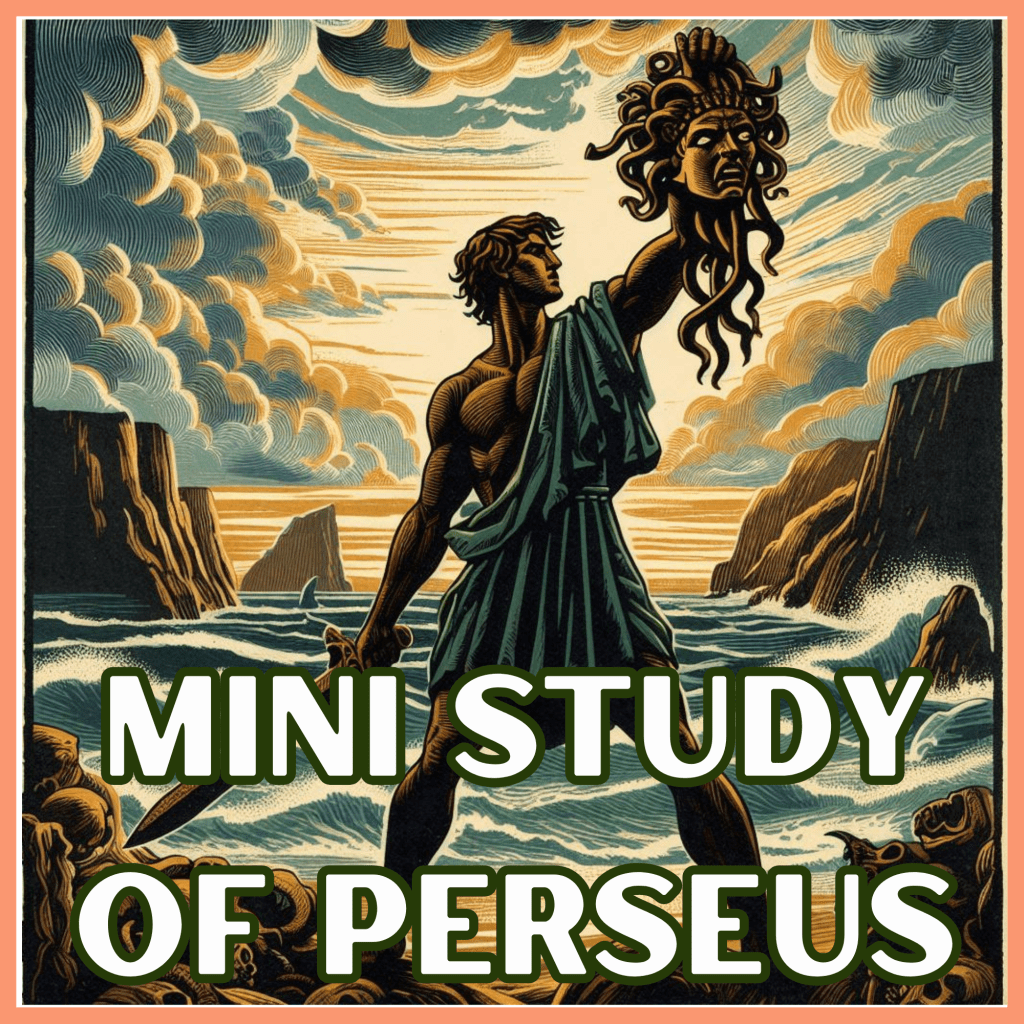
Perseus was born to Danaë, daughter of King Acrisius of Argos. The trouble started before Perseus even drew his first breath: a prophecy declared that Acrisius would one day be killed by his own grandson. In a panic, he locked Danaë away to prevent her from having children.
But – as always- Zeus had other ideas. When Perseus was born, Acrisius did what frightened men in Greek mythology tend to do: he made a decision that set the very prophecy in motion that he was trying to avoid. He had Danaë and the infant Perseus sealed in a chest and cast into the sea.
They survived, washing ashore on the island of Seriphos, where Perseus grew into a warrior. His real trouble began when King Polydectes set his sights on Danaë and wanted Perseus out of the way. He gave Perseus an impossible task: bring him the head of Medusa, the Gorgon whose gaze turned anyone who looked at her directly to stone.
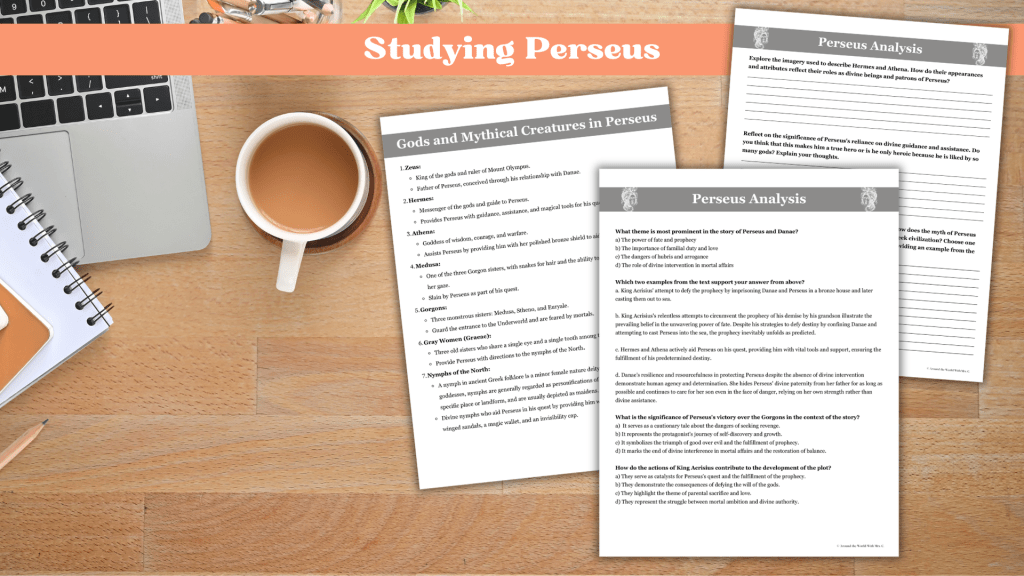
This is where the resource I use in class becomes really valuable. The Gods and Mythical Creatures in Perseus reference sheet gives students a clear map of who is who before they dive into the myth. Hermes guides Perseus and provides him with tools for the journey. Athena gives him her polished bronze shield, which becomes the key to his survival. The Gray Women point him in the right direction after he steals their one eye and refuses to return it until they cooperate. The Nymphs of the North provide him with winged sandals, an invisibility cap, and a magic wallet. Every helper matters, and students need to track them to understand how Perseus succeeds.
Perseus uses Athena’s shield as a mirror — never looking directly at Medusa, only at her reflection — and decapitates her while she sleeps. He returns victorious, uses Medusa’s head as a weapon to rescue Andromeda and defeat his enemies, and eventually makes his way home.
And then, in classic Greek mythology fashion, fate shows up right on schedule.
At the Pythian Games, Perseus throws a discus. It goes off course. It strikes and kills an old man in the crowd. That old man is King Acrisius—his grandfather. The very prophecy Acrisius spent his whole life trying to prevent came true anyway, not through malice or intent, but through a random accident at a sporting event. No one saw it coming. No one could have stopped it.
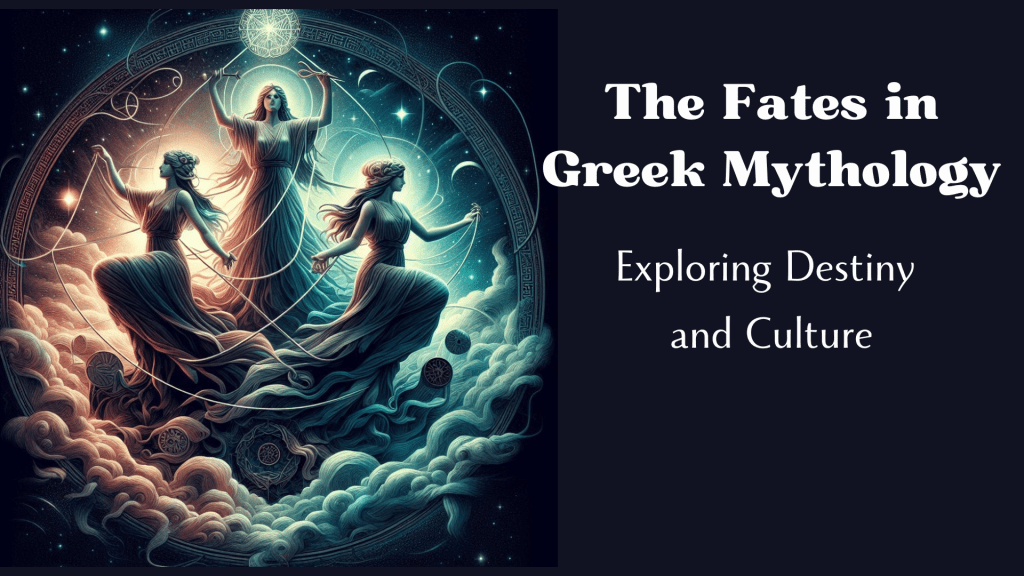
This is exactly the moment to pause and connect back to everything students have already learned about Greek fatalism and the Fates. The Fates presentation and CLOZE notes work beautifully as a companion to Perseus. Students can see in real time how the concept of Moira plays out in a specific myth. Clotho spins the thread, Lachesis measures it, Atropos cuts it. Acrisius tried to cheat that system, and the trying is precisely what doomed him. The same dynamic shows up with Achilles, with Meleager, and later with Odysseus.
Across every story in this unit, the Greek worldview is consistent: you can struggle against your fate, but you cannot escape it.
That through-line — from Perseus to Achilles to Hercules to Odysseus — is what makes teaching these myths as a connected unit so much more powerful than teaching them in isolation. Students start to recognize the pattern, and once they do, they’re not just learning mythology anymore. They’re learning how an entire civilization understood the relationship between human choice and forces beyond human control. That’s the kind of thinking that transfers.
Connecting It All: Ancient Greek Cultural Values
One of the things I love most about this unit is how naturally it lends itself to a broader conversation about Ancient Greek culture. The myths make a lot more sense — and land a lot deeper — when students understand the values that produced them.
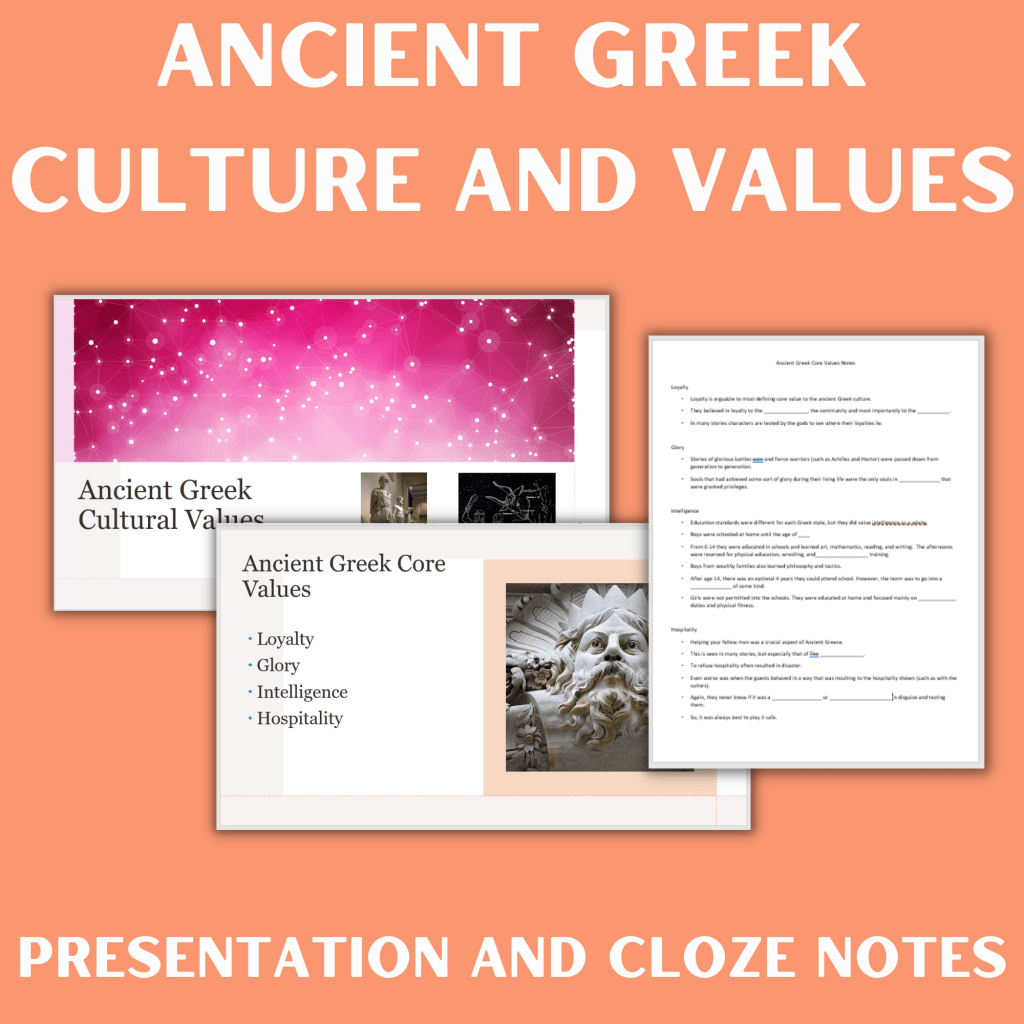
I pair all of the hero reading with a presentation and CLOZE notes on Ancient Greek cultural values, which covers concepts like fate, the role of the gods, heroic ideals, and the tension between individual glory and community responsibility. Having that cultural context before diving into the texts changes everything. Students stop reading Achilles as just “that guy who threw a tantrum” and start understanding him as a product of a specific cultural moment with specific expectations about what it meant to be a man, a warrior, and a hero.
The CLOZE notes format works especially well here because it keeps students actively engaged during the presentation without requiring them to write down every single word — which means they’re actually listening instead of just copying.
Teaching The Odyssey Without the Overwhelm: A Multimodal Approach
Once students have that mythological foundation, The Odyssey is a natural next step… and one that intimidates a lot of teachers. (I know from personal experience!)
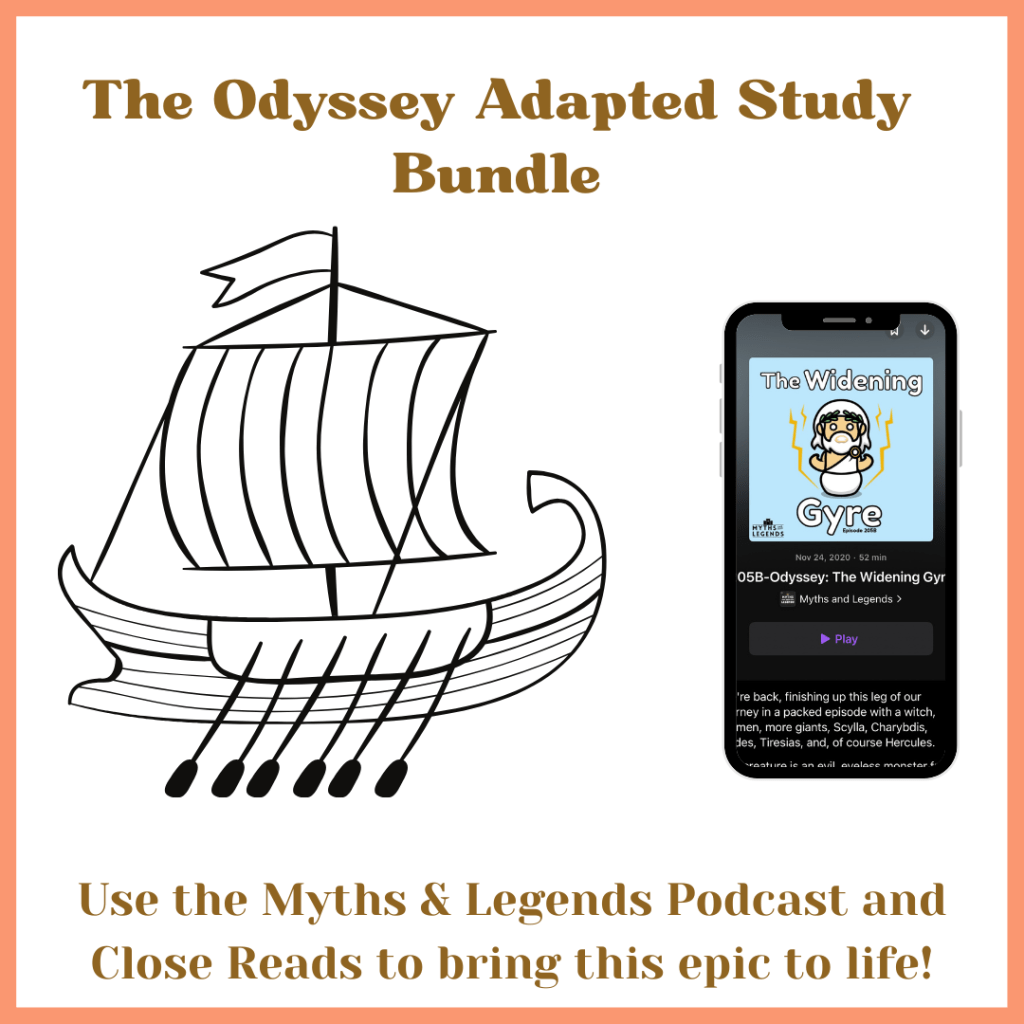
The full text is long, dense, and can feel impossible to navigate in a typical school schedule. So here’s the approach I’ve landed on, and it’s genuinely one of my favorites: pairing the Myths and Legends podcast with close reading handouts that pull directly from the original text.
This combination lets students experience The Odyssey in two complementary ways — they get the storytelling energy and accessibility of a modern podcast retelling, plus the depth and rigor of working directly with Homer’s own words. You get the best of both worlds, and so do your students.
How the Podcast + Close Read Pairing Works
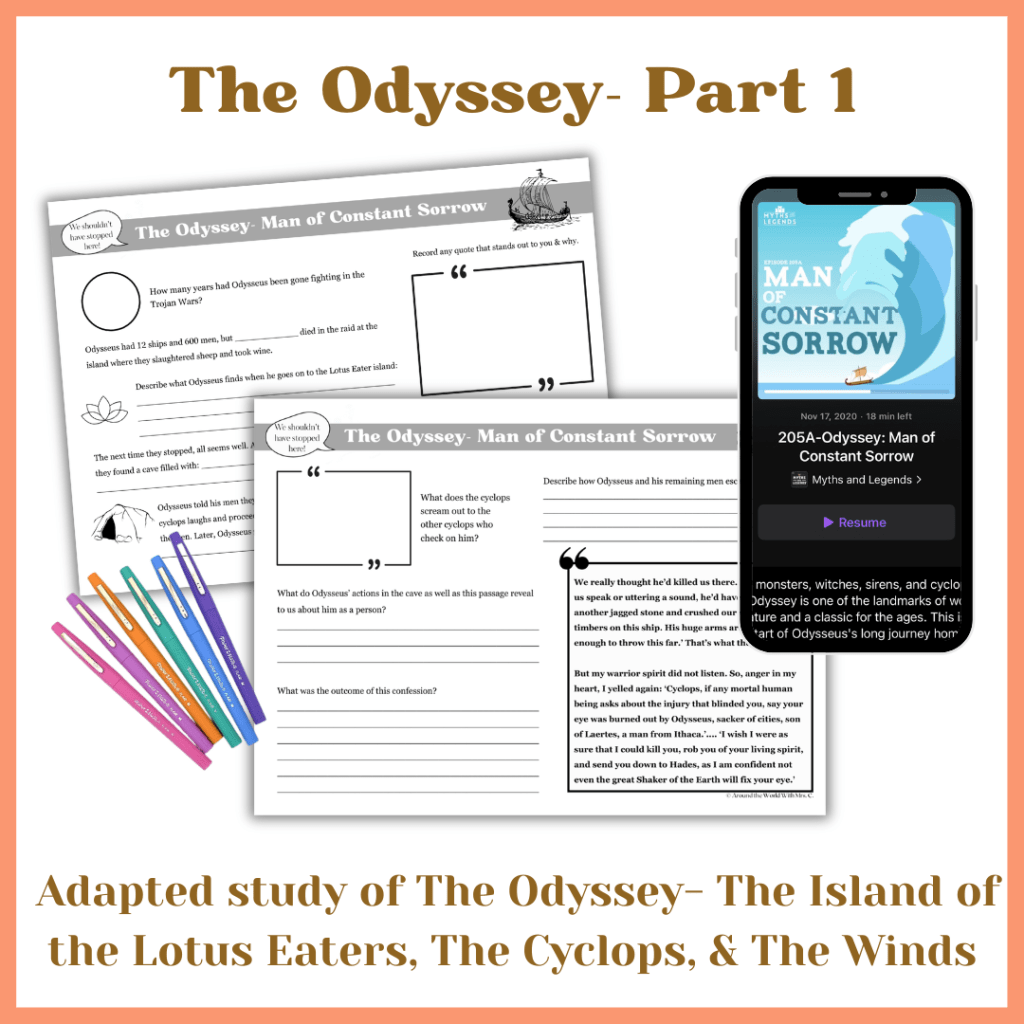
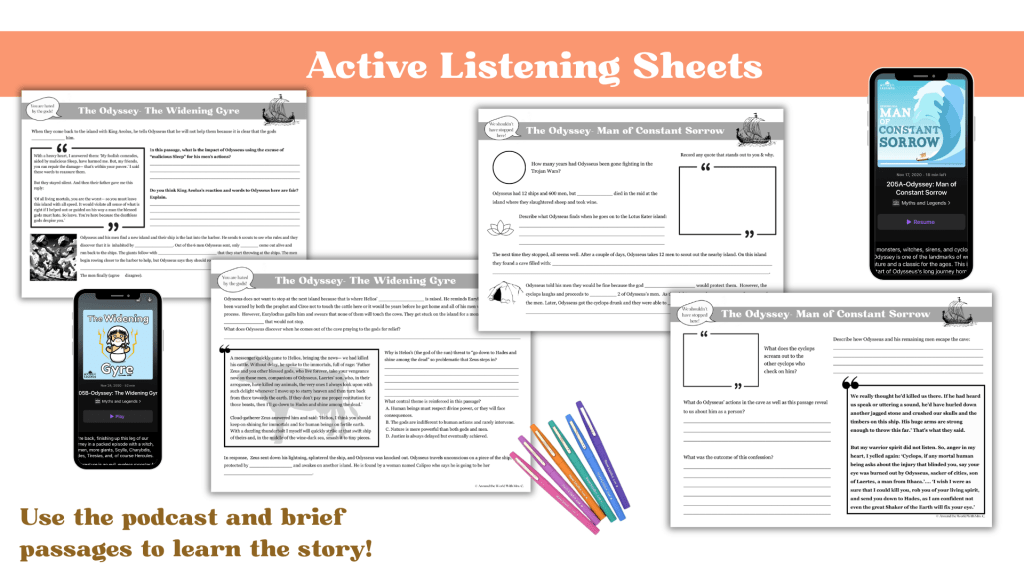
The Myths and Legends podcast breaks the epic into digestible episodes, each covering a key portion of Odysseus’s journey. I’ve built active listening sheets to go alongside each episode — students fill these in as they listen, keeping them engaged and accountable throughout. Then, woven into each episode, I’ve embedded passages directly from the original text that pause the podcast and push students into close reading.
You can use these close reads mid-episode (just pause at the timestamp I include in the teaching tips) or wait and use them as a follow-up once the episode is done. Either way works; it just depends on your class and your pacing.
Each portion of the journey typically takes about two class periods to cover, which makes planning manageable. Here’s a quick snapshot of what each part of the unit looks like:
Part 1 — The Island of the Lotus Eaters, the Cyclops, and the Winds
This is where students first encounter Odysseus as a narrator of his own story, which is itself worth discussing. The Cyclops episode is endlessly engaging — students are genuinely gripped by Odysseus’s Nobody trick and the blinding scene, and the close read I’ve included pushes them to analyze Homer’s use of simile and imagery in that pivotal moment. The Winds episode opens up great conversations about leadership, temptation, and the consequences of mistrust — Odysseus’s crew undoing years of effort in a single moment of envy is something students find both infuriating and completely relatable.
Parts 2 and 3 — Circe, the Underworld, Scylla and Charybdis, and the Cattle of Helios
This stretch of the journey is thematically rich and morally complicated in all the best ways. Students grapple with some genuinely difficult questions here: Should Odysseus have stayed with Circe? Was he right to withhold information from his men about Scylla? How do you lead people when every option is terrible?
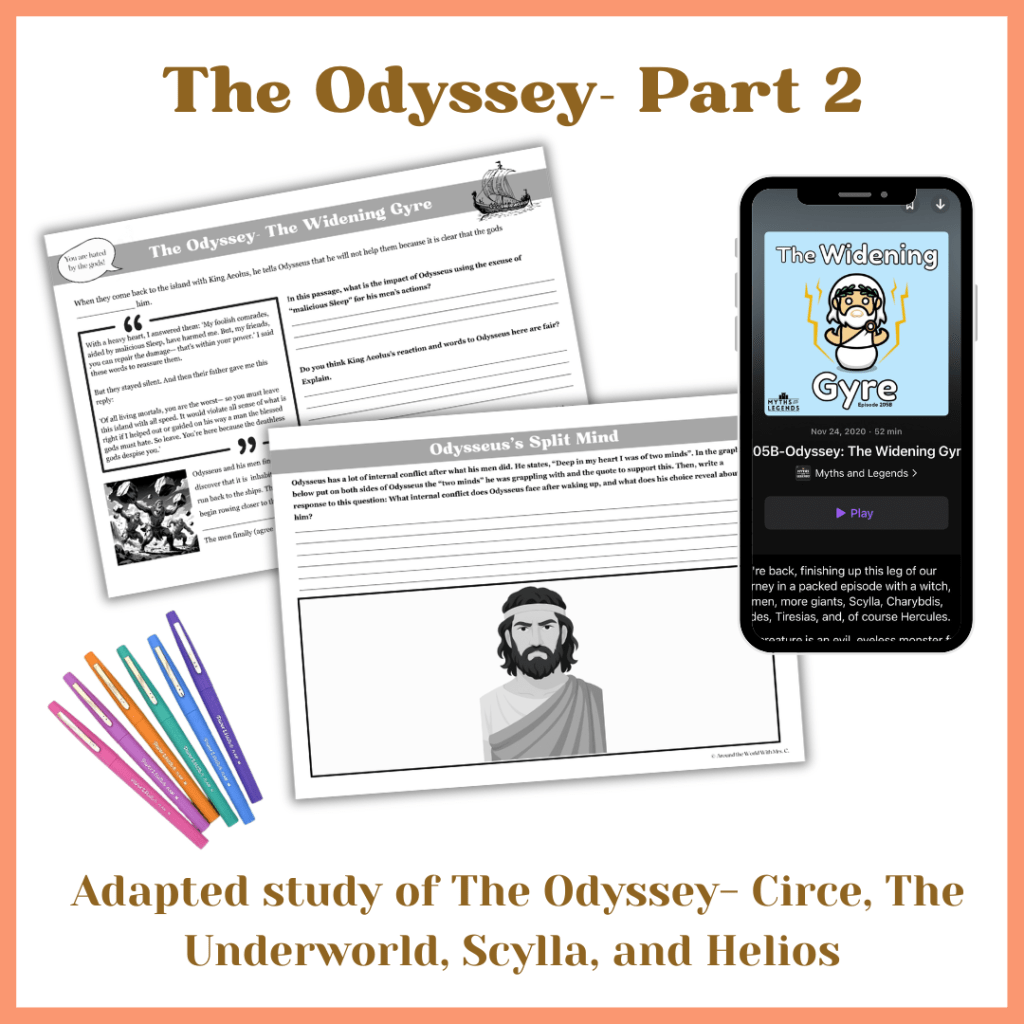
The Scylla close read is one of my favorites to teach because it puts students in an impossible ethical position alongside Odysseus. The Cattle of Helios is where things fall completely apart. The passage I’ve included from the confrontation between Helios and Zeus is a great anchor for discussing divine justice and the theme of consequences for human arrogance.
I’ve also built in a pre-reading close read on Calypso that provides essential context before students hear the podcast episode covering Odysseus’s return. Students often want to jump straight to the action, but understanding why Odysseus was weeping on a beach while living with a goddess (and what his choice to leave immortality behind says about Greek values) gives the whole homecoming arc so much more weight.
Part 4 — The Return: Vengeance, Recognition, and Reunion
This is the finale, and it earns every bit of the buildup. Students follow Odysseus as he returns to Ithaca in disguise, endures abuse from the suitors while biding his time, and finally reveals himself in one of the most satisfying moments in all of Western literature. The close reads I’ve built into this section focus on dramatic irony, foreshadowing, and character analysis. Particularly the moment Odysseus strings his bow and the deeply moving scene where Penelope tests him with the secret of their bed.
That bed scene, by the way, is one I always build extra time around. Students need a moment to sit with what it means. That Odysseus built their bedroom around a living olive tree, so the bed literally could not be moved without destroying it. As a symbol of an unshakeable marriage, it’s hard to top. And the fact that Penelope, after twenty years of waiting and uncertainty, still tests him before she trusts him? That tells students everything they need to know about her character.
The Discussion Questions That Make It All Stick
What I love most about this unit is that the discussion questions write themselves once students are invested in the story. I’ve included discussion prompts throughout the teaching tips for each episode, but some of my favorites across the whole unit are:
Was Odysseus a good leader? Use specific examples to defend your answer.
Odysseus repeatedly withholds truth from the people around him: his men, Penelope, even the gods. Is deception ever justified? When?
Do you think Penelope always knew, or suspected, that the beggar was Odysseus? What evidence supports your interpretation?
How does ancient Greek culture’s emphasis on fate and divine will change how we judge the characters’ choices?
These questions work equally well as quick journal prompts, Socratic seminar topics, or essay starters. This makes this unit flexible enough to fit whatever format your class needs.
How to Structure This Unit
Here’s a simple sequence that works well for both middle and high school:
- Start with cultural context. Use the Ancient Greek Cultural Values presentation before introducing any of the hero texts. This gives students the framework they need.
- Introduce Hercules first. His story is the most familiar, which makes it a low-stakes entry point. Use the background activity and 12 Labors handout, then move into discussion questions.
- Move to Atalanta. Now that students have a feel for what a Greek hero looks like, Atalanta gives them something to push back against and compare.
- Finish with Achilles. The Rage of Achilles is the most text-heavy and analytically demanding, so saving it for when students are warmed up pays off.
- Transition to The Odyssey. The Calypso pre-reading is a great bridge — it connects the hero themes students have already been exploring to Odysseus’s specific dilemma and gives them context before the podcast begins.
- Work through the podcast episodes in order, using the active listening sheets and pausing for embedded close reads as you go.
- Culminating writing task. The discussion prompts from both the hero unit and The Odyssey sections are all strong essay or Socratic seminar springboards.
Common Questions Teachers Have About Teaching Greek Mythology and The Odyssey
What grade level is this appropriate for? This unit works well for grades 8–10. The texts and handouts are accessible enough for strong middle school readers and rigorous enough to challenge high schoolers. The discussion questions in particular scale nicely. A eighth grader and an tenth grader will have very different conversations about Hercules and atonement, and both conversations are worthwhile.
How long does this unit take? You can stretch it across three to four weeks for a full deep dive, or compress it into two weeks if you’re moving faster. The modular structure makes it easy to pick and choose based on your pacing.
Do I need the full original text of The Odyssey? Nope! That’s the whole point of this approach. The podcast handles the narrative, and I’ve pulled the most important passages directly into the close reading handouts. Students get genuine exposure to Homer’s language and style without you needing to assign the complete 500-page epic.
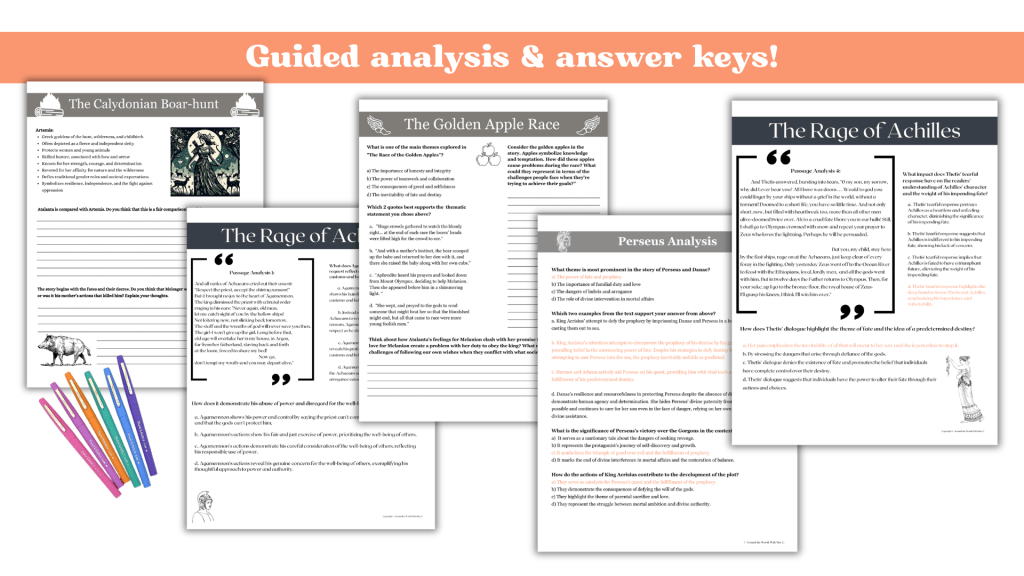
Does this connect to ELA standards? Yes! The close reading activities, constructed response handouts, and discussion questions are all designed with reading literature and writing standards in mind. Students are analyzing character motivation, identifying theme, citing textual evidence, and crafting argumentative responses throughout the unit.
Can I use this alongside a textbook? Absolutely. These materials work as a standalone unit or as a supplement to an existing mythology textbook or anthology.
Ready to Bring Greek Mythology Into Your Classroom?
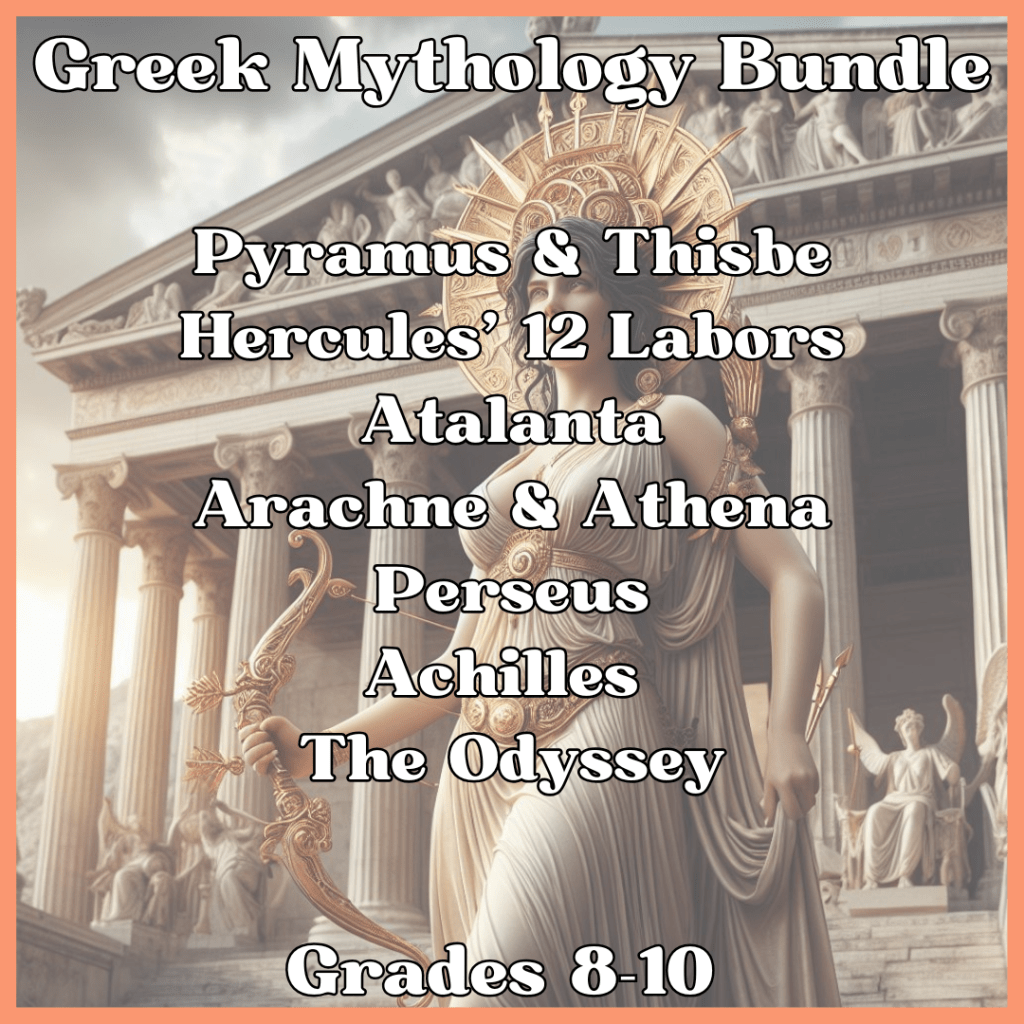
If you’re looking for resources that are actually ready to go — texts included, handouts designed, answer keys written, discussion prompts ready — you can find both my Greek Heroes unit and my Odyssey Listening Sheets in my TPT store.
Want an even better deal? Grab my Greek Mythology Mega Bundle that includes all of these and a few other myths you could sprinkle in as needed at a discounted price!

Because your planning time is valuable, and your students deserve a mythology unit that goes way beyond fill-in-the-blank worksheets.
Because your planning time is valuable, and your students deserve a mythology unit that goes beyond fill-in-the-blank worksheets.
Join my weekly newsletter!
Would you love to get weekly tips and resources for teaching secondary English delivered right to your inbox? Click here to join! Would you like to connect on social to see more of my ideas in bite-sized form? You can find me on YouTube and Instagram.
© 2026 · Around the World With Mrs. C · All rights reserved
 Around the World With Mrs. C