

Are you tired of only teaching Greek and Roman mythology? These stories are great, but many of us want to introduce our students to other cultures too. Adding myths from Celtic, Norse, and Japanese traditions can make lessons more interesting and help students learn about different parts of the world.
This can also help students think more critically, appreciate different cultures, and understand universal themes in stories from around the globe. By studying a wider range of myths, we can make our classes more engaging and relevant for today’s diverse world.

Japanese Mythology and Folktales
Japanese mythology is sorely missing in most studies. I find this most odd given the high interest that many of our students have in manga and anime stories. Japanese mythology is extremely rich and complex. You could easily spend months teaching it. If you only have a short timeframe though, here are the 3 I suggest:
Creation Story– the deities Izanagi and Izanami are tasked with creating the world. They use a jeweled spear to stir the ocean, and from the droplets that fall, the islands of Japan are formed.
The Ogre of Rashomon– this is a folktale of a hero who encounters the terrible Ogre of Rashomon and learns a lesson on why you should always be suspicious if your old nanny shows up out of the blue
The Bamboo Cutter and the Moon Princess– little bit of mythology mixed with folktale here; this is the story of how the Moon Princess comes to Earth and is found by a simple bamboo cutter inside of a bamboo stalk. She lives and grows with the couple and learns what it is to be human. For a little extra analysis, consider comparing with the new anime movie The Tale of Princess Kagua! Check out my comparison here.

Ready to open up the world of Japanese mythology and folktales to your students but want to save time researching and creating material? Check out this resource!
Celtic Mythology
I ADORE Celtic mythology. Maybe I was a druid in my past life because I just can’t get enough of it! I like to add in Celtic mythology into my classroom in a couple of ways.
My biggest piece is my Celtic Mythology mini unit in which we cover several individual deities and mythological creatures and then compare them with the Irish animated movie Song of the Sea. My students always love this. It’s different from everything they have covered and the movie is just amazing!
Some of the Celtic figure we learn about are:
Manannán mac Lir (the son of the sea) is one of the main deities shown in the movie. He was a popular deity in Celtic mythology, belonging to an Irish mystical race known as the Tuatha De Danann. In the most popular myths he is seen as the island’s defender, using his magic to create a mist to confuse and intimidate any invaders.
Macha can be a challenging deity to try and teach. She is one part of a triad a female deities (think Mother, Maiden, Crone). For the purposes of this mini study though, I focus on Macha the mother in the tale “The Curse of Macha”.
Silkies are a beautiful mythological creature that is prevalent in Scottish and Irish traditions. Typically they are females, but there are also some instances of male selkies. Selkies are seals in the water to come on land and shed their skin to reveal a human form underneath. In order to return to the sea they must put their seal skins back on and return to the water.
The movie Song of the Sea brings these figures and others to life and students fall in love with the story. You will also love all of the literary elements that you can tie into this! Such as parallel plot, heavy symbolism, and The Hero’s Journey.

The movie is also a fantastic tie into studying the famous Irish author Yeats and one of his iconic poems. The opening lines of the movie is pulled from his poem The Stolen Child.
Come away, O human child!
To the waters and the wild
With a faery, hand in hand,
For the world’s more full of weeping than you can understand.
Ready to get started with this mini unit? Check out this resource here!
Samhain
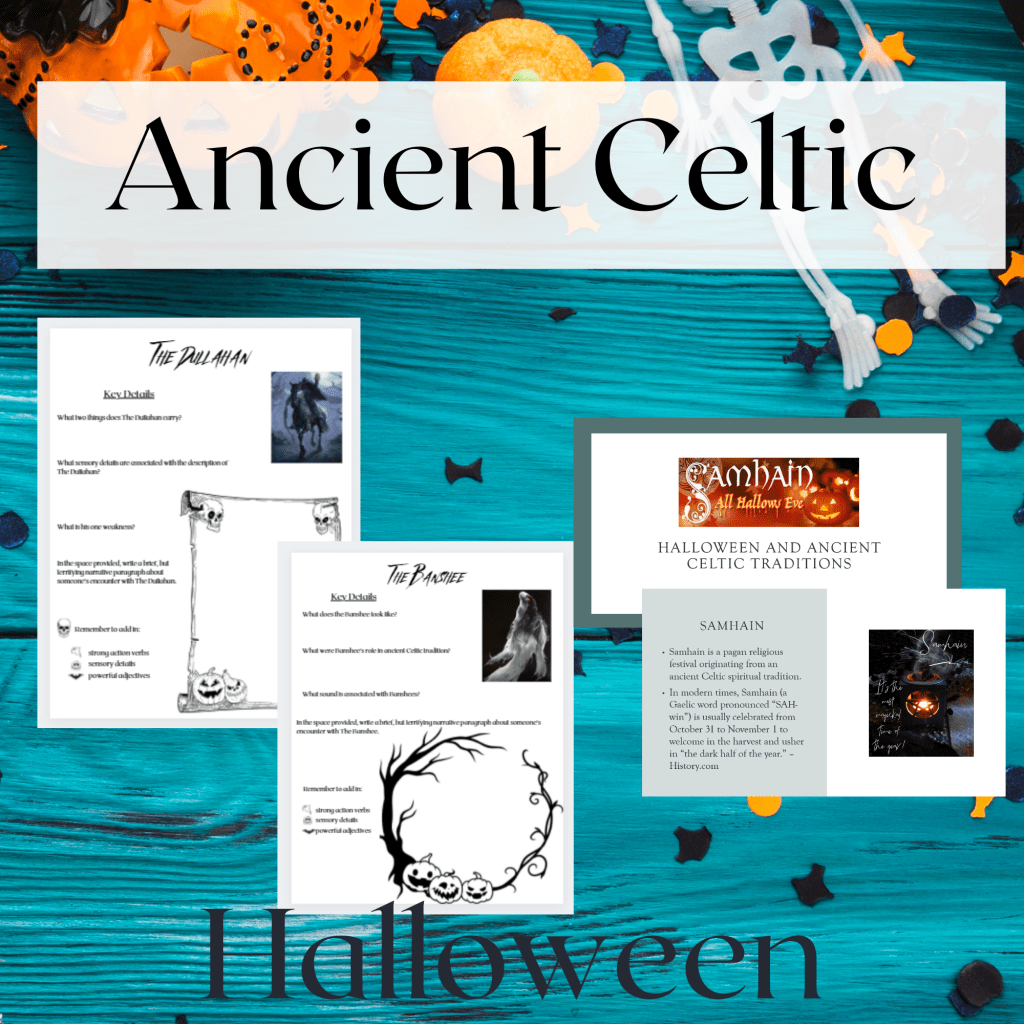
Another time I love to bring in Celtic Mythology is around Halloween. Celtic mythology had some seriously scary beings. This quick and fun exploration is always a blast during the Halloween season while also seeing how largely our modern day celebrations of Halloween are traced back to ancient Celtic customs.
I love to focus on the Celtic figures- The Dullahan and Banshees
The Dullahan was the original Headless Horseman! He caries a carved turnup in one hand and a spine for a whip in the other. He wonders around on Samhain (Halloween) to collect the dead.
Banshees are usually connected to a family. Sometimes they are a long-dead relative of that family. When they appear, a great threat to the family is coming. Often it means death, but on occasion it is another type of grave threat.
Ready to have a little scary fun with your mythological studies? Check out this resource here!
Norse Mythology
Who doesn’t love learning about Vikings?!
Again, this is an extremely diverse culture and mythological belief system. After introducing students to the history and culture of the people, I personally love using Neil Gaiman’s book called Norse Mythology for many of the tales.
Within my Norse Mini Mythology unit, I share several Norse myths. Some of my favorite tales to share is:
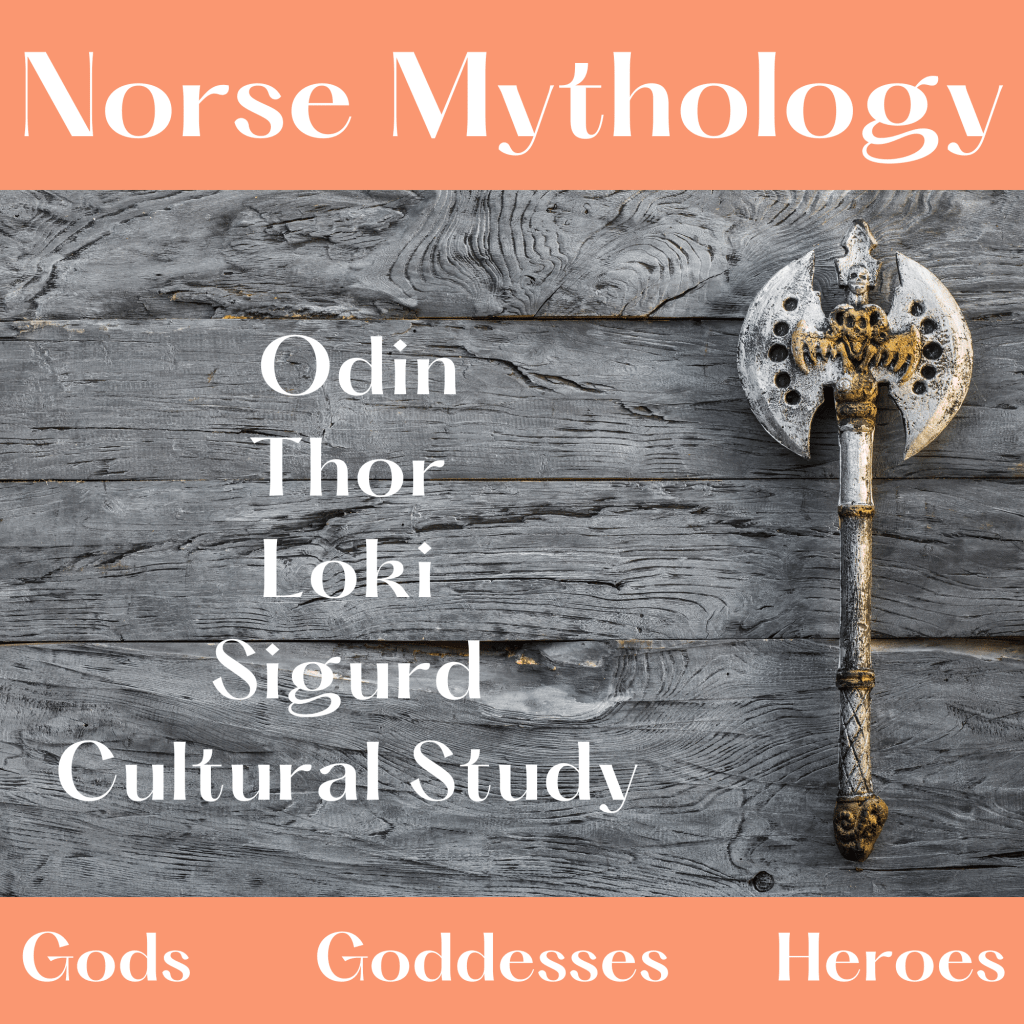
Mimir and Odin’s Eye– Odin sacrifices his eye to the well so that he can be blessed with infinite wisdom (showing how much the Viking culture valued intelligence)
Odin Discovers the Runes– Odin takes his thirst for knowledge further and desires to learn how to read the runes. He pierces himself with a spear and hangs upside down from Yggdrasil for 3 days and called to the runes until they revealed themselves. (showing how highly they valued reading)
The Death of Baldur– In this tale, Odin has a vision that his beloved son Baldur is killed. So, Frigg travels the lands to ask every living thing and even the plants to to swear they will not to harm her son. They all agree, but she realizes that she forgot about Mistletoe. She assumes that it is of no consequence and her son is safe. However, Loki finds this out and uses it to kill Baldur. Events then happen that lead to Ragnarök. However, this tale also shows students where the tradition of kissing under the Mistletoe came from!

I also love to cover the greatest Viking hero story (which of course also has meddling Norse gods in it)- Sigurd. This tale has everything- dragons, damsels in distress, Odin and Loki, and much more!
Sigurd’s is most famous for slaying the dragon, Fafnir. Dragons in Norse mythology symbolize greed, and Fafnir’s greed takes an extreme form when he kills his own family. Sigurd is able to use his intelligence and abilities to outwit several foes (including the dragon); showing us again the character traits that Vikings highly valued.
Teach Japanese, Celtic, and Norse Mythology

Does all of this sound good and you want to try covering it all?! Check out this resource. Within this bundle, you will get everything you need to teach Celtic, Norse, and Japanese mythology at a discounted price!
Honorable Mentions
It goes without saying that in the wide expanses of the world, this is but a small tasting of the mythology you can start including to change things up! I also highly recommend The Ramayana for a look at Hindu mythology and have had some great successes with my students in the past with it. Exposing students to Igbo mythology and culture can help greatly before reading books heavily focused on this culture- like Things Fall Apart or Purple Hibiscus.
Are there any mythology studies you love to incorporate into your studies each year that go beyond the traditional Greek/Roman tales?
Join the Newsletter
Would you like more tips like this sent directly to your email box every week?! Join my newsletter!
 Around the World With Mrs. C
One thought on “Expanding Your Mythology Curriculum by Adding in Celtic, Japanese, and Norse Mythology”