

Teaching your World Literature class thematically can have so many wonderful benefits! Creating a thematic unit on love can be a great way to explore the different ways in which love is represented throughout the world’s literature.
Through this post, students can examine how different authors have used love as a theme in their works, including novels, plays, and short stories.
By exploring these works, students can gain a better understanding of the many ways love is expressed in literature and gain insights into what it means to love and be loved.
Tips on Creating a Thematic Unit on Love
First, you will want to create a engaging inquiry questions to center around your unit. I personally like to call this unit- Love, It’s Complicated!
Some questions to consider throughout the unit would be:
How do you define love?
Has loved changed over the centuries?
How do our beliefs and experiences shape our understanding of love?
How do societal expectations shape our understanding of love?
With this umbrella theme of love, there is so much to explore. Such as romantic love, familial love, unrequited love, and self-love. By focusing on a single theme, such as love, students can gain a greater understanding of the texts they are studying.
The larger umbrella of love can leave you a lot of room for a variety of texts to use. Such as William Shakespeare’s A Midsummer Night’s Dream, Emily Bronte’s Wuthering Heights, Edmond Rostand’s Cyrano de Bergerac, and Hans Christian Andersen’s The Little Mermaid.
When you are creating your unit, I would recommend you mix and match with the texts mentioned. Lets explore a little more what each one can bring to the discussion.
Shakespeare’s A Midsummer Night’s Dream

I know I know. Everyone’s “go to” here is Romeo and Juliet.
However, I just adore this play AND I think that it a wonderful way to expose our students to more comedies instead of only focusing on the tragedies.
Using Midsummer also shows how complex love can be but that it can also bring much joy instead of death and misery…
A Midsummer Night’s Dream is a romantic comedy written by William Shakespeare that explores various types of love.
The various types of love seen in the play include romantic love, parental love, platonic love, and unrequited love.

In the play, the four young lovers, Hermia, Lysander, Demetrius and Helena, experience romantic love as they compete for each other’s affections. This love is further contrasted with the parental love of Egeus for Hermia, who insists that she must marry Demetrius.
The play also features the platonic love between Helena and Hermia, and the unrequited love of Helena for Demetrius. Through these various types of love, the audience is able to explore the complexities of human relationships and the power of love.
When teaching A Midsummer Night’s Dream, I love to include some other texts that will be mentioned further down. Such as the myth of Pyramus and Thisbe and poetry.
Emily Bronte’s Wuthering Heights

In Wuthering Heights, Emily Bronte presents a variety of types of love. The most evident type of love is the powerful, passionate love between Heathcliff and Catherine. However, it is an unhealthy kind of love (kind of like Helena in A Midsummer Night’s Dream).
This is a love that is full of longing, obsession, and pain. It is a love that is ultimately destructive and unfulfilling. In contrast to this type of love, there is the steady, supportive love between Edgar and Isabella.
This is a compassionate and understanding love that is eventually able to heal the wounds of Wuthering Heights. Lastly, there is the tender, protective love between Nelly and Hareton. This is a sweet and innocent love that is ultimately able to bring peace and joy to Wuthering Heights.
Edmond Rostand’s Cyrano de Bergerac

Cyrano de Bergerac is a play by Edmond Rostand that tells the story of a brave, passionate, and talented French soldier who is deeply in love with his cousin, Roxane. Despite his own insecurities about his appearance (namely his large nose), Cyrano finds a way to express his love for her through his extraordinary wit and writing while pretending to be her love interest, Christian.
This story emphasizes the power of selfless love and how it can overcome even the greatest of obstacles. Cyrano’s love for Roxane is strong and unwavering; however, his own self-doubt and pride keep him from possibly “having it all”.
I highly recommend pairing this with the modern film adaptation featuring Peter Dinklidge!
Hans Christian Andersen’s “The Little Mermaid”
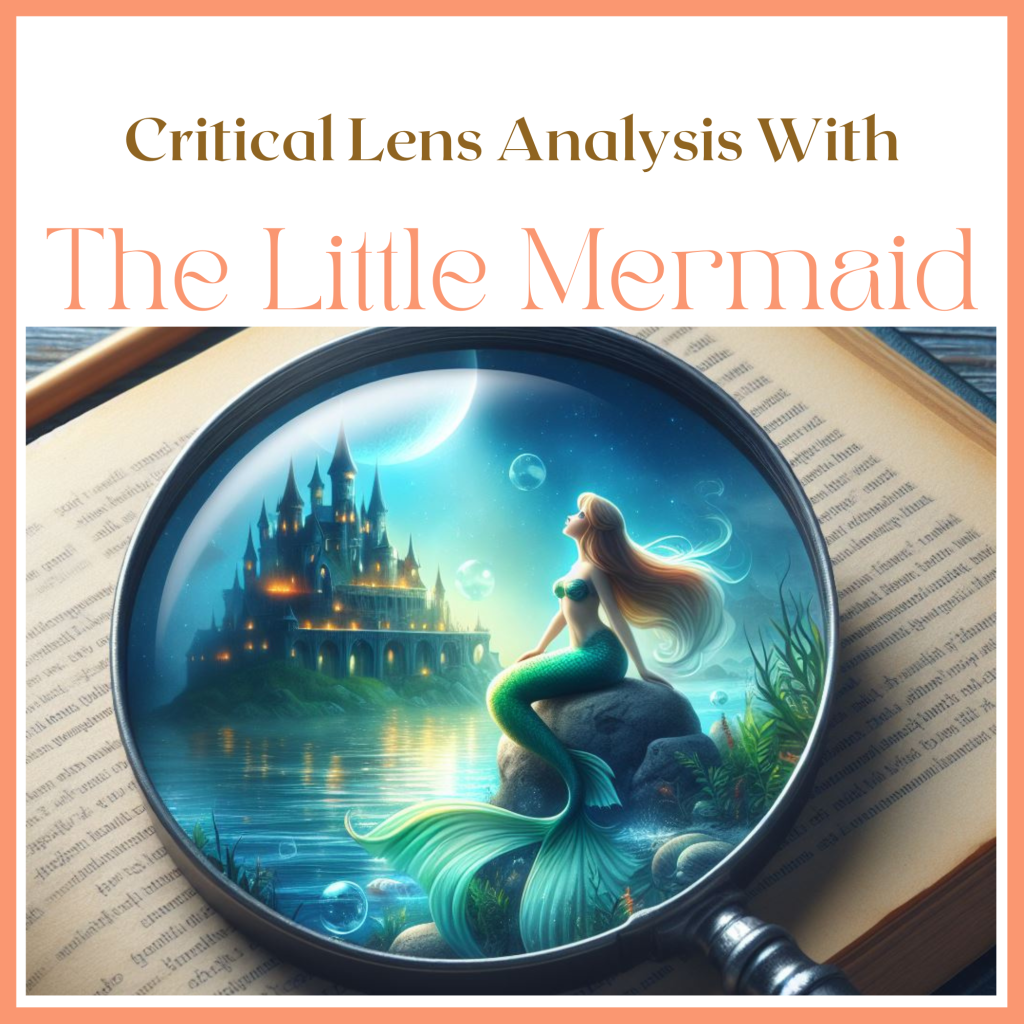
Hans Christian Andersen’s The Little Mermaid tells the story of a young mermaid who falls in love with a human prince and makes a dangerous bargain to become human so she can be with him.
Through her journey, she learns about the power of love and ultimately sacrifices herself for his happiness. By having students also learn about Hans Christian Andersen’s own love life and how he wrote this story when the man he was in love with was getting married, brings a whole deeper meaning to this classic tale.
This resource can be a wonderful way to analyze this story and the Disney adaptation in your class!
Mythology Stories about Love
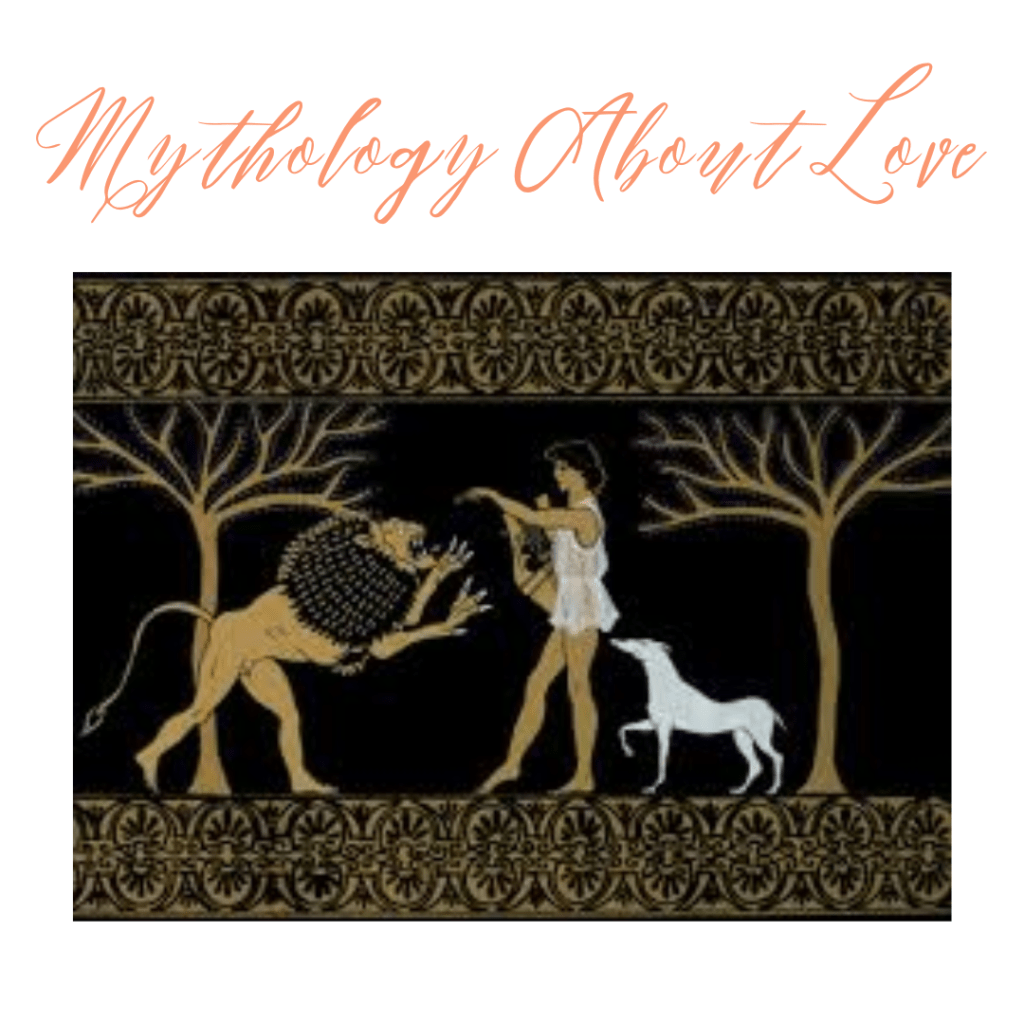
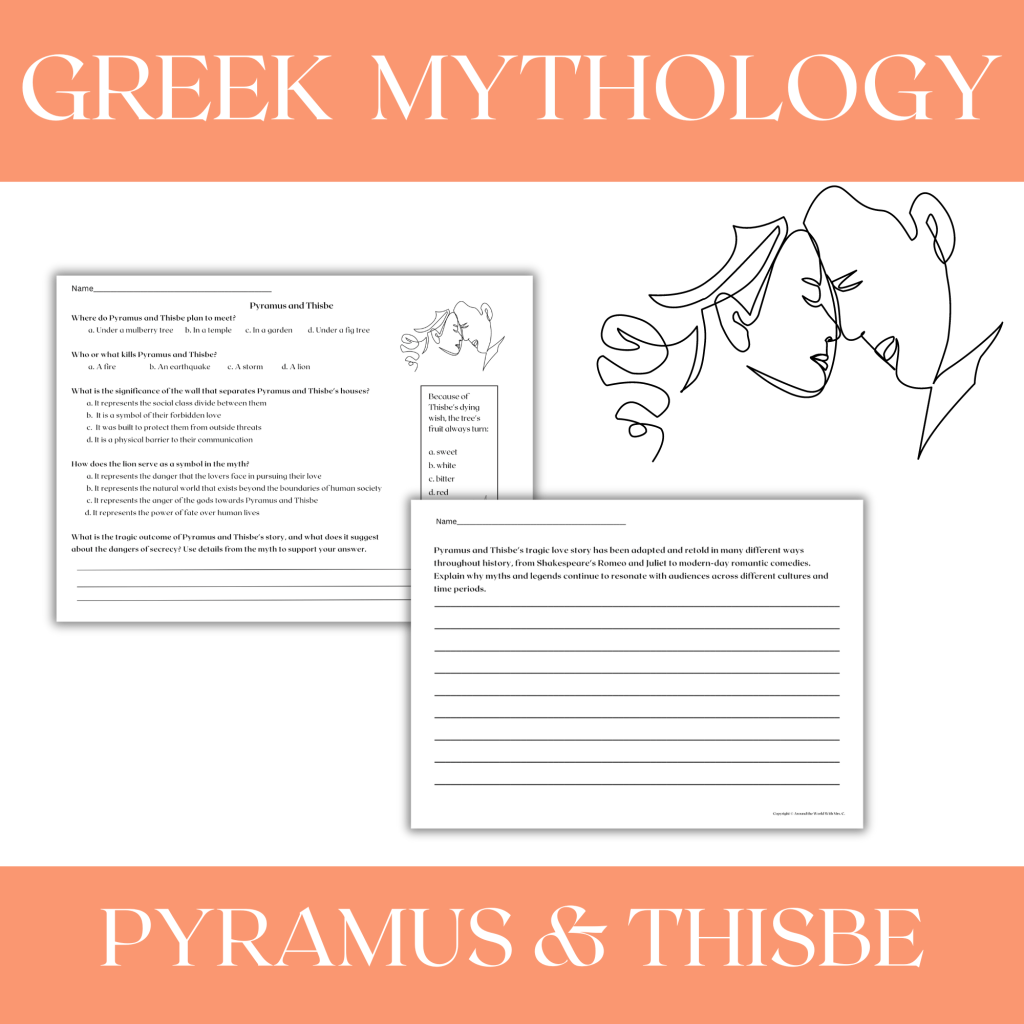
Mythology is full of stories about love. One of the most beloved myths is the story of Pyramus and Thisbe, two star-crossed lovers from Babylon who could not be together due to their families’ differences. Despite the obstacles, they found a way to be together by using a crack in a wall to talk to each other.
Their love was so strong that they eventually decided to run away together, but tragedy struck when Thisbe was attacked by a lion and Pyramus killed himself when he found her body. This one is FANTASTIC to pair with A Midsummer’s Night Dream (mentioned above) as it is featured in the play!
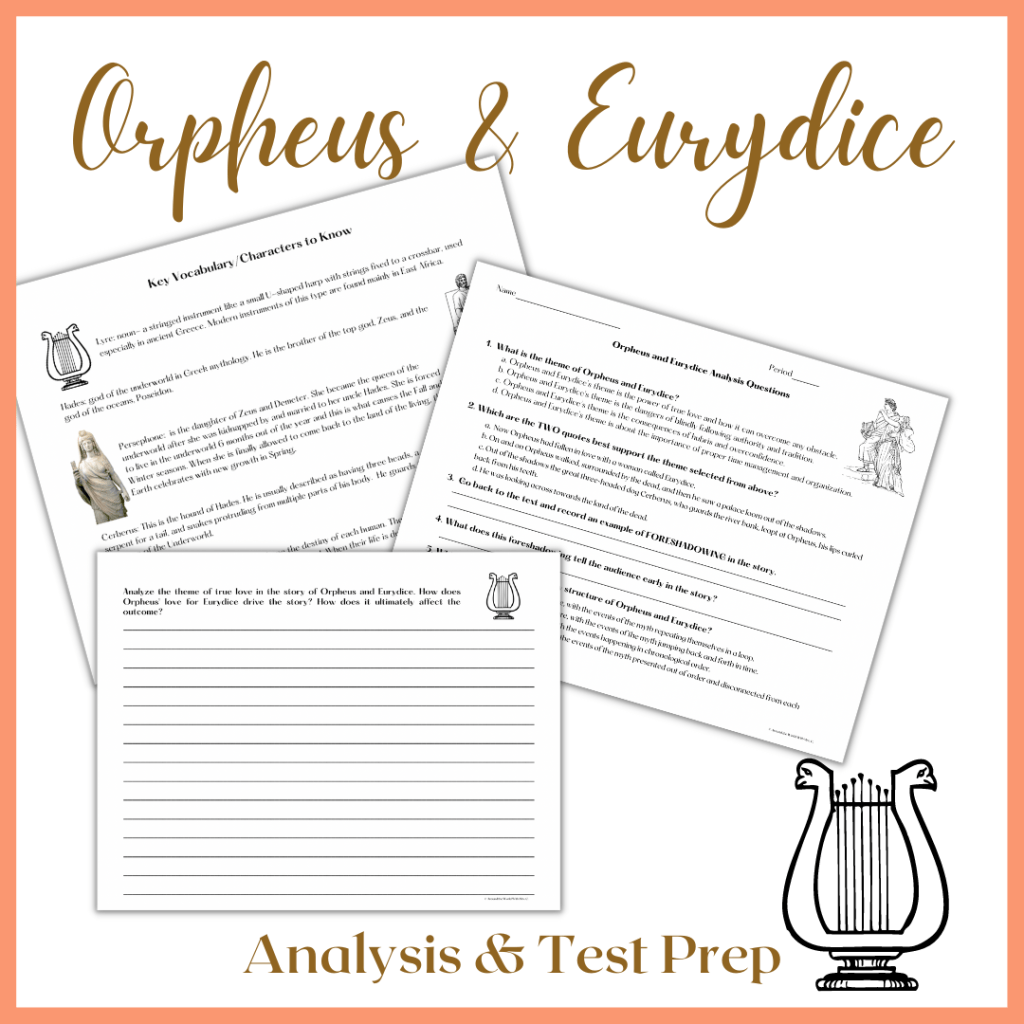
The story of Orpheus and Eurydice is also a well-known myth about love. Orpheus, a gifted musician, accidentally caused his wife Eurydice to be killed by a snake. In an attempt to bring her back from the dead, Orpheus descended into the underworld and used his music to charm Hades.
Eventually, Hades and Persephone allowed him to take Eurydice back to the living world on the condition that he not look back at her until they reached the surface. Unfortunately, Orpheus was so overcome with joy that he looked back at her too soon and she was forced to return to the underworld.
You can use this product to add a skills-based look at this myth as well!
Finally, the myth of Cupid and Psyche is a tale of love and challenges. Psyche, a mortal woman of extraordinary beauty, arouses the jealousy of Venus, the goddess of love. Venus sends her son Cupid to make Psyche fall in love with a hideous creature, but Cupid himself falls for her. Despite being forbidden to see Cupid’s face, Psyche disobeys and looks at him, leading to their separation.
To reunite, Psyche undergoes a series of difficult tasks set by Venus. Ultimately, her perseverance wins, and the gods grant Psyche immortality, allowing her and Cupid to be together forever.
Of course we can’t forget poetry!

Love has been a source of inspiration for poets around the world for centuries. From the passionate words of the great Persian poet, Rumi, to the powerful words of the French poet, Paul Verlaine, love has provided a platform for expression. Here are three poems in particular that you could incorporate into your unit.
“A Red, Red Rose” by Robert Burns from Scotland follows the speaker’s love and admiration for his beloved, who he compares to a red rose. The poem expresses the speaker’s deep, romantic feelings for his lover and his hope that their love will last forever.
Shakespeare’s Sonnet 130– Shakespeare’s Sonnet 130 is a humorous parody of the typical love sonnet of his day. It rejects conventional poetic standards of beauty and instead focuses on a sincere appreciation of an imperfect beloved. The speaker acknowledges the beloved’s physical flaws, but insists that their inner beauty outshines any physical perfection. The poem ends with the speaker declaring his love for the beloved, despite their physical flaws, in a humorous and mockingly exaggerated tone. Despite its humor, the poem ultimately conveys a powerful message of unconditional love.
This product can help you have students also analyze Sonnet 18 and have students compare the two!

“If You Forget Me” by Pablo Neruda from Chile is an emotional poem that expresses the pain of being forgotten by a loved one. It is a passionate and heartbreaking poem of a lover begging to be remembered. The narrator pleads with the beloved to never forget them, even if they forget the physical details of their beloved. They ask that they remember the love they shared, and how it was unique and special. The poem is a testament to the power of love, and the hope that love can transcend physical memories and moments.
These three poems capture the many different sides of love, and they remind us of the power of this emotion.
Final Thoughts
This is by no means a complete list of texts to consider. This is just a jumping off point to be thinking about how you could build this thematic unit in your world lit classes!
By introducing stories, poems, plays and other literary works that explore different facets of love, students gain insight into how different cultures and time periods view this timeless emotion.
With the right classroom activities, students can also develop their skills in close reading, interpretation, and critical thinking. By studying love in world literature, students not only gain a greater appreciation for the beauty of these stories, but also a deeper understanding of the complicated emotion that is love!
 Around the World With Mrs. C
Vert well said.
LikeLike
Thank you so much! I’m glad you enjoyed reading it.
LikeLike