

10 (or more) Mythical Heroes to Teach in High School
Each year, I love to start my World Literature class by taking a deep look into mythical heroes from several cultures and discuss how these heroes reflect the best aspects of the culture. We explore the timeless tales of heroes like Beowulf, Achilles, Hua Mulan, Prince Yamato, and so many more!
My students and I spend this time uncovering the universal themes of courage, sacrifice, and resilience that resonate across cultures and centuries. Through these narratives, students gain a deeper understanding of not only the specific cultures that birthed them but also the human condition itself, fostering empathy and appreciation for diverse perspectives.
Many people love to debate on who they think is the greatest mythical hero of all time. This can be a tough one to answer because there are so many!
I absolutely LOVE diving into hero worship with my students. It’s ingrained into humans to hold people or stories of people high in our society as a way to strive for what we believe in and would like to be. I could probably do an entire semester on this study, but for the sake of time, I have narrowed it down to a mere 6 weeks.
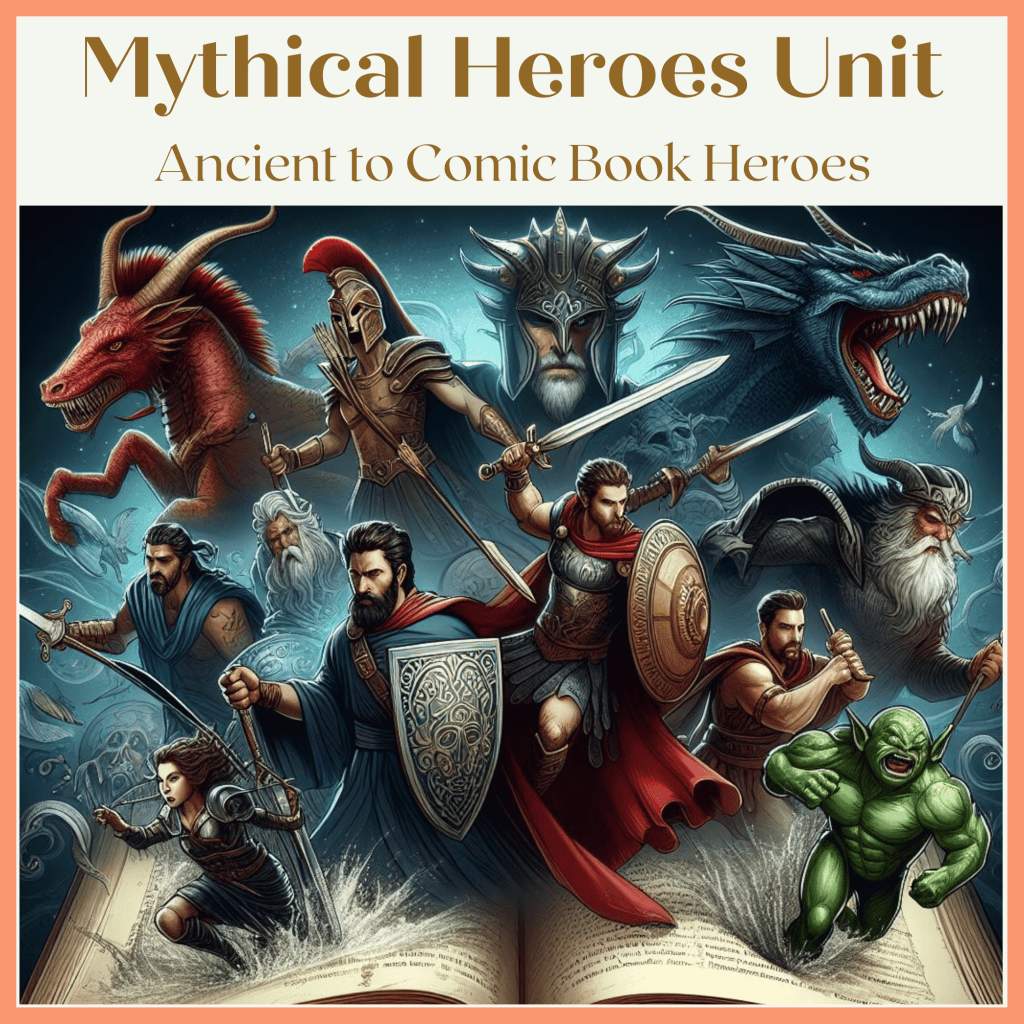
Beginning with Archetypal Patterns
In this unit we will not only look at these larger-than-life stories, but the cultures they came from as well as the psychology behind it. I like to begin the year with an intensive look at Archetypes and then The Hero’s Journey.
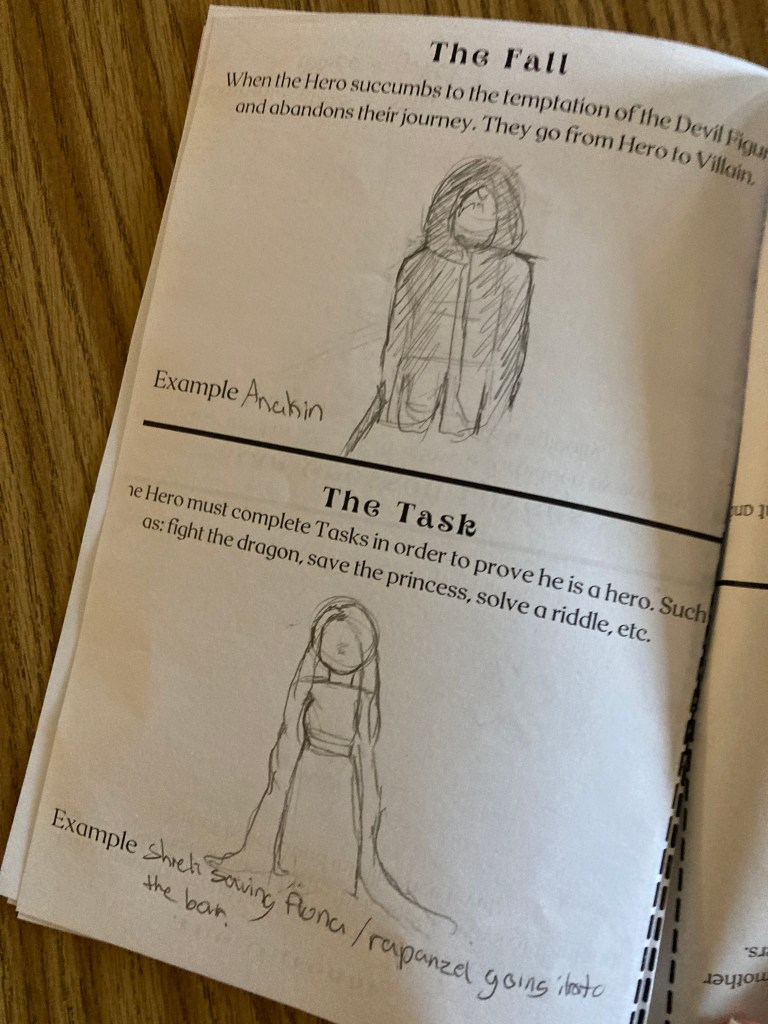
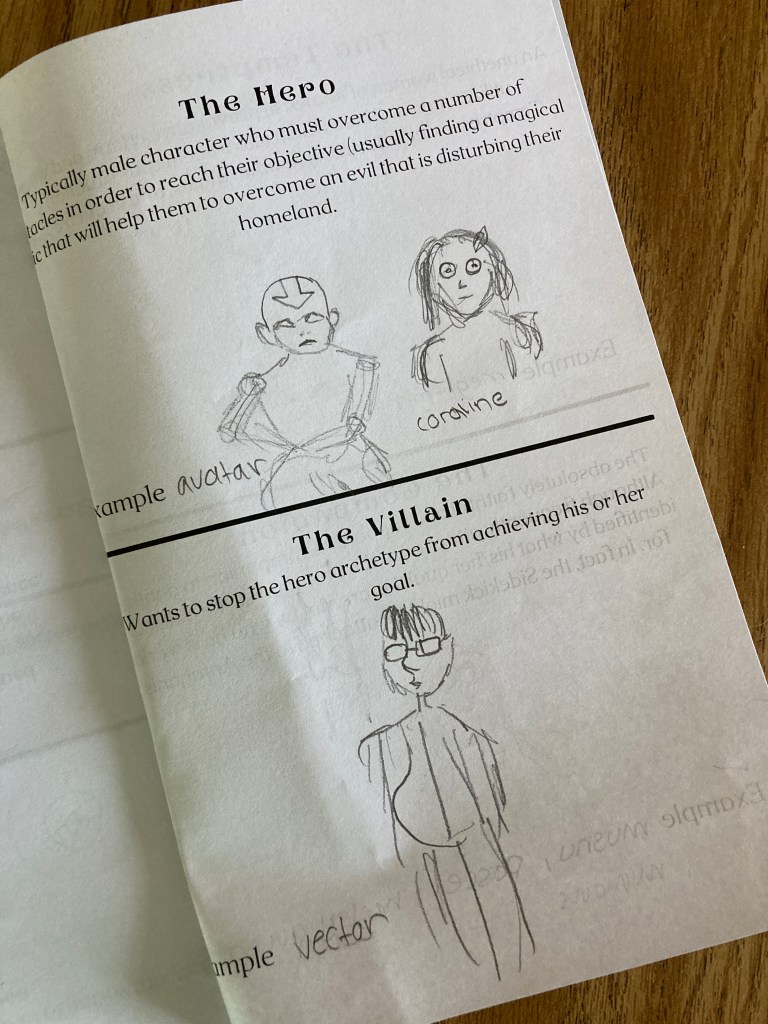
For the first few days, my students create a handmade archetypes reference book that we refer back to all year. As we learn about each Archetype, we spend time discussing where have they seen this pattern before in movies, video games, books, etc. (Metacognition anyone?) They then pick the example that best works for them to remember and draw a quick image to go with their selection.
After looking at several archetypes more deeply, they are then ready to move into The Hero’s Journey.

After learning about The Hero’s Journey archetype from a brief 5-minute overview (on top of our discussions while making our reference book), I have students create a visual of The Hero’s Journey and its steps while we talk in more detail about each step.
I then let students vote on which movie we will watch in order to see the steps more closely. Popular choices for The Hero’s Journey: The Neverending Story, The Lion King, Batman Begins, Moana, Star Wars: Episode 4, Aquaman, Moana, How To Train Your Dragon
Once we have laid a solid foundation of naming the patterns that they have been ingrained with all their lives and analyzing a film version, we are ready to go even deeper by adding in cultural analysis and what heroes (and their villains) tell us about a society’s values.
What do heroic myths tell us about their societal values?
This is the main essential question we consider during the entire unit.
Hero worship is a big part of every society in history. We learn about the culture, their values, their religions, their customs, etc and then look at some of these legendary hero in their histories.
A couple other questions considered:
How did these heroes teach children of the time the social norms needed to be accepted by their society?
What do the villains teach us about those who don’t fit into the social norms?
Greek Mythical Heroes
First, I like to start with the Greek heroes Perseus, Hercules, Achilles, and Atalanta. Greek mythology is usually covered in elementary school, but a refresher is always great and my students are going to be going much deeper with these heroes than they ever have before.
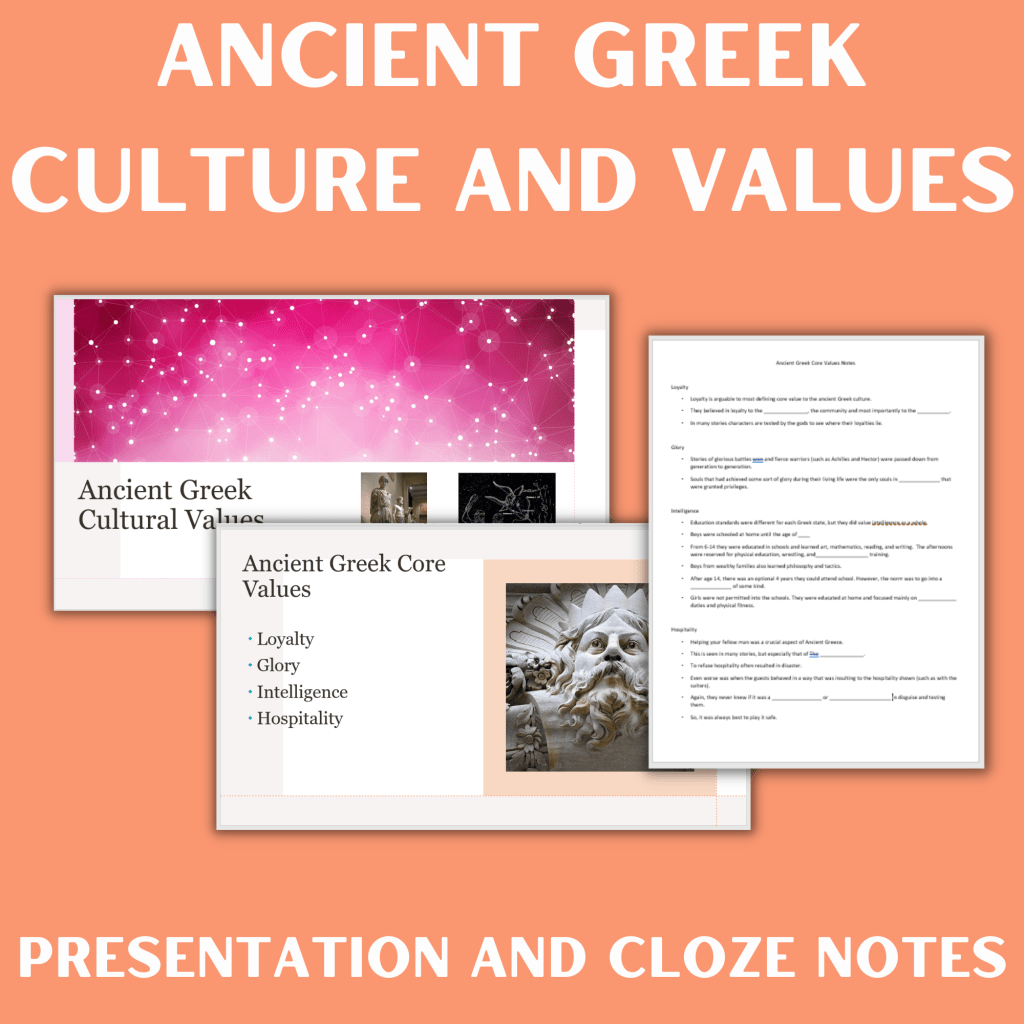
First, we review some of the major cultural values of the Ancient Greek society:
- Loyalty
- Glory
- Intelligence
- Hospitality
Then, we discuss how we see these reflected in these cultural heroes.
I often find that Hercules is the one that they have never actually explored beyond the Disney movie…..which we all know is WAY different.
We cover the 12 Labors of Hercules and discuss how these tie into the Ancient Greek values.
Perseus has to be untangled in their minds from Percy Jackson. Many remember that he killed Medusa, but the family drama is a new layer to cover.
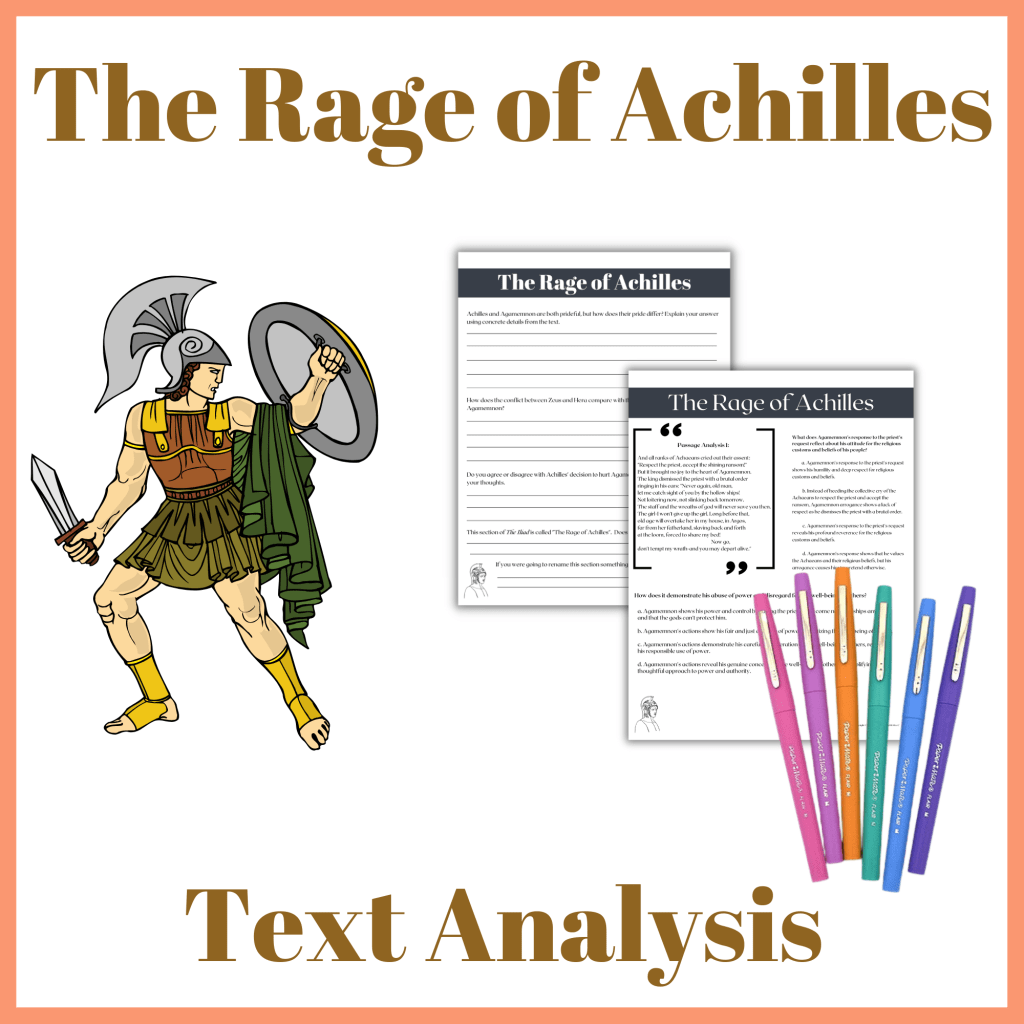
The Rage of Achilleas is another look at a famous Greek hero that I love to include. Specifically looking at The Rage of Achilles. What is interesting to note about looking at this hero is when he openly weeps while speaking with his mother.
Does this behavior change our initial thought of this hero who is often portrayed as an arrogant hothead? Does it add to the complexities of what it means to be a culture’s “hero”? Can he both?
Atalanta is the perfect hero to close out the Greek mythical heroes! She is the only female Greek hero (that I have found at least) and it’s great to compare her to her male counterparts. She is a woman that was left for dead in the woods by her father and raised by bears until a kindly hunter finds her years later and takes her in.
The two myths I use are: The Calydonian Boar-hunt and Atalanta’s Race (or The Race of the Golden Apples).
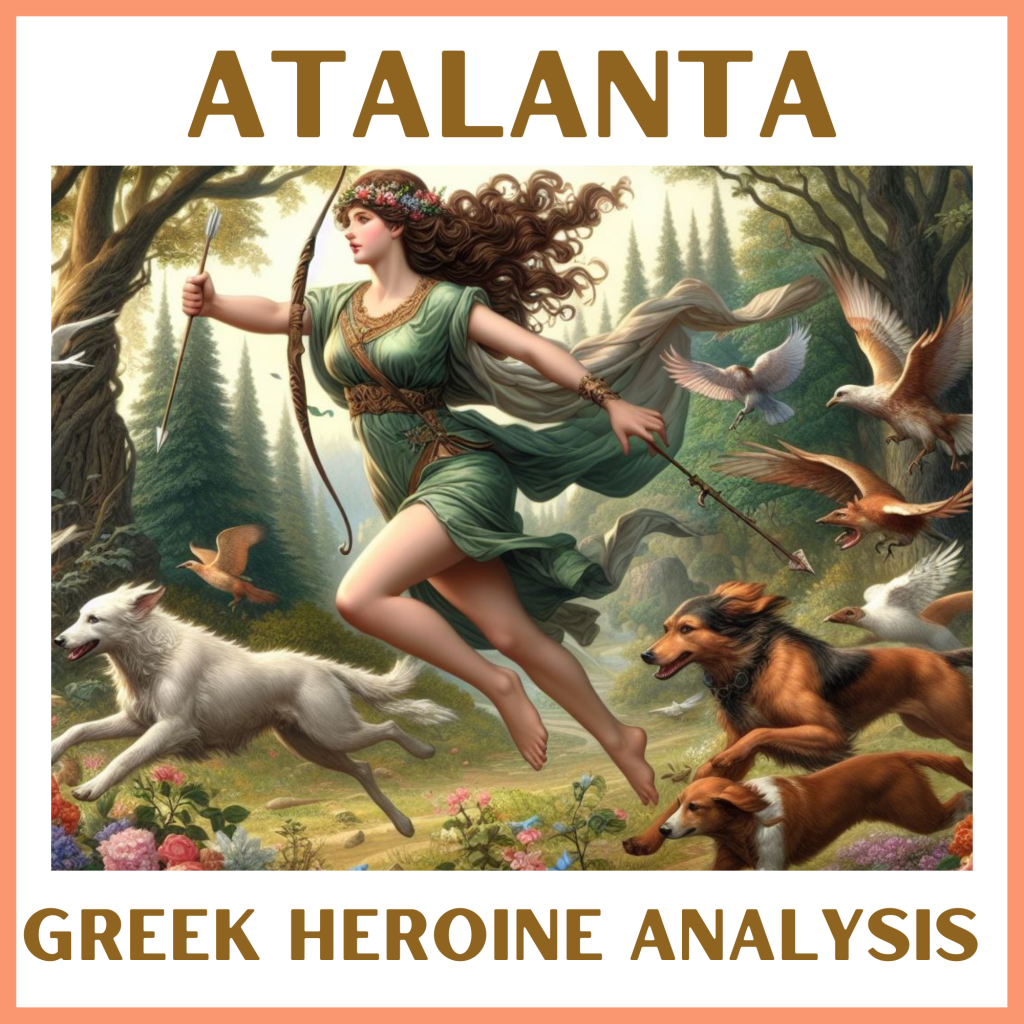
In the myth The Calydonian Boar-hunt, it is most interesting to see how Atalanta is compared to the goddess Athena. In fact, Athena admired her spunk so much that she became Atalanta’s patron.
In the Race of the Golden Apples, Atalanta’s father reclaims her for his own benefit once he discovers how fast she is. Sadly, many men loose their heads trying to beat her. It isn’t until Aphrodite steps in that a man finally beats her. Adding to the discussion of Atalanta’s greatness that it literally took divine intervention to best her.
Short on time but want to teach all the Greek mythical heroes we’re coving in this post? This Greek Heroes Mini Unit may be the perfect fit!

Japanese Mythological Hero
We then move over to the east and look at the Japanese mythological hero- Prince Yamato.
Prince Yamato follows a typical Hero’s Journey. He is sent to deal with enemies of his father and his rulership. The Sun Goddess Amaterasu blesses him on his journey. Prince Yamato does so by dressing in drag to fool his enemies into letting down their guard and then killing them.
“He hardly knew himself, so changed was he. All traces of the warrior had disappeared, and in the shining surface only a beautiful lady looked back at him. Thus completely disguised, he set out for the enemy’s camp alone. In the folds of his silk gown, next his strong heart, was hidden a sharp dagger.”
His wife (and princess) then gifted him a magical sword that had been blessed by the Japanese god Susanoo. He then continues on with his trials and loses his wife and mentor when she jumps into the sea to soothe the Sea God’s anger.
On his journey home, he angers a local god who inflicts him with a disease and almost dies. However, he travels to a famous volcanic spring that heals him over several days.
He attributes his success to The Sun Goddess Amaterasu at the end of his journey.
Prince Yamato is a revered Japanese mythical hero because he encompasses so many character traits admired by this society- most notably his courage, integrity, and ingenuity.
Chinese Mythological Heroine
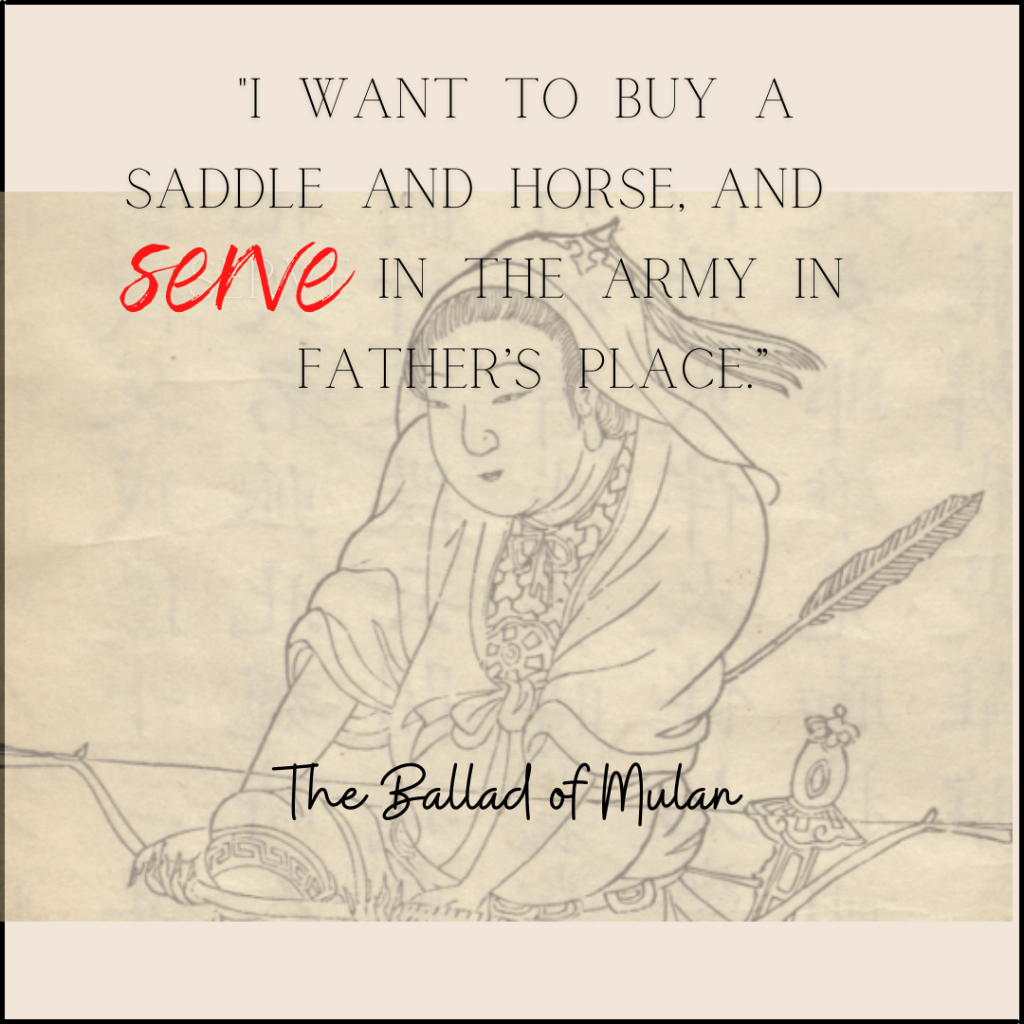
As we are covering Eastern Mythical Heroes, I love to also cover a famous Mythical Heroine- Hua Mulan.
Hua Mulan is a story that is over 1,500 years old! I love sharing a true heroine story. The real Hua Mulan is greatly different from the Disney version.
Most of her earlier stories are quite short and in poetic form. They described Hua Mulan as exceedingly beautiful and gifted in battle. She took her father’s place in battle, served for twelve or thirteen years without her femininity ever being discovered, and was rewarded by the emperor for her accomplishments.
Eventually more lengthy texts were made about her as well as plays.
There are many variations of what happens to Hua Mulan in the end, but they all seem to end in suicide. In one piece it’s because the emperor was taken with her and her success in battle that he offers her a place in his harem. She knows that she cannot refuse him, but also values herself too much and instead commits suicide.
There is an extremely rich history in this one mythical heroine. I highly encourage you to check it out here!

Norse Mythological Heroes
I like to have students start with the Viking Search and Find to get the basics of Norse Mythology. Or, as I like to tell them, a lesson in on the ways Marvel has lied to them about Viking mythology. Then we take a quick look at the Viking creation myth. The creation myth highlights the creation of the planet as well as the gods.
I know it’s kind of cheating, but I actually like to start with Odin during this section. Yes, he’s a god, but the Allfather does some pretty incredible stuff! The first tale covered is Mimir and Odin’s Eye. This link actually takes you to Neil Gaimon’s excerpt that I love to use.
I like to follow up this myth with a One Pager having students answer the question:
- What would the lesson of this story have been to Viking children?
I specifically like to cover this since Odin sacrifices his eye for knowledge and the great pains he goes through to be able to read the ancient runes. This shows my students how much the Viking culture valued intelligence as well as the hierarchy of their society as only the highest up in the culture could read the runes fluently.
After this, I like to cover Sigurd! Sigurd, also known as Siegfried, is the slayer of the dragon Fafnir.
Fafnir killed his own father for a treasure of gold, and when he became rich he worried how to protect his newfound wealth and so he became a dragon to guard it. Fafnir becomes consumed with greed- a cultural taboo in the Viking culture.
“Fafnir became so ill-natured that he set out for the wilds and allowed no one to enjoy the treasure but himself. He has since become the most evil serpent and lies now upon his hoard”
Sigurd
Sigurd’s story begins when he is taken in as a foster child by a man named Regin who wished to have Fafnir’s treasure for himself.
Regin eventually takes him to a smithy and gives him his father’s broken sword to be repaired so he can use it to kill Fafnir all the while he planed on killing Sigurd afterwards to keep the gold.
Regin instructed Sigurd to kill Fafnir and eat his heart so he could gain all of the dragon’s wisdom. On his way to kill Fafnir, Odin appears to Sigurd and gives him advice. He sneaks up on the dragon and kills him.
He cuts out and roats the heart, but before eating it, Sigurd taste the dragon’s blood and is gifted supernatural hearing. He hears two birds talk about Regin’s true plan to betray and kill Sigurd. Sigurd then kills Regin and keeps the treasure for himself.
Again, circling back to lesson on how greed will twist a person. The following was used to describe Regin in the text:
“For the first time he understood the master of cunning.”
Anglo-Saxon Mythical Hero
Beowulf! I won’t lie, one of my all-time favorites is Beowulf. He’s cocky, but he’s got the goods to back it up. Grendel is a fascinating villain to also dive in to and discuss what we can tell this society did NOT value.
“They have seen my strength for themselves, have watched me rise from the darkness of war, dripping with my enemies’ blood. I drove five great giants into chains, chased all of that race from the earth. I swam in the blackness of night, hunting monsters out of the ocean, and killing them one by one; death was my errand and the fate they had earned. Now Grendel and I are called together, and I’ve come.”
Beowulf
In a previous post, I gave a breakdown of how I approach Beowulf with the use of a fantastic 3-part podcast from Myths and Legends and excerpts for closer study. My students LOVE this multimodal approach to a text that could otherwise feel daunting.
What I love about Beowulf is that you can see the blending of multiple cultures as colonization was taking place in Briton.
While Beowulf himself is a Viking and the setting is in Denmark and Sweden, it has the heavy Christian overtones all over it. Beowulf gives all praises to “God” but never to Odin or any other Norse god.
With Beowulf, you can see the Anglo-Saxon culture (that was already a mixture) along with the Viking influences as the Vikings had been invading Briton at this time as well.

American Mythical Heroes- Comic Book Heroes!
I love to end the unit with a look at American’s cultural history with comic book heroes. I specifically zero in on Batman and Superman as they are the oldest and are still going strong over 70 years later! These two comic book heroes encapsulate so much of the American culture.
A fantastic documentary that I urge you to watch when you get the chance is PBS’s Superheroes. Here is a link to the first episode in YouTube.
This first episode gives a great breakdown of the inception of comic books and how they evolved from the 1930’s to the 1950’s. Superman is technically a Moses story retold in a new way, but can also be seen as an immigrant story.
Batman is a stark look at governmental corruption and a crumbling society. Bruce Wayne is blessed to be wealthy and a genius. However, it is the tragedy of losing his parents to senseless violence and greed that helps him to find a purpose for both.
Many of his villains are also powerful, smart, and wealthy. They show us the dark side of the American culture that we must fight against.
Captain America and Wonder Woman are also featured in this segment of the documentary and make wonderful additions in continuing to examine American culture in the face of widespread war and feminist issues.
This honestly is just a brief overview of what all we dive into when researching mythological heroes and their importance to all human cultures throughout time. If you are feeling inspired and would like to save a little bit of time creating resources for all of these heroes, heroines, and much more- check out my Mythological Heroes Around the World Unit!
Join my weekly newsletter!
Would you love to get weekly tips and resources for teaching secondary English delivered right to your inbox? Click here to join!
 Around the World With Mrs. C
One thought on “10 (or more) Mythical Heroes to Teach in High School”