

Mythical heroes is one of my favorite things to share with my World Literature classes each year! These heroes can reveal so much about a culture’s values, but so can the mighty weapons they are chosen to wield. These mythical weapons come with unique powers and gifts that fight for the good in the world and sometimes even the universe.
From the special powers that these weapons have, our heroes are elevated to new heights in order to defend those they love and wish to protect. When we hear these stories, we believe that even we can be worthy of slaying the dangerous dragons of the world that try to tear us apart.
You can also find my post on mythical heroes to teach and this post on evil characters in mythology to analyze.
In today’s post, we are going to learn 7 mythical weapons and the heroes that wield them. These weapons are Excalibur, Gram, Shamash’s Radiant Axe, Brahmastra, Kusanagi-no-Tsurugi, Gáe Bolg, and Durandal.
We will also consider what we can glean about the symbolism and cultural values connected with these weapons.
If you want to also share these insights with your students, as well as modern connections with comic book movies and video games and even make their own modern-day mythical weapon, be sure to check out this resource!
1. Excalibur and its scabbard
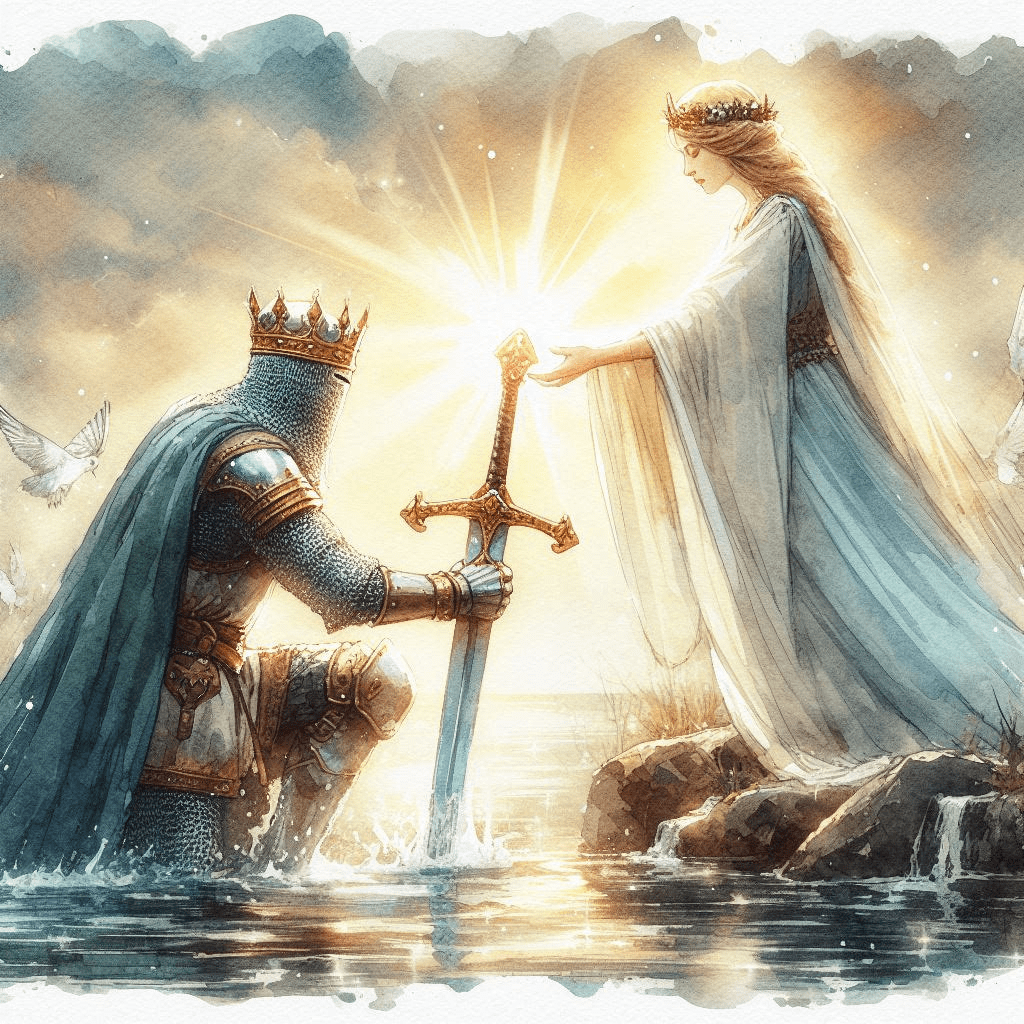
Hero: King Arthur
Special Powers: Excalibur was said to have been imbued with magical properties, granting its wielder unmatched strength and invincibility in battle. However, its scabbard was more important because it ensured that the wearer would not loose any blood. Being without the scabbard is what lead to Arthur’s mortal wounds.
Culture: Originating from Celtic mythology and later popularized in Arthurian legend. The original Celtic name for this sword was, Caliburn. It wasn’t until the 12th century that it became know as, Escalibor (the name changed slowly with the shifts in language). Caliburn was given to Arthur by Nimue, one of the many Ladies of the Lake.
Centuries later, there was a new tale in which Arthur pulled a sword from an anvil. This sword is different from Caliburn. It only indicated that he was chosen to be the one true king of all of Briton. (Remember, Briton was ruled by several kings in 5 kingdoms in the earlier centuries.)
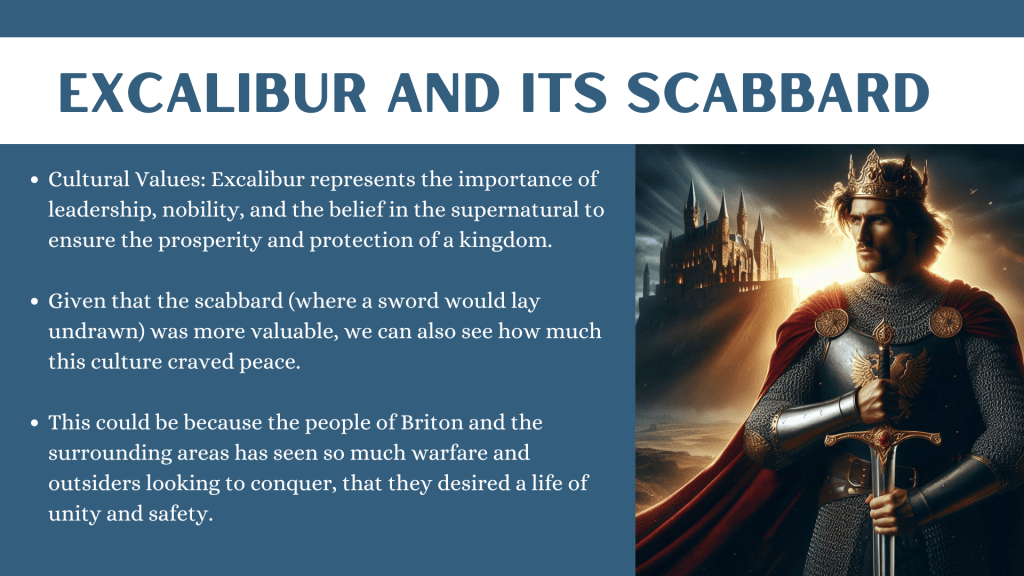
Cultural Values: Excalibur represents the importance of leadership, nobility, and the belief in the supernatural to ensure the prosperity and protection of a kingdom. Given that the scabbard (where a sword would lay undrawn) was more valuable, we can also see how much this culture craved peace.
This could be because the people of Briton and the surrounding areas have seen so much warfare. Outsiders were looked at it as a place to conquer. They desired a life of unity and safety.
2. Gram, the Dragon Slayer
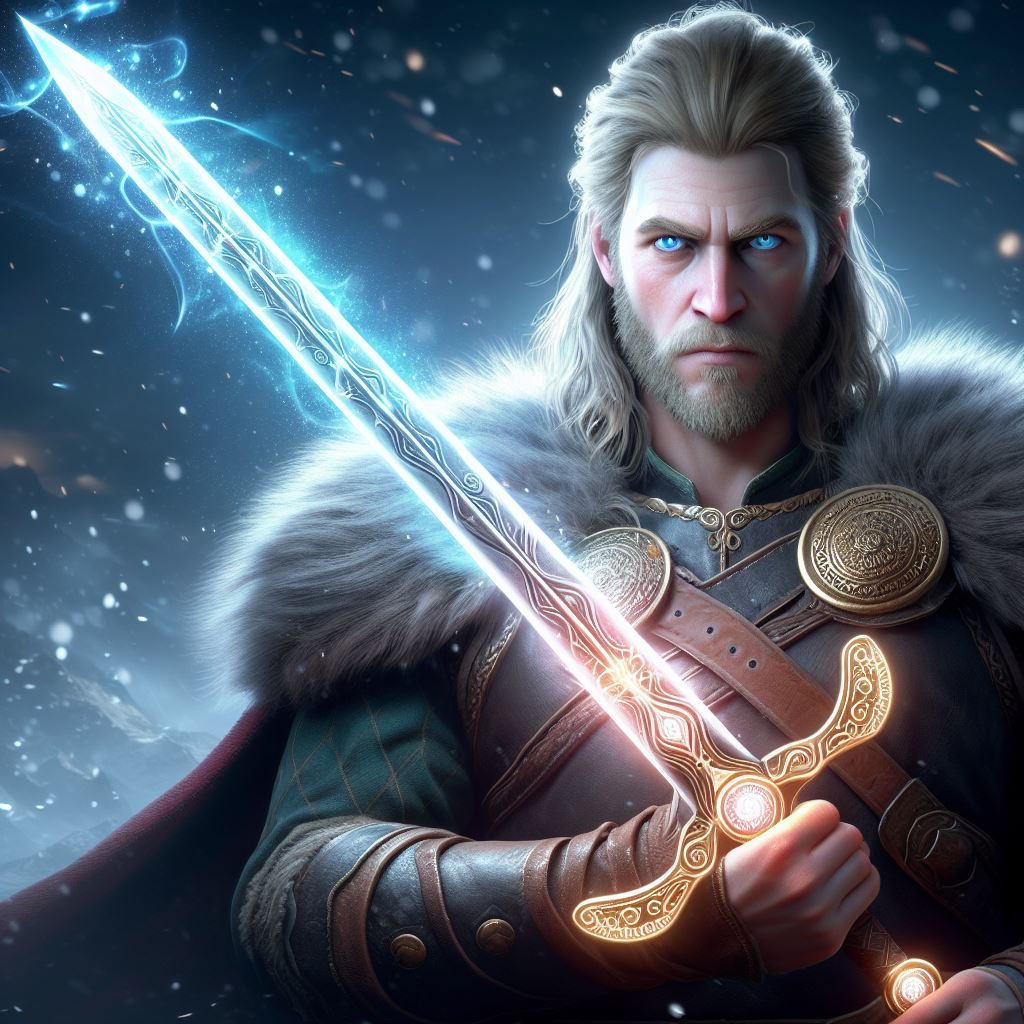
Hero: Sigurd (Norse Hero)
Special Powers: Gram (meaning wrath), also known as Balmung, was a legendary sword forged by the renowned smith, Regin. This legendary weapon was imbued with the power to slay dragons and cut through any material with ease. Its blade was said to gleam with a radiant light, and it possessed the ability to protect its wielder from harm.
Sigmund was able to remove the sword from the Branstock tree, where the god Odin himself had placed it. Odin said that whoever could remove the sword would be its rightful owner, and the sword would always be victorious. Once broken, the sword was rewelded by Regin and used by Sigmund’s son Sigurd (Siegfried) to slay the dragon Fafnir.
Culture and Time: Rooted in Norse mythology and Germanic legends, the story of Sigurd and Gram dates back to the Viking Age, around the 8th to 11th centuries CE. Sigurd’s saga. It recounts his heroic deeds and encounters with dragons, giants, and other mythical creatures.
Cultural Values: Gram, the Dragon Slayer, reflects the Norse values of bravery, heroism, and the indomitable spirit of the warrior. It embodies the Norse belief in destiny and the courage to confront and overcome formidable challenges. For example, the slaying of dragons was symbolic of chaos and primordial forces in Norse mythology. Additionally, the sword signifies the importance of loyalty, as Sigurd’s quest for vengeance and justice is a central theme in his saga.
3. Shamash’s Radiant Axe
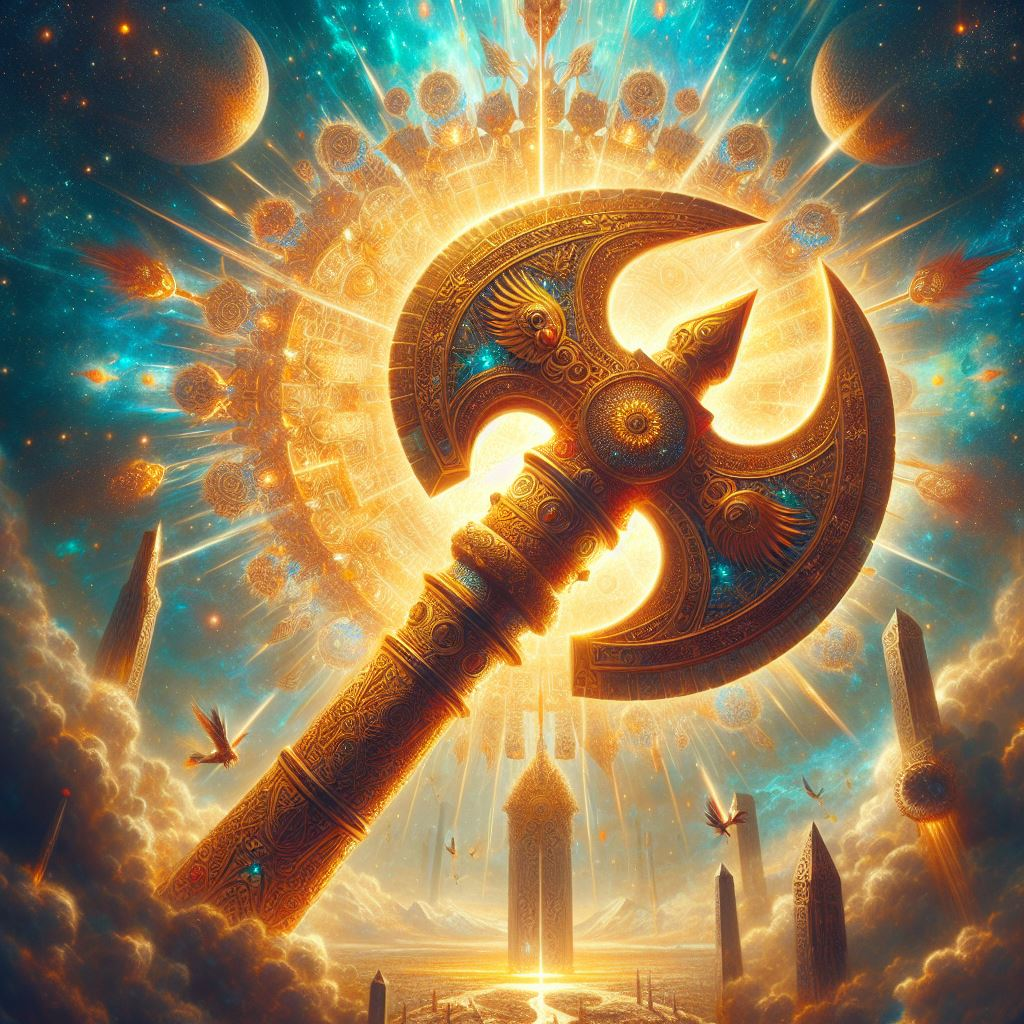
Hero: Gilgamesh (Legendary King of Uruk)
Special Powers: Shamash’s Radiant Axe was a celestial weapon gifted to Gilgamesh by the sun god, Shamash. This mighty axe radiated with divine light and was capable of cleaving through any obstacle with ease. It also granted its wielder the wisdom to discern truth from falsehood.
Culture and Time: Originating from Mesopotamian mythology, the story of Gilgamesh dates back to the Sumerian civilization around 2100 BCE. Gilgamesh was a central figure in Mesopotamian epic literature, symbolizing kingship, heroism, and the quest for immortality.
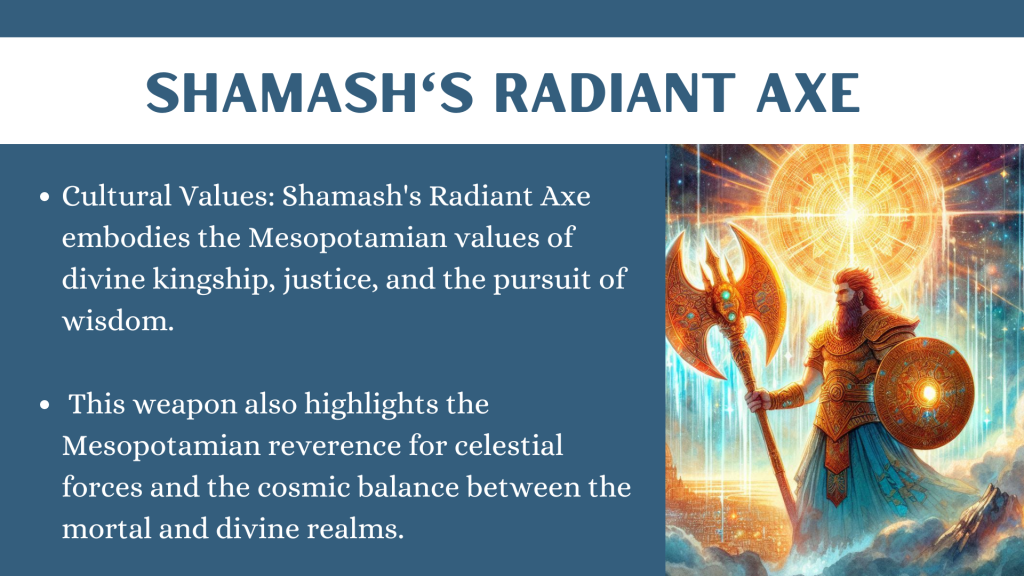
Cultural Values: Shamash’s Radiant Axe embodies the Mesopotamian values of divine kingship, justice, and the pursuit of wisdom.
It reflects the belief in the divine favor bestowed upon righteous rulers by the gods and underscores the importance of justice and truth in maintaining order and harmony within society. This weapon also highlights the Mesopotamian reverence for celestial forces and the cosmic balance between the mortal and divine realms.
4. Brahmastra
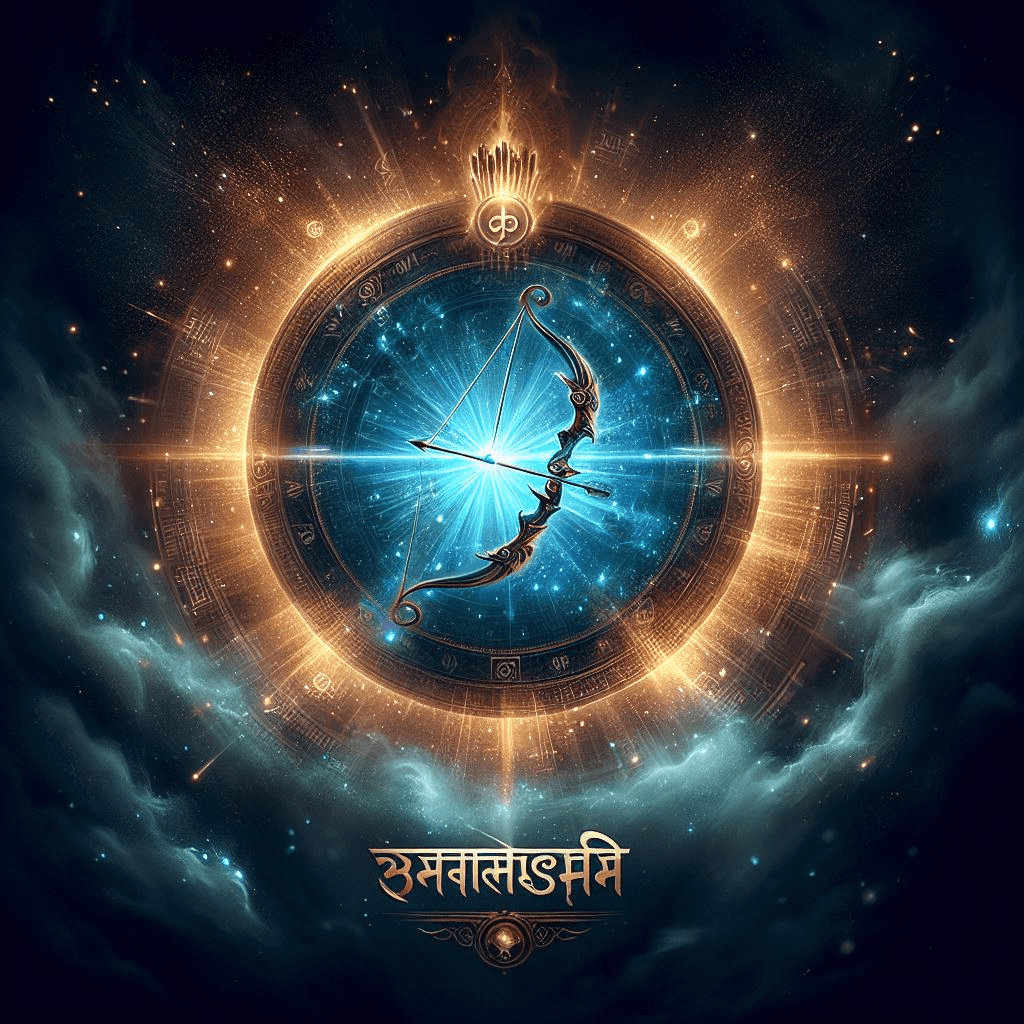
Hero: Various heroes in Hindu mythology
Special Powers: The Brahmastra was a powerful weapon created by Lord Brahma, capable of destroying entire armies and even entire civilizations. However, it required immense concentration and adherence to dharma (Cosmic law). It is invoked with a special mantra, and then you can use it to destroy anything that is created by Brahma. The Brahmastra does refer to a special arrow, but an ordinary arrow can also be given the same power using the mantra.
Culture and Time: From ancient Indian mythology, the Brahmastra reflects the Hindu values of dharma, karma, and the cosmic balance between good and evil.

Cultural Values: The weapon symbolizes the moral and ethical responsibilities of individuals in upholding righteousness and the consequences of misusing power, as well as the Hindu belief in the cyclical nature of existence and the inevitability of divine justice.
5. Kusanagi-no-Tsurugi
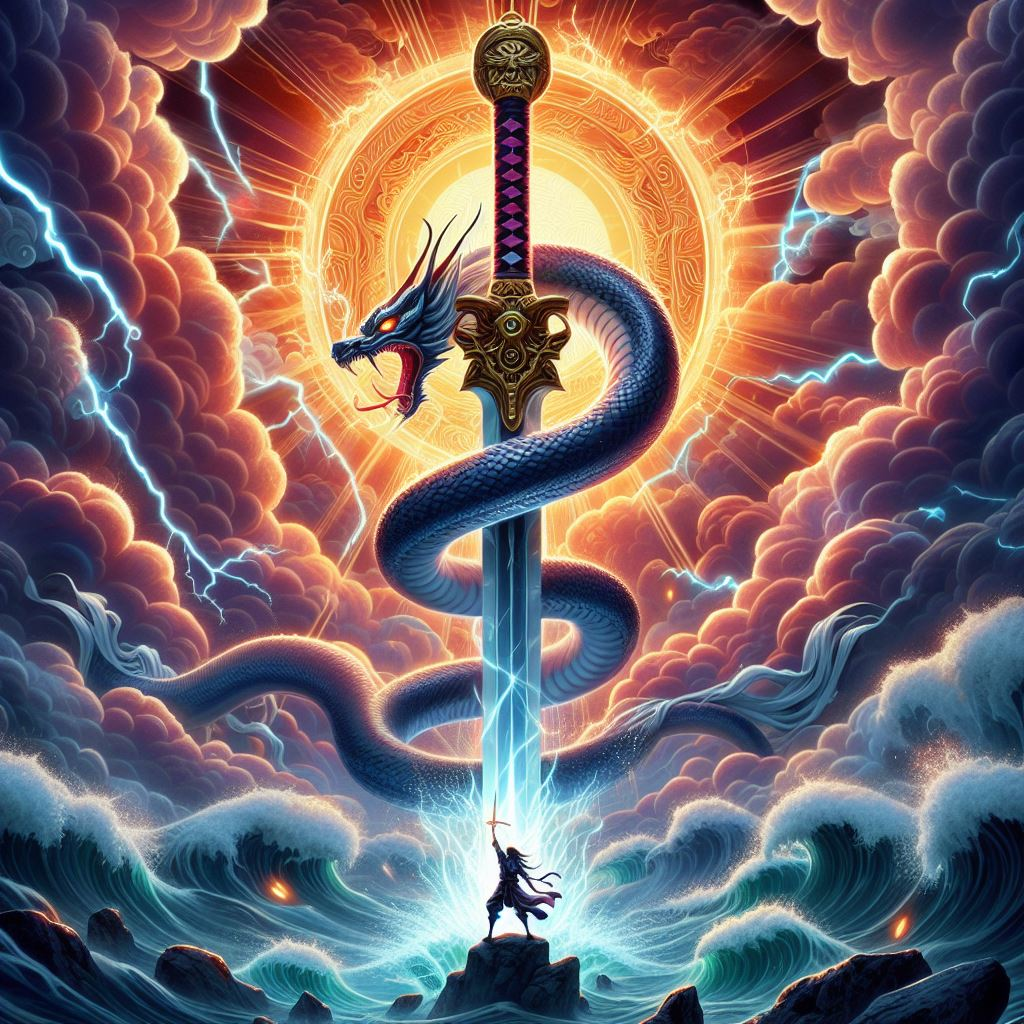
Hero: Susanoo (Japanese God of Sea and Storms)
Special Powers: Kusanagi-no-Tsurugi, also known as the Grass-Cutting Sword, was a legendary sword capable of controlling the elements and vanquishing enemies with its divine power.
Culture and Time: After slaying Yamato no Orochi, the god Susano-o discovered the sword in one of the serpent’s eight tails, originally named Ame-no-Murakumo-no-Tsurugi (“Sword of the Gathering Clouds of Heaven”).
As an apology, Susano-o gave the sword to his sister Amaterasu, allowing him to return to the gods from his exile. Eventually, Amaterasu bestowed the sword upon Yamato Takeru, a young prince or high priestess related to her.
She gave this weapon to a young prince related to her, Prince Yamato (check out this product that includes a look at Yamato!). In a battle, Yamato Takeru used the sword to redirect fire from burning grass onto his enemies, earning it the name “Grass-cutting sword”.
Cultural Values: The sword represents the virtue of valor and the connection between the divine and mortal realms. It also hints to us their belief in the sacred duty of rulers to protect their people and uphold justice in Japanese society.
6. Gáe Bulg
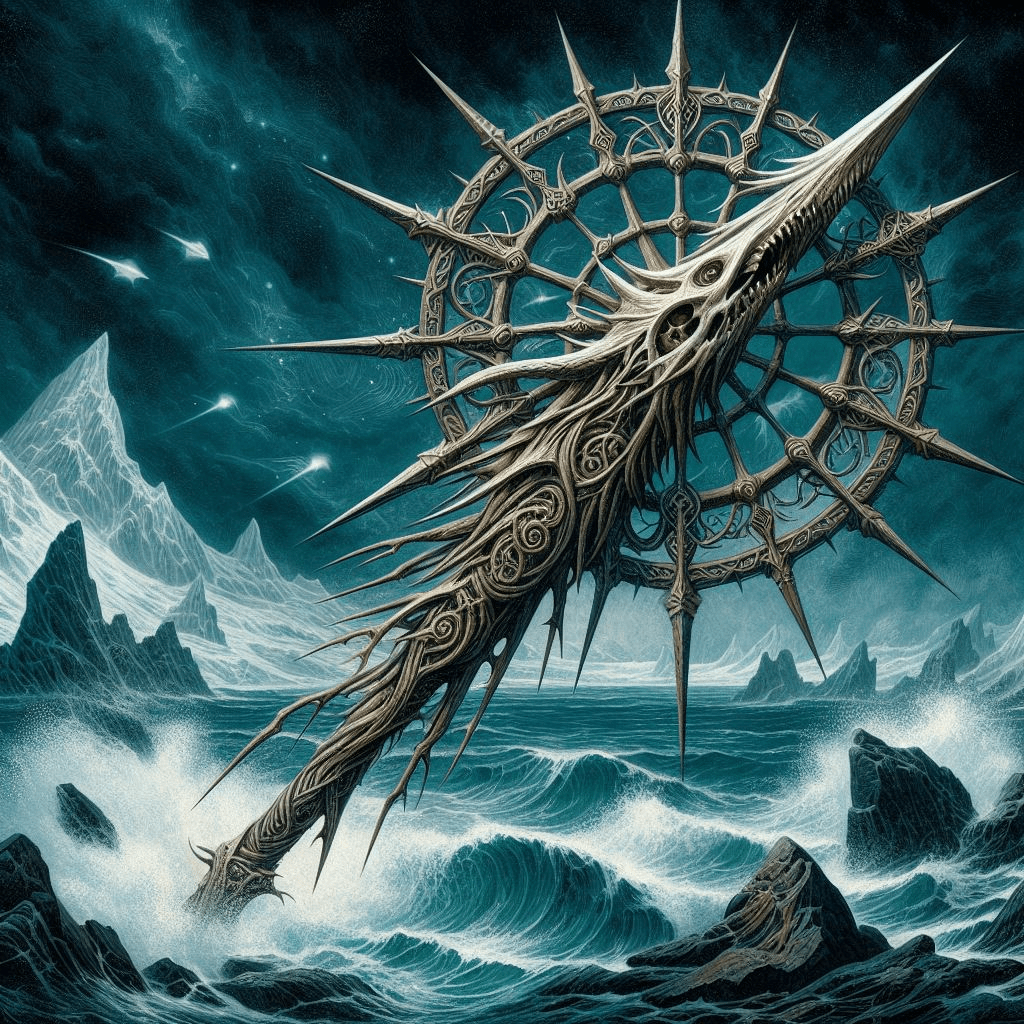
Hero: Cú Chulainn (Legendary Irish Hero)
Special Powers: The Gáe Bolg, a legendary spear from Irish mythology, was made from the bone of a sea monster. It is described in some versions as having a single point that pierces its victim before splitting into 30 barbs, while in others, it consists of seven main spearheads, each with seven barbs.
In both accounts, its ferocity is such that it embeds deeply into its victim’s flesh, forcing you to cut it out of the body to retrieve it. It was said to be capable of piercing any armor and causing mortal wounds that were impossible to heal.
Because it was such a brutal weapon, it was only used as a last resort. In fact, there are only 2 instances in which Cú Chulainn used it.
Culture and Time: Rooted in Irish mythology, Gáe Bulg reflects the Celtic values of bravery, cunning, and the importance of warrior prowess in ancient Ireland.
Cultural Values: Gáe Bulg highlights the significance of individual heroism, skill in combat, and the notion of fate and destiny in Celtic society, where warriors were revered for their martial prowess and bravery in battle. Because it was used so sparingly, it also tells us that this culture would rather not resort to such violent methods. It was truly only in dire circumstances.
7. Durandal
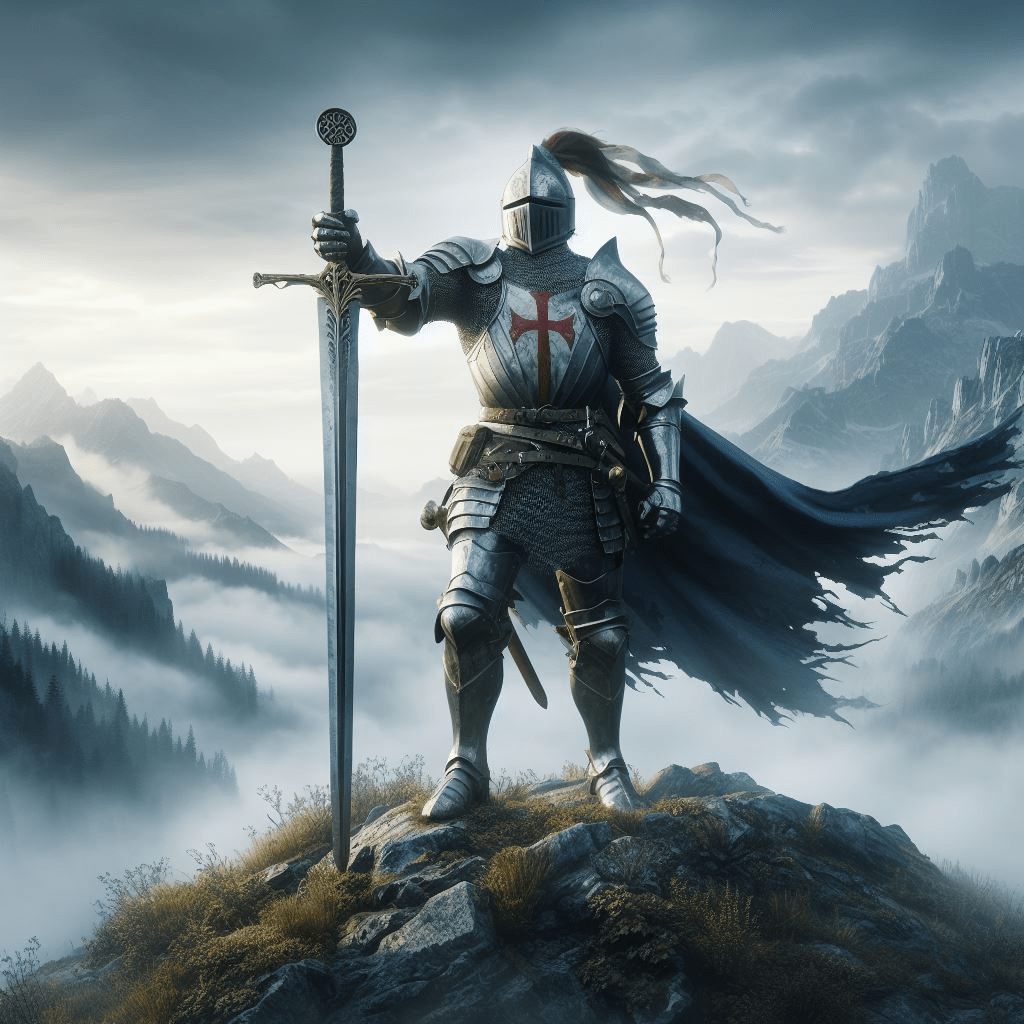
Hero: Roland (Legendary Knight of Charlemagne). In a number of legends, he is described as being the nephew of the famous Holy Roman Emperor, Charlemagne.
He is known not for just being a knight, but a Paladin. The Paladins, also called the Twelve Peers, are twelve legendary knights, the foremost members of Charlemagne’s court in the 8th century.
In our modern day, you see Palidin’s in fantasy games such as Dungeons and Dragons and World of Warcraft. These characters are divine warriors that are incredibly powerful and fierce defenders of noble causes. So is the same with Sir Roland.
Special Powers: Durandal was an indestructible sword that could cut through anything and was said to be forged by the legendary blacksmith Wayland the Smith. In fact, Roland tried to destroy Durandal in order to prevent it from falling into the hands of the enemy and was unable to,
“Rollant his stroke on a dark stone repeats, / And more of it breaks off than I can speak. / The sword cries out, yet breaks not in the least, / Back from the blow into the air it leaps.”
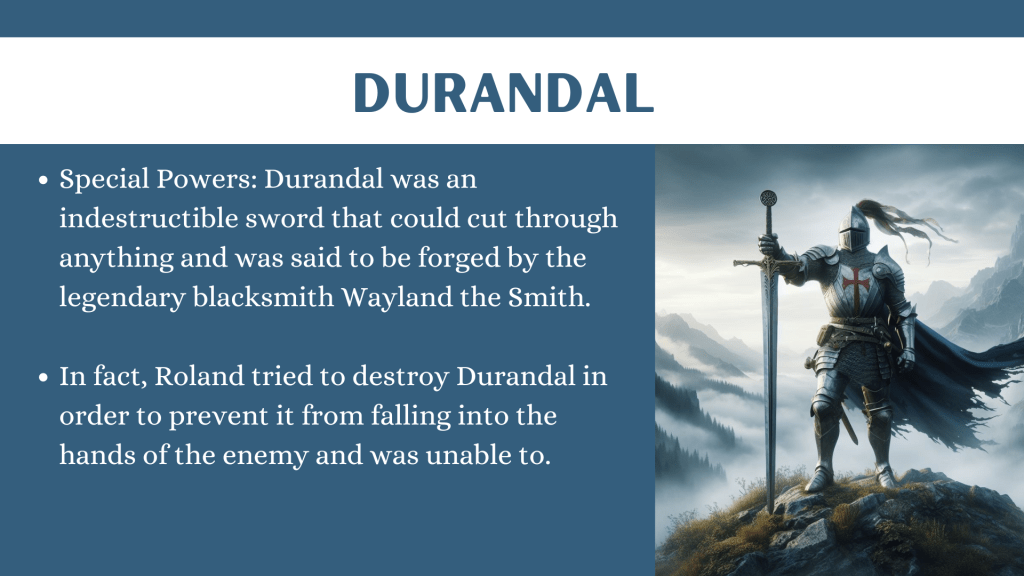
Culture and Time: In one version of the tale, Durandal was given to Charlemagne by an angel of God, who instructed him to pass it to one of his counts. Crafted by the mythical swordsmith Wayland the Smith, it was revered for its strength and craftsmanship. Another account from the Italian epic “Orlando Furioso” presents Durandal as the Greek hero Hector’s sword, given to Roland by the enchanter Malagigi.
Regardless of its origins, Durandal was a coveted and potent weapon, with its significance emphasized by the invasion of France by Gradasso, the heathen king of Sericena, who sought to retrieve it from Roland.
Originating from French epic poetry, Durandal reflects the values of chivalry, loyalty, and the Christian virtues of righteousness and valor during the medieval period.
Cultural Values: Durandal symbolizes the ideals of honor, loyalty to one’s liege lord, and the struggle between good and evil, as embodied by the heroic exploits of Roland in the chansons de geste.
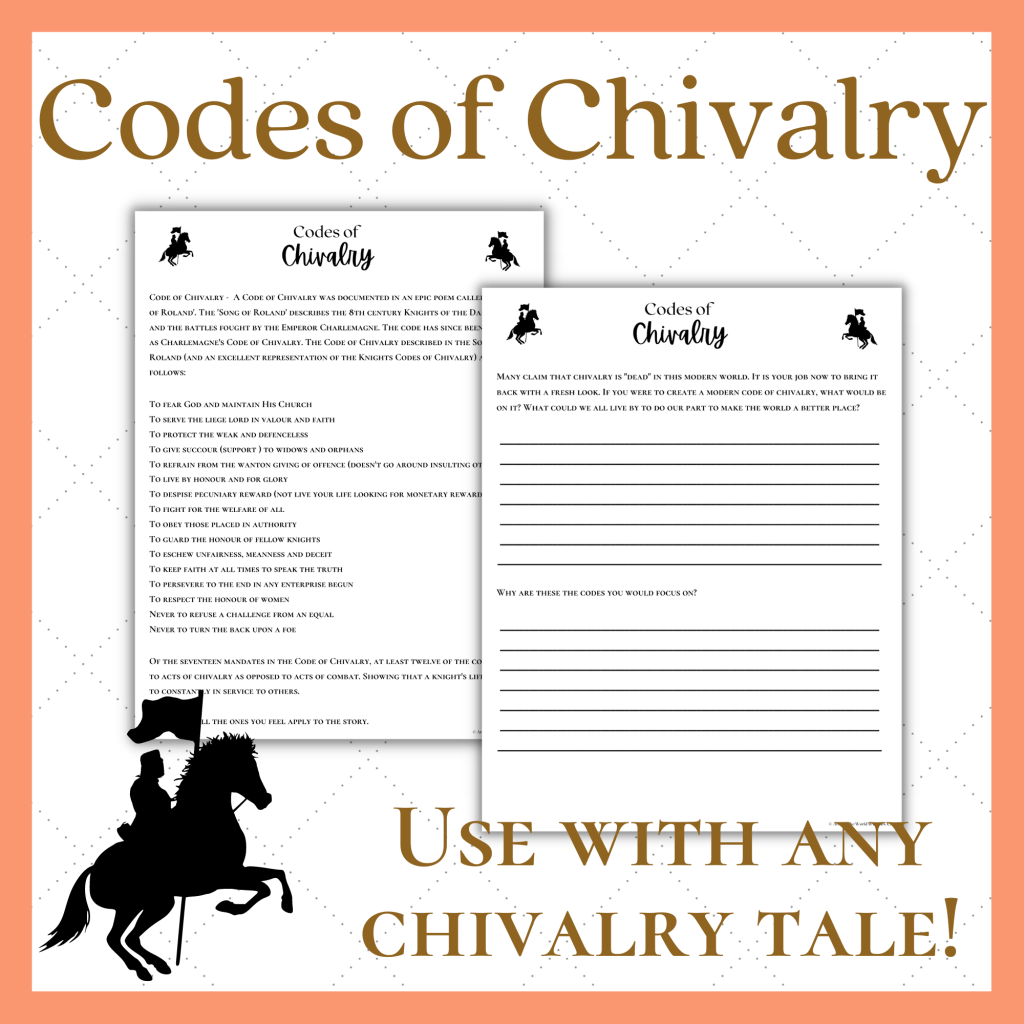
Sir Roland’s story is the perfect example of Chivalry and Charlemagne’s Codes of Chivalry. You could also use this resource to help your students learn about this code of conduct and how Roland (and his weapon) help to reflect that!
Create Your Own Mythical Weapon

As you can see, there are no shortage of mythical heroes and their special weapons to combat evil! Even in our modern day, there are new takes on these.
Such as with Wonder Woman and her Lasso of Truth and Link’s Master Sword!
We cover all the these heroes and their mythical weapons in this highly engaging product. Your students get a nice overview of all these mythical weapons, their deeper meanings, and then they are challenged to create their own!
What new challenges do they face today? What kind of weapon could be used to combat this evil? What type of person would be chosen for this task?
These are the types of deeper questions they think on in this activity. This can be a fantastic addition to any mythology study you are doing. However, it would be a fantastic companion to a mythical heroes unit like this one!
Be sure to grab it here and get started in your classroom today!
Join my weekly newsletter!
Would you love to get weekly tips and resources for teaching secondary English delivered right to your inbox? Click here to join!


What about Shamshir-e Zomorrodnegar?
LikeLiked by 1 person
I’m not well-versed in those tales, but I’m always looking to expand! Thanks for sharing a new rabbit hole for me to go down.
LikeLike