

Are you looking for a way to captivate your high school English students while diving deep into the complexities of American literature? Dark Romanticism offers a thrilling opportunity to engage students in a thematic exploration of fear, anxiety, and perception.
By centering the inquiry question “How do our fears and anxieties influence the way we perceive reality?” this mini unit not only invites students to analyze timeless literary works but also challenges them to connect these themes to their own lives and the modern world.
Let’s explore why Dark Romanticism is compelling. We will also examine how thematic teaching transforms the classroom. We will also see how this unit can make your life as a teacher easier.
What is Dark Romanticism?
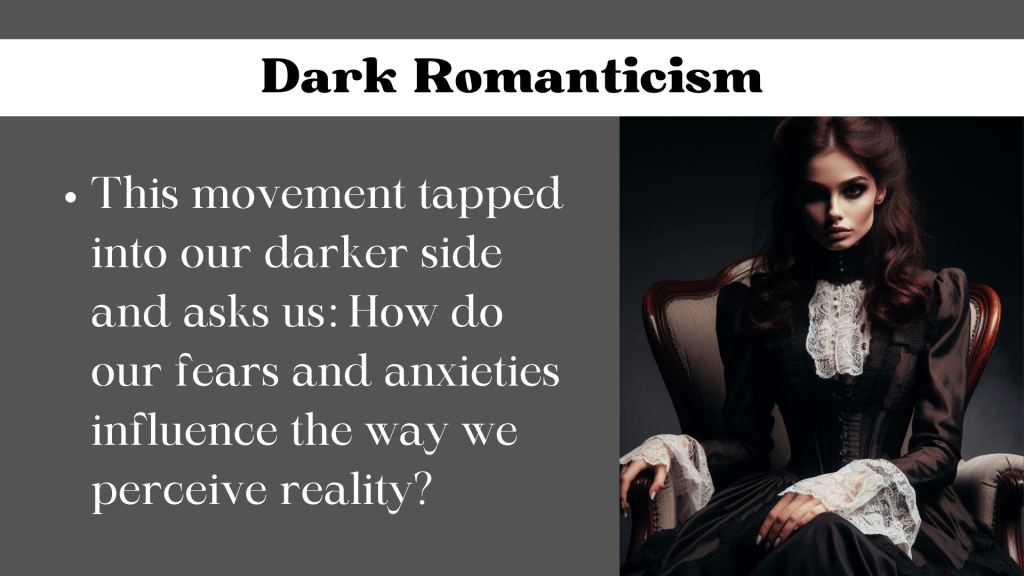
Dark Romanticism is a subgenre of Romantic literature that delves into the shadowy corners of human nature, exploring themes like fear, isolation, and the supernatural. Unlike the idealism of the Transcendentalists, Dark Romantic authors were captivated by the darker aspects of the human experience. They believed that our inner fears and anxieties often reveal deeper truths about who we are.
With its eerie settings, tormented characters, and blurred lines between reality and illusion, this literary movement offers rich material for discussion and analysis.
Why This Essential Question Works
The inquiry question “How do our fears and anxieties influence the way we perceive reality?” gets straight to the heart of Dark Romanticism. It prompts students to consider not just what happens in the stories but why these themes resonate across time.
Fear and anxiety are universal experiences—ones that often cloud our judgment, shape our relationships, and alter how we see the world. This question allows students to explore these ideas in literature while reflecting on their own perceptions and biases. It’s a perfect lens through which to study Dark Romanticism and encourages critical thinking and self-awareness.
The Power of Thematic Teaching
Thematic teaching ties together various texts under a unified concept, creating a cohesive learning experience for students. This approach deepens understanding by allowing students to see how different authors and genres tackle the same questions.
For teachers, thematic teaching simplifies lesson planning because every activity connects back to the central theme. In this case, students will repeatedly return to the question of how fear and anxiety distort perception, making connections between characters, settings, and ideas across multiple texts.
Exploring the Texts: How Each Connects to the Inquiry Question
“The Legend of Sleepy Hollow” by Washington Irving
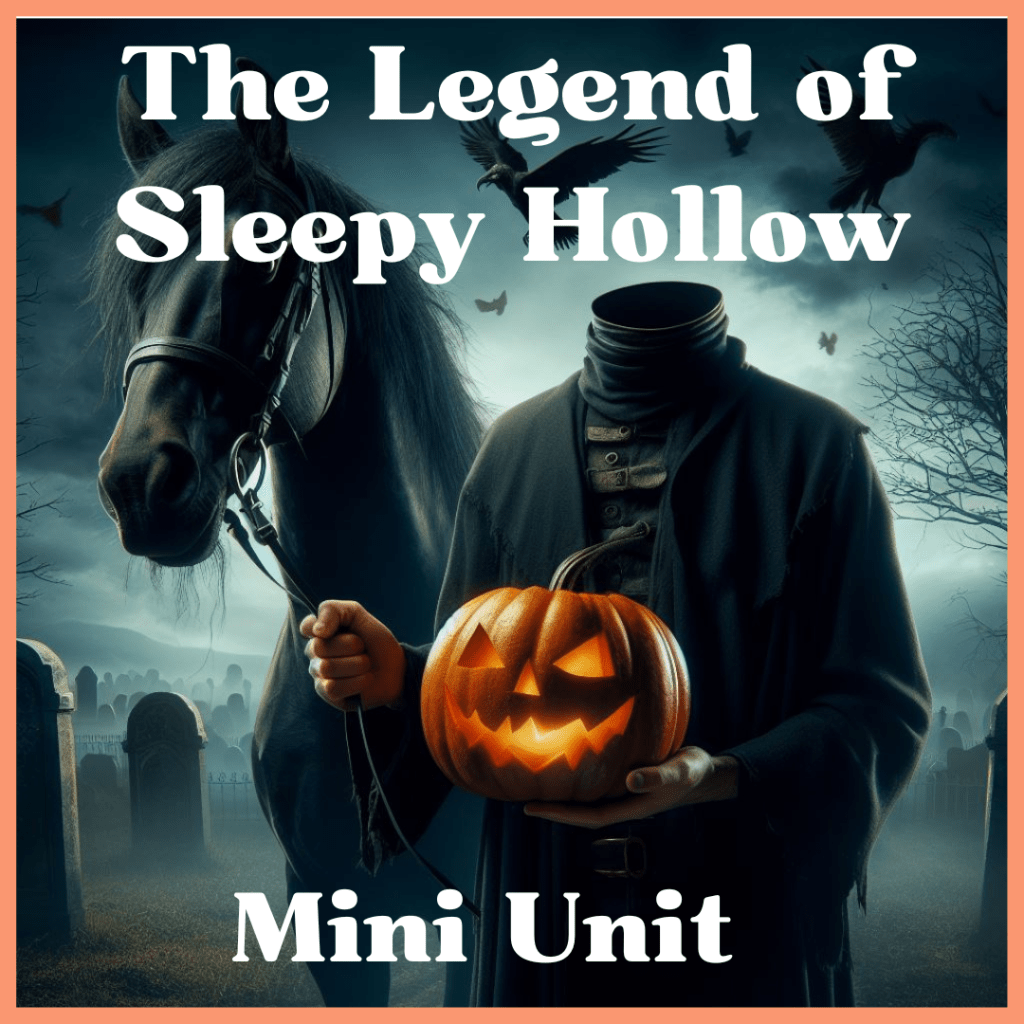
This classic tale introduces students to the role of fear and superstition in shaping perception. Ichabod Crane’s vivid imagination and susceptibility to local legends blur the line between reality and illusion. Students will explore whether the Headless Horseman is a genuine threat or a product of Ichabod’s overactive mind. This story is perfect for discussing how cultural and personal fears can warp our understanding of events.
Though the night was dark and dismal, yet the form of the unknown might now in some degree be ascertained. He appeared to be a horseman of large dimensions, and mounted on a black horse of powerful frame. He made no offer of molestation or sociability, but kept aloof on one side of the road, jogging along on the blind side of old Gunpowder, who had now got over his fright and waywardness.- The Legend of Sleepy Hollow
With this passage, we can see that the deepening darkness during Ichabod’s ride home makes him more fearful. It blurs the line between reality and superstition. He can only see vague details of the “horseman of large dimensions,” which leaves his imagination to run wild.
Unsure if the figure is friendly or dangerous, Ichabod’s fear of the Headless Horseman takes over. The dark setting adds to his growing anxiety, making it hard for him to tell what’s real and what’s in his mind. This shows how a scary environment can shape how we see the world around us.
“The Fall of the House of Usher” by Edgar Allan Poe

Poe’s exploration of isolation and psychological instability makes this story an ideal piece for the unit. The crumbling mansion mirrors the decaying mental state of Roderick Usher, who is consumed by his fears. Students analyze how Poe’s Gothic setting heightens the tension and blurs the boundaries between reality and madness. The Fall of the House of Usher is fantastic for discussing how our environments can amplify anxiety and alter perception.
The room I came into was very large and high. The windows were high, and pointed at the top, and so far above the black floor that they were quite out of reach. Only a little light, red in color, made its way through the glass, and served to lighten the nearer and larger objects. My eyes, however, tried and failed to see into the far, high corners of the room. Dark coverings hung upon the walls. The many chairs and tables had been used for a long, long time. Books lay around the room, but could give it no sense of life. I felt sadness hanging over everything. No escape from this deep cold gloom seemed possible.- The Fall of the House of Usher
In this quote, the dim, red light creates a foreboding and oppressive atmosphere, amplifying the narrator’s emotional response of sadness and despair. The lack of natural light, with windows unreachable and shadowy corners obscured, symbolizes the psychological decay and isolation of the house’s inhabitants.
This absence of brightness reflects the Usher family’s emotional and mental stagnation and the room’s gloom mirrors their hopelessness. The red light adds a sense of unease, suggesting hidden fears and underlying tensions within the space.
“Young Goodman Brown” by Nathaniel Hawthorne

Hawthorne’s short story, Young Goodman Brown, delves into the paranoia and distrust that arise from fear. As Goodman Brown ventures into the forest, he begins to question the goodness of those around him. By the end, he ultimately losing faith in humanity. This story prompts students to consider how fear and suspicion can distort our view of others and erode trust.
He had taken a dreary road, darkened by all the gloomiest trees of the forest, which barely stood aside to let the narrow path creep through, and closed immediately behind. It was all as lonely as could be; and there is this peculiarity in such a solitude, that the traveller knows not who may be concealed by the innumerable trunks and the thick boughs overhead; so that, with lonely footsteps, he may yet be passing through an unseen multitude. “There may be a devilish Indian behind every tree,” said Goodman Brown to himself; and he glanced fearfully behind him, as he added,\ “What if the devil himself should be at my very elbow!” – Young Goodman Brown
In this quote, we can see that the forest serves as a reflection of Goodman Brown’s internal fears and anxieties. The forest’s darkness and oppressive atmosphere intensifies Goodman Brown’s paranoia, making him imagine dangers lurking in the shadows. The “gloomiest trees” and the “narrow path” create a sense of entrapment. It amplifies his anxiety and makes him more susceptible to believing in the supernatural threats he fears.
“Annabel Lee” by Edgar Allan Poe
This haunting poem explores the enduring power of grief and its ability to cloud reality. Through the narrator’s obsessive love for Annabel Lee, students can discuss how emotional pain can alter perception, making it difficult to separate reality from fantasy. The poem’s dreamlike quality and Gothic imagery give a poetic complement to the prose works in the unit.
“The Ocean” by Nathaniel Hawthorne
Hawthorne’s meditative poem offers a contrast to the other texts by reflecting on the vastness and mystery of nature. Students can analyze how the ocean becomes a metaphor for the unknown and how its endless depths evoke both awe and anxiety.
The Ocean has its silent caves,
Deep, quiet, and alone;
Though there be fury on the waves,
Beneath them there is none.
This text encourages discussions about how fear of the unknown shapes our perceptions of the world.
Informational Text: “How Does Your Physical Environment Affect You and Your Mental Health?”
This contemporary article bridges the gap between literature and real-life application. Students will examine how environmental factors like light, sound, and space influence mental health. This connects these ideas to the eerie settings of Dark Romanticism. Including this article encourages students to apply their literary analysis skills to modern contexts, making the themes of the unit even more relevant.
How This Unit Simplifies Teaching Dark Romanticism

Teaching Dark Romanticism doesn’t have to be overwhelming!
My thematic mini-unit is designed to provide everything you need to engage your students in meaningful exploration. With detailed lesson plans, guided discussions, differentiated activities, and answer keys, you’ll have the tools to make this unit both rigorous and accessible for all learners.
Have your students engage in an interactive Socratic seminar. Choose between two creative final projects- creating a psychological case study on one of the characters or creating a modern Dark Romantic story.
This mini unit ensures students actively engage in critical thinking and promoting their self-expression.
Whether you’re teaching American Literature or simply looking for a deep dive into Gothic storytelling, this unit is a great way to foster curiosity and critical thinking in your students. If you’re ready to explore the shadows of Dark Romanticism with your class, check out my unit today!
Join my Newsletter!
Would you love to get weekly tips and resources for teaching secondary English delivered right to your inbox? Click here to join!


Thanks so much for sharing!
LikeLike