

The end of the school year can be a strange mix of exhaustion and anticipation—for both teachers and students. You’re trying to maintain structure while also celebrating all the growth that’s happened. If you’re looking for meaningful and memorable activities to wrap up your English class, here are three favorites that combine reflection, creativity, and fun.
Each one is classroom-tested, SEL-friendly, and designed to keep students engaged while reinforcing key ELA skills.
1. End-of-Year Literature Awards Ceremony
Your students have spent the year immersed in novels, poems, short stories, and plays this year! This End-of-the-Year Literature Awards activity is the perfect way to celebrate their journey as readers and still incorporate some ELA skills.
Teaching Tip: Set Students Up for Success
Before students start nominating, give them a quick memory boost. Post a list of all the texts you’ve read this year—include titles, authors, and a one-line summary to jog their memories. Print it out or keep it on the board for easy reference.
Build Discussion Before Writing
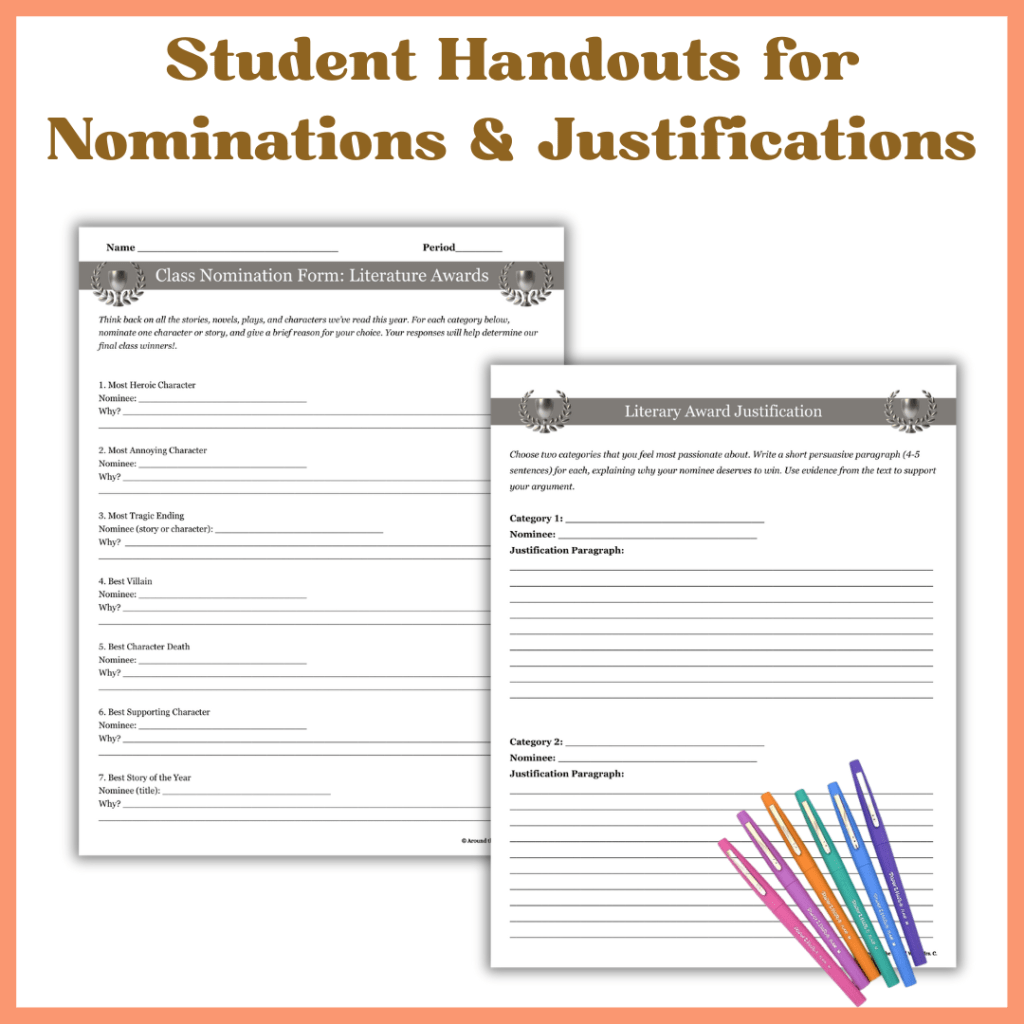
Before individual nominations, place students in small groups of 3–4 and give each group the award categories (like “Most Memorable Villain” or “Best Plot Twist”). Let them flip through old journals or notes and use sentence starters like:
- “I think ___ should be nominated because…”
- “Remember in ___ when they…?”
You’ll be amazed at how much they recall—and how thoughtful their reasoning becomes.
Bonus Tip: Turn It Into a Class Vote
Want to make it even more collaborative? Have each group submit a list of finalists and then vote as a class. This gives you a narrowed pool of contenders—and an excellent opportunity for persuasive talk and consensus-building.
Put a Bow on It: Canva Awards Show
Once you tally the votes, use the pre-made Canva template to create a simple, slideshow-style ceremony with categories, images, and dramatic winner reveals. You can even assign student presenters. It’s the perfect way to close your literature circle with a sense of celebration.
2. Ravenwood Manor Escape Room
If your students are feeling squirrely but still need some academic structure, this eerie and atmospheric escape room keeps them reading closely, thinking critically, and working together—all while having a blast.

Teaching Tip: Keep the Mystery Flowing
Students can work in small groups, pairs, or even solo depending on your classroom dynamics. Start with the original story excerpt, then move sequentially through each station once they’ve solved the previous one. Each step will have your students sifting through diary entries and old letters to further unravel the mystery and discover the name of the stolen child.
Push for Deeper Thinking
Although the answer key is included, you can guide students to think critically about their responses. For example:
- The name “Violet” is foreshadowed throughout the story—especially in the Station 3 letter and the repeated flower references.
- The story includes rich quotes about inner vs. outer conflict—encourage students to annotate and discuss these during the game.
Why It Works:
It reviews literary analysis, conflict, inference, and textual evidence—all wrapped in a ghost story. It is interactive and fun while also being a fantastic review of many skills. What’s not to love?
3. Personal Narrative Writing with The Moth Radio Hour
Need a reflective and emotionally resonant writing activity to end the year? Try these three Moth Radio Hour episodes each pair beautifully with an SEL mini-lesson and writing prompt.
You can use them across multiple days or let students choose one that speaks to them. They are perfect for leading into a personal reflection piece of their own.
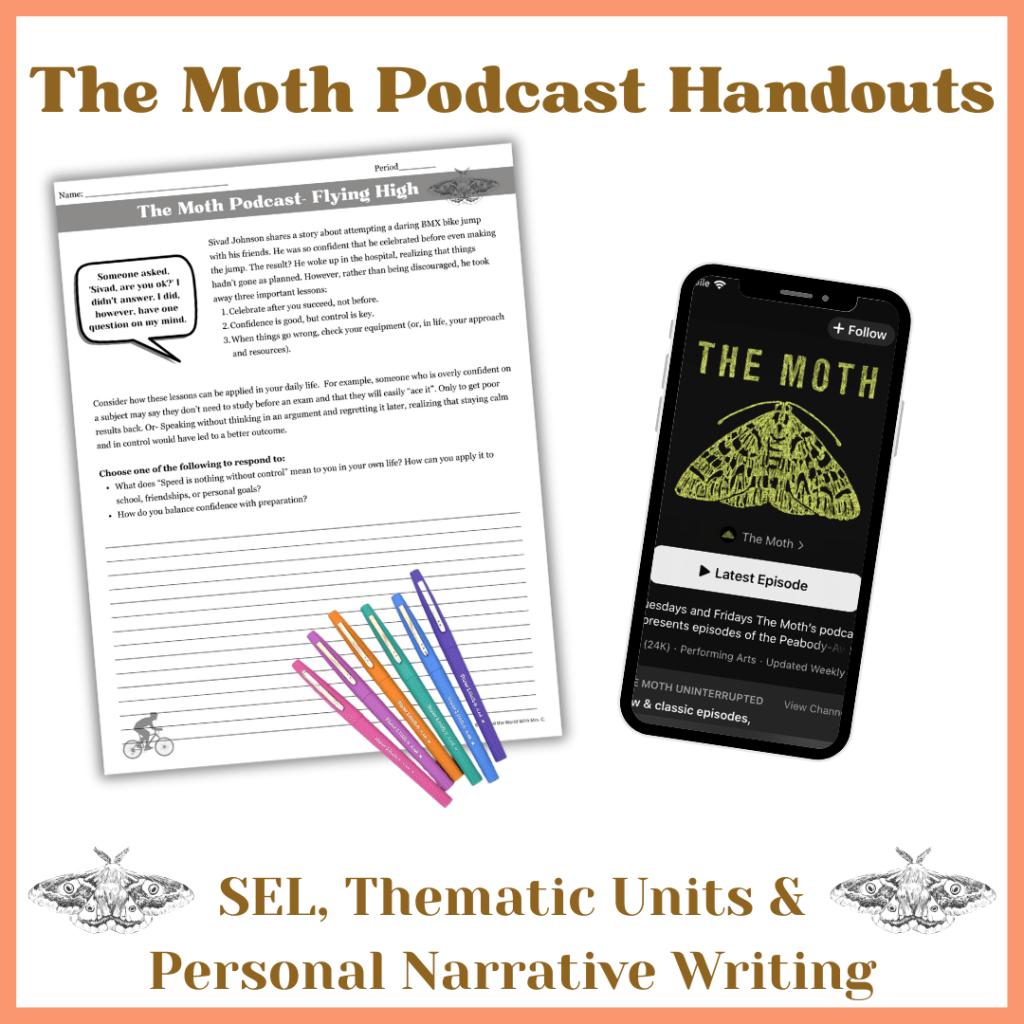
Episode 1: “Flying High”
Theme: Confidence, Resilience, Learning from Mistakes
Teaching Tip:
Use the story’s circular structure (starting and ending with the same moment) to help students explore storytelling techniques. The episode sparks great discussion about taking risks and bouncing back from failure.
Episode 2: “48 Inches
Theme: Facing Fears and Taking Risks
Teaching Tip:
Discuss how the narrator’s emotions affect his son, and let students write about a moment they pushed through fear. It’s a beautiful way to talk about courage and vulnerability without being too heavy.
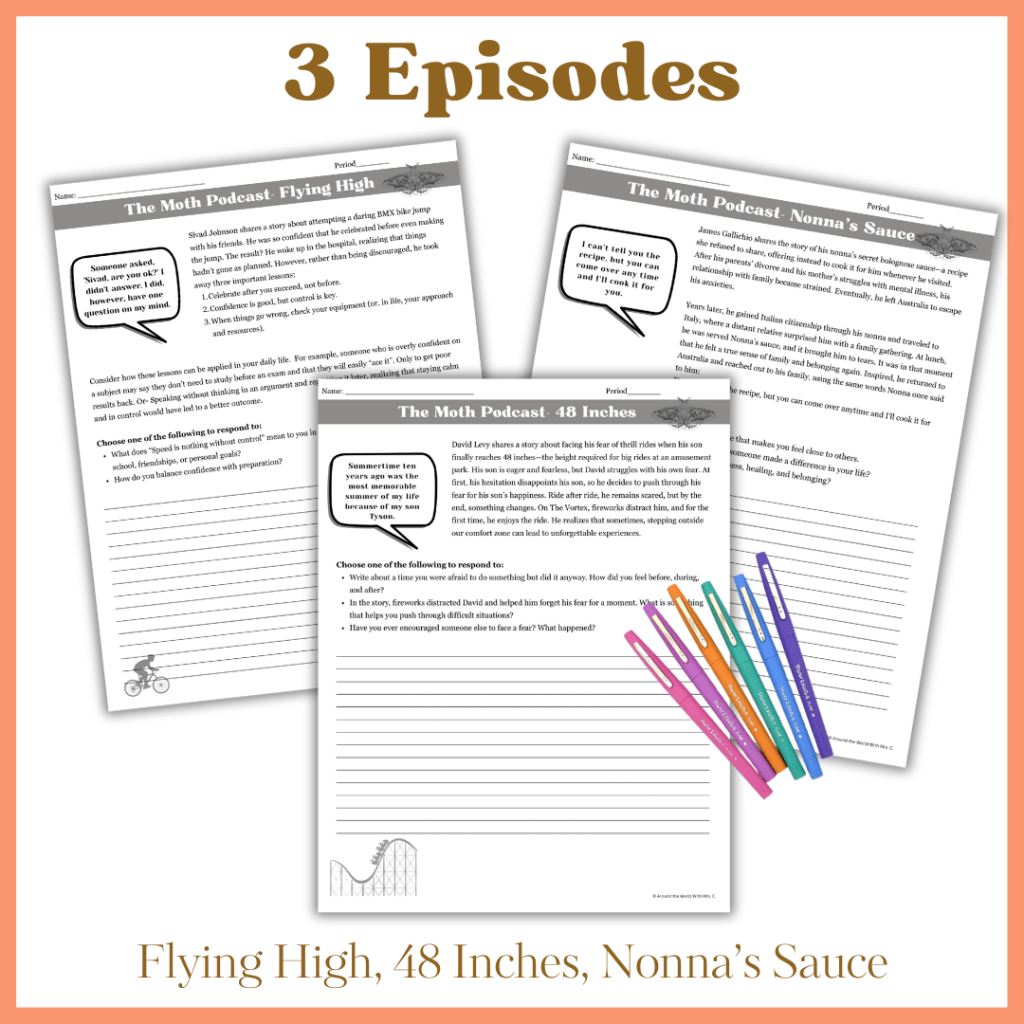
Episode 3: “Nonna’s Sauce”
Theme: Healing, Family, and Belonging
Teaching Tip:
This one is especially powerful for students who’ve felt disconnected from others. The sensory details (like the smell of sauce) are great mentor text material, and it opens the door for students to write about meaningful traditions, relationships, or reunions.
Wrap-Up Idea:
Have students compile their personal narratives into a keepsake booklet or present them during a class storytelling day. It’s a meaningful way to say goodbye—and it builds community, even in those last fleeting days of class.
Final Thoughts
The end of the year doesn’t have to be a countdown. These three activities let students reflect, connect, and create while keeping your classroom focused and joyful. Whether you’re handing out literary awards, solving a gothic mystery, or listening to real-life stories, you’ll give your students something they’ll remember—long after the final bell rings.
Would you like a few more ideas? Check out my previous post HERE!
Join my weekly newsletter!
Would you love to get weekly tips and resources for teaching secondary English delivered right to your inbox? Click here to join!
 Around the World With Mrs. C